
Aquarium Plant Lighting: Low, Medium and High Light Tanks
The short answer
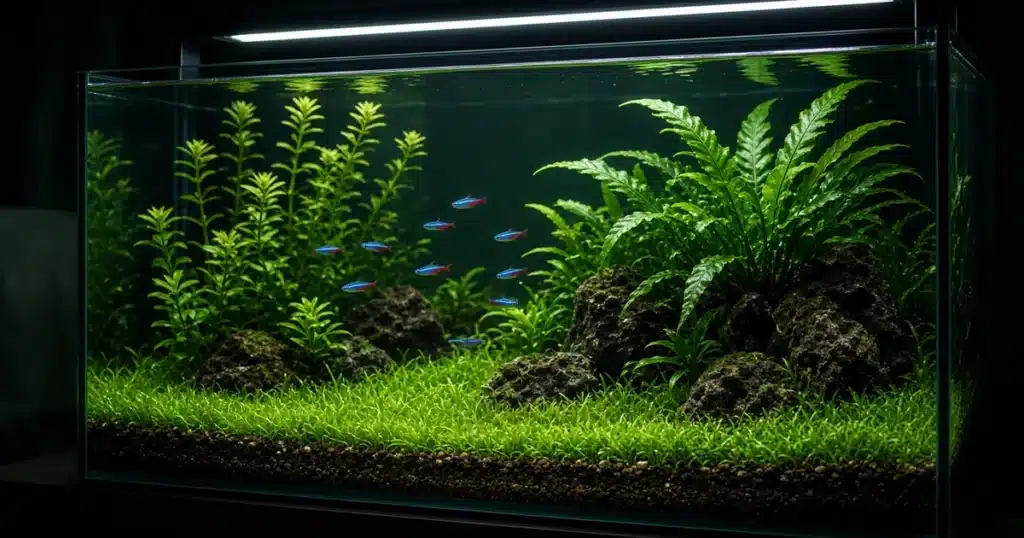
Aquarium plant lighting ranges from low light tanks for hardy plants to high light tanks for demanding ones. Plant lighting guides measure the light plants actually receive, not watts. Start with modest light and a steady schedule, then raise it slowly. Too much light without enough plant growth often feeds algae instead.
Aquarium plants follow the same rules as garden plants. They turn light into growth. The difference is that water, glass and depth all change how much light reaches them.
How much light do aquarium plants need?
Plants use light in the range from blue to red. Growers measure it as PPFD, the amount of plant usable light landing on a surface each second.
The University of Missouri Extension guide to understanding grow lights explains PPFD and other light terms. Watts tell you how much power a light uses, but they don’t tell you how much light reaches a plant.
Light over a full day matters too. The Virginia Cooperative Extension guide to daily light integral explains DLI. It adds up all the light a plant gets in a day. A dim light on for many hours can give the same DLI as a bright light on for fewer hours.
Water absorbs some light as it passes through. Deeper tanks lose more light by the time it reaches the bottom. Plants at the bottom of a tall tank get less than those near the surface.
What separates low, medium and high light tanks?
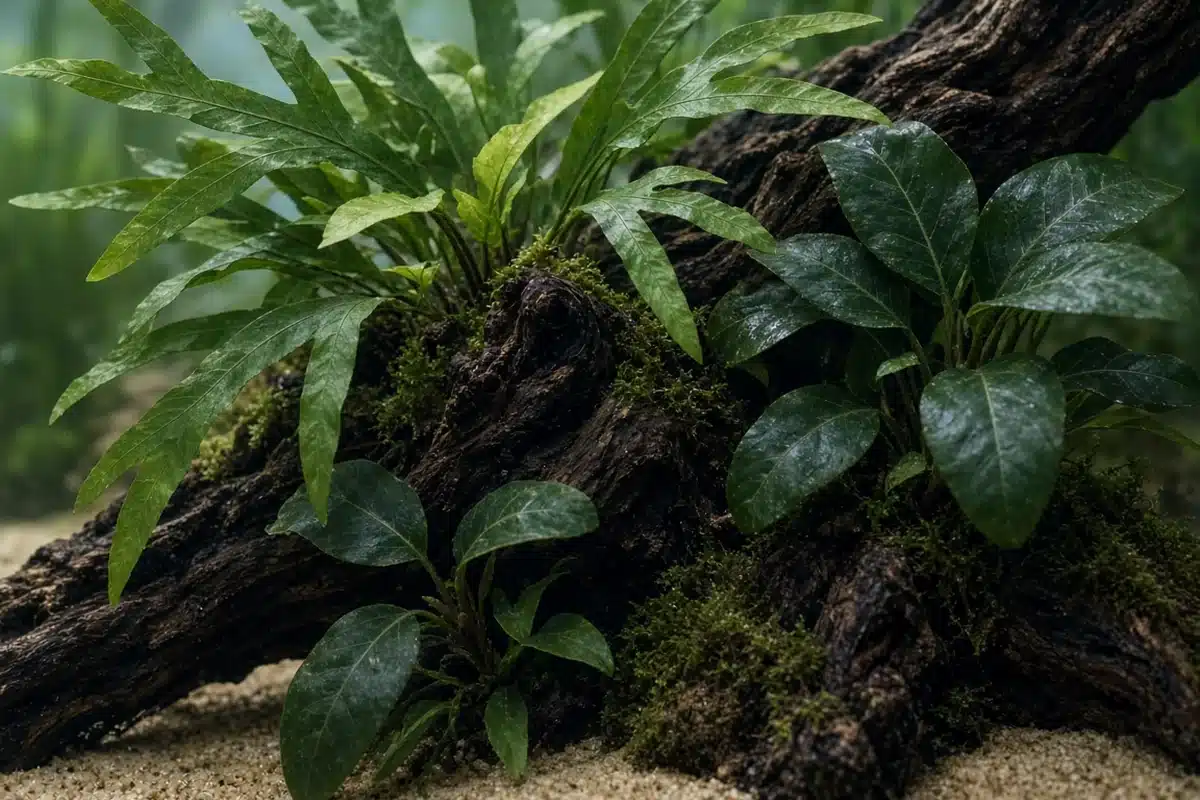
Low light tanks suit hardy plants that grow slowly. Java fern, anubias and many mosses fall here, and these plants handle dim light and need little care.
Medium light tanks open up more choices. Many stem plants and swords grow well at this level. Growth is faster, so trimming becomes a regular job.
High light tanks support carpeting plants and red stem plants. These plants need bright light, added carbon dioxide and steady fertilizer. Without all three in balance, algae takes over quickly.
| Level | Plant examples | Notes |
|---|---|---|
| Low | Java fern, anubias, mosses | Slow growth, little care |
| Medium | Many stem plants, swords | Regular trimming |
| High | Carpeting and red stem plants | Need added carbon dioxide and steady feeding |
Sources: University of Missouri Extension, Virginia Cooperative Extension, University of Minnesota Extension.
How do you choose a light?
Pick an LED made for planted tanks. Most offer a full white spectrum with extra red and blue.
Choose a dimmable model, so you can start low and increase slowly.
Size the light to the tank. It should cover the full length so plants at the ends get light too.
The University of Minnesota Extension guide to lighting for indoor plants explains how distance affects light. Light gets dimmer quickly as you move away from the source. Hanging height and tank depth both play a role.
Our post on optimal lighting for growing indoors covers more on matching light to plants.

How do you avoid algae?
Algae grows when there’s more light than plants can use. Extra light and nutrients go to algae instead.
Stick to a steady schedule. Plants and algae both respond to changes. A timer holds the day at the same length every day. Our post on grow light timers explains how to set one up.
Start low. Raise intensity in small steps over weeks as plants fill in.
Balance light with nutrients and carbon dioxide. In high light tanks, plants need both to match the light.
Add more plants. A full tank of fast growing plants leaves fewer nutrients for algae.
Place the tank out of direct sunlight. Sun adds bright, uneven light you can’t control.
How to: step by step
- List the plants you want to grow.
- Group them by low, medium or high light need.
- Choose a dimmable LED sized for the tank.
- Set a steady daily schedule on a timer.
- Increase intensity slowly as plants adapt.
- Watch for algae and adjust light first.
Can tank water help garden plants?
Aquarium water contains organic waste and plant nutrients. Many gardeners use it to water houseplants and garden beds after a water change.
Our post on aquarium water for plants explains how growers reuse it.
Use water from freshwater tanks only. Saltwater harms soil and plants.
Troubleshooting
Green film on glass. There’s too much light. Shorten the day or dim the light.
Plants stretch toward the top. Light is too low. Raise intensity slowly.
Red plants turn green. Light is too low for color. Increase intensity.
Algae after a light upgrade. The change was too fast. Dim it and raise it in steps.
Bottom plants fade. The tank is deep. Choose a brighter light or move low light plants down.
Good light turns a tank into a living garden. Kind Seed Co carries cannabis seeds for growers who want to try light skills on a new crop.
Sources
- Controlled environment agriculture: understanding grow lights (G6987), University of Missouri Extension, Controlled environment agriculture
- Calculating and using daily light integral (DLI): an introductory guide (SPES-720), Virginia Cooperative Extension, Calculating and using daily light integral (DLI)
- Lighting for indoor plants and starting seeds, University of Minnesota Extension, Lighting for indoor plants and starting seeds
FAQ
Can regular LEDs grow aquarium plants?
Many can, if they give enough plant usable light and cover the tank. Planted tank LEDs are easier to dim and tune.
How many hours should tank lights run?
Many growers use a steady daily period set on a timer. Shorten it if algae appears.
Do low light plants need special bulbs?
No. Hardy low light plants grow under most planted tank LEDs on a low setting.
Does depth change light needs?
Yes. Water absorbs light, so deep tanks need brighter lights to reach the bottom.
Does sunlight help a planted tank?
Direct sun often causes algae. It adds light you cannot control.



