
Tomato Greenback: Why Yellow Shoulders Happen and How to Prevent Them
The short answer
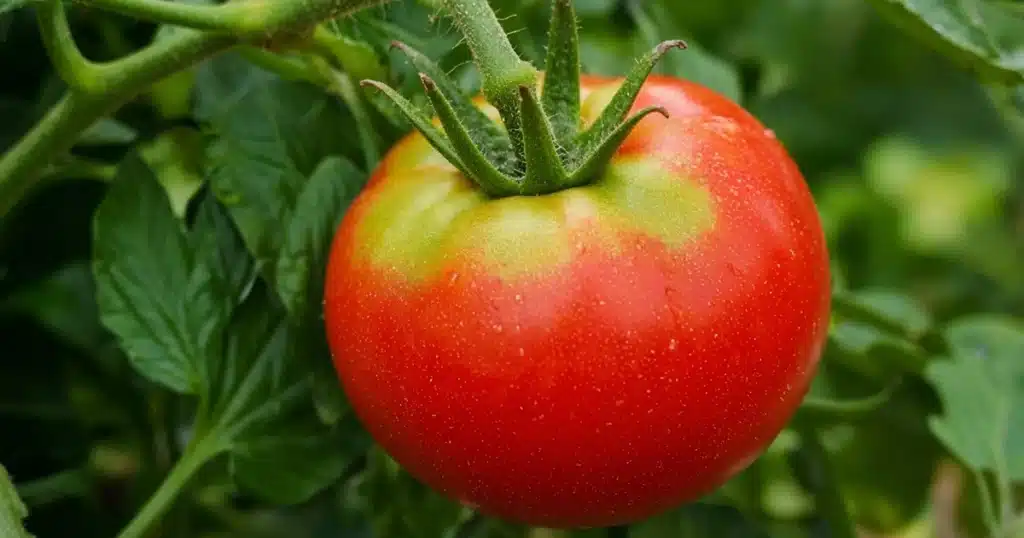
Tomato greenback, also called yellow shoulders, leaves hard yellow or green tissue around the stem end that never ripens. Extension specialists link it to high heat and direct sun on the fruit, and low potassium can add to it. Leave leaf cover over the fruit, check soil potassium and choose varieties less prone to it.
You slice a ripe looking tomato and find a tough, pale ring near the top. That is greenback. It is a ripening disorder, not a disease, and a few changes can reduce it.
What causes yellow shoulders on tomatoes?
Yellow shoulder shows up as a band of yellow, green or white tissue around the stem end. The rest of the fruit ripens red, but the shoulder stays firm and pale. Inside, the tissue may be white and hard.
The UConn IPM fact sheet on yellow shoulder on tomato explains that the problem is linked to high temperatures on the fruit. When the shoulders heat up in direct sun, the red pigment fails to form there. The fruit ripens unevenly.
Shoulders face the sky, and they catch the most sun and heat. That is why the problem sits at the top of the fruit.
The UMass Amherst Extension fact sheet on tomato ripening disorders groups yellow shoulder with other ripening problems such as blotchy ripening. These disorders come from growing conditions rather than pests or pathogens.
How do heat and potassium play a part?
Heat is the main trigger. Fruit sitting in full sun on hot days can reach temperatures far above the air around it.
Potassium matters. Tomatoes need plenty of it to ripen evenly and build color. The Purdue Vegetable Crops Hotline article on temperature and potassium uptake explains that root zones hotter than about 86°F take up less potassium. So hot spells hit twice, heating the fruit directly and limiting the nutrient that supports even ripening.
Low soil potassium makes it worse. A soil analysis tells you whether levels are adequate. Our post on soil analysis explains how to collect a sample and read the results.
| Factor | Effect on shoulders | Source |
|---|---|---|
| High fruit temperature | Red color fails to form at the top | UConn IPM |
| Direct sun on fruit | Heats shoulders more than the rest | UConn IPM |
| Heat stress on roots | Lowers potassium uptake | Purdue Vegetable Crops Hotline |
| Low soil potassium | Less even ripening | Purdue Vegetable Crops Hotline |
| Variety | Some types are more prone | UMass Amherst Extension |
Sources: UConn IPM, Purdue Vegetable Crops Hotline, UMass Amherst Extension.
How can you prevent greenback?
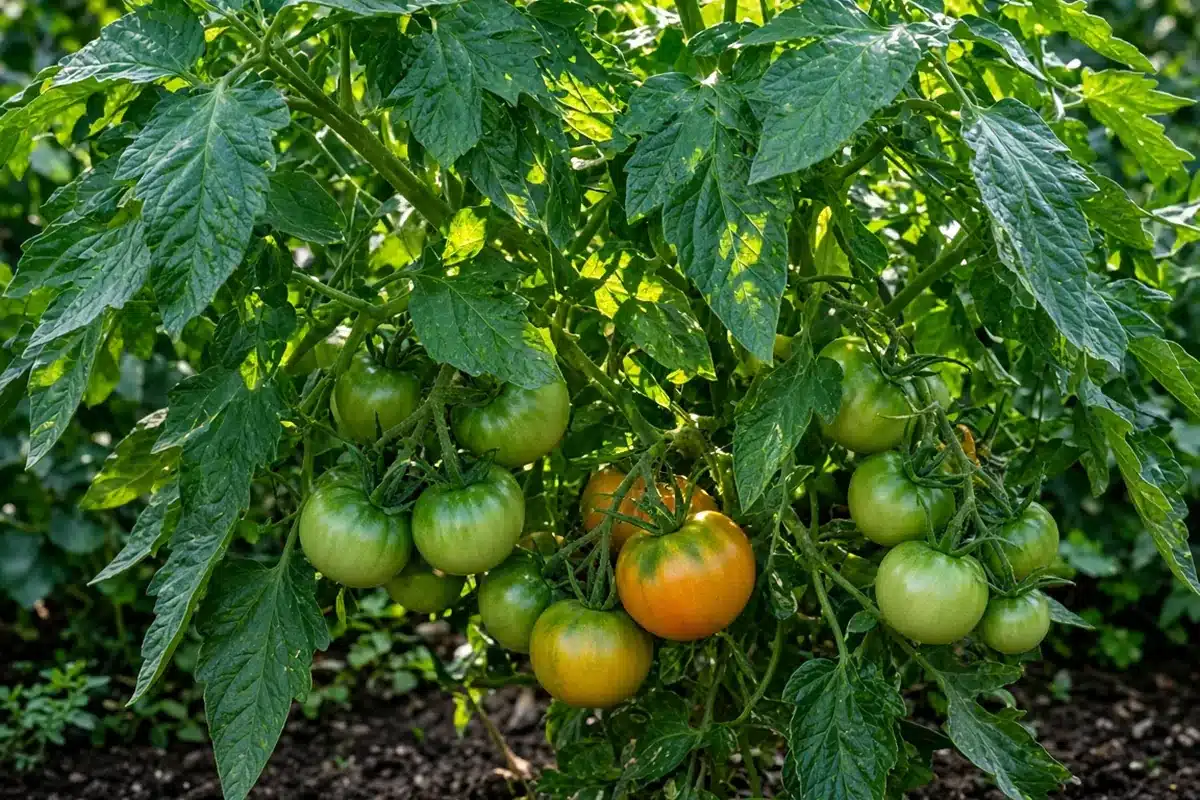
Let leaves shade the fruit. Heavy pruning exposes tomatoes to direct sun. Leave enough foliage to shade fruit clusters, especially on the south and west sides.
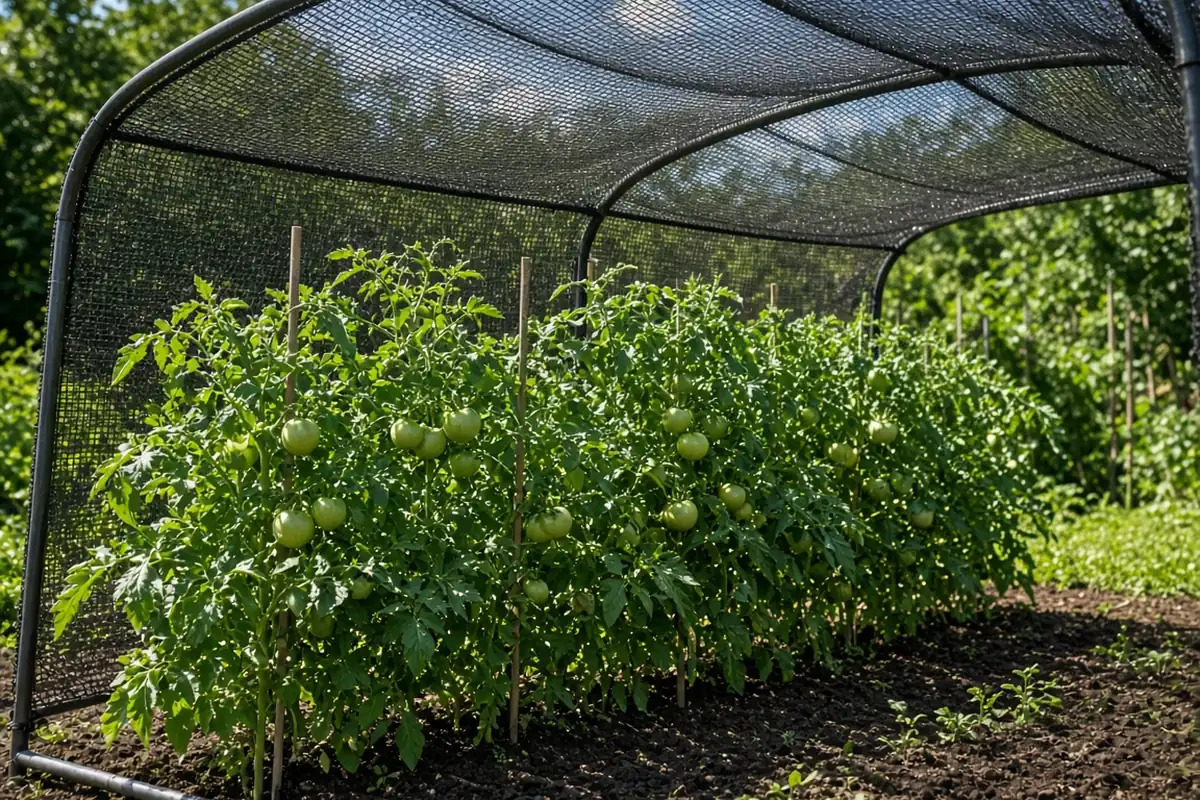
Use shade cloth in hot spells. A light shade cloth cuts heat on fruit without cutting too much light for the plant. Our post on shade cloth covers how to choose and hang it.
Check soil potassium before planting. Add potassium if your soil analysis shows it’s low. Our post on why potassium matters for plants explains its role.
Water evenly. Steady moisture helps roots take up nutrients through hot periods.
Choose varieties wisely. Older varieties with a green shoulder trait often show more yellow shoulder. Many modern varieties carry a uniform ripening trait that lowers the risk.
How do you spot it early?
Look at fruit as it turns color. A ring that stays green or yellow while the rest of the fruit reddens is a warning sign.
Check plants after hot spells. Fruit that sat in sun during a heat wave may show the problem a week or two later.
Compare plants. If only some varieties show it, variety is part of the story. If all plants show it, heat and potassium are more likely causes.
How to: step by step
- Look for hard yellow or green tissue near the stem.
- Check soil potassium with a soil analysis.
- Leave enough foliage to shade the fruit.
- Use shade cloth in very hot spells.
- Water evenly through the season.
- Choose varieties with a uniform ripening trait.
Can you still use affected fruit?
Yes. The red part of the fruit is still good. Cut away the hard shoulder before slicing.
Affected fruit works well in sauces and soups. Trim the pale area and use the rest.
Market growers lose more from greenback because the fruit looks less appealing. Home gardeners can trim and cook.
Troubleshooting
Shoulders stay green. Heat is hitting the fruit. Shade the plants.
Pale ring on many fruits. Potassium may be low. Run a soil analysis and feed if needed.
Only one variety affected. That variety is prone. Try a uniform ripening type next year.
Problem after heavy pruning. Fruit is exposed. Leave more leaves next time.
Worse in late summer. Heat builds over the season. Add shade cloth during the hottest weeks.
Shading fruit and maintaining adequate soil potassium can reduce uneven coloring. Kind Seed Co shares more garden ideas in outdoor growing.
Sources
- Yellow shoulder on tomato, University of Connecticut IPM, Yellow shoulder on tomato
- Temperature effects on potassium uptake: managing heat stress for better tomato quality, Purdue University Vegetable Crops Hotline, Temperature effects on potassium uptake
- Tomato, physiological ripening disorders, UMass Amherst Extension Vegetable Program, Tomato
FAQ
Can you eat tomatoes with yellow shoulders?
Yes. Cut away the hard pale area and use the rest of the fruit as normal.
Does pruning cause yellow shoulders?
Heavy pruning can add to it by exposing fruit to direct sun. Leave enough leaves to shade clusters.
Can fertilizer fix it?
Fertilizer cannot change fruit already affected. Adding potassium when soil is low can help future fruit.
Which varieties resist it?
Varieties with a uniform ripening trait tend to show it less. Seed catalogs often note this.
Is yellow shoulder a disease?
No. It is a ripening disorder caused by heat and growing conditions.



