
Porch Light Insects: Which Bulb Colors Draw Fewer Bugs
The short answer
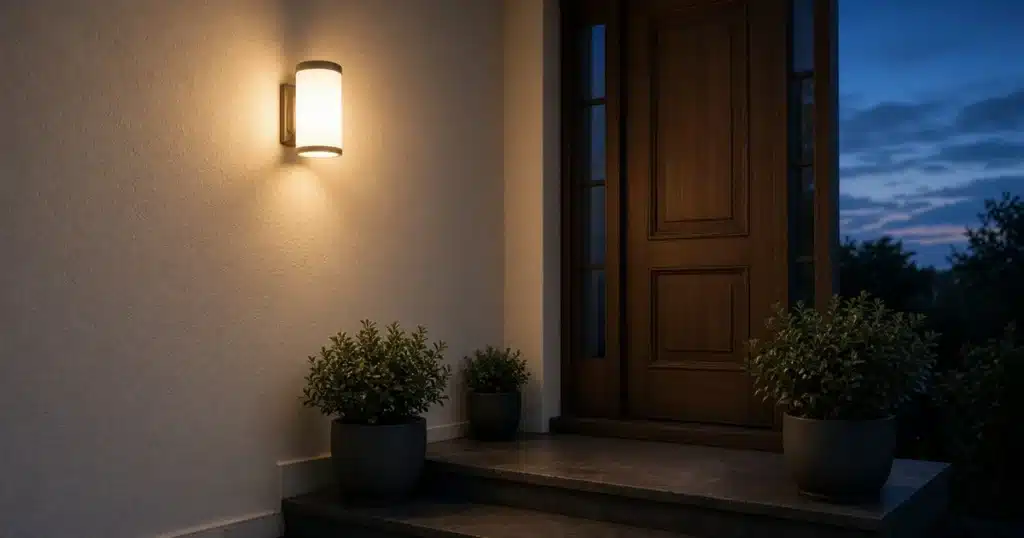
Porch light insects gather in different numbers depending on bulb color. A UCLA led study found warm white LEDs drew fewer insects than many other bulbs, including some yellow bug lights. Florida Extension suggests shielded, downward lights on timers or sensors. Fewer lights at night help moths, beetles and other insects that support the garden.
A swarm around the door is annoying. It also pulls night insects away from the garden, where many of them do useful work.
Why do porch lights attract insects?
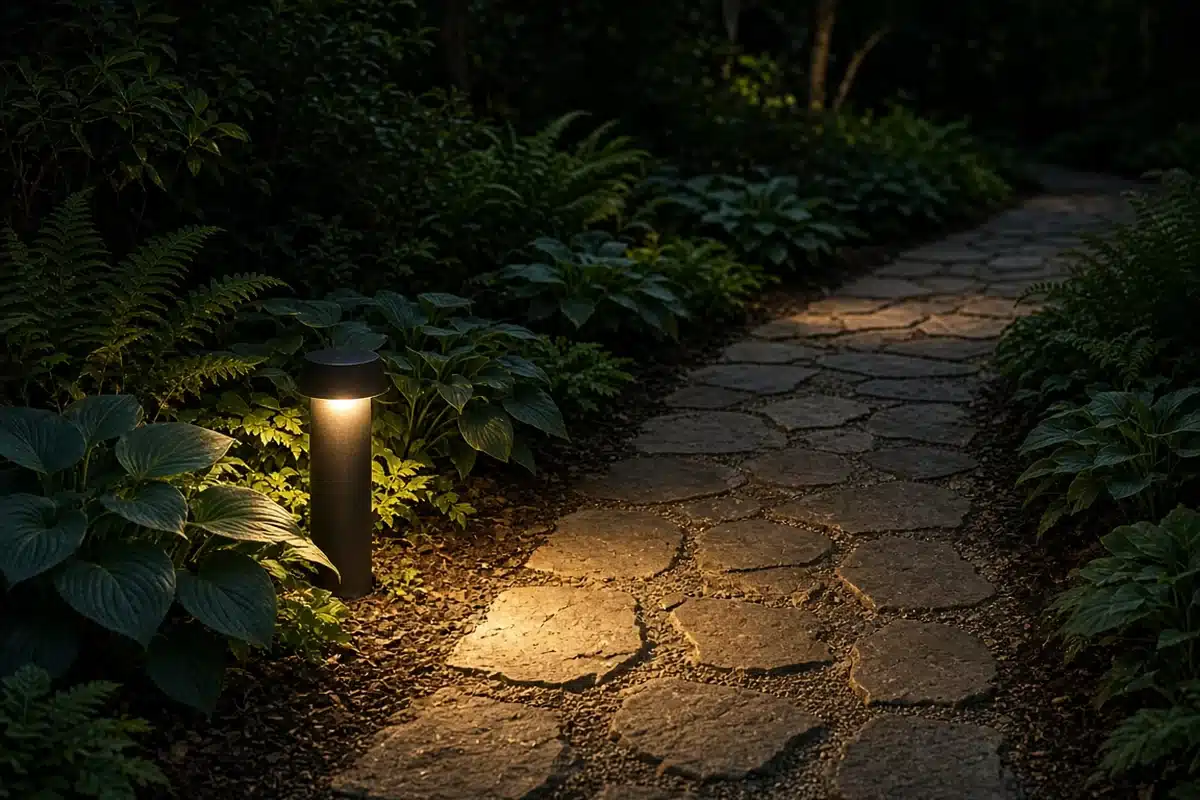
Many night flying insects steer by natural light from the sky. A bright point of light near the ground confuses them. They circle it, tire out and often stay near it until dawn.
Insects see light differently than people do, and many are drawn to short wavelengths, such as blue and ultraviolet. Cool white bulbs give off more of that blue light.
Insects stuck at a porch light aren’t feeding, mating or pollinating. Some become easy prey for bats, spiders and toads. Others simply die from exhaustion.
Our post on night lighting and outdoor plants explains how stray light can affect plants in the garden.
Which bulb colors draw fewer bugs?
The UCLA Institute of the Environment and Sustainability report on outdoor lighting and insects describes a field study of several common bulbs. Researchers counted insects drawn to each type.
Warm white LEDs drew the fewest insects in that study. They even drew fewer than some yellow bug lights sold for that purpose. Cool white and bluer lights drew more.
The takeaway is simple. The color of the light matters, and the label on the box doesn’t always tell the full story.
| Bulb type | Insect draw | Notes |
|---|---|---|
| Warm white LED | Lowest in the UCLA study | Common and easy to find |
| Yellow bug light | Low, but not always lowest | Results varied by model |
| Cool white LED | Higher | More blue light |
| Lights left on all night | Highest total impact | Use timers or sensors |
Sources: UCLA Institute of the Environment and Sustainability, UF/IFAS Extension Sarasota County.
How can you light a yard with less impact?
Color is only one part of the answer. How and when you use light matters too.
The UF/IFAS Extension Sarasota County article on exterior lighting suggests several simple changes. Point lights down, not out or up. Use shields so the bulb is hidden from the side. Use only as much light as you need.
Timers and motion sensors leave lights off most of the night. A light that turns on only when someone walks by limits the time insects are exposed to it.
Place lights well away from garden beds. Light near beds pulls insects away from the flowers and plants they would normally visit at night.
Why do night insects matter to gardens?
Some moths pollinate flowers at night, and some plants rely heavily on them. Beetles and flies move pollen.
Other night insects eat garden pests. Ground beetles hunt slugs and caterpillars after dark. Lacewings feed on aphids.
Our post on the helpful bugs for a garden grow covers helpful insects worth attracting.
Bees mostly work by day, but light near hives and nest sites can still disturb them. Our post on what roles bees play outdoors explains how they support a garden.
How to: step by step
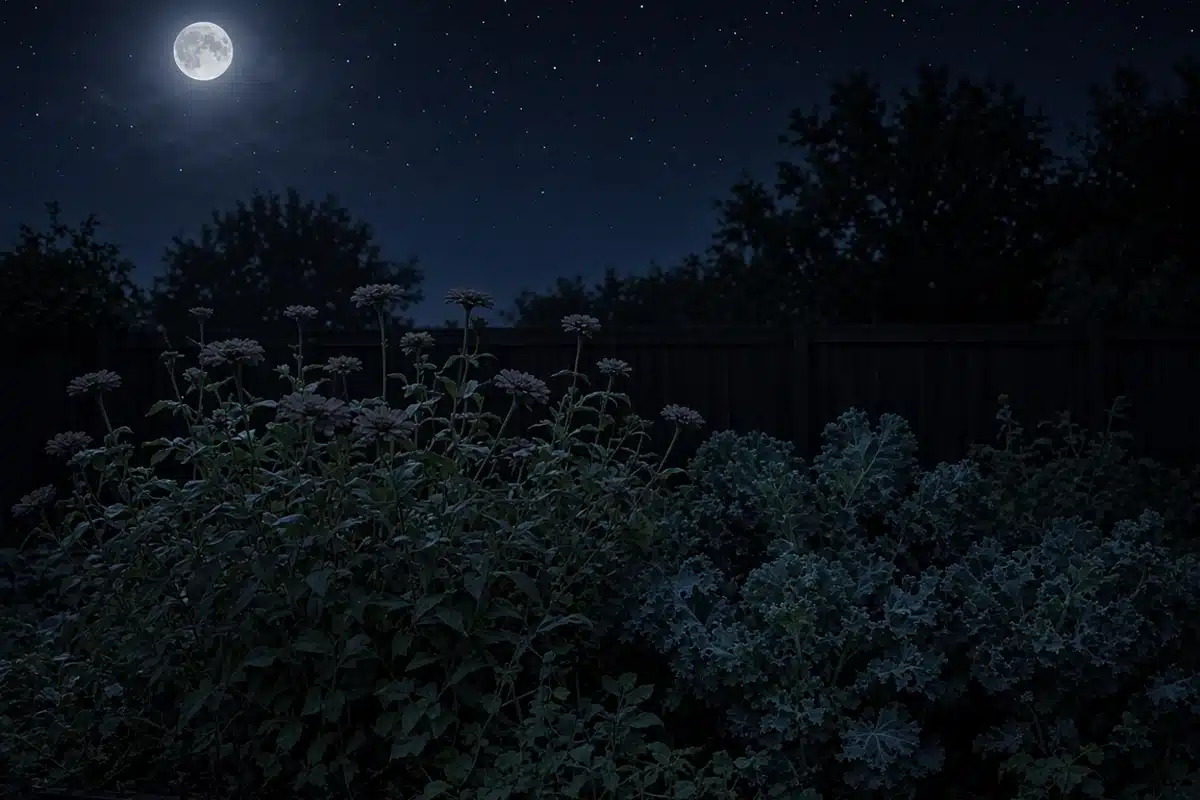
- Note which outdoor lights stay on at night.
- Swap cool white bulbs for warm white LEDs.
- Shield fixtures so light points down.
- Add motion sensors or timers.
- Turn off lights you do not need.
- Aim lights away from garden beds.
What about indoor grow lights near windows?
Indoor grow lights can shine out through windows at night. Insects outside gather at the glass.
Use blinds or curtains during the dark hours. This leaves the grow space dark when plants need it.
The University of Minnesota Extension guide to lighting for indoor plants explains grow light types and placement for seed starting. Placing lights close to plants and away from windows uses light well and limits spill.
How do you pick a warm white bulb?
Look at the color temperature on the box. It is listed in kelvin. Lower numbers mean warmer, more yellow light. Higher numbers mean cooler, bluer light.
Bulbs sold as warm white usually sit at the low end of the range. They look cozy and soft.
Choose a bulb no brighter than you need. A dim light by the door is often enough to find keys and steps.
Troubleshooting
Swarms at the door. The bulb is cool white. Use warm white.
Bugs on garden plants at night. Lights are nearby. Move or shield the lights.
Light spills into beds. The fixture is unshielded. Add a shield.
Lights on until morning. No timer is in use. Add a timer or sensor.
Window glows at night. Grow lights shine out. Close blinds during dark hours.
A few small swaps make the yard friendlier to night insects. Kind Seed Co shares more garden ideas in outdoor growing.
Sources
- Study reveals which outdoor lighting minimizes harm to insects, UCLA Institute of the Environment and Sustainability, Study reveals which outdoor lighting minimizes harm to insects
- Shining a spotlight on exterior lighting, UF/IFAS Extension Sarasota County, Shining a spotlight on exterior lighting
- Lighting for indoor plants and starting seeds, University of Minnesota Extension, Lighting for indoor plants and starting seeds
FAQ
Do yellow bug lights work?
They draw fewer insects than cool white bulbs. In the UCLA study, warm white LEDs drew even fewer.
Do LEDs attract fewer insects?
It depends on color. Warm white LEDs drew few insects, while cool white LEDs drew more.
Does turning lights off help pollinators?
Yes. Darker nights let moths and other night pollinators feed and move normally.
Do motion sensors help?
Yes. Lights that turn on only when needed spend most of the night off.
Do shields make a difference?
Yes. Shields aim light down and hide the bulb from insects flying past.



