
Boston Fern Turning Brown? Dry Air Plus Uneven Watering
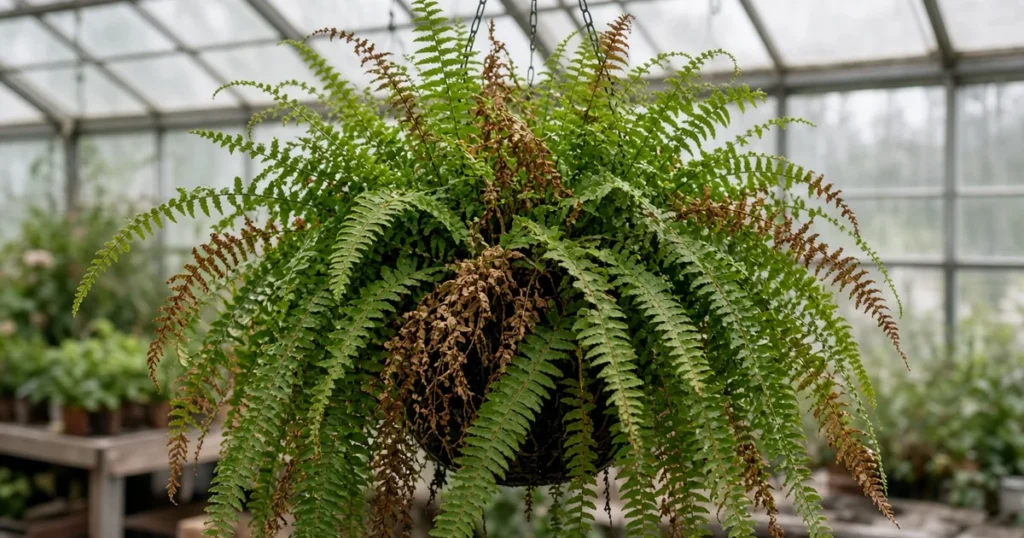
A Boston fern turning brown usually points to dry indoor air, soil that dries out too far between waterings or both. Purdue Extension notes that low humidity causes browning plus drying of frond tips. Water when the surface feels slightly dry, raise humidity around the plant plus trim brown tips.
The short answer
Brown, crispy fronds most often come from dry air plus uneven watering. Purdue Extension notes 40 to 50 percent humidity suits ferns, while homes often sit near 10 to 15 percent. Water when the soil surface feels slightly dry, set the pot on a pebble tray plus trim brown tips.
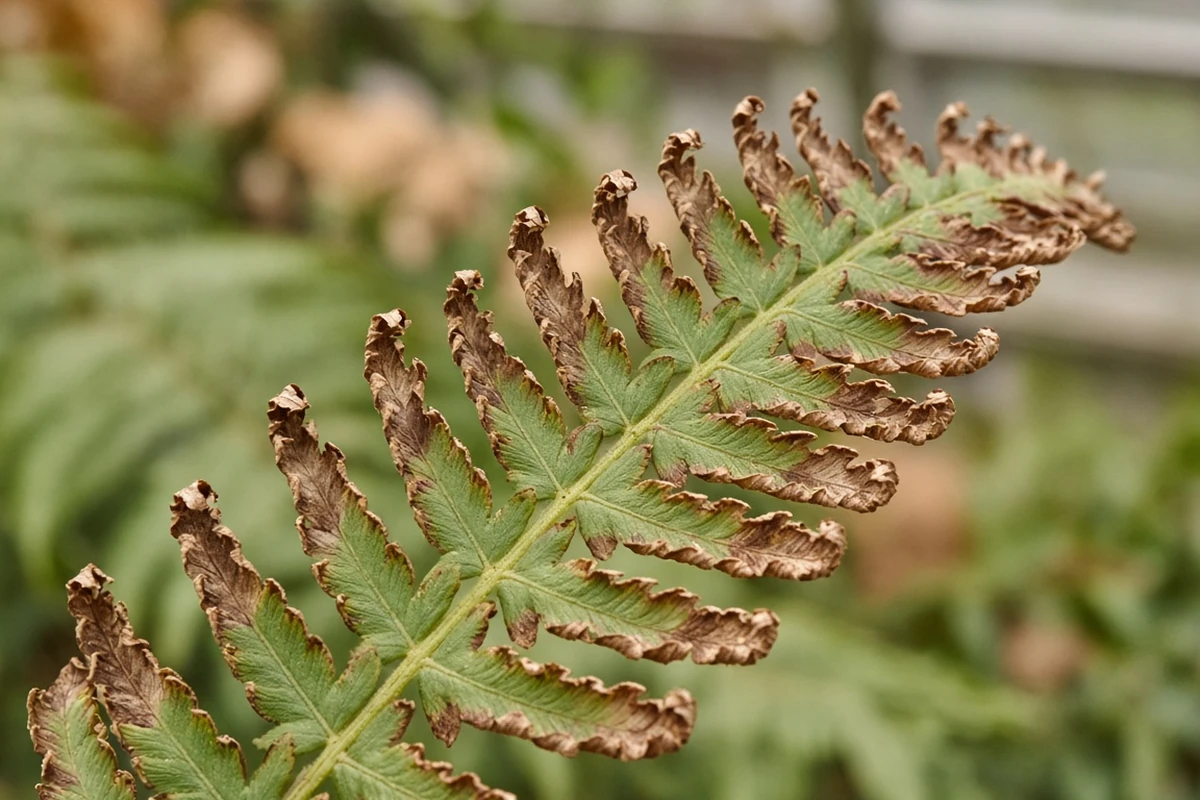
Why do Boston ferns brown indoors?
Iowa State University Extension names low humidity as the most likely cause of brown tips plus edges on houseplants, especially in winter. It adds that letting plants dry out too long between waterings, excess fertilizer salts plus chlorine or fluoride in water can also brown leaf tips. Purdue Extension notes yellowing plus dropping of interior leaves can also mean the air is too dry.
| Cause | Sign | Fix |
|---|---|---|
| Low humidity | Brown, dry frond tips | Pebble tray, humidifier or grouped plants |
| Dry soil between waterings | Brown tips plus edges | Water when the surface is slightly dry |
| Excess fertilizer salts | Brown leaf tips | Feed lightly |
| Chlorine or fluoride in water | Brown tips over time | Use a different water source |
| Overwatering in winter | Root rot | Water less while the plant rests |
Source: Iowa State University Extension, Purdue Extension plus NC State Extension.
How moist should fern soil stay?
Purdue Extension advises watering Boston ferns when the soil becomes slightly dry on the surface, using room temperature water plus soaking the soil thoroughly. NC State Extension notes this fern needs moist soil that should never dry out, but advises reducing water in winter because overwatering can lead to root rot. Touch the soil before each watering instead of following a calendar.
Where should a Boston fern sit?
NC State Extension advises bright, indirect light plus warmth of 60 to 70 degrees Fahrenheit, with a place near a kitchen or bathroom for higher humidity. Purdue Extension notes room temperatures that suit people are often too warm for ferns, with days below 72°F plus nights below 60°F, plus that a north or east window usually works.
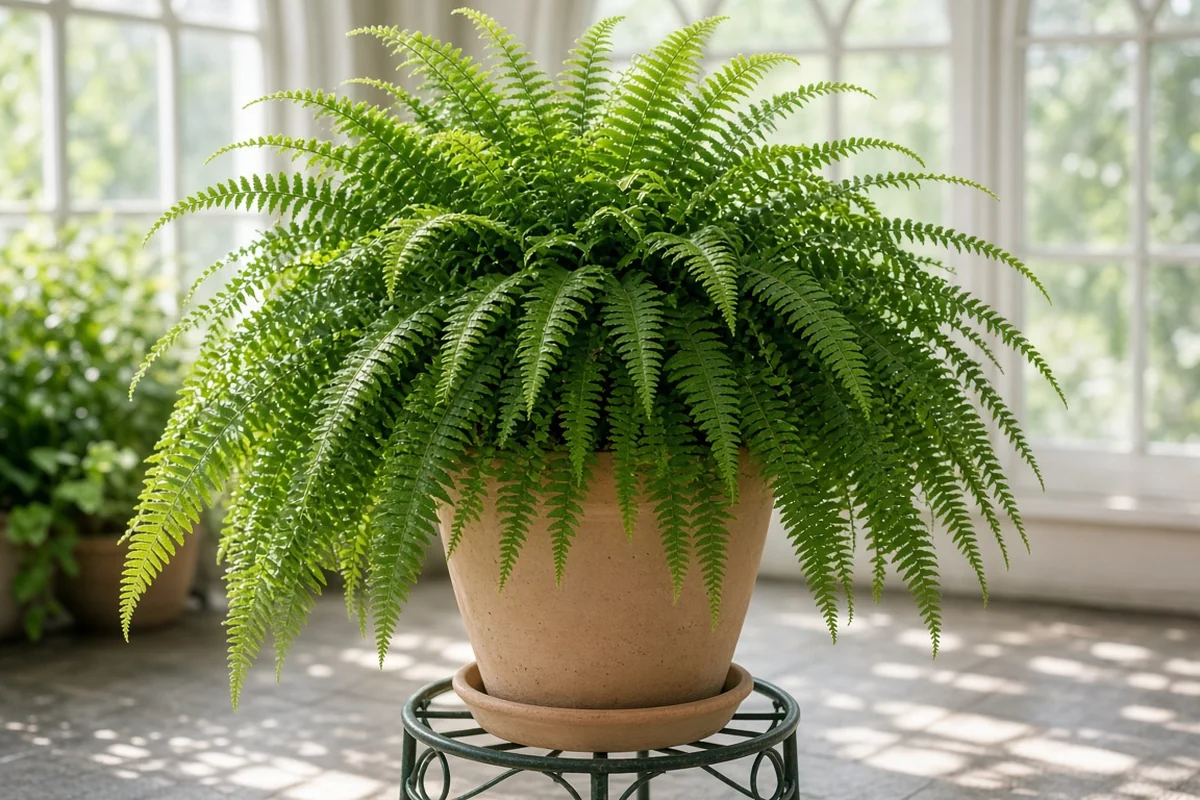
How to: step by step
- Feel the soil plus water when the surface becomes slightly dry.
- Set the pot on a tray of gravel with water below the pot base.
- Cluster the fern with other plants to raise humidity.
- Give bright, indirect light from a north or east window.
- Hold the room cool, with nights below 60°F if you can.
- Snip brown portions with scissors.
Troubleshooting
Crispy brown leaflets: dry air. Use a pebble tray, a humidifier or grouped plants.
Entire fronds brown: soil drying out too far. Water when the surface is slightly dry.
Yellow fronds with wet soil in winter: overwatering. NC State Extension notes winter overwatering can lead to root rot, so water less.
For related reading see what factors affect relative humidity control for cannabis, underwatering cannabis plus what cannabis leaves can tell you. Kind Seed Co also stocks cannabis seeds.
Sources
- Ferns for indoors (HO 141), Purdue Extension
- Nephrolepis exaltata (Boston fern), NC State Extension Gardener Plant Toolbox
- Why does my houseplant have brown leaf tips and edges?, Iowa State University Extension, Yard plus Garden
- Houseplants: watering, University of Illinois Extension
FAQ
Should Boston ferns be misted?
Misting does little for humidity. Purdue Extension notes that misting only helps remove dust from fern leaves. It suggests a humidifier, a tray of wet gravel or a double pot packed with moist sphagnum moss instead. Iowa State University Extension adds that grouping plants together helps their foliage hold in more humidity.
Can a brown fern recover?
The brown parts will not turn green again, but new growth can come in clean once the cause is fixed. Iowa State University Extension notes trimming brown portions off leaves can improve appearance, but new browning will occur if the root cause is not addressed. Correct the humidity plus watering first, then trim the damaged portions.
How much light does a Boston fern need?
NC State Extension advises bright, indirect light. Purdue Extension lists two hours of indirect sun in winter plus filtered shade in spring, summer plus fall. It notes a north or east window usually suits ferns, while south or west windows may need a sheer curtain or more distance from the glass to avoid direct sun.
Can Boston ferns go outside in summer?
NC State Extension notes Boston fern is commonly grown as a houseplant in North Carolina plus other areas cooler than zone 10a, plus that it shows its form well in a hanging basket or container both indoors plus outdoors. Purdue Extension lists filtered shade during spring, summer plus fall, so a shaded porch suits a summer move.
How often should a Boston fern be fed?
Purdue Extension suggests fertilizing Boston ferns monthly from April to September plus once every two months for the rest of the year, noting natural fertilizers such as fish emulsion give good results. Iowa State University Extension notes too much fertilizer can build up salts that brown leaf tips, so feed lightly.



