
Calathea Brown Edges: Dry Air Plus Tap Water Fixes
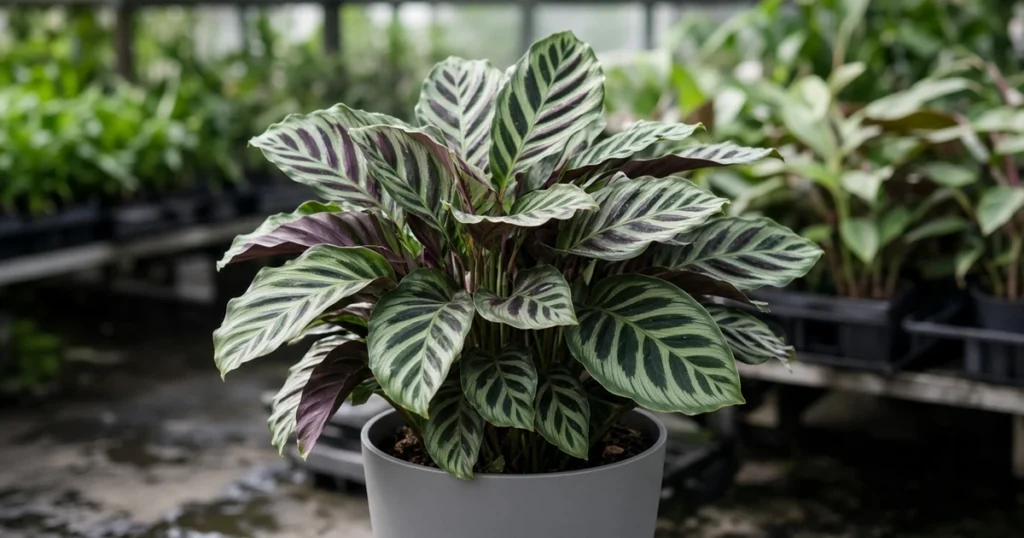
Calathea brown edges often trace back to dry air, fluoride in tap water or salts left in the pot. NC State Extension notes that peacock calathea comes from warm, shaded, humid rainforests. It suggests distilled water or rain water, since fluoride in tap water can brown the leaves.
The short answer
Water with distilled water or rain water, as NC State Extension suggests, plus hold humidity near 60 percent. Flush the pot with plenty of water when a white crust forms. Water before the mix dries out fully, since dry mix concentrates salts around the roots.
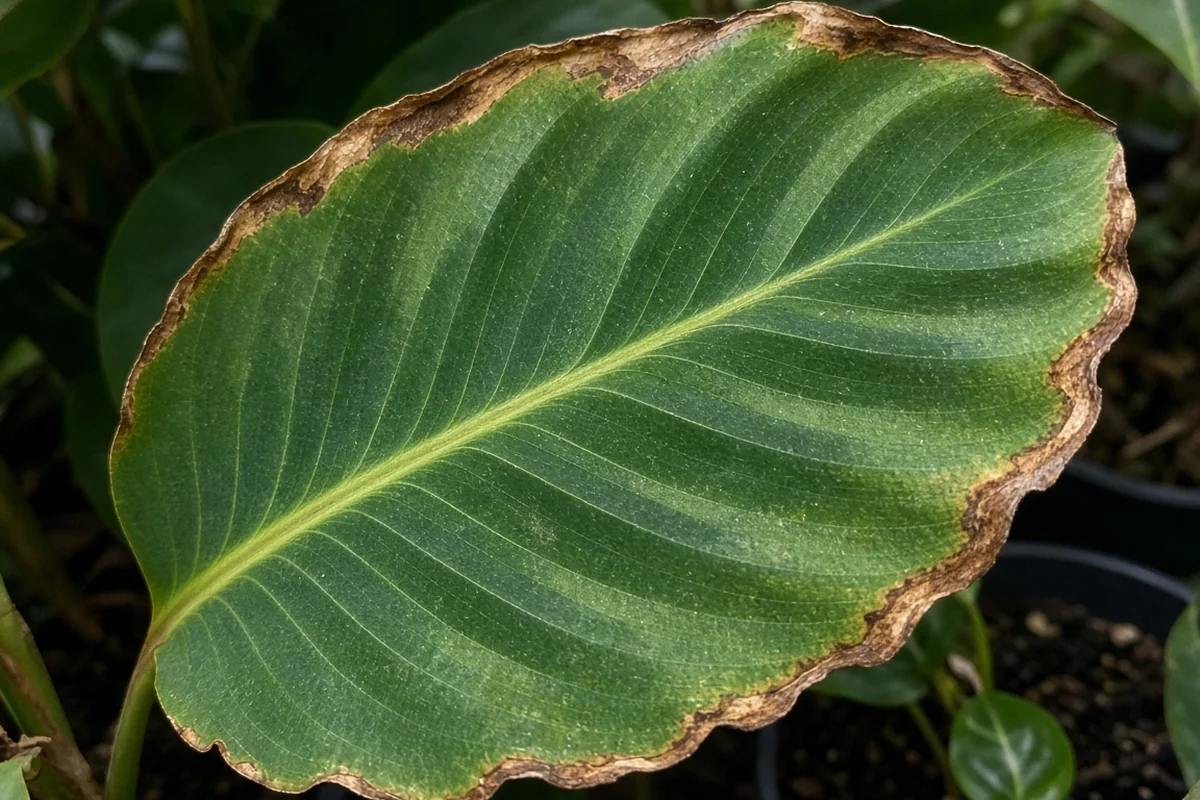
Why does dry air brown the edges?
Calathea comes from humid places. NC State Extension notes that peacock calathea thrives in a warm, shaded, humid setting. It suggests temperatures of 65 to 75°F plus a humidity level of 60 percent.
Can tap water cause brown edges?
Yes. NC State Extension notes that fluoride in tap water can cause browning of the leaves. University of Missouri Extension adds that many public water sources contain trace amounts of fluoride.
Salts matter too. Colorado State University Extension lists brown leaf tips as a sign of salt buildup. Softened water plus many fertilizers add salts, which stay behind as soil dries.
| Sign | Likely cause | Fix |
|---|---|---|
| Brown leaf edges | Fluoride in tap water | Use distilled water or rain water |
| White crust on soil | Salt buildup | Flush the pot with plain water |
| Wilting in moist soil | Salts affecting roots | Leach the mix or repot |
Source: NC State Extension plus Colorado State University Extension.
How does uneven watering affect leaves?
Dry spells add stress. University of Missouri Extension explains that as potting mix dries, it loses water but not its fertilizer salts. That raises salinity in the root zone.
NC State Extension notes that the soil needs to be moist but not wet or soggy. Illinois Extension suggests checking the soil with a finger two inches down.
How to: step by step
- Feel soil moisture often with a finger.
- Water before the mix goes fully dry.
- Pour distilled water or rain water.
- Grow the plant in a warm room near 60 percent humidity.
- Rinse the pot with plain water once a crust forms.
- Trim dead edges with clean scissors if wanted.
Troubleshooting
Brown edges on new growth: fluoride. Switch to distilled water or rain water.
Brown tips plus a white crust: salts. Flush the pot as Colorado State University Extension describes.
Wilted leaves in moist soil: salt damage to roots. Leach the soil or repot in fresh mix.
For related reading see relative humidity control, fluoride in water plus underwatering cannabis. Kind Seed Co also stocks cannabis seeds.
Sources
- Goeppertia makoyana, NC State Extension Plant Toolbox
- Leaf tipburn on houseplants, University of Missouri Extension
- Leaching salts from potting mixes, Colorado State University Extension
- Watering houseplants, Illinois Extension
FAQ
Should brown edges be trimmed?
It is up to you. University of Missouri Extension notes that once a leaf tip dies, there is no way to return it to its normal appearance. Clipping off the dead portion is one option. Preventing new damage through better water plus humidity is the more practical step for the plant.
Does calathea need filtered water?
NC State Extension recommends distilled water or rain water, since fluoride in tap water can brown the leaves. Illinois Extension adds that softened water should be avoided. If tap water is the only choice, let it sit at least 24 hours so chlorine plus fluoride can dissipate first.
How much light does calathea need?
Bright but indirect light. NC State Extension notes that peacock calathea prefers bright indirect sun or partial shade, with direct sun only part of the day. Its leaves fold up in the evening plus reopen at sunrise, a response to changes in light plus temperature in the room.
How do you flush salts from the pot?
Colorado State University Extension advises removing the white crust plus a thin layer of mix. Set the pot in a sink, fill it to the top with tepid water a couple of times, then let it drain well. Replace the mix taken off plus water lightly afterward.
What soil suits calathea?
NC State Extension suggests a moist, well drained potting mix with high organic matter. Perlite improves drainage, though University of Missouri Extension notes that perlite contains fluorides. For plants sensitive to fluoride, it suggests a perlite free mix plus rainwater or distilled water for watering.



