Areca Palm Brown Tips: Dry Air Plus Fluoride Fixes
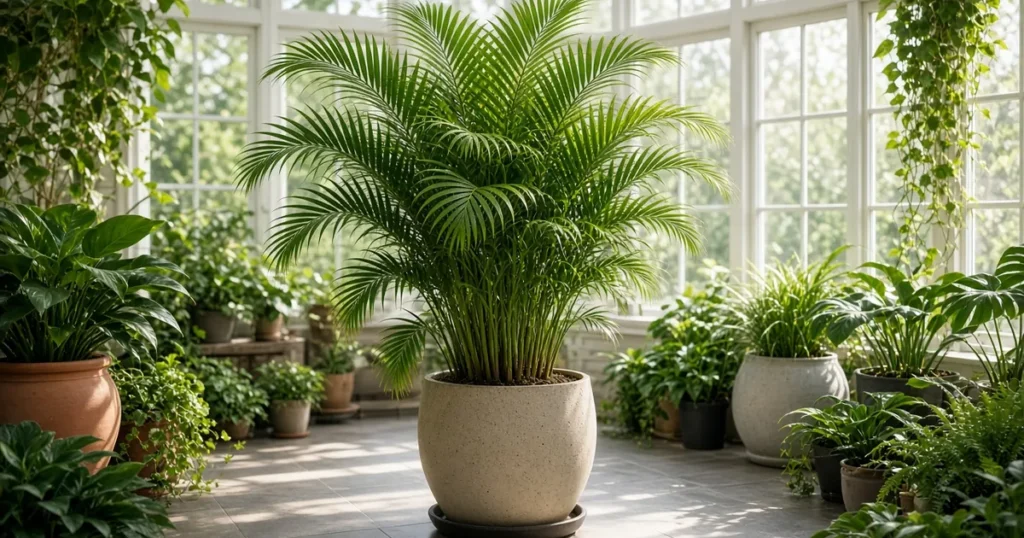
Areca palm brown tips often point to dry air, fluoride or fertilizer salts or soil that dries out too far. NC State Extension notes that areca palm prefers a bright spot, a warm room plus high humidity indoors. Water evenly, flush salts plus add moisture to the air.
The short answer
Grow the palm in bright indirect light with high humidity, as NC State Extension advises. Water so the mix stays moist but not soggy in the growing season. Flush the pot when a white crust forms, plus use rainwater or distilled water if fluoride in tap water is a concern.
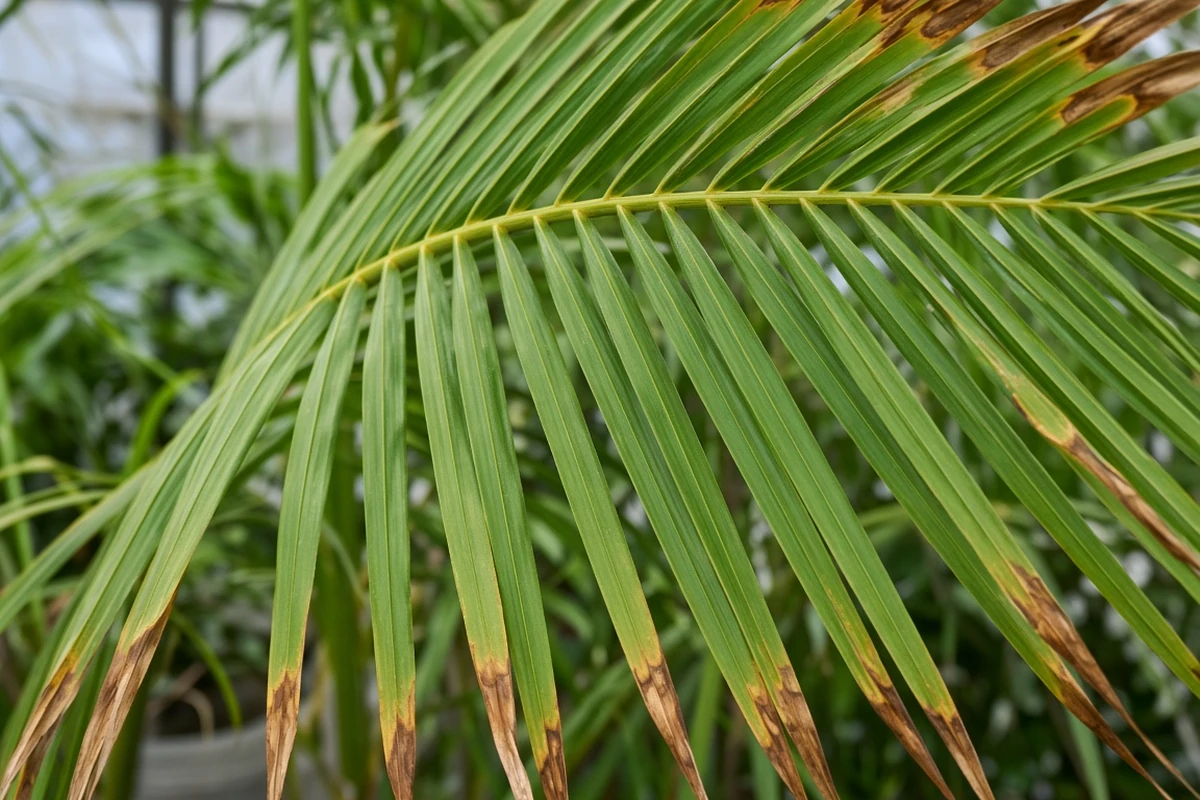
Why does dry air brown palm tips?
Areca palm comes from Madagascar. NC State Extension notes that indoors it prefers a warm to average room with high humidity. It suggests adding moisture to the air when needed.
Can fluoride cause brown tips?
It can. University of Missouri Extension lists excess fluoride as one of three main causes of tipburn on houseplants. The other two are excess fertilizer plus improper watering.
Many public water sources contain trace amounts of fluoride. Sensitive plants can build up enough over time to show damage. Missouri suggests rainwater or distilled water plus a perlite free mix for sensitive plants.
| Sign | Likely cause | Fix |
|---|---|---|
| Brown tips on many fronds | Salts or fluoride | Flush the mix plus switch water |
| White crust on soil | Fertilizer salts | Flush with clear water |
| Tips brown in dry mix | Uneven watering | Water so the mix stays moist |
Source: University of Missouri Extension plus NC State Extension.
How does watering affect fronds?
Both extremes cause trouble. NC State Extension advises moist but not soggy soil during the growing season. University of Missouri Extension explains that as potting mix dries, salts stay behind plus raise salinity around the roots.
Missouri notes that more houseplants die from overwatering than from any other cause. So aim for uniformly moist, not wet.
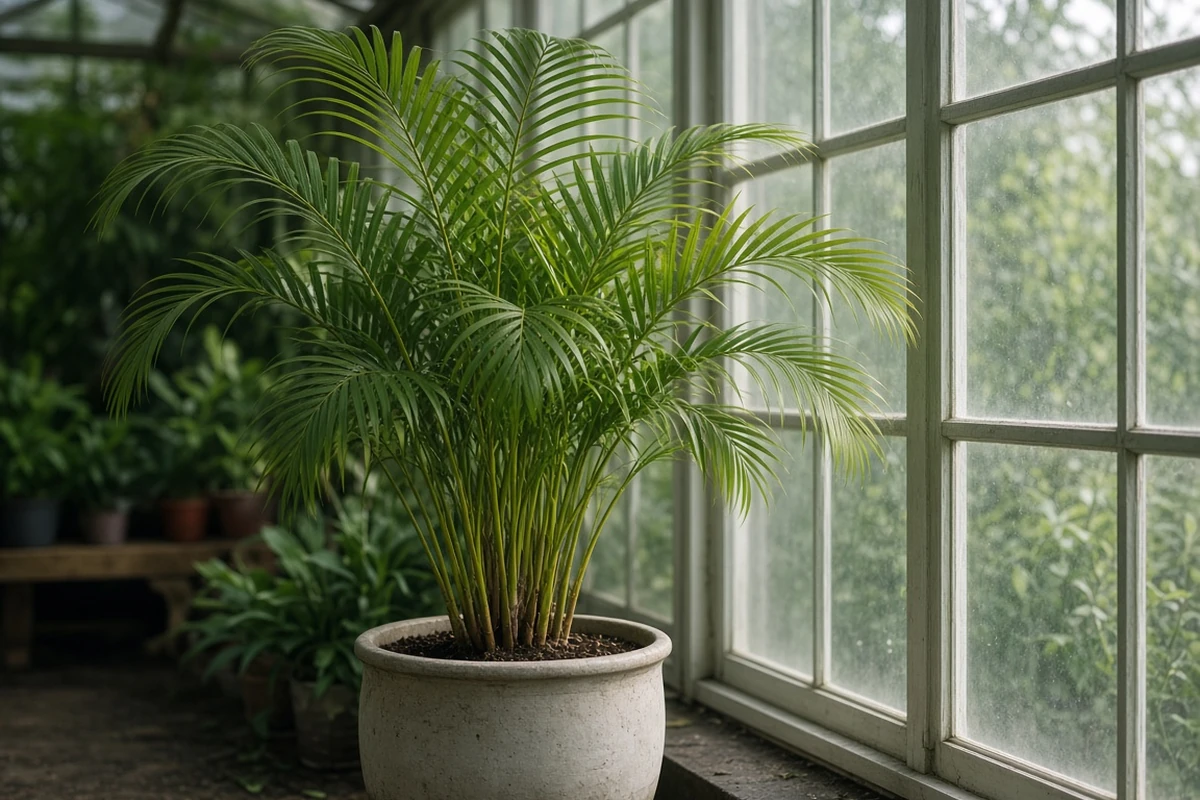
How to: step by step
- Feel the soil two inches down with a finger.
- Water once the top dries, so the mix stays moist.
- Rinse the pot with clear water to remove salts.
- Add humidity around the palm.
- Set it in bright indirect light.
- Trim dead tips if wanted, leaving green tissue.
Troubleshooting
Brown tips on many fronds: salts or fluoride. Flush the pot plus use rainwater or distilled water.
Whitish residue on the soil: salt buildup. University of Missouri Extension advises flushing the mix with clear water.
Yellowing or streaked fronds: possible nutrient shortage. Clemson Extension notes that palms are very prone to shortages of nitrogen, potassium, magnesium plus manganese.
For related reading see fluoride in water, relative humidity control plus underwatering cannabis. Kind Seed Co also stocks cannabis seeds.
Sources
- Chrysalidocarpus lutescens, NC State Extension Plant Toolbox
- Palms plus cycads, Clemson Cooperative Extension
- Leaf tipburn on houseplants, University of Missouri Extension
- Houseplant lighting, Illinois Extension
FAQ
Should brown palm tips be cut?
Only the dead part. University of Missouri Extension notes that a dead leaf tip cannot return to normal, so clipping it is one option. Clemson Extension advises removing only fully dead leaves when pruning palms. If the leaf stalk is still green, the leaf is not dead plus should stay.
How often should an areca palm be watered?
There is no set schedule. NC State Extension advises moist but not soggy soil during the growing season. Illinois Extension suggests checking the soil with a finger two inches down. If it feels dry, water thoroughly, let the excess drain, then empty the saucer under the pot.
Does an areca palm need sun?
Indoors, it needs bright indirect light, as NC State Extension advises. Outdoors in zones 10 plus 11, it tolerates full sun but prefers partial shade. Illinois Extension notes that a spot directly in front of an east or west window gives high light, about 300 foot candles.
Why are fronds turning yellow?
Nutrients may be short. Clemson Extension notes that palms are very prone to shortages of nitrogen, potassium, magnesium plus manganese. Symptoms include yellowing, streaking or spotting of fronds. Removing older yellow fronds can push potassium shortage symptoms up to the next tier of leaves.
How often should an areca palm be repotted?
NC State Extension suggests repotting every 2 or 3 years. Use a well drained potting soil. University of Missouri Extension adds that for plants sensitive to fluoride, a growing mix free of perlite helps, since perlite contains fluorides that can add to tip damage over time.