
Carpetweed in Cannabis Beds: The Low Mat Weed Guide
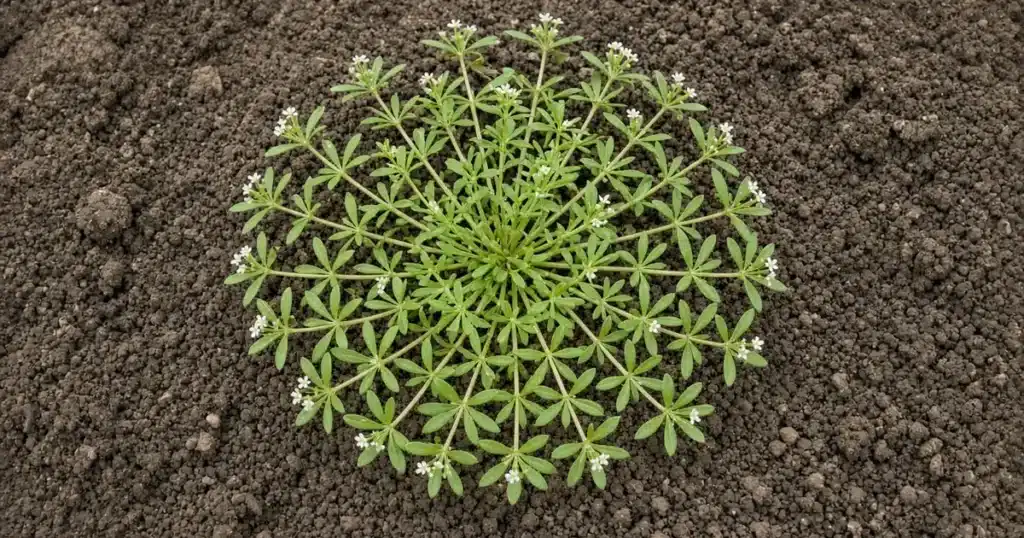
Quick answer: Carpetweed is a low summer annual that spreads into a flat, circular mat with whorls of narrow leaves and tiny white flowers. NC State says it is easy to remove by pulling or hoeing and should come out before it blooms. Maryland says hand pulling is easier in moist soil. Mulch bare spots afterward.
What Is Carpetweed?
A flat, fast summer annual. NC State Extension describes carpetweed as a prostrate, flowering summer annual weed that spreads rapidly to create a dense mat of foliage resembling a carpet. It grows in sunny disturbed areas, including tilled gardens, newly planted lawns and roadsides.
The University of Maryland Extension calls carpetweed a non native summer annual broadleaf weed that spreads by seed and forms a circular mat. Our overview of weed control in outdoor cannabis covers the general plan, and this guide focuses on a weed that thrives in the open soil between young plants.
How Do You Identify Carpetweed?
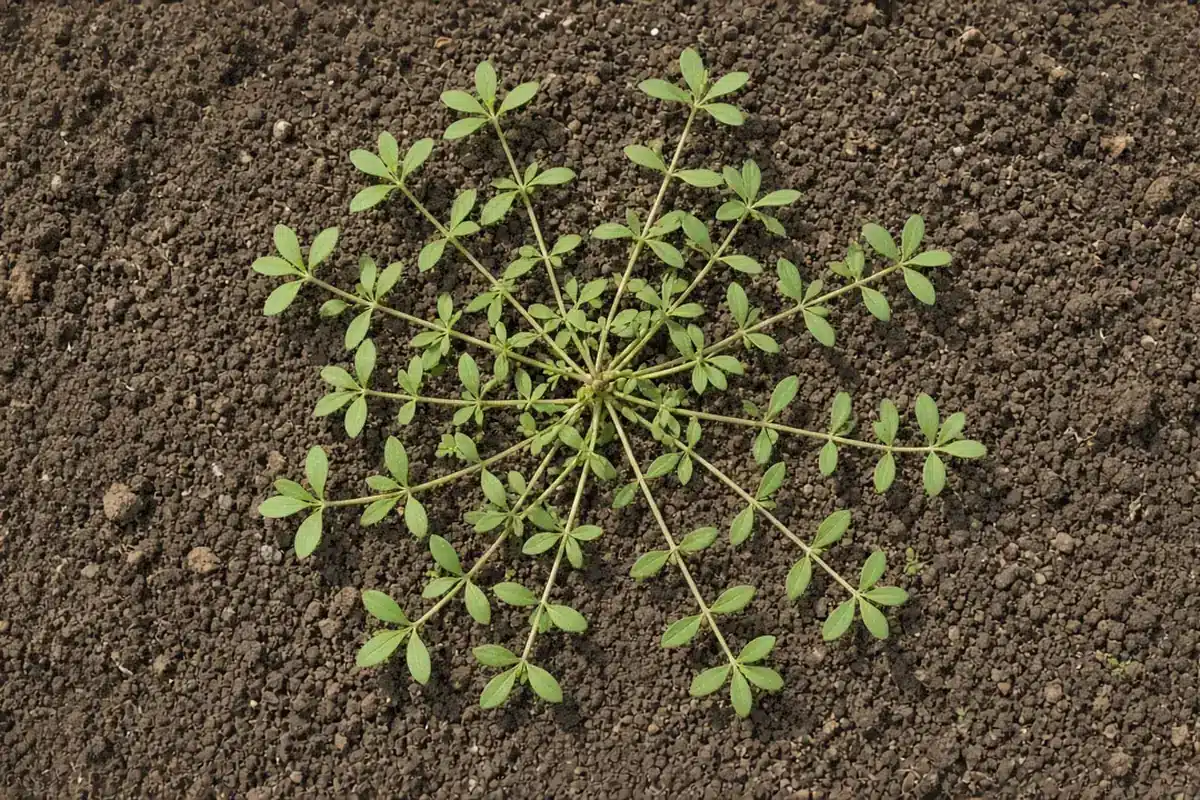
Look down at the soil. NC State says carpetweed creates a mat about 5 inches high that is often circular. Other features from NC State and Maryland:
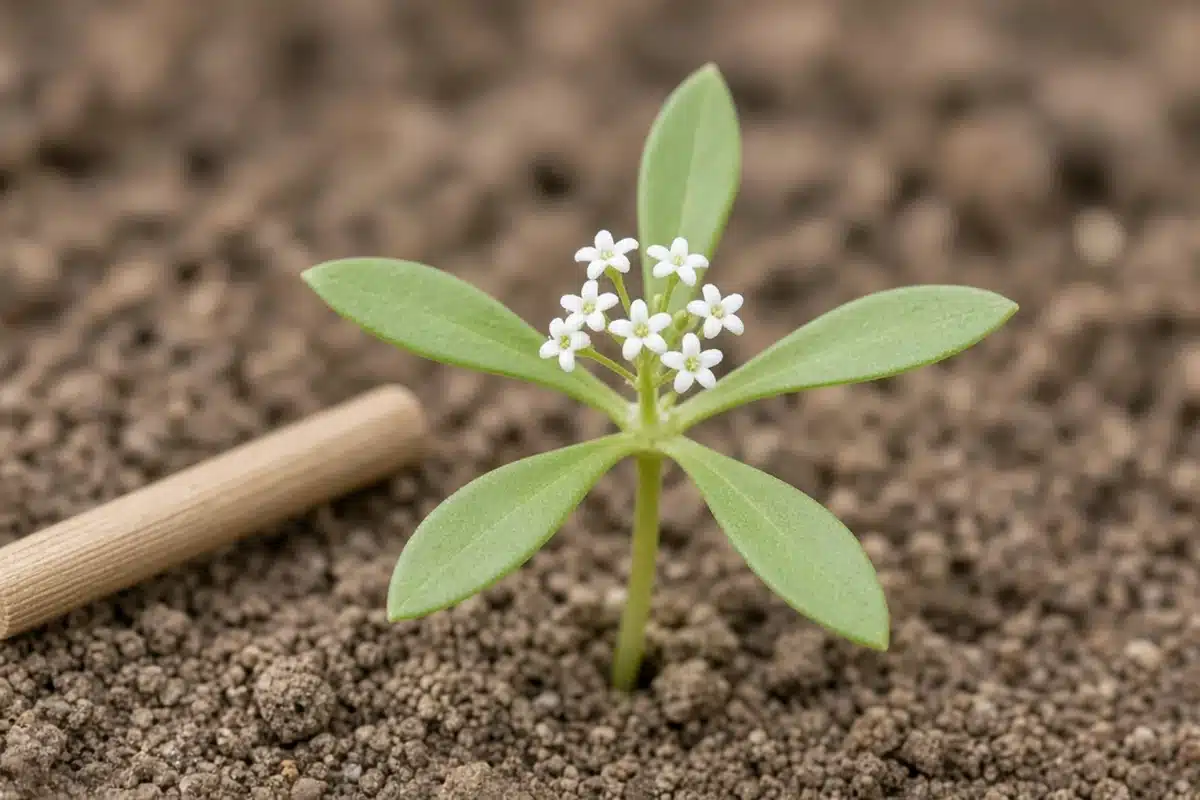
- Leaves. Whorls of three to eight long, narrow leaves at each node. NC State says they are dull green, smooth along the edges and hairless.
- Color. Maryland describes the leaves as smooth and light green.
- Roots. NC State says it grows from a sparsely branched central taproot.
- Flowers. Small clusters of two to five flowers in the leaf axils, each about 1/4 inch across.
- Flower parts. NC State says each flower has five petal like sepals and no petals, white to greenish white on top.
- Seed. Egg shaped capsules holding up to 35 tiny reddish brown seeds.
NC State adds that as it spreads, carpetweed can climb over nearby plants and obstacles.
How Is Carpetweed Different From Other Mat Weeds?
Count the leaves at each joint. NC State says carpetweed carries whorls of three to eight leaves at intervals along the stems, and Maryland describes the leaves as smooth and light green. A ring of narrow leaves at every node is the quickest field check.
If a wiry mat grows along a packed path instead, compare it with prostrate knotweed in cannabis beds. Both mat weeds are managed the same way, by pulling or hoeing young plants before they set seed.
Why Does Carpetweed Matter Near Cannabis?
It really loves open ground. NC State says carpetweed prefers open disturbed sites because it is not competitive with other vegetation and does not do well when shaded by taller plants. A newly planted cannabis bed, with lots of sunny soil between small plants, fits that description.
It also seeds itself. NC State says carpetweed spreads by reseeding and often forms colonies. Maryland says seeds keep germinating throughout the growing season. A missed mat can reseed and form colonies, as NC State notes.
When Does Carpetweed Grow?
Once soil warms. Maryland says seeds begin to germinate as soils warm in early spring and continue throughout the growing season. NC State says it germinates in late spring in warm soil and spreads rapidly.
NC State says the small flowers appear in midsummer and continue through early fall, and Maryland says flowers form in mid to late summer. Check bed edges and the open soil between plants from late spring onward, and remove mats before they flower.
Why Does Shade Help?
Carpetweed does not compete well. NC State says it does not do well when shaded by taller plants, and Maryland says dense turf that competes well helps prevent it in lawns. In a garden, the same idea applies to bare soil.
UC IPM’s landscape guide advises establishing new plantings quickly to cover bare areas and shade out weeds, and says mulch prevents weed seed germination by blocking sunlight. Mulch between young cannabis plants and consider a living cover on resting ground. Our guide to cover crops for cannabis explains the options.
How to Control Carpetweed in a Cannabis Bed
- Learn the leaf whorls. NC State describes whorls of three to eight narrow leaves at each node.
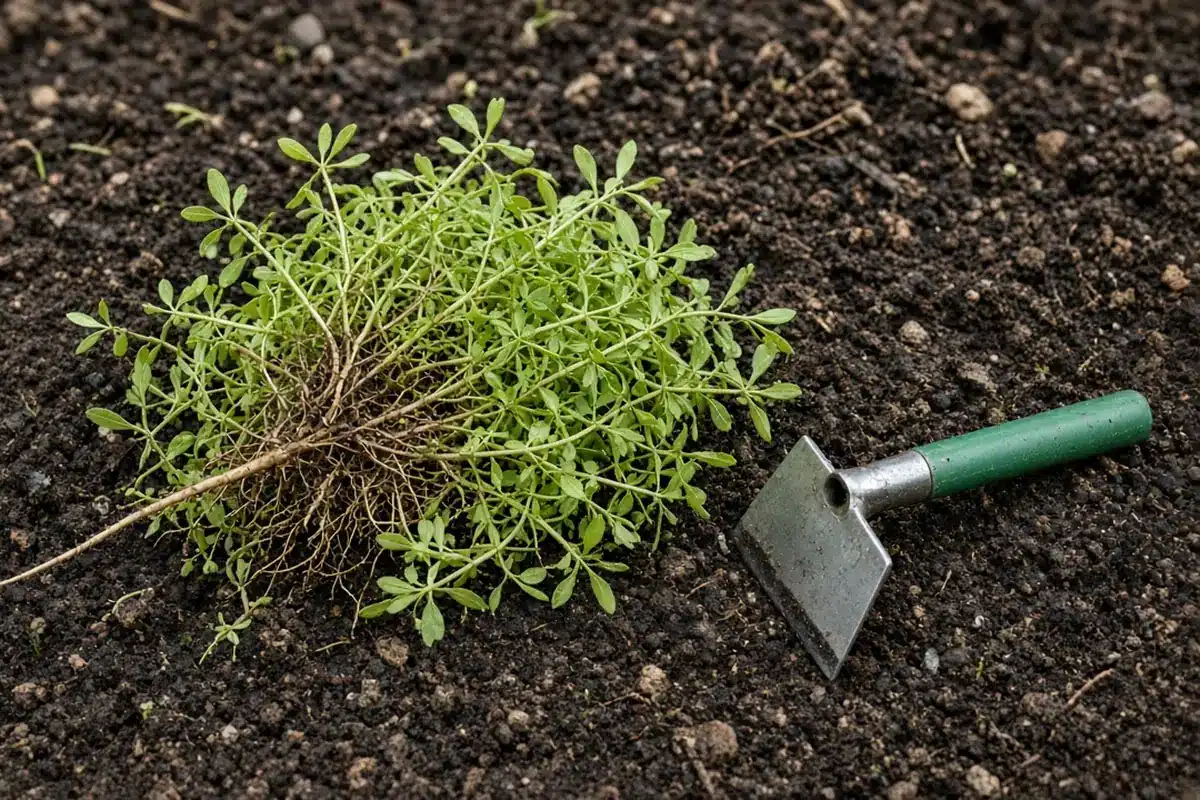
- Pull in moist soil. Maryland says hand pulling is easier when the soil is moist.
- Hoe young mats. NC State says carpetweed is easy to remove by pulling or hoeing.
- Act before it blooms. NC State says removing it before bloom prevents the spread of seed.
- Check all season. Maryland says seeds keep germinating throughout the growing season.
- Cover bare soil. NC State says carpetweed does not do well when shaded by taller plants.
- Mulch between plants. UC IPM recommends a medium mulch kept 3 to 4 inches deep. Our guide to mulch for cannabis compares materials.
Carpetweed at a Glance
| Subject | Extension finding | Attribution |
|---|---|---|
| Life cycle | Summer annual | NC State, Maryland |
| Habit | Circular mat (both), 5 inches high (NC State) | NC State, Maryland |
| Leaves | Whorls of three to eight | NC State |
| Flowers | Small, white (both), greenish white (NC State) | NC State, Maryland |
| Seed | Up to 35 per capsule | NC State |
| Weak spot | Does poorly in shade | NC State |
Should You Use Herbicides Near Cannabis?
No. Pull, hoe shallowly and mulch. Remember that EPA has not registered any herbicide for use on marijuana, and state rules vary, so check with your state agriculture department. UC IPM says home gardeners who hand weed and mulch should not need herbicides. Before you plant cannabis outdoors, check your state’s home grow law.
Troubleshooting Carpetweed
New mats keep appearing. Maryland says seeds germinate throughout the growing season. Check every week or two.
It is climbing over seedlings. NC State says carpetweed can climb over nearby plants. Pull it gently from the center.
Pulling is hard in dry soil. Maryland says hand pulling is easier when the soil is moist. Pull after rain or a watering.
Mats fill the gaps between plants. NC State says it does poorly in shade. Mulch or cover the open soil.
It flowered before you got to it. NC State says to remove it before bloom. Bag mats that already flowered.
At Kind Seed Co, we see a flat green circle on bare soil as a quick five minute job, as long as we catch it early.
Frequently Asked Questions
Is carpetweed an annual?
Yes. NC State calls carpetweed a prostrate summer annual, and Maryland describes it as a non native summer annual broadleaf weed that spreads by seed. Each plant lives for one warm season, so the main goal is to stop seed. Pull or hoe mats before their tiny white flowers appear in midsummer.
How can I identify carpetweed?
Look for a flat, often circular mat about 5 inches high with whorls of three to eight narrow, smooth leaves at each node, as NC State describes. Tiny white to greenish white flowers sit in small clusters where the leaves meet the stem. Maryland adds that the leaves are smooth and light green.
How do I get rid of carpetweed?
Pull or hoe it. NC State says carpetweed is easy to remove by pulling or hoeing and should be removed before it blooms. Maryland says hand pulling is easier when the soil is moist. After removal, mulch the bare soil so new seedlings have less light and room to start.
When does carpetweed germinate?
Maryland says seeds begin to germinate as soils warm in early spring and continue through the growing season. NC State says it germinates in late spring in warm soil. Either way, new mats can appear all summer, so check the open soil between cannabis plants every week or two.
Why does carpetweed grow in my beds?
It favors open, sunny ground. NC State says it prefers open disturbed sites because it is not competitive and does not do well when shaded by taller plants. Freshly planted beds with bare soil between small plants suit it well. Mulch and denser plantings help keep it out.
Sources
- NC State Extension Gardener Plant Toolbox, Mollugo verticillata: https://plants.ces.ncsu.edu/plants/mollugo-verticillata/
- University of Maryland Extension, Carpetweed: https://extension.umd.edu/resource/carpetweed
- UC Statewide IPM Program, Weed Management in Landscapes: https://ipm.ucanr.edu/home-and-landscape/weed-management-in-landscapes/


