
Morningglory in Cannabis Gardens: Vines and Seed Control
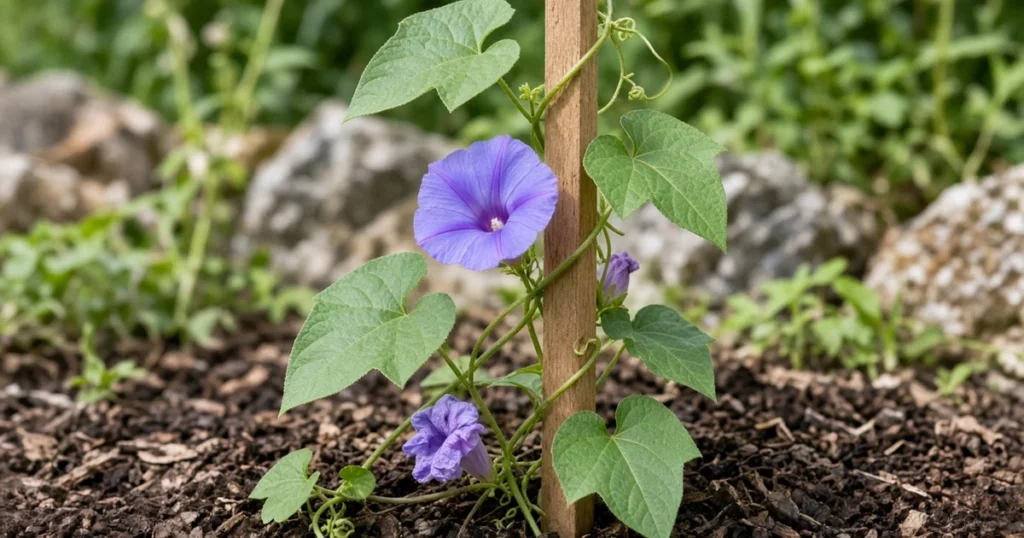
Quick answer: Annual morningglory is a twining vine with heart shaped or three lobed leaves and funnel flowers. UC IPM says to destroy seedlings while small, because once vines twine up crop stems they are hard to remove without injury. Purdue says to pull seedlings before they reach 5 inches and to watch garden edges.
What Is Morningglory?
A climbing broadleaf vine. The University of California Statewide IPM Program (UC IPM) describes morningglories as summer annual or perennial broadleaf plants. This guide covers several closely related annual species together, as UC IPM and Purdue do, since they look and behave alike in a garden. Several are grown as ornamentals, but UC IPM notes that under favorable conditions they become troublesome weeds, and calls them a major farm weed problem in parts of California.
Purdue University’s Vegetable Crops Hotline describes annual morningglories as twining vines that can grow up to 10 feet long. In a cannabis garden, that reach is the whole problem. A vine that starts at the base of a plant can wrap its way up the main stem and into the branches. Our overview of weed control in outdoor cannabis covers the wider picture.
How Do You Identify Morningglory?
Start by looking at the seed leaves. UC IPM says morningglory cotyledons are butterfly shaped, more deeply notched and much larger than those of field bindweed. The first true leaves are heart shaped with deep lobes at the base.
Mature plants are easier still:
- Stems. Long stems that climb and twine, UC IPM says.
- Leaves. Large, heart shaped or three lobed, and alternate along the stem.
- Flowers. Funnel shaped, ranging from violet or blue to pink and red depending on the species, according to UC IPM. Purdue says flowers bloom from July into November.
- Fruit. Pods that release seeds through slits, UC IPM notes. Purdue gives seed size as about 4 to 6 mm.
How Is Morningglory Different From Field Bindweed?
Size and life cycle. UC IPM lists field bindweed as a similar plant and separates them at the seedling stage, where morningglory seed leaves are much larger and more deeply notched. UC IPM also notes that seedlings of the two can be told apart early, so a close look at the seed leaves is the quickest way to confirm what you are pulling.
Why Does Morningglory Keep Coming Back?
The seed is long lived and sprouts from deep soil. UC IPM says morningglory seeds remain viable in soil for long periods and germinate from a depth of 4 inches or more, much deeper than most annuals. Purdue reports the same 4 inch figure.
That depth means a thin layer of mulch will not stop every seedling, and turning the soil can wake up seed that was buried years ago. Mississippi State University Extension puts the stakes plainly in its morningglory guide: one weed seed is enough to start an infestation.
When Do Morningglory Seedlings Appear?
It often shows up right after you water. UC IPM says most seedlings emerge following irrigation, though they may also show up when surface soil is too dry for other annuals to sprout. If you hand water or run drip lines, check the wet zone around each plant a few days later. Our guide to drip irrigation for cannabis shows how to keep water close to the root zone.
Why Pull Morningglory So Early?
Because it gets hard to handle fast. UC IPM says control is critical from crop emergence to harvest, and that seedlings must be destroyed while small. Once they have twined up stems, they are difficult to control without injuring the crop. Purdue gives a clear target: remove seedlings before they reach 5 inches.
How to Control Morningglory in a Cannabis Bed
- Scout three times a season. Purdue recommends scouting before planting, during the season and after harvest so you know where vines are coming from. The after harvest check fits well with our fall garden cleanup after cannabis harvest routine.
- Check after each watering. UC IPM says most seedlings follow irrigation. Look for large butterfly shaped seed leaves near your plants.
- Pull before 5 inches. Purdue says to remove seedlings before they reach that height. At that size the vine has not wrapped anything yet.
- Unwind, then pull. If a vine has started climbing, unwrap it gently from the cannabis stem before you pull the base, so you do not tear the branch it was holding.
- Use a stale seedbed. Purdue suggests a stale seedbed with shallow cultivation, letting a flush of seedlings sprout and then removing them before you plant. UC IPM’s landscape guide agrees that cultivation should stay shallow, since deep tilling brings buried seed up.
- Cover the soil. Purdue mentions plastic mulch with small planting holes. Organic mulch also helps, and our guide to mulch for cannabis compares options.
- Manage the edges. Purdue points to fence rows and field edges as sources. Pull vines on fences near your beds before they flower.
Morningglory at a Glance
| Subject | Extension finding | Attribution |
|---|---|---|
| Life cycle | Summer annual or perennial | UC IPM |
| Vine length | Up to 10 feet | Purdue |
| Bloom period | July into November | Purdue |
| Seed depth | Germinates from 4 inches or more | UC IPM, Purdue |
| Removal target | Before seedlings reach 5 inches | Purdue |
| Seed life | Viable in soil for long periods | UC IPM |
Should You Use Herbicides Near Cannabis?
No. Pull, cultivate shallowly and mulch. No EPA registered herbicide label lists cannabis as a use site, and state rules vary, so check your state agriculture department. UC IPM says herbicides should not normally be needed by home gardeners.
Troubleshooting Morningglory
Seedlings appear even under mulch. UC IPM says seed sprouts from 4 inches or deeper. Keep pulling the few that push through and avoid turning the soil.
A vine is wrapped around a main stem. UC IPM warns that twined vines are hard to remove without crop injury. Unwind it slowly and cut the vine at the soil line if it will not let go.
New vines keep coming in from the fence. Purdue recommends managing fence rows and edges. Pull those vines before they flower.
Seedlings show up after every watering. UC IPM ties emergence to irrigation. Water at the root zone so less bare soil gets wet.
You are not sure if it is bindweed. UC IPM says morningglory seed leaves are larger and more deeply notched. Compare a few seedlings side by side to be sure.
Hand pulling, shallow hoeing and mulch keep most annual weeds in check in cannabis beds, and the Kind Seed Co weed guides cover more species.
Sources
- UC Statewide IPM Program, Morningglories, Weed Gallery: https://ipm.ucanr.edu/weeds-identification-gallery/morningglories/
- Purdue University Vegetable Crops Hotline, Morningglories: https://vegcropshotline.org/article/morningglories/
- Mississippi State University Extension, Weed Identification: Morningglory: https://extension.msstate.edu/publications/weed-identification-morningglory
- UC Statewide IPM Program, Weed Management in Landscapes: https://ipm.ucanr.edu/home-and-landscape/weed-management-in-landscapes/
FAQ
Is morningglory an annual or a perennial?
Both kinds exist. UC IPM describes morningglories as summer annual or perennial broadleaf plants, and Purdue focuses on the annual vines that return from seed. In most gardens the annual types are the main problem, so stopping seed production each year is the most important part of keeping them out of cannabis beds.
How deep can morningglory seed sprout from?
UC IPM says morningglory seeds germinate from a depth of 4 inches or more, which is much deeper than most annual weeds. Purdue reports the same figure. Because of that, avoid deep digging that lifts old seed toward the surface, and expect a few seedlings to push through mulch now and then.
When should I pull morningglory seedlings?
Pull them early. Purdue says to remove seedlings before they reach 5 inches, and UC IPM says to destroy them while small, because once they twine up stems they are hard to remove without injuring the crop. Checking the soil a few days after watering helps you find them at the right stage.
Why do morningglory vines show up near my fence?
Purdue lists fence rows and field edges as places where morningglory grows and spreads into planted areas. Vines left on a fence can flower and drop seed that UC IPM says stays viable in soil for long periods. Pulling those edge vines before they bloom protects the beds next to them.


