
Prostrate Knotweed in Cannabis Beds and Paths
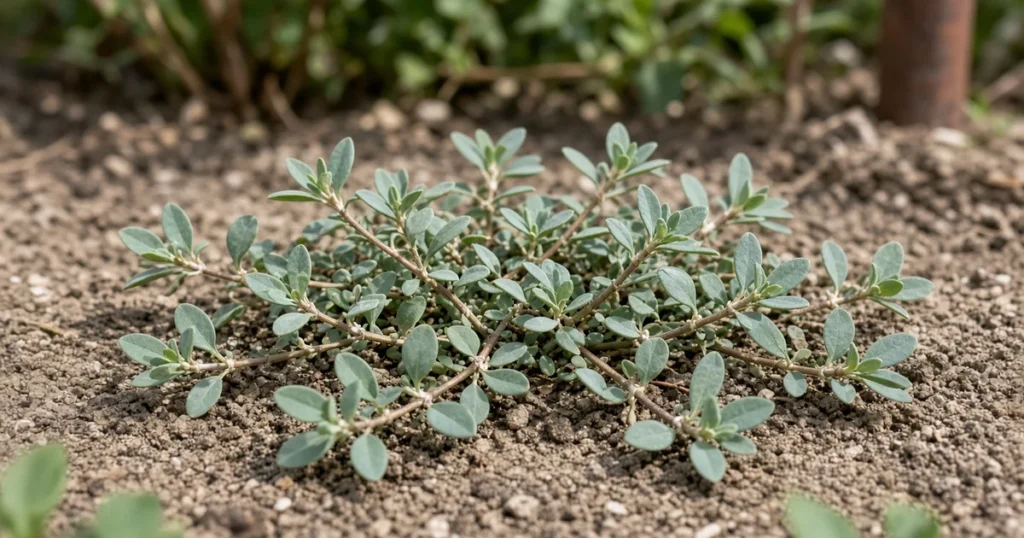
Quick answer: Prostrate knotweed is a low summer annual that forms wiry mats on compacted soil along paths and bed edges. UC IPM says preventing compaction is one of the most important controls. Pull or hoe young plants when the soil is moist, spread out foot traffic, and keep coarse mulch 3 to 4 inches deep.
What Is Prostrate Knotweed?
A mat forming summer annual that thrives where soil gets trampled. University of Maryland Extension describes prostrate knotweed as a summer annual broadleaf that spreads by seed, with wiry stems that form a mat. NC State Extension’s TurfFiles calls it a low growing summer annual or perennial that is very competitive in compacted soils, and often a problem along driveways, sidewalks and beaten paths.
The University of California Statewide IPM Program (UC IPM) covers the closely related common knotweed in its Pest Notes and lists names like wiregrass, matweed and doorweed. UC IPM says it is found in gardens, yards and crops and tolerates soils compacted by foot traffic, which is why it lines so many paths. Our overview of weed control in outdoor cannabis covers the wider picture.
How Do You Identify Prostrate Knotweed?
Look for swollen joints along thin, wiry stems. UC IPM says the stem nodes are encircled by papery sheaths and slightly swollen, giving the knotlike look behind the name. Other clues:
- Habit. Numerous slender stems branch out from a central taproot to form a tough mat, according to NC State. UC IPM says mats can reach 3 to 4 feet across.
- Leaves. Small, smooth, dull blue green and alternate along the stem, NC State says. Maryland notes that young leaves are long and slender while older leaves are smaller and duller.
- Flowers. Small and easy to miss, tucked where leaves meet the stem. Maryland describes them as white or yellow, and UC IPM as white to green with a pinkish tinge.
- Root. UC IPM says the single taproot can reach more than 18 inches deep.
- Seedlings. NC State says new seedlings are often mistaken for grasses in their earliest stage.
What Looks Like Prostrate Knotweed?
Spotted spurge is the usual mixup. UC IPM says the easy way to tell them apart is the white milky sap that oozes from broken spurge stems. Knotweed has none. Snap a stem and look.
Why Does Knotweed Love Paths and Bed Edges?
It tends to win on compacted soil. UC IPM says common knotweed readily invades trampled and compacted areas where other weeds struggle, including gardens, foot paths and gravel areas. It often germinates in cracks in compacted soil. Maryland says it grows in areas with heavily trafficked, compacted soils.
That makes the paths between cannabis rows prime ground. Our guide to soil compaction in cannabis beds explains how packed soil affects roots and how to loosen it.
When Does Prostrate Knotweed Sprout?
It sprouts early. NC State says it germinates with the first warm temperatures in spring, and UC IPM says common knotweed germinates in late winter or early spring when there is enough moisture. UC IPM adds that it grows slowly and upright at first before flattening into a mat. Flowering can run from March through October in UC IPM’s description, and Maryland lists blooms from midsummer through fall.
How Long Does Knotweed Seed Last?
Most likely a long time. UC IPM says seed in the soil is probably long lived, like other members of its genus, and that seeds develop low to the ground where they are hard to notice. Controlling young plants before they seed, UC IPM says, reduces the amount of seed in the soil in later years.
How to Control Prostrate Knotweed in a Cannabis Bed
- Scout paths in early spring. NC State says knotweed sprouts with the first warm spring temperatures. Look closely, since young seedlings resemble grass.
- Pull when the soil is moist. Maryland says hand pulling or a weeding tool works best at the start of an infestation and on young weeds, and moist soil makes it easier.
- Use a swivel hoe. UC IPM says common knotweed is easy to remove with tools like a swivel hoe, and that frequent manual removal plus mulch should manage it in most home gardens.
- Stop seed early. UC IPM advises controlling young plants so they cannot produce seed.
- Spread out traffic. UC IPM recommends spreading foot traffic over a broader area, using fences or hedges to reduce traffic, and installing rock or paved paths where traffic cannot be avoided. Permanent paths are easier to plan with raised beds for cannabis.
- Stay off wet soil. UC IPM says not to trample areas soon after irrigation or rainfall.
- Mulch with coarse material. UC IPM says organic mulch used alone should be 3 to 4 inches thick, coarse rather than fine, and replenished each year. See our guide to mulch for cannabis.
Prostrate Knotweed at a Glance
| Subject | Extension finding | Attribution |
|---|---|---|
| Life cycle | Summer annual, sometimes perennial | Maryland, NC State |
| Favored site | Compacted, heavily trafficked soil | UC IPM, Maryland, NC State |
| Mat size | 3 to 4 feet across | UC IPM |
| Taproot | Can exceed 18 inches | UC IPM |
| Sprouting | First warm spring temperatures | NC State |
| Mulch | Coarse organic mulch 3 to 4 inches, renewed yearly | UC IPM |
Should You Use Herbicides Near Cannabis?
No. Pull, hoe, mulch and manage traffic. No EPA registered herbicide label lists cannabis as a use site, and state rules vary, so check your state agriculture department. UC IPM says herbicides are not generally required for knotweed in home gardens.
Troubleshooting Prostrate Knotweed
It keeps returning along the same path. UC IPM ties knotweed to compaction. Loosen the soil, spread out traffic or pave the path.
Seedlings got mistaken for grass. NC State says young knotweed looks grassy. Check for the papery sheaths at leaf joints.
Plants snap off instead of pulling out. Maryland says moist soil makes pulling easier. Water first or wait for rain.
Weeds grow right through the mulch. UC IPM says fine mulch lets seed sprout. Switch to a coarser material at 3 to 4 inches.
You are not sure if it is spurge. UC IPM says spurge has milky sap. Knotweed stems do not.
Hand pulling, a swivel hoe, mulch and traffic control are enough for knotweed in most cannabis gardens, and the other Kind Seed Co weed guides are there if you want to read on.
Sources
- UC Statewide IPM Program, Common Knotweed Pest Notes: https://ipm.ucanr.edu/home-and-landscape/common-knotweed/
- University of Maryland Extension, Prostrate knotweed: https://www.extension.umd.edu/resource/prostrate-knotweed
- NC State Extension TurfFiles, Prostrate Knotweed: https://content.ces.ncsu.edu/prostrate-knotweed
FAQ
Why does prostrate knotweed grow along my garden paths?
UC IPM says common knotweed tolerates soil compacted by foot traffic and often sprouts in cracks of packed ground. Maryland and NC State both tie prostrate knotweed to heavily trafficked, compacted soils along paths and driveways. Where other plants struggle, knotweed fills in, so the paths beside cannabis beds are a natural home for it.
How do I tell prostrate knotweed from spotted spurge?
UC IPM gives an easy test. Break a stem. Spotted spurge oozes white milky sap and knotweed does not. Knotweed also has slightly swollen joints wrapped in thin papery sheaths, which gives the plant its name. Both form low mats, so this quick sap check is the fastest way to confirm what you have.
When is the best time to pull prostrate knotweed?
Pull it young and when the soil is moist. NC State says it sprouts with the first warm spring temperatures, and Maryland says hand pulling works best early in an infestation on young plants. UC IPM adds that removing young plants before they set seed lowers the amount of seed in the soil.
Does mulch work against prostrate knotweed?
Yes, with the right material. UC IPM says organic mulch used alone should be 3 to 4 inches thick and replenished each year. Coarse material drains well and reduces knotweed seedlings, while finer mulch can let weed seed sprout in it. UC IPM adds that landscape fabric works only if it is overlapped and no light reaches the soil.


