
Japanese Stiltgrass in Cannabis Gardens: Pull It Before Seed
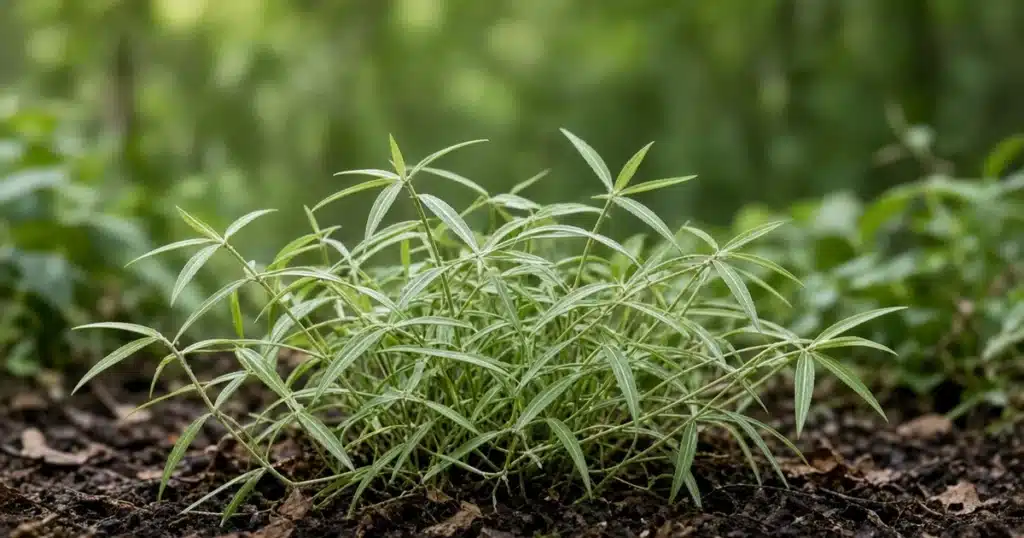
Quick answer: Japanese stiltgrass is an invasive summer annual grass with short, bamboo like leaves and a silvery midvein set off center. Maryland Extension says it pulls out by hand easily and should be stopped before it goes to seed. Pull it before it seeds, keep seed heads out of the compost and mulch bare soil.
What Is Japanese Stiltgrass?
An invasive annual grass that thrives at shady edges. NC State Extension says Japanese stiltgrass is a summer annual in the grass family that invades disturbed and undisturbed woodlands. It was accidentally brought into Tennessee around 1919 as packing material and has spread to 26 states, mainly in the eastern and central United States.
The University of Maryland Extension calls it an invasive summer annual that invades and alters disturbed soils in sun or shade. NC State lists roadsides, ditches, trail edges, farm fields, home landscapes and turf as places it grows. Our overview of weed control in outdoor cannabis covers the general plan.
How Do You Identify Japanese Stiltgrass?
Look closely at the midvein. NC State says each leaf has a silvery midvein that divides the leaf unevenly. Other features from NC State and Maryland:
- Leaves. Short and bamboo like, about 3 inches long and 1/2 inch across, with smooth edges.
- Color. Maryland describes a bright green grass with silver hairs down the center of the blade.
- Height. Maryland says it grows up to 2 feet tall. NC State says it can reach 3.5 feet.
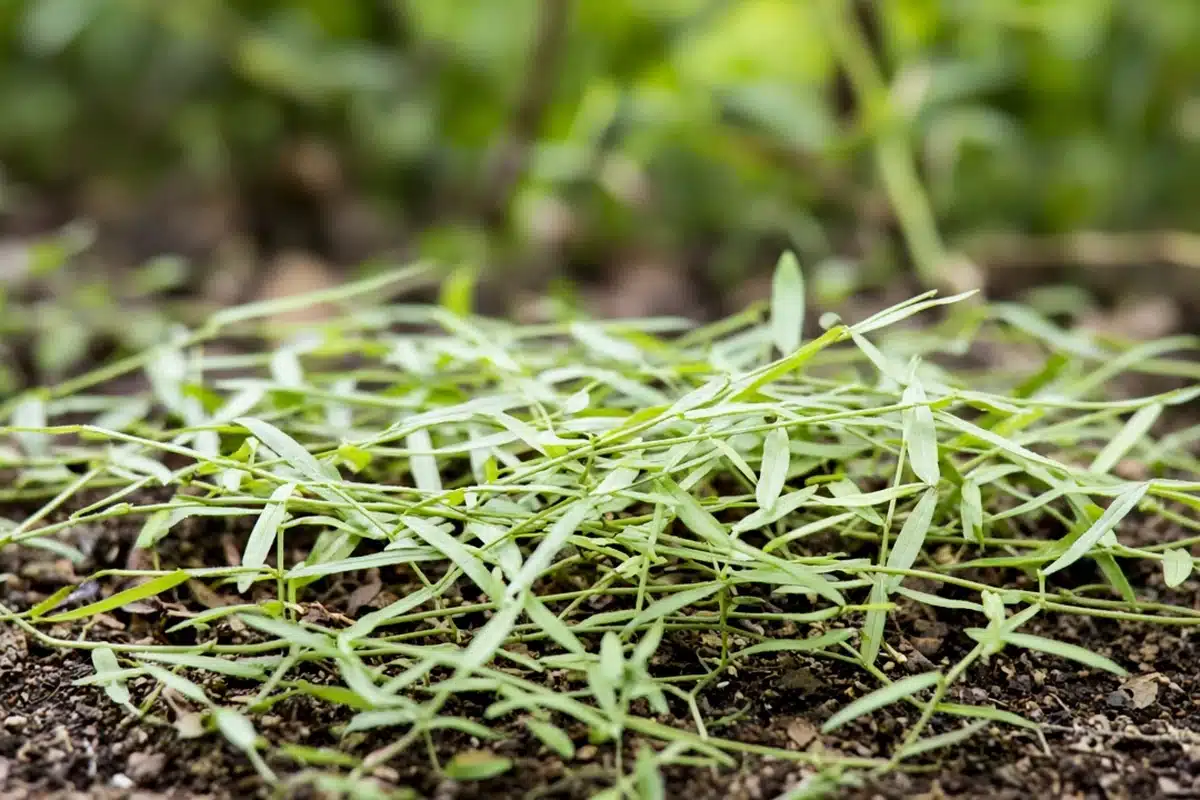
- Stems. Light green to reddish purple, smooth and round. Lower stems spread while upper stems stand more upright.
- Stilts. NC State says the lower stems are often raised off the ground by roots, which gives the plant its name.
- Roots. Maryland says the root system is weak and shallow.
NC State notes that the flowers can form fruit while still covered by the leaf sheaths.
How Does Japanese Stiltgrass Spread?
On anything that moves. Maryland says the sticky, tiny seeds spread on the fur and hooves of animals such as deer, by water and on shoes and clothes. NC State says the fruits are awned and bristly and are blown by the wind or stick to the fur of mammals.
It also produces a lot of seed. NC State says one plant can disperse 1,000 seeds, and Maryland says the seeds stay viable in the soil for many years. NC State adds that the plant spreads vegetatively too, and Maryland notes that it roots at the nodes. Clean your boots and tools after working in an infested area.
Why Does Japanese Stiltgrass Matter Near Cannabis?
It moves in from the edges. NC State says it prefers partly shaded, moist conditions but is very adaptable to other conditions and most soils. A garden next to woods, a creek or a shady fence line is an easy target.
Once it arrives, it builds up. NC State says few native insects feed on it, so there is little natural control on its spread. A patch that seeds for even one season can leave years of seed in the soil, according to Maryland. Catching it in the first year saves a lot of work later.
When Does Japanese Stiltgrass Grow?
Anywhere from spring to fall. Maryland says seeds germinate in late winter or early spring, and adds that stiltgrass germinates earlier than crabgrass. It elongates quickly in fall, then produces seed, and dies back in the fall.
That timing gives you a clear window. Maryland’s advice for larger areas is to act in late summer, before the plant goes to seed in the fall. In garden beds, pull plants any time you see them through summer. Our guide to fall garden cleanup after cannabis harvest is your last chance before seed drops.
Should You Compost Japanese Stiltgrass?
Not once it has seed heads. Maryland says not to compost plants with seed heads. Bag those plants and remove them from the garden instead.
Young plants without seed are a different story, but it is safest to keep all stiltgrass out of a home pile, since it is hard to tell when the hidden seed has formed. NC State notes that flowers can form fruit while still covered by the leaf sheaths. Our guide to composting cannabis garden waste covers what else to keep out of the pile.
How to Control Japanese Stiltgrass in a Cannabis Garden
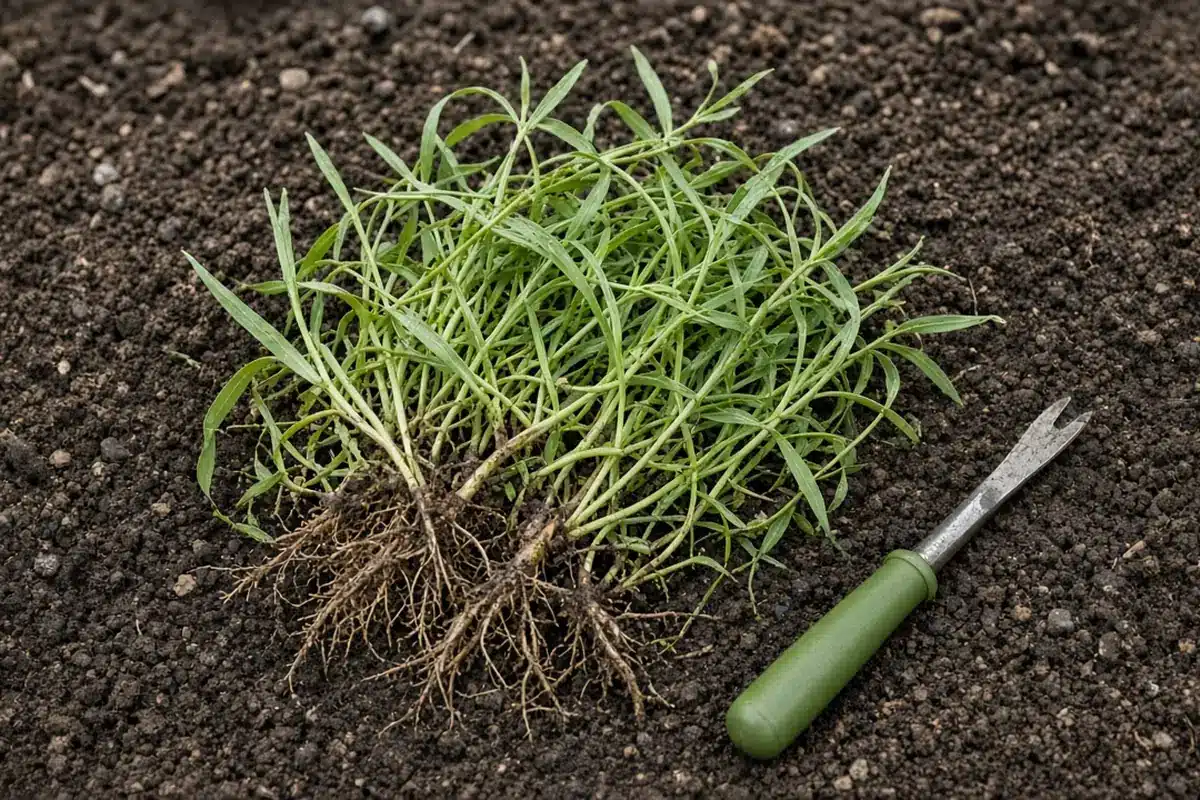
- Learn the off center midvein. NC State says a silvery midvein divides each leaf unevenly.
- Pull by hand. Maryland says Japanese stiltgrass can be pulled out by hand easily.
- Pull when the soil is moist. Maryland says hand pulling is easier in moist soil.
- Stop seed. Maryland says to prevent plants from going to seed.
- Bag plants with seed heads. Maryland says not to compost plants with seed heads.
- Clean boots and tools. Maryland says seeds spread on shoes, clothes and animals.
- Mulch bare soil. UC IPM recommends a medium mulch kept 3 to 4 inches deep. Our guide to mulch for cannabis compares materials.
Japanese Stiltgrass at a Glance
| Subject | Extension finding | Attribution |
|---|---|---|
| Life cycle | Summer annual grass | NC State, Maryland |
| Height | 2 feet (Maryland), 3.5 feet (NC State) | Maryland, NC State |
| Key trait | Silvery midvein set off center | NC State |
| Roots | Weak and shallow | Maryland |
| Seed | Up to 1,000 per plant | NC State |
| Spread | Animals, water, shoes and clothes | Maryland |
Should You Use Herbicides Near Cannabis?
No. Pull, hoe shallowly and mulch. Remember that EPA has not registered any herbicide for use on marijuana, and state rules vary, so check with your state agriculture department. UC IPM says home gardeners who hand weed and mulch should not need herbicides. Before you plant cannabis outdoors, check your state’s home grow law.
Troubleshooting Japanese Stiltgrass
It keeps coming back each year. Maryland says seeds stay viable in the soil for many years. Keep pulling before seed forms.
It showed up after a woods walk. Maryland says seeds ride on shoes and clothes. Clean boots before entering the garden.
Plants root along the ground. Maryland says it roots at the nodes. Pull the whole stem, not just the top.
You missed the seed window. Maryland says it produces seed in fall. Bag plants and keep them out of the compost.
A shady edge is full of it. NC State says it prefers partly shaded, moist sites. Clear that edge first.
At Kind Seed Co, we pull stiltgrass along the shady fence line every few weeks in summer, since it lifts out so easily.
Frequently Asked Questions
Is Japanese stiltgrass an annual?
Yes. NC State and Maryland both call Japanese stiltgrass a summer annual grass. Maryland says seeds germinate in late winter or early spring, the plant produces seed in fall and then dies back. Because each plant lives one season, stopping seed production is the main way to shrink a patch over time.
How can I identify Japanese stiltgrass?
Look for short, bamboo like leaves with a silvery midvein that sits off center, as NC State describes. Maryland says it is a bright green grass with silver hairs down the center of the blade and a weak, shallow root system. NC State adds that the lower stems are often raised on roots.
How do I get rid of Japanese stiltgrass?
Pull it. Maryland says Japanese stiltgrass can be pulled out by hand easily and that the key is to prevent plants from going to seed. Pull when the soil is moist, bag any plants with seed heads and mulch the cleared ground so new seedlings have less room to start.
Can I compost Japanese stiltgrass?
Not if it has seed heads. Maryland says not to compost plants with seed heads. NC State notes that flowers can form fruit while still covered by the leaf sheaths, so seed can be hard to spot. Bagging pulled plants and removing them from the garden is the safest choice.
How does Japanese stiltgrass spread?
Maryland says the sticky, tiny seeds spread on the fur and hooves of animals such as deer, by water and on shoes and clothes. NC State says one plant can disperse 1,000 seeds and that the plant also spreads vegetatively. Clean boots and tools after working near an infested area.
Sources
- NC State Extension Gardener Plant Toolbox, Microstegium vimineum: https://plants.ces.ncsu.edu/plants/microstegium-vimineum/
- University of Maryland Extension, Japanese Stiltgrass in Home Landscapes: https://extension.umd.edu/resource/japanese-stiltgrass-home-landscapes
- UC Statewide IPM Program, Weed Management in Landscapes: https://ipm.ucanr.edu/home-and-landscape/weed-management-in-landscapes/


