
Horsenettle in Cannabis Gardens: Prickly Perennial Guide
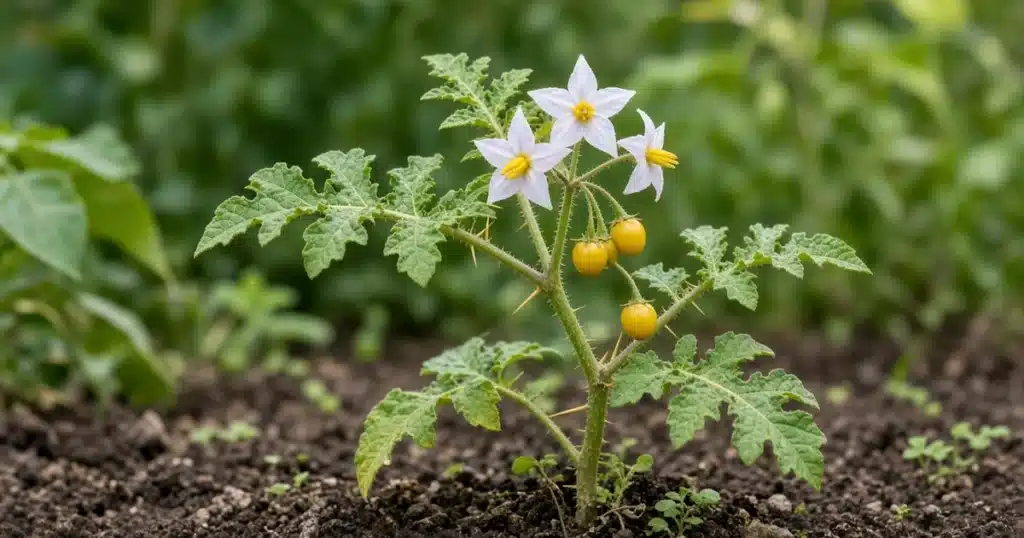
Quick answer: Horsenettle is a prickly perennial in the nightshade family with wavy, lobed leaves, white to pale violet star shaped flowers and yellow berries. NC State says it spreads by deep rhizomes and seeds, and all parts are poisonous if eaten. Wear gloves, dig out as much root as possible and remove plants before berries form.
What Is Horsenettle?
A native warm season perennial in the nightshade family. NC State Extension describes Carolina horsenettle as an erect or sprawling perennial herb or subshrub that spreads by rhizomes and seeds. It is found in the central and southern United States in pastures, cultivated fields, disturbed sites and roadsides, and NC State says it is considered a noxious weed in several states.
The University of Maryland Extension calls horsenettle a weed primarily of orchards and pastures, and also of vegetable gardens. Our overview of weed control in outdoor cannabis covers the general plan.
How Do You Identify Horsenettle?
Look closely for prickles. NC State says the stems and leaves carry prickles, and Maryland notes spines on the upper and lower midrib of the leaves. Other features from NC State and Maryland:
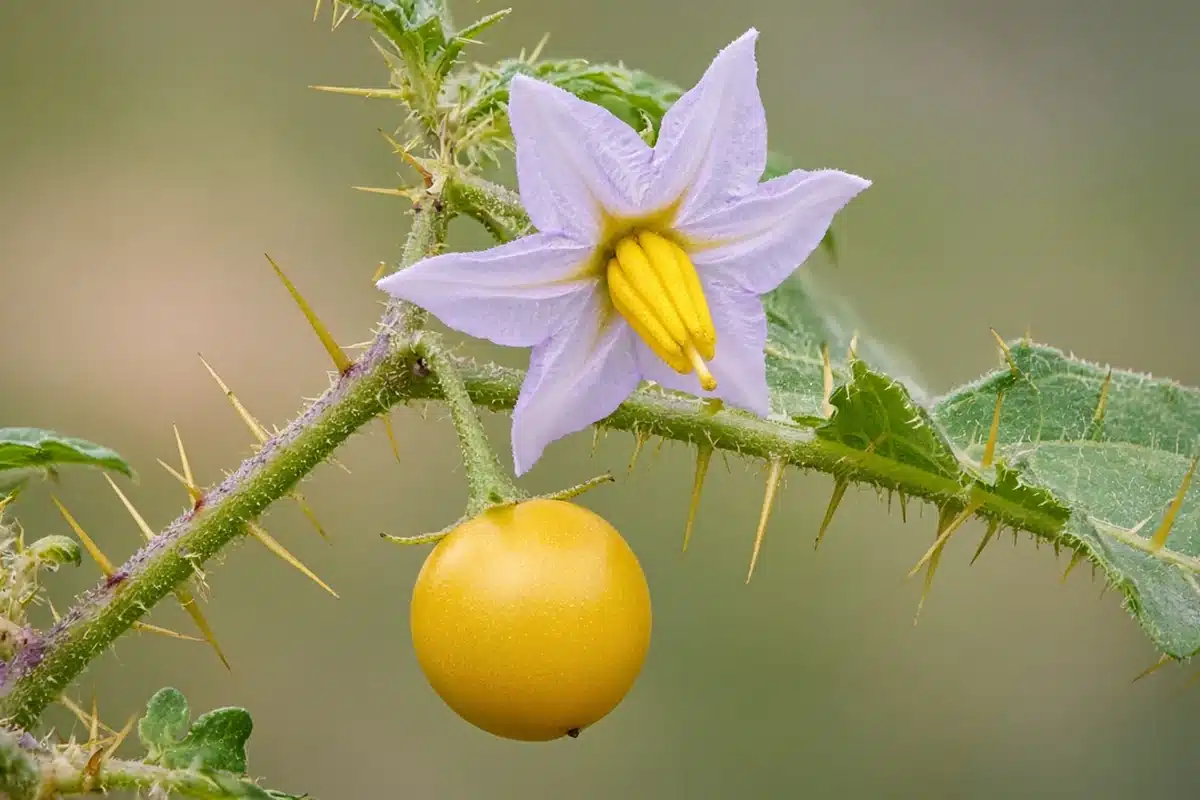
- Height. NC State says it can grow up to 4 feet tall. Maryland gives 1 to 3 feet.
- Leaves. Alternate, dull green and 2 to 6 inches long, with wavy or coarsely lobed edges and star shaped hairs.
- Smell. NC State says crushed leaves smell like potato.
- Stems. Prickly, angled at the nodes in a zigzag pattern, and woody with age.
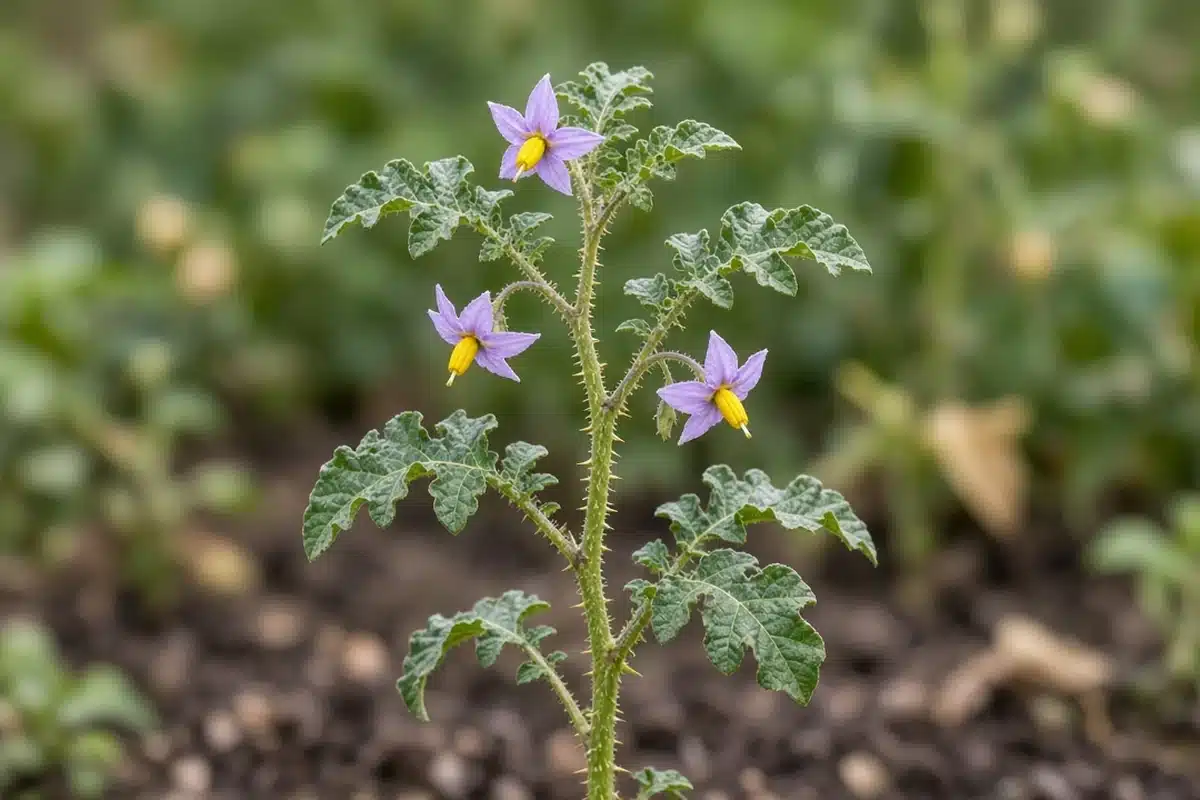
- Flowers. Star shaped, white to light violet, with protruding yellow stamens in the center.
- Berries. About 1/2 inch across, green like tiny tomatoes, then yellow and wrinkled.
NC State says the fruit ripens in fall and may last through winter, and Maryland notes the berries persist through winter.
Is Horsenettle Poisonous?
Yes. NC State says all parts of Carolina horsenettle are poisonous to livestock and humans if eaten. It lists solanine as the toxin and says the level is highest in the fall, with mature berries the most toxic.
NC State also says protective clothing and gloves should be worn when handling the plant because of the spines on the stems and leaves. Maryland gives the same advice, noting that the prickles can hurt. As a precaution, we keep children and pets away from the yellow berries.
Why Does Horsenettle Matter Near Cannabis?
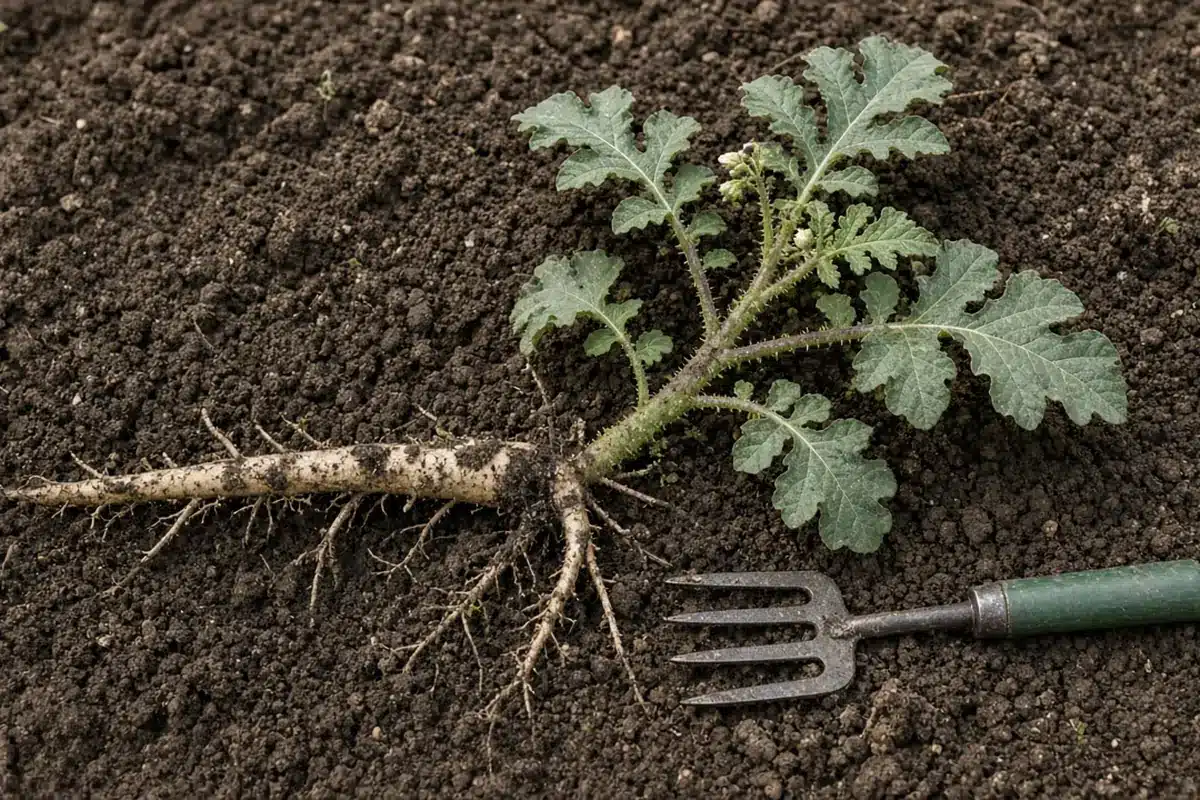
It spreads underground and is hard to clear. NC State says the plant has very deep taproots and spreading rhizomes, and that colonies are difficult to control and eliminate. Maryland says it reproduces by seeds and creeping rhizomes.
It also hosts garden pests. NC State says the Colorado potato beetle, eggplant flea beetle and tobacco hornworms feed on it. NC State adds that it is a weed of gardens or field crops with reduced tillage. Our guide to tilling vs no till cannabis beds explains how each approach affects weeds.
When Does Horsenettle Grow?
Through the warm season. NC State calls it a warm season perennial and says it blooms in summer and fall, with fruit ripening in fall and lasting into winter. New shoots return from the rhizomes each spring.
Act when shoots first appear in spring, before flowers open. Check bed edges, paths and fence lines, and keep checking every week or two. Our guide to fall garden cleanup after cannabis harvest is a good time to remove any berries before they drop.
What Soil Does Horsenettle Like?
Light soil, usually in full sun. Maryland says it thrives on sandy or gravelly soils. NC State says it prefers full sun, tolerates both wet and dry conditions and grows in sandy or loamy soils, and that it can easily become weedy and aggressive in disturbed sites.
Disturbed, sunny ground describes most garden beds. Keep soil covered between plants and remove any shoot that appears. UC IPM’s landscape guide says to dig up all roots and underground parts of perennial weeds without overly disturbing the soil.
How to Control Horsenettle in a Cannabis Garden
- Wear gloves and long sleeves. NC State and Maryland both advise protection from the prickles.
- Learn the flowers and berries. Look for star shaped flowers with yellow centers and small yellow berries, as NC State describes.
- Dig out the roots. Maryland says to remove all parts of the root and stem when cultivating.
- Act on young shoots. NC State says colonies are difficult to control once they spread.
- Recheck every week or two. New shoots from rhizome pieces are easiest to remove while small.
- Bag plants with berries. NC State says mature berries are the most toxic part.
- Mulch the cleared area. UC IPM recommends a medium mulch kept 3 to 4 inches deep. Our guide to mulch for cannabis compares materials.
Horsenettle at a Glance
| Subject | Extension finding | Attribution |
|---|---|---|
| Life cycle | Warm season perennial | NC State, Maryland |
| Height | 1 to 4 feet | NC State, Maryland |
| Key trait | Prickly stems and leaf midribs | NC State, Maryland |
| Flowers | White to light violet, yellow center | NC State, Maryland |
| Spread | Deep rhizomes and seeds | NC State, Maryland |
| Toxicity | All parts poisonous if eaten | NC State |
Should You Use Herbicides Near Cannabis?
No. Pull, hoe shallowly and mulch. Remember that EPA has not registered any herbicide for use on marijuana, and state rules vary, so check with your state agriculture department. UC IPM says home gardeners who hand weed and mulch should not need herbicides. Before you plant cannabis outdoors, check your state’s home grow law.
Troubleshooting Horsenettle
Shoots return after digging. NC State describes deep taproots and spreading rhizomes. Dig deeper and keep rechecking.
Hands get stuck by spines. Maryland says the prickles can hurt. Wear thick gloves.
Potato beetles show up nearby. NC State says Colorado potato beetles feed on horsenettle. Clear it from edges.
Yellow berries are on the ground. NC State says the fruit can last through winter. Bag it and remove it.
It thrives in a sandy corner. Maryland says it favors sandy or gravelly soils. Mulch that area well.
At Kind Seed Co, we never handle a nightshade family weed like this without gloves, and we bag every berry.
Frequently Asked Questions
Is horsenettle poisonous?
Yes. NC State says all parts of Carolina horsenettle are poisonous to livestock and humans if eaten, and that mature berries are the most toxic. It lists solanine as the toxin. NC State and Maryland both recommend gloves and protective clothing because of the prickles. As a precaution, keep children and pets away from the plant.
How do I get rid of horsenettle?
Dig it out and keep at it. Maryland says to remove all parts of the root and stem when cultivating, and to wear gloves. NC State says the plant has very deep taproots and spreading rhizomes, so colonies are hard to clear. Recheck every week or two and remove new shoots while they are small.
Is horsenettle related to tomatoes?
Yes. NC State says Carolina horsenettle is in the nightshade family, which also includes tomatoes, potatoes, eggplants and peppers. Maryland describes its flowers as potato or tomato like. NC State adds that Colorado potato beetles, eggplant flea beetles and tobacco hornworms feed on it, so it can host garden pests.
How can I identify horsenettle?
Look for a prickly plant with wavy or lobed leaves covered in star shaped hairs, as NC State describes. The flowers are star shaped, white to light violet, with yellow centers. NC State says the green berries look like tiny tomatoes and turn yellow and wrinkled, and crushed leaves smell like potato.
Where does horsenettle grow?
NC State says it grows in pastures, cultivated fields, disturbed sites and roadsides, and prefers full sun in sandy or loamy soil. Maryland calls it a weed of orchards and pastures that also shows up in vegetable gardens and thrives on sandy or gravelly soils. Check sunny bed edges and paths.
Sources
- NC State Extension Gardener Plant Toolbox, Solanum carolinense: https://plants.ces.ncsu.edu/plants/solanum-carolinense/
- University of Maryland Extension, Horsenettle: https://extension.umd.edu/resource/horsenettle
- UC Statewide IPM Program, Weed Management in Landscapes: https://ipm.ucanr.edu/home-and-landscape/weed-management-in-landscapes/


