
Carrot Tops Turning Yellow: Aster Yellows plus Dry Soil
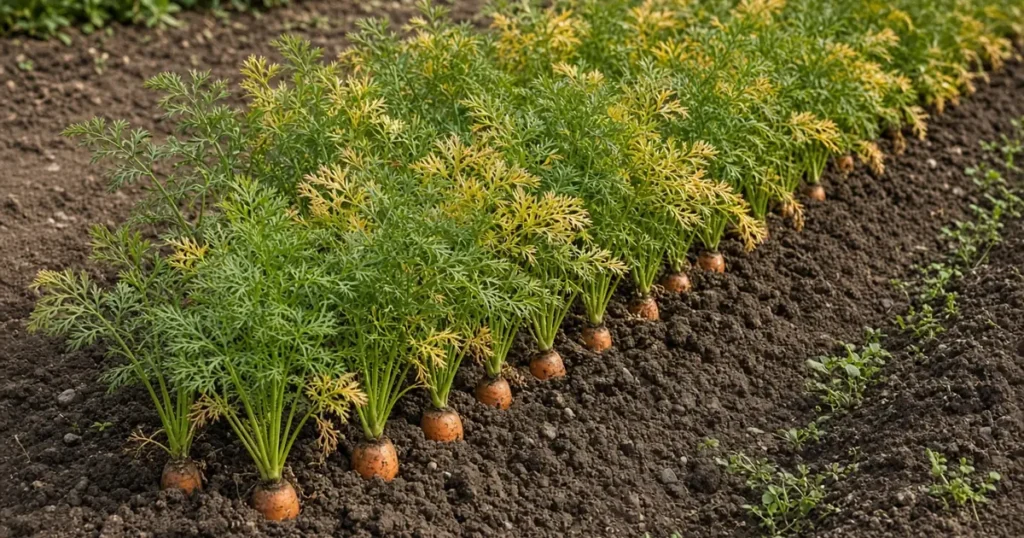
Carrot tops turning yellow are a common sign of aster yellows. Utah State University Extension notes this disease is caused by a phytoplasma spread by the aster leafhopper. New leaves turn yellow, small plus deformed, while older leaves turn purple red. Uneven watering can also stress carrots.
The short answer
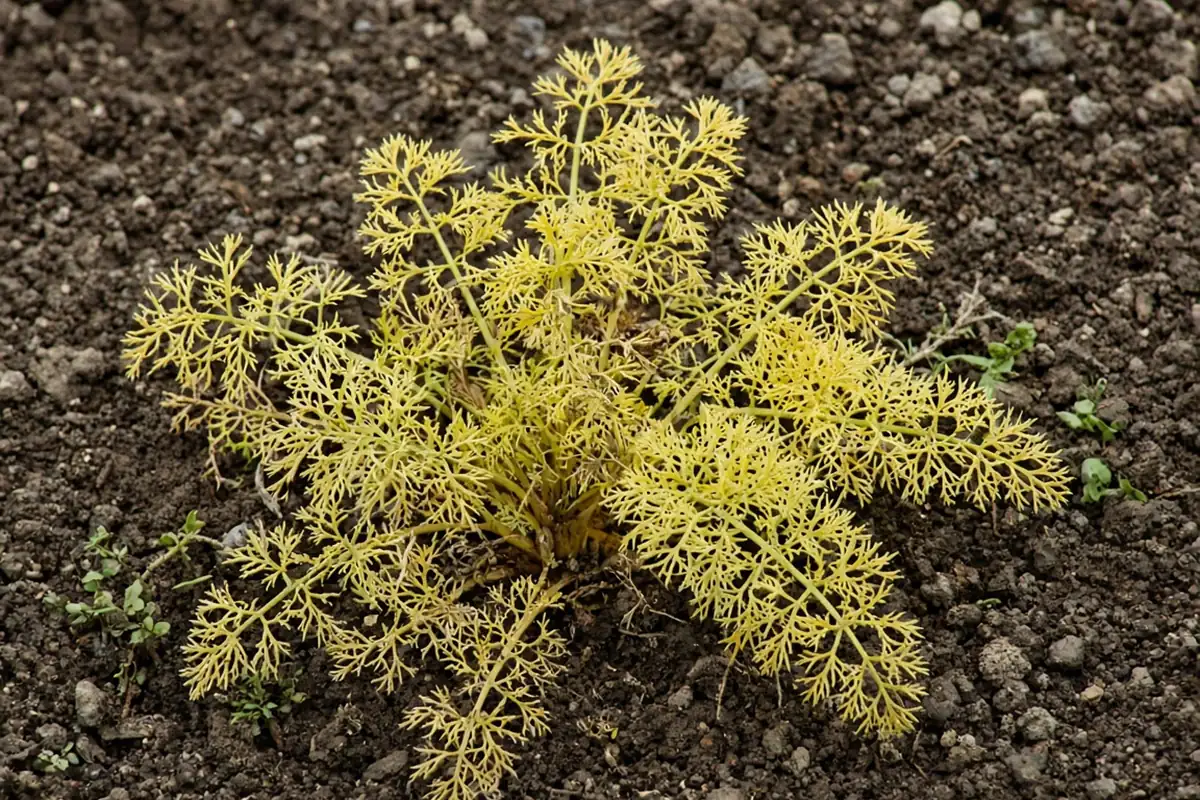
Yellow carrot tops with small, twisted new leaves plus purple red older leaves point to aster yellows. Utah State University Extension notes the aster leafhopper spreads it. University of Minnesota Extension notes infected plants never recover, so pull them. If leaves yellow without those signs, check soil moisture plus water evenly.
How do you spot aster yellows on carrots?
Extension services describe distinct symptoms on carrots.
| Plant part | Symptom | Source |
|---|---|---|
| New leaves | Yellow, small plus deformed | Utah State University Extension |
| Older leaves | Purple to red | Utah State University Extension |
| Crown | Many thin stems, a witches broom | University of Minnesota Extension |
| Taproot | Thin with many hairy roots | University of Minnesota Extension |
| Flavor | Roots often bitter | University of Wisconsin Extension |
Sources: Utah State University Extension, University of Minnesota Extension plus University of Wisconsin Extension.
How does aster yellows spread?
University of Minnesota Extension notes aster leafhoppers pick up the phytoplasma when they feed on infected plants. After about two weeks it reaches their salivary glands, plus they spread it each time they feed for the rest of their lives. Most leafhoppers fly north each season from southern states.
What else yellows carrot tops?
Water stress matters too. Utah State University Extension advises frequent, uniform irrigation for carrots plus notes high summer heat reduces growth plus quality. Over watering causes hairy, forked roots. If tops yellow evenly without twisted new growth, check soil moisture plus adjust watering.

How to: step by step
- Study the newest leaves.
- Check older leaves for purple red color.
- Pull a root plus check for hairy growth.
- Remove plants with aster yellows signs.
- Clear weed hosts such as dandelions.
- Water carrots evenly.
Troubleshooting
Twisted yellow new leaves: aster yellows. Pull the plant.
Purple red older leaves: aster yellows. Remove plus discard the plant.
Hairy forked roots: over watering. Water evenly plus less frequently.
For related reading see environmental stresses on cannabis plants, leafhoppers on cannabis plus what cannabis leaves can tell you. Kind Seed Co also stocks cannabis seeds.
Sources
- Carrot aster yellows, Utah State University Extension
- Aster yellows, UMN Extension
- Aster yellows, University of Wisconsin Extension Horticulture
- Carrots in the garden, Utah State University Extension
FAQ
What should I do with carrots that have aster yellows?
Remove them. University of Minnesota Extension notes plants infected with aster yellows will never recover plus should be removed from growing areas. University of Wisconsin Extension notes infected carrot taproots often taste bitter plus are covered in hairy roots. Pull them early so leafhoppers cannot spread the disease to nearby plants.
How does aster yellows spread?
University of Minnesota Extension notes the aster leafhopper carries the phytoplasma from plant to plant. The insect picks it up while feeding on an infected plant, plus after about two weeks it can spread it each time it feeds. University of Wisconsin Extension notes infected perennials can host the pathogen for many years.
Can infected carrots recover?
No. University of Minnesota Extension notes a plant infected with aster yellows will never recover because the phytoplasma moves through the whole plant, from roots to flowers. University of Wisconsin Extension notes there is no known way to fix an infected plant. Pull plus discard it to limit the spread.
Do carrot tops yellow after frost?
Light frost is rarely the cause. Utah State University Extension notes temperatures down to 32F do not seriously damage carrot plants. It notes high summer temperatures reduce growth, decrease quality plus cause off flavors. Yellow tops in cool weather are more likely aster yellows or water stress than cold.
Should weeds near carrots be pulled?
Yes. University of Wisconsin Extension advises removing plants with aster yellows signs, including weeds such as dandelions, since they can host the phytoplasma. University of Wisconsin Extension notes the disease affects over 300 species of broadleaf plants. Clearing nearby weeds reduces the sources leafhoppers feed on.



