
How to Fix a Waterlogged Garden: Beds plus Plant Choices
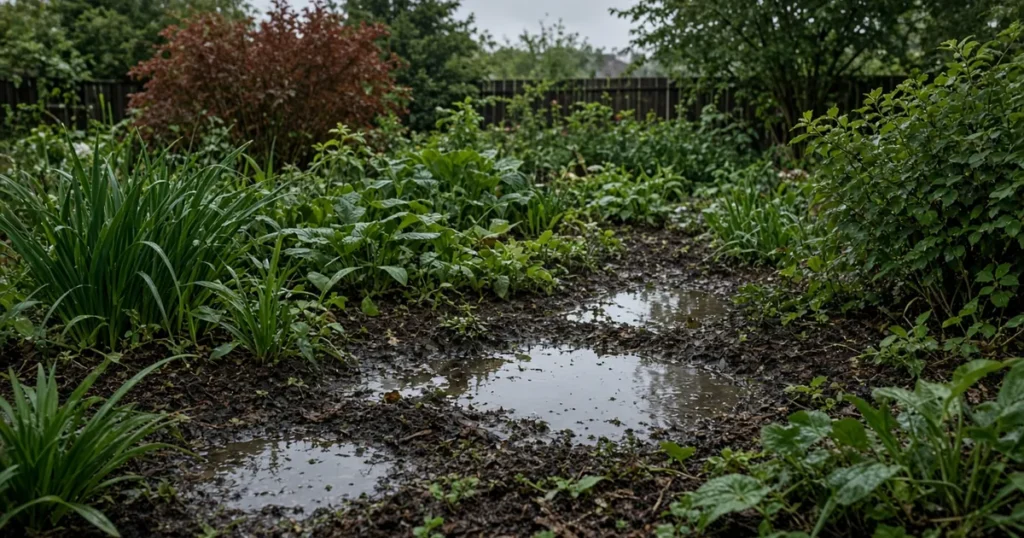
How to fix a waterlogged garden starts with the soil. Utah State University Extension notes poorly drained soil leaves roots wet, which can lead to root disease plus iron deficiency. Adding organic matter, raising beds above the wet layer plus choosing plants suited to moist ground are the main fixes.
The short answer
Fix a waterlogged garden by adding organic matter, building raised beds plus planting species that tolerate wet soil. Utah State University Extension notes beds 8 to 12 inches high suit many garden plants. Water should drain from a planting hole within 24 hours. Alabama Cooperative Extension System notes roots die without oxygen.

Which fixes work for wet soil?
Extension services list cultural fixes for poor drainage.
| Fix | What it does | Source |
|---|---|---|
| Add organic matter | Improves drainage in fine soils | Utah State University Extension |
| Raised beds | Lifts roots above wet soil | MU Extension |
| Beds 8 to 12 inches high | Suits many garden plants | Utah State University Extension |
| Mix layered soils | Avoids a barrier between layers | Utah State University Extension |
| Wet site plants | Tolerate moist soil | Iowa State University Extension |
Sources: Utah State University Extension, MU Extension plus Iowa State University Extension.
Why does wet soil harm plants?
Alabama Cooperative Extension System notes an ideal soil is about half air space. When soil stays too wet, roots cannot get oxygen plus die. Beneficial microbes also need oxygen, plus some bacteria in wet soil turn nitrate into a gas that is lost. Wet soil also stays chilly longer in spring.
How do raised beds help?
MU Extension notes raised beds let roots develop in soil held above waterlogged or compacted zones. Adding compost while beds are built improves structure plus drainage further. Utah State University Extension notes beds 8 to 12 inches high suit many plants, while berms 2 to 3 feet high suit woody plants.

How to: step by step
- Dig a hole plus fill it with water.
- See if it drains within 24 hours.
- Work organic matter into the soil.
- Build raised beds 8 to 12 inches high.
- Skip deep digging into clay under beds.
- Plant species suited to wet soil.
Troubleshooting
Water sits in a planting hole: poor drainage. Raise the bed or move the planting.
Raised bed still soggy: dug deep into clay below. Build upward instead of digging down.
Plants yellow in wet spots: low oxygen at roots. Add organic matter.
For related reading see soil drainage checks for cannabis beds, flooded cannabis garden plus clay soil for cannabis. Kind Seed Co also stocks cannabis seeds.
Sources
- Solutions to soil problems III: drainage, Utah State University Extension
- A well drained soil, Alabama Cooperative Extension System
- Raised bed gardening (G6985), University of Missouri Extension
- Native perennials for moist to wet soils, Iowa State University Extension, Yard and Garden
FAQ
How high should raised beds be on wet ground?
Utah State University Extension notes beds 8 to 12 inches high are adequate for many garden plants, while hills or berms 2 to 3 feet high are better for woody plants. MU Extension advises a bed width of about 4 feet so you can reach the center from either side without stepping on the soil.
Why do wet soils harm roots?
Alabama Cooperative Extension System notes roots need oxygen. When soil is too wet, air spaces fill with water, roots cannot breathe plus they die. Utah State University Extension notes a perpetually wet root zone can lead to root disease, iron deficiency plus other growth problems. Better drainage restores air in the soil.
Can a rain garden help a wet yard?
It can make use of a wet spot. Iowa State University Extension lists rain gardens among sites for native perennials that perform well in moist to wet soils, such as swamp milkweed, turtlehead plus Joe Pye weed. Choosing plants that like wet ground turns a soggy area into a planted bed.
Should I dig deep to fix clay drainage?
Not under a bed. Alabama Cooperative Extension System advises building up topsoil or a soil mix on the surface of poorly drained clay plus avoiding deep digging, which can create a bathtub effect that holds water. Utah State University Extension notes organic matter improves drainage in fine textured soils.
What if new soil sits on top of old soil?
Utah State University Extension notes layered soils can restrict drainage. Where new soil goes on top of existing soil, it advises placing a 2 to 3 inch layer of the new soil first, mixing it well with the existing soil, then adding the rest on top. This avoids a sharp boundary that stops water.



