
Coffee Grounds in Cannabis Gardens: What They Really Do
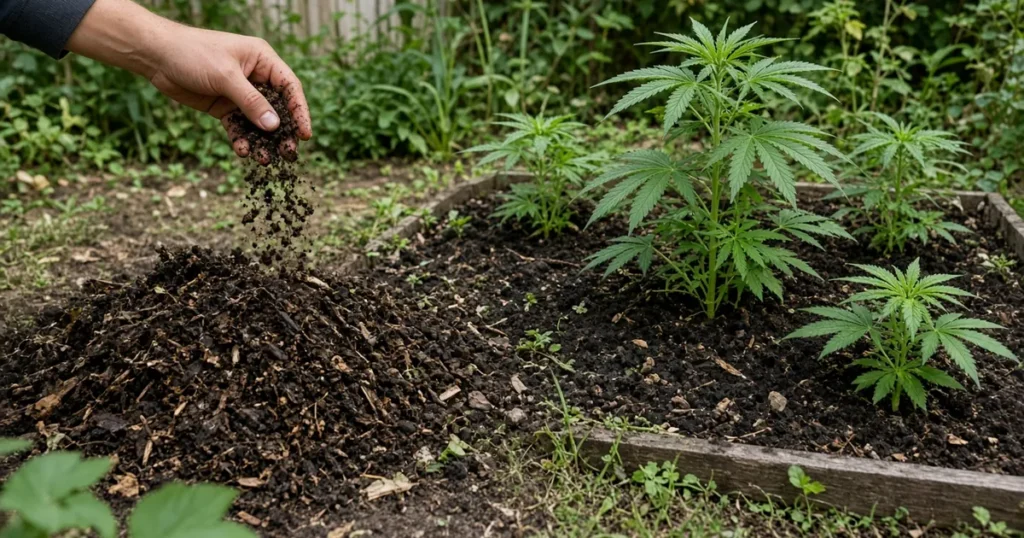
Quick answer: Used coffee grounds are a fine garden material in moderation, mainly because they help build soil structure. Oregon State University Extension says brewed grounds land near neutral, at roughly pH 6.5 to 6.8, and are not a major nutrient source. It recommends working no more than a half inch of grounds into the top 4 inches of soil and keeping grounds to 20% or less of a compost pile. Washington State University Extension advises against using pure grounds as mulch.
Are Coffee Grounds Acidic?
Not after brewing. Oregon State calls the idea that used grounds are acidic a common misconception and says they sit near neutral. It adds that whatever pH shift they cause in soil does not last, so grounds will not lower pH enough to help acid loving plants.
Washington State reviewed studies on composting grounds and found mixed results. Two studies reported mildly acidic levels of 4.6 and 5.26, while others measured neutral to somewhat alkaline levels from 7.7 to 8.4. One study found soil pH rose for 14 to 21 days after coffee compost was added, then slowly fell. Washington State concludes that you should not assume grounds will ever be reliably acidic. If your bed needs a lower pH, our guide to lowering soil pH for cannabis covers proven options.
Do Coffee Grounds Feed Cannabis Plants?
Only a little. Oregon State says grounds contain 1% to 2% nitrogen plus small amounts of potassium, phosphorus, calcium, magnesium, plus traces of iron, copper, manganese and zinc, but not enough to meet plant needs. Their main benefit is better soil structure and drainage.
Oregon State explains how that works. Microbes eating the grounds give off compounds that glue soil particles into stable, well drained crumbs. Washington State adds that earthworms pull grounds deep into the soil, which may explain reports of better soil aggregation.
There is a catch with nitrogen. Oregon State says microbes temporarily tie up nitrogen while they break down fresh grounds. To balance that, it suggests adding a nitrogen rich material like grass clippings, alfalfa meal or composted manure. Our cannabis nutrients crash course explains why a nitrogen dip shows up in the leaves.
How Much Coffee Grounds Is Too Much?
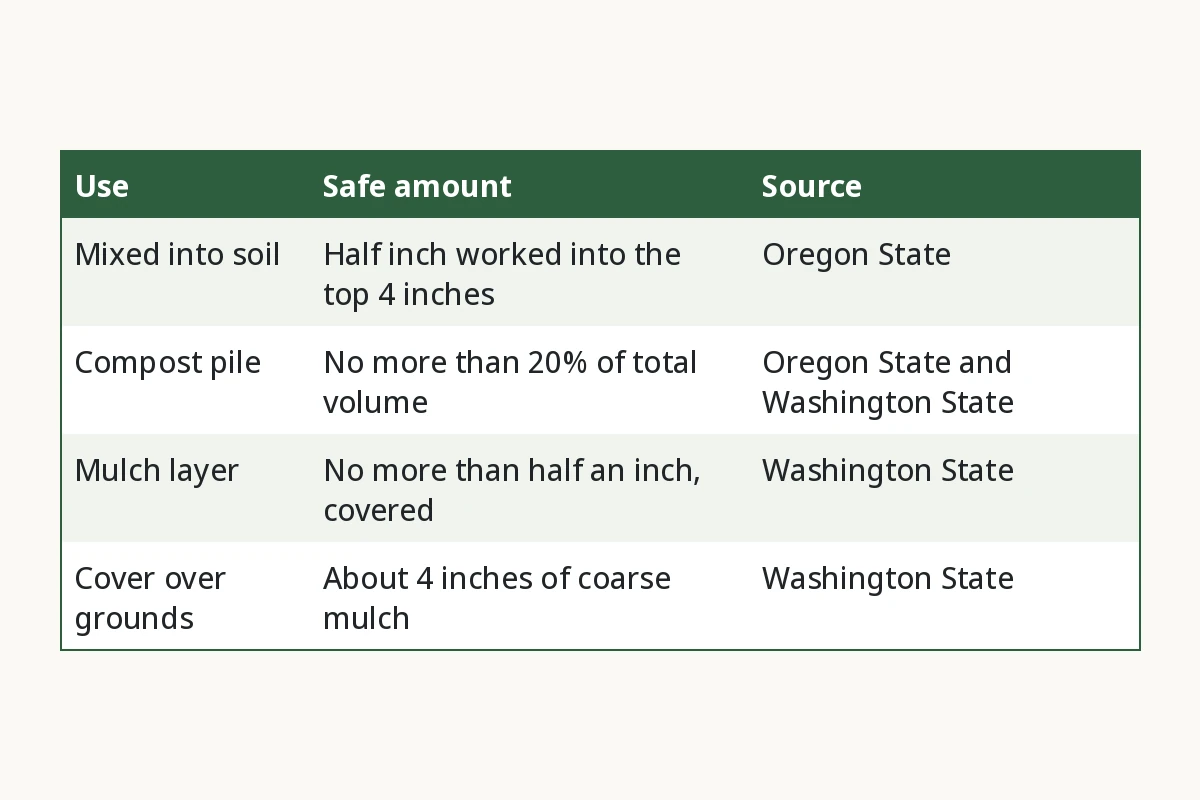
Less than many gardeners use. Oregon State soil scientist Linda Brewer warns that gardeners are often too enthusiastic and says she has watched heavy coffee use ruin raised beds. Use these limits from the two sources:
| Use | Safe amount | Source |
|---|---|---|
| Mixed into soil | Half inch worked into the top 4 inches | Oregon State |
| Compost pile | No more than 20% of total volume | Oregon State and Washington State |
| Mulch layer | No more than half an inch, covered | Washington State |
| Cover over grounds | About 4 inches of coarse mulch | Washington State |
Washington State notes that 10% to 20% of compost volume has been reported as best for compost quality, while more than 30% can be harmful. Oregon State says higher amounts can be toxic to plants.
How to Use Coffee Grounds in a Cannabis Bed
- Start with spent grounds. Both sources discuss used grounds, not fresh coffee or coffee waste from processing.
- Let hot grounds cool. Washington State advises cooling grounds before adding them to compost.
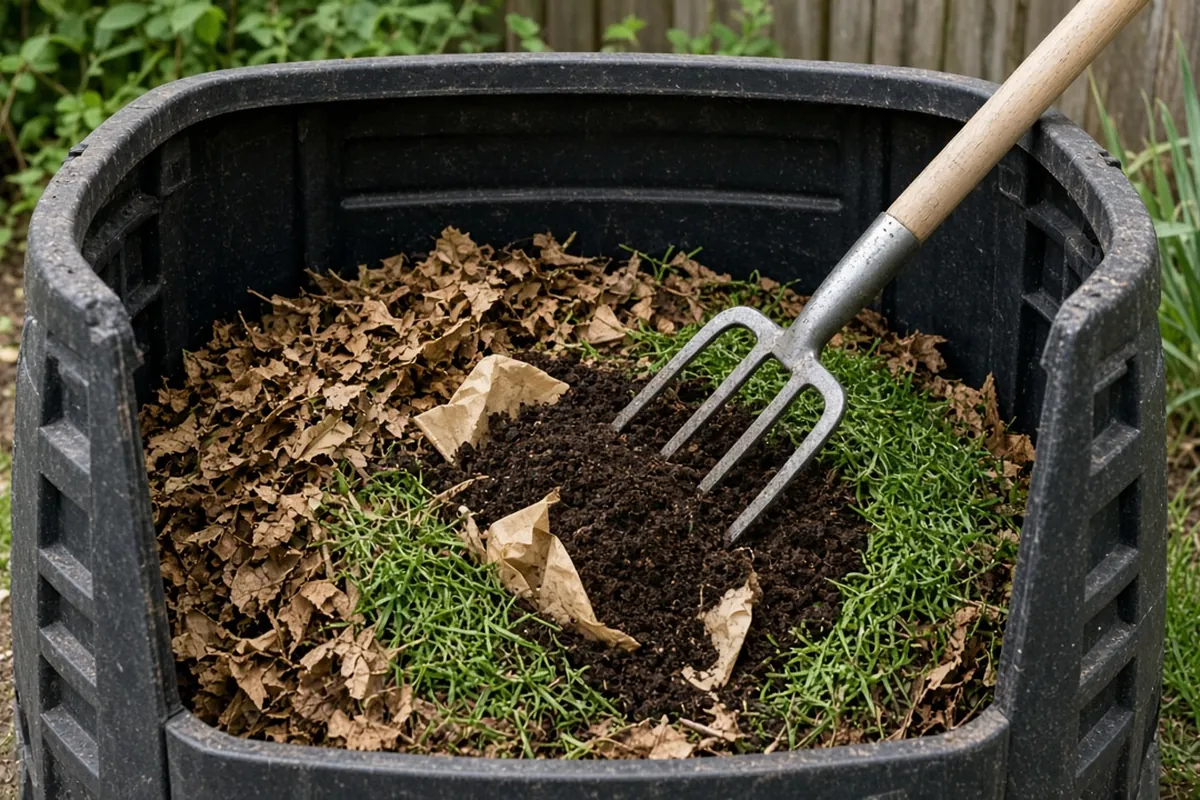
- Compost them first when possible. Mix three parts leaves, one part fresh grass clippings and one part grounds by volume, as Oregon State suggests.
- Turn the pile weekly. Oregon State says to turn it weekly and watch moisture. It expects finished compost in three to six months.
- Add filters too. Oregon State notes coffee filters can be composted with the grounds.
- Mix sparingly into soil. If adding grounds straight to a bed, work in no more than a half inch to a depth of 4 inches.
- Pair with nitrogen. Add grass clippings, alfalfa meal or composted manure to offset the nitrogen tie up, per Oregon State.
- Store shop grounds sealed. Oregon State suggests a sealed container for bulk grounds. Mold that forms is harmless in compost.
Our post on building a compost pile from garden scraps covers balancing greens and browns in more detail.
Can You Use Coffee Grounds as Mulch?
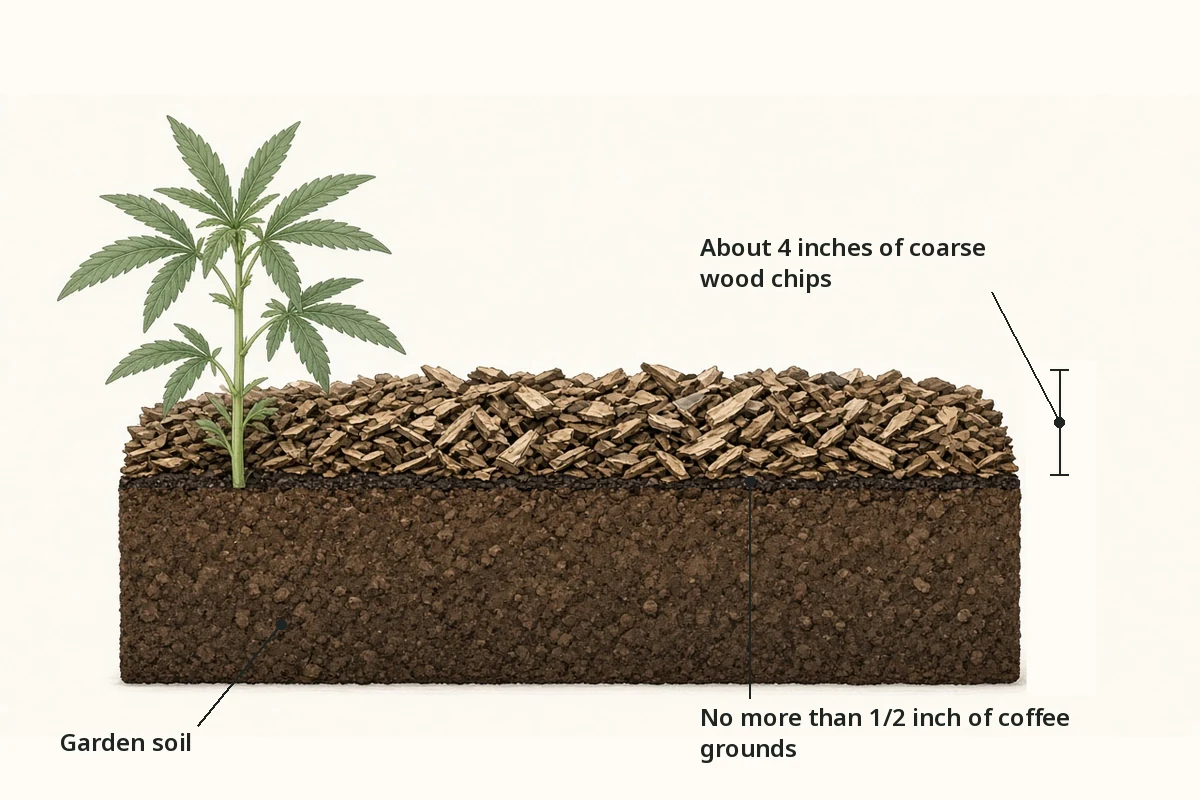
Only as a thin, covered layer. Washington State says grounds are finely textured and pack down easily, and that compacted grounds block water and air, especially in thick layers. It recommends against using pure grounds as mulch.
Instead, spread no more than half an inch and cover it with about 4 inches of coarse organic mulch like wood chips, as Washington State advises. Oregon State gives the same idea, suggesting leaves or bark on top so the surface does not dry out and shed water. For mulch choices around cannabis, see our guide to mulch for cannabis.
Can Coffee Grounds Hurt Plants?
Yes, in some cases. Washington State lists several crops and ornamentals whose growth was held back by coffee grounds, including Chinese mustard, Italian ryegrass and geraniums, and notes that one researcher blamed toxic compounds released as the grounds decay. Oregon State says excess grounds added straight to soil can slow plant growth, partly because of caffeine residues, and can tie up nitrogen.
Results with other crops were positive. Washington State cites studies where coffee ground composts and mulches helped cabbage and soybeans grow and yield better. Its overall view is that effects on plant growth are unpredictable. No study in either source tested cannabis, so think of grounds as a small part of a balanced soil plan rather than a booster. Keep raw grounds away from seedling trays and young transplants.
Do Coffee Grounds Repel Pests?
The evidence is limited. Washington State lists repelling cats, killing slugs and preventing weeds among popular claims and says the scientific picture is still incomplete. Oregon State reports that research found strong caffeine solutions made from brewed coffee harmed slugs and snails in soil, but that refers to brewed coffee, not grounds sitting on the surface.
Washington State also reviewed controlled studies where composts containing grounds held back some fungal rots and wilts, including Pythium and Fusarium. It stresses that this was shown only on a handful of vegetable crops and that the effect in real gardens is unknown.
For cannabis, rely on proven pest steps instead. Never apply coffee or any homemade spray to flowers or buds. Our post on diagnosing sick cannabis plants helps you identify what is actually going on.
Troubleshooting Coffee Grounds
Leaves turned pale after adding grounds. Microbes may be tying up nitrogen, as Oregon State explains. Add a nitrogen source and cut back on grounds.
Water beads up and runs off the bed. A thick grounds layer may have crusted. Washington State says compacted grounds block water and air. Rake it in or cover it with coarse mulch.
The compost pile is soggy and slow. Too many grounds may be in the mix. Keep them at or below 20% and add more leaves.
Grounds in storage grew mold. Oregon State says that mold is harmless once it goes into compost.
Plants grew slowly in a coffee heavy bed. Washington State and Oregon State both note growth can be held back. Dilute the bed with compost or fresh soil next season.
Soil pH did not drop. That fits what both sources report. Grounds are near neutral after brewing.
Sources
- Oregon State University Extension Service, Coffee grounds boost soil health and help control slugs: https://extension.oregonstate.edu/news/coffee-grounds-boost-soil-health-help-control-slugs
- Washington State University Extension, Linda Chalker Scott, Coffee grounds: will they perk up plants?: https://wpcdn.web.wsu.edu/wp-puyallup/uploads/sites/403/2015/03/coffee-grounds.pdf
FAQ
Can I put coffee grounds directly on cannabis plants?
Not in thick layers. Mix a small amount into the soil or compost them first, as Oregon State advises.
Do coffee grounds add caffeine to the soil?
Some residue remains. Oregon State links caffeine residues in excess grounds to slower plant growth.
Are coffee grounds good for compost?
Yes, at 20% or less of the pile volume, according to both sources.
Will coffee grounds lower soil pH for cannabis?
No. Oregon State says used grounds are close to neutral and any pH shift is temporary.
How do earthworms react to coffee grounds?
They can. Washington State says earthworms feed on decaying grounds and pull them deeper into the soil.
Can I use coffee shop grounds in bulk?
Yes, but in moderation. Oregon State suggests storing them sealed and sticking to the recommended amounts.


