
Aphids on Cannabis Leaves: Signs, Natural Enemies and Control
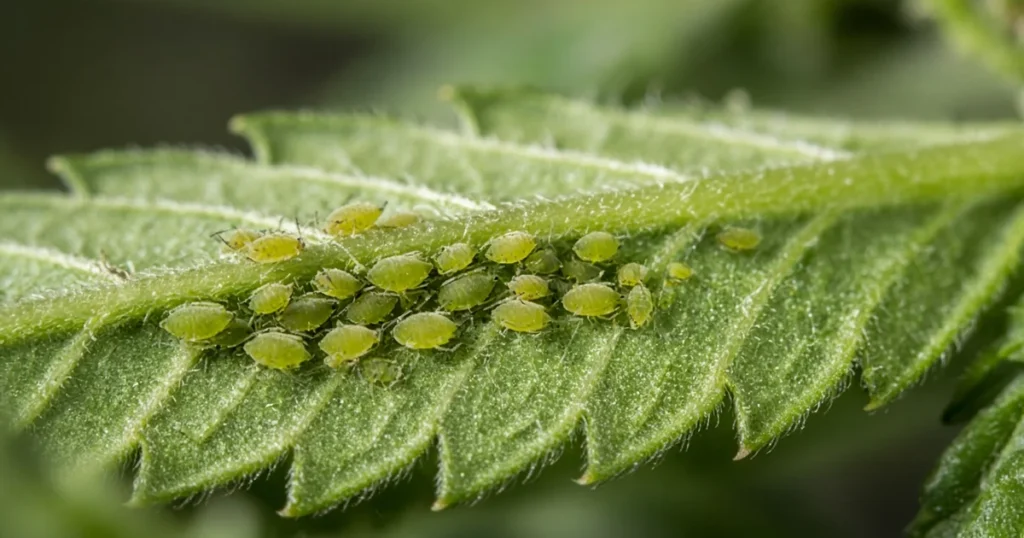
Quick answer: Aphids are small, pear shaped sap feeders that gather on new growth and the undersides of cannabis leaves. The University of California IPM program (UC IPM) advises starting with nonchemical steps: prune infested tips, blast colonies off with a strong stream of water, keep ants away and let lady beetles and lacewings feed. If you still need a spray in veg, insecticidal soaps and oils solve most aphid problems when applied thoroughly.
What Are Aphids?
UC IPM describes aphids as small insects with soft, pear shaped bodies, long legs and antennae, and long slender mouthparts that pierce plant tissue and suck out fluids. Depending on the species they can be green, yellow, brown, red or black, and a few look waxy or woolly. Most have two small tubes called cornicles sticking out from the rear end, which is a handy clue under a lens.
University of Wisconsin Madison Extension notes one trait that sets aphids apart from almost every other insect. In summer, females give birth to live young without mating. Wingless females dominate while food is plentiful, and winged forms appear when a colony gets crowded and needs to move. That is why a few aphids on Monday can become a crowded leaf by the weekend.
This page covers aphids on leaves and stems. Aphids that live on roots in the soil are a different problem, explained in our guide to root aphids on cannabis.
What Do Aphids Do to Cannabis?
UW Madison lists reduced vigor, stunting and deformed plant parts as common symptoms. On cannabis, watch for:
- Clusters of insects on stem tips and under young leaves
- Leaves that curl, pucker or turn yellow in patches
- Shiny, sticky honeydew on leaves below a colony
- Black sooty mold growing on that honeydew
- Ants running up and down the stem
- White cast skins stuck to leaves
UW Madison adds that aphids can spread several plant viruses, and that honeydew often gives away an outbreak before the insects are noticed. UC IPM notes that most established plants tolerate aphid feeding and outgrow minor damage, so a few aphids on a large plant are not an emergency.
How to Check Cannabis Plants for Aphids
- Turn over the youngest leaves at the top of each plant and on side branches.
- Look along the main stem just under the growing tip.
- Run a finger over lower leaves. Sticky residue means a colony sits above.
- Watch for ants climbing the stem. They tend aphids for honeydew.
- UW Madison suggests checking several plants in different spots, since infestations tend to start in scattered hot spots.
- Count how many tips you check and how many have aphids, and repeat weekly.
Aphid Control Steps for Cannabis
- Prune. UC IPM recommends cutting off heavily infested leaves and stems. Bag them before you carry them away.
- Spray with water. A strong stream knocks aphids off, and many cannot climb back. UC IPM lists this as a first step. Do it early in the day so leaves dry.
- Stop the ants. UC IPM notes ants protect aphids from natural enemies. A sticky band around the stem or a pot stand in a tray of water keeps them off. See ants on cannabis for more options.
- Go easy on nitrogen. UC IPM advises against overfertilizing and suggests slow release products, because soft new growth draws aphids. Our page on slow release fertilizer for cannabis explains the options.
- Use soap or oil in veg. UC IPM says insecticidal soaps and oils, used properly, solve most aphid problems. They work by smothering, so wet the insects directly, including leaf undersides. Avoid spraying plants that are drought stressed or when it is very hot.
- Repeat. Contact sprays only kill aphids they touch, so a second round a few days later catches newborns.
- Stop spraying at flower. Once buds form, rely on pruning and predators so nothing ends up on the flowers.
For mixing guidance, see insecticidal soap for cannabis.
Which Natural Enemies Eat Aphids?
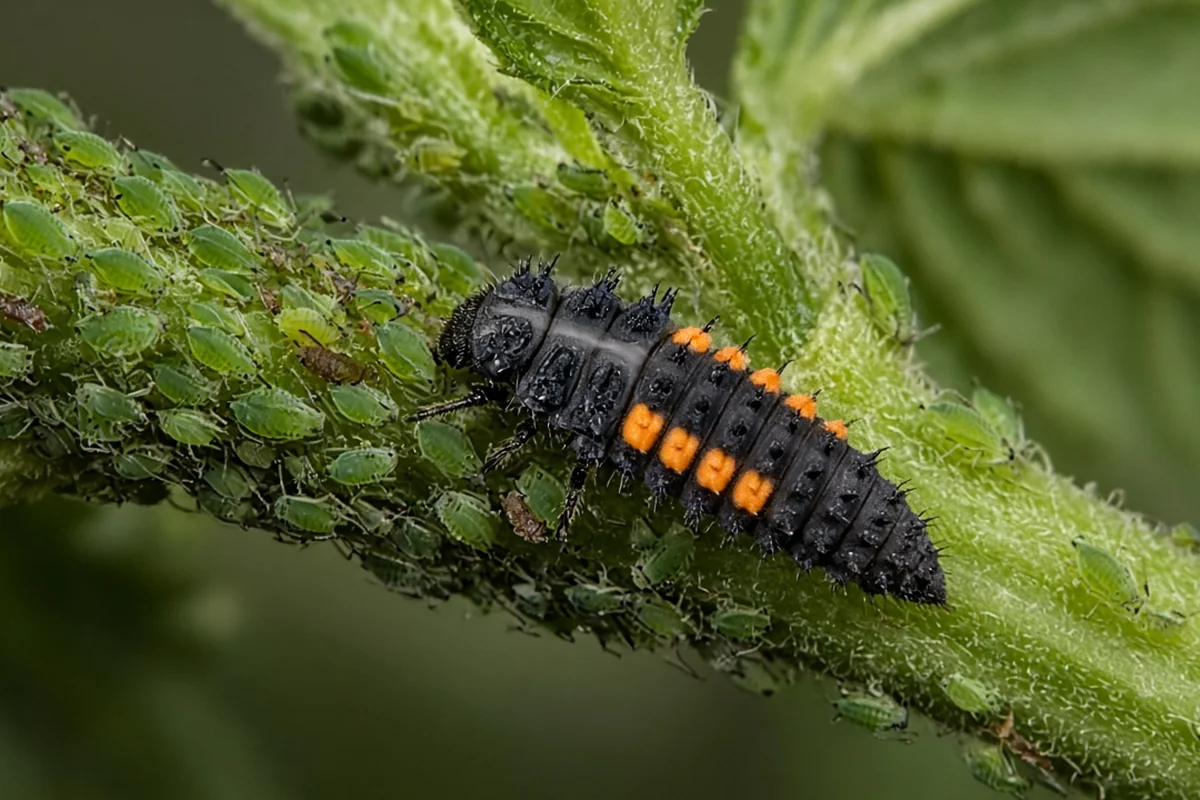
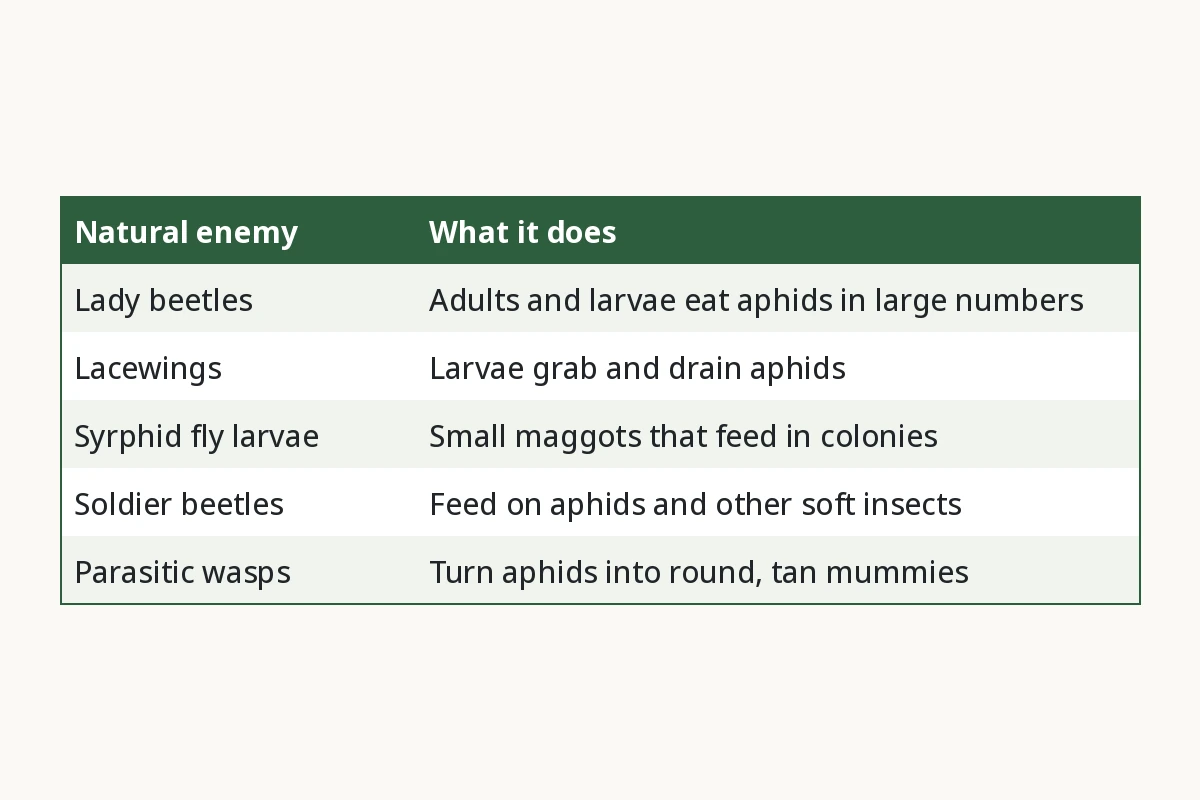
Lady beetles, lacewings, syrphid flies, soldier beetles and parasitic wasps all eat aphids.
UC IPM lists the main allies:
| Natural enemy | What it does |
|---|---|
| Lady beetles | Adults and larvae eat aphids in large numbers |
| Lacewings | Larvae grab and drain aphids |
| Syrphid fly larvae | Small maggots that feed in colonies |
| Soldier beetles | Feed on aphids and other soft insects |
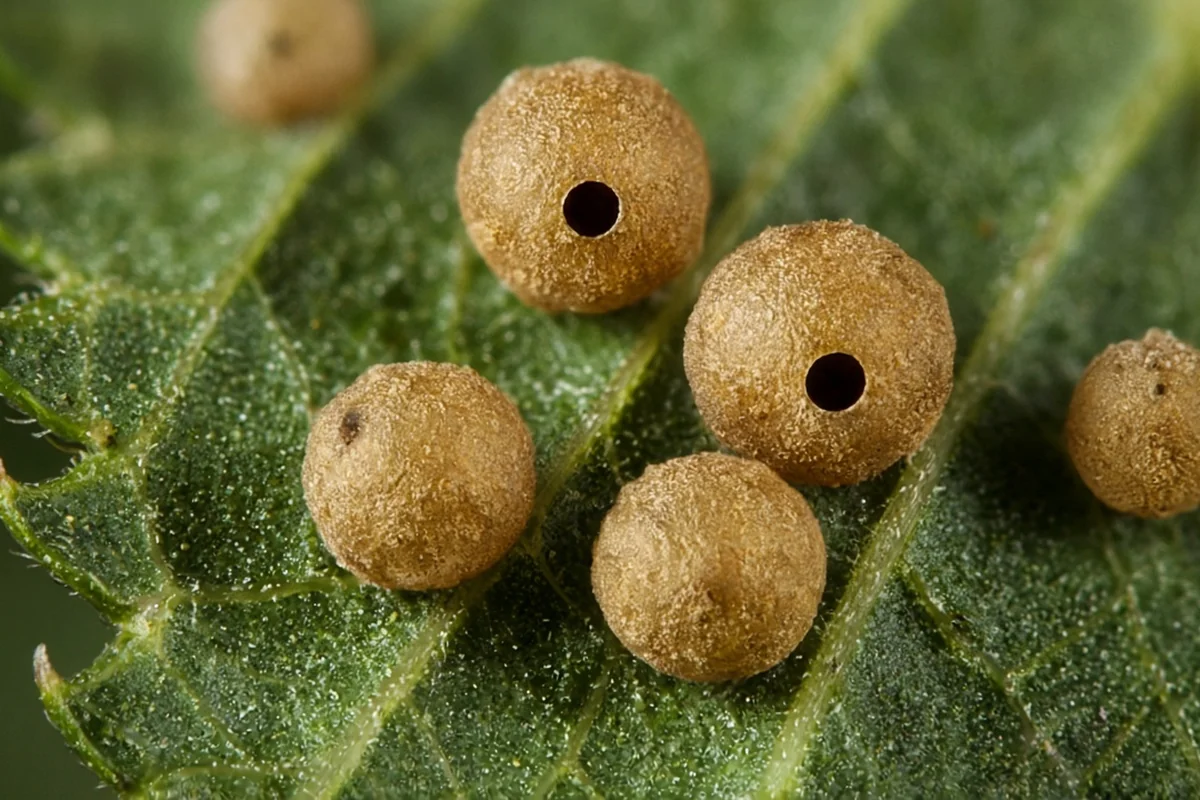
| Parasitic wasps | Turn aphids into round, tan mummies |
UC IPM notes the larvae of these predators do most of the feeding. Broad spectrum insecticides kill them too, so they can make aphid problems worse over time. Planting flowers that offer nectar and pollen near the garden helps keep these helpers around. Our list of the best bugs for a cannabis grow covers buying and releasing them indoors.
Aphids Indoors vs Outdoors
Outdoor plants have a built in defense crew, since lady beetles, lacewings and tiny wasps find colonies on their own. Indoor tents have no such help, so a few aphids carried in on a clone can multiply for weeks with nothing to stop them. Indoors, check every tip twice a week, rinse early, and consider releasing predators at the first sign. Outdoors, give natural enemies a week or two to respond before you reach for any spray.
How to Prevent Aphids
- Inspect clones and new plants before they enter your space.
- Protect seedlings with covers. UC IPM mentions covers and silver reflective mulches for young plants. Our guide to row covers for cannabis explains setup.
- Keep feeding balanced so growth is steady, not lush and soft.
- Control weeds near beds that can host aphids.
- UC IPM points out some aphids fade in hot weather by midsummer, so early season checks matter most outdoors.
Troubleshooting Aphids
Aphids return a week after spraying. Live birth means fast rebounds. Keep spraying on a short schedule in veg and check for ants that keep moving them back.
You see round, tan, swollen aphids. Those are mummies with parasitic wasps inside. Leave them alone. They are working for you.
Leaves stay curled after aphids are gone. Damaged leaves will not flatten out. Judge success by clean new growth.
Black film on lower leaves. That is sooty mold on honeydew. It wipes off with a damp cloth once the aphids are under control.
Soap spray burned leaf edges. The plant may have been thirsty or the room was hot. UC IPM warns against spraying stressed plants or in high heat. Water first and spray in the cool part of the day.
Winged aphids suddenly appear. UW Madison explains that winged forms show up when a colony gets crowded and needs new food. Expect them to land on nearby plants, so check every plant in the area, not just the first one.
Outdoor aphids disappear in July. UC IPM notes some aphid species cannot handle heat and fade by midsummer. Keep checking anyway, since numbers can climb again as nights cool in fall.
Sources
- UC Statewide IPM Program, University of California, Aphids, Home and Landscape: https://ipm.ucanr.edu/home-and-landscape/aphids/
- University of Wisconsin Madison Extension, Wisconsin Horticulture, Aphids: https://hort.extension.wisc.edu/articles/aphids/
FAQ
Can aphids kill a cannabis plant?
Rarely on a mature plant. UC IPM notes most established plants can tolerate aphid feeding. Seedlings and clones with heavy colonies can be stunted badly.
Are ladybugs good for cannabis?
Yes. Lady beetles are one of the main aphid predators UC IPM lists. Release them at dusk near the infested plants and keep ants away.
Why are ants on my cannabis plant?
Ants often farm aphids for their sugary honeydew. UC IPM says ants protect aphids from predators, so controlling ants helps.
Can I use neem on aphids in flower?
It is safer to avoid any spray on buds. Rely on hand removal and beneficial insects, and save water rinses for leaves in veg.
What is the white stuff left behind by aphids?
Often it is cast skins from molting. Sticky shine is honeydew, and black film on top of it is sooty mold.
Do aphids spread plant viruses?
They can. UW Madison describes aphids as efficient carriers of several viruses, including a group of mosaic viruses. Keeping numbers low protects plants from that risk too.


