
Dallisgrass in Cannabis Beds: Clumping Grass Weed Guide
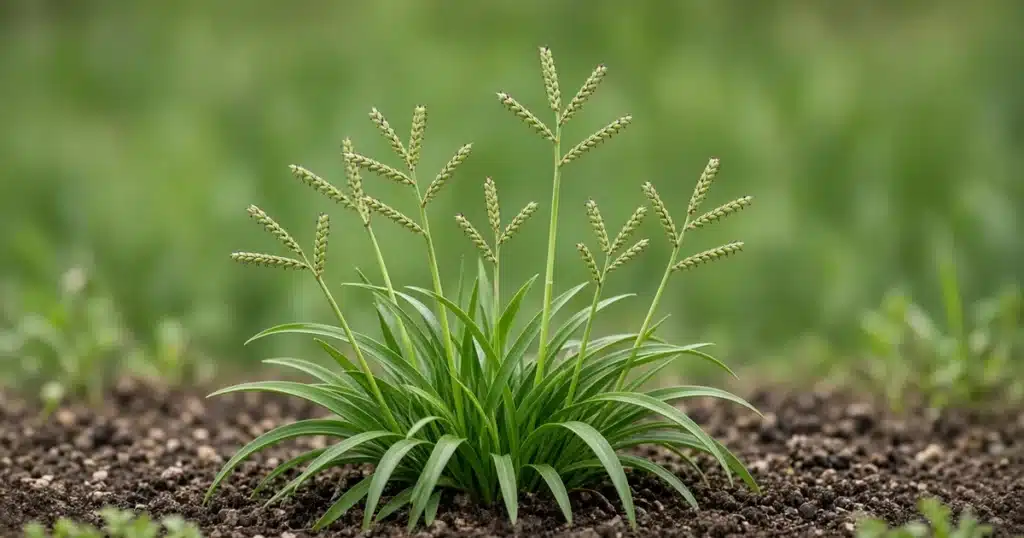
Quick answer: Dallisgrass is a perennial bunchgrass with a hairy, often reddish sheath base and seed heads of three to six drooping spikes. UC IPM says it blooms from May through November. In home landscapes, NC State says digging out young plants before they form rhizomes or set seed is the best strategy. UC IPM’s landscape guide adds mulch.
What Is Dallisgrass?
A warm season perennial grass that forms loose bunches. The University of California Statewide IPM Program (UC IPM) says dallisgrass is cultivated for pasture in many places but is less commonly used for forage in California because of its weedy character. Its habitat list includes gardens, turf, orchards, ditches, canals and stream banks.
NC State Extension calls it a common perennial weed of lawns and disturbed areas and says its dense growth can smother other plants. UC IPM says its rapid growth and profuse seed production let it quickly invade waterway margins and managed urban sites. Our overview of weed control in outdoor cannabis covers the general plan.
How Do You Identify Dallisgrass?
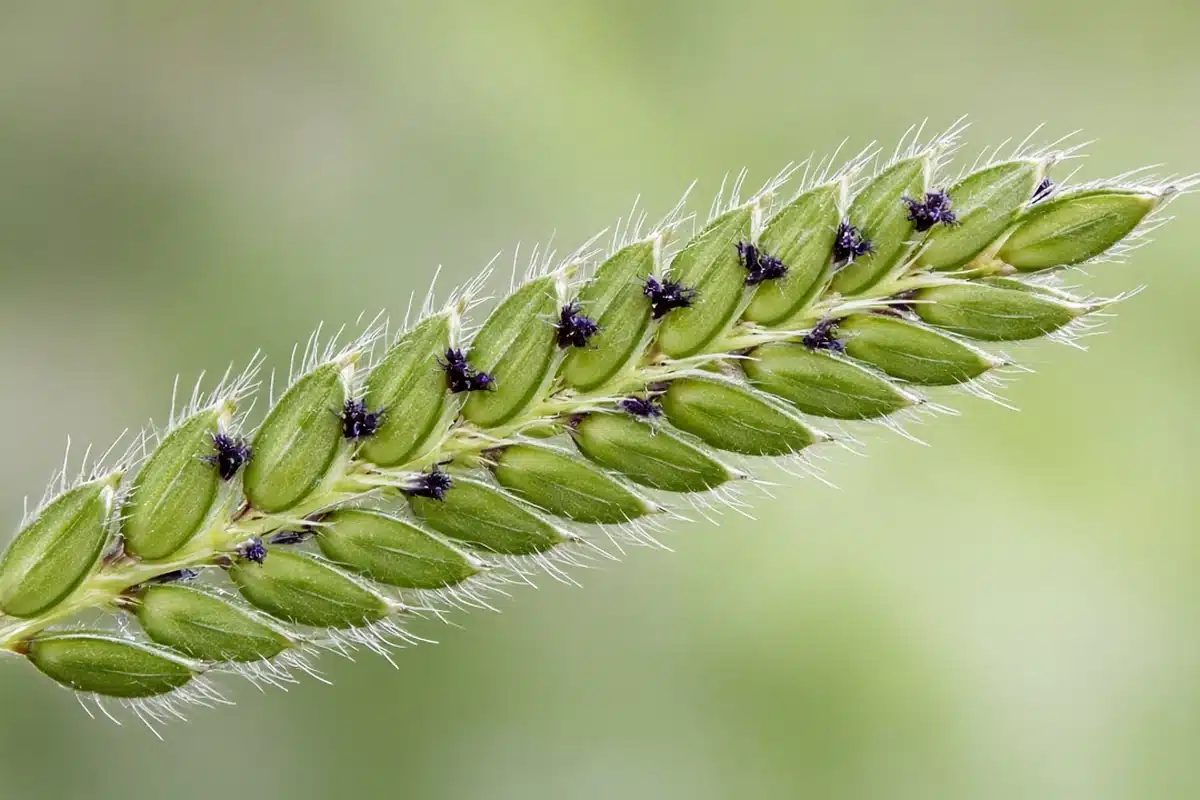
Look low on the stem. UC IPM says the leaf sheath is somewhat flattened, hairy at the base, often tinged red and usually inflated. Other features from UC IPM and NC State:
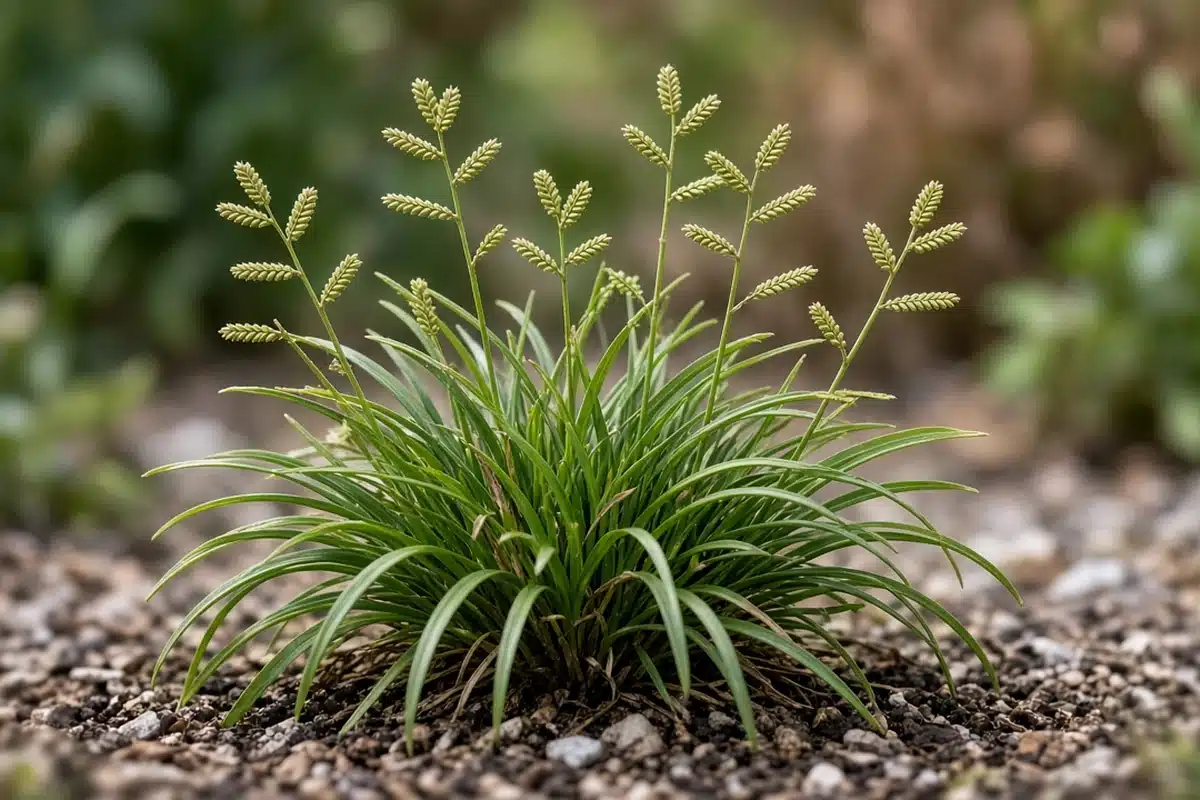
- Habit. Loose bunches that grow 1 to 5 feet tall, from prostrate with erect tips to fully erect.
- Leaves. NC State says the blades are fairly wide, about 1/4 to 1/2 inch, and grow 4 to 10 inches long if left unmowed.
- Collar. UC IPM says the ligule is firm and membranous, with no auricles.
- Seed head. Three to six spikes that arise from different points along the stem and often droop.
- Underground stems. Fairly short, with areas that look like concentric rings.
NC State adds that there is frequently purplish coloring at the base of the stems.
How Is Dallisgrass Different From Crabgrass and Goosegrass?
Start by feeling the leaves. UC IPM says that in mowed sites dallisgrass may be confused with crabgrass, but crabgrass leaves are soft while dallisgrass leaves are stiffer. UC IPM also says the flower head looks a little like goosegrass, but dallisgrass has a longer and less stiff flower head.
Life cycle is the other clue. UC IPM and NC State both call dallisgrass a perennial, and NC State says it spreads from a short rhizome, so the same clump returns each year. If a flat, tough clump grows in a packed, sunny path instead, compare it with goosegrass in cannabis beds.
Why Does Dallisgrass Matter Near Cannabis?
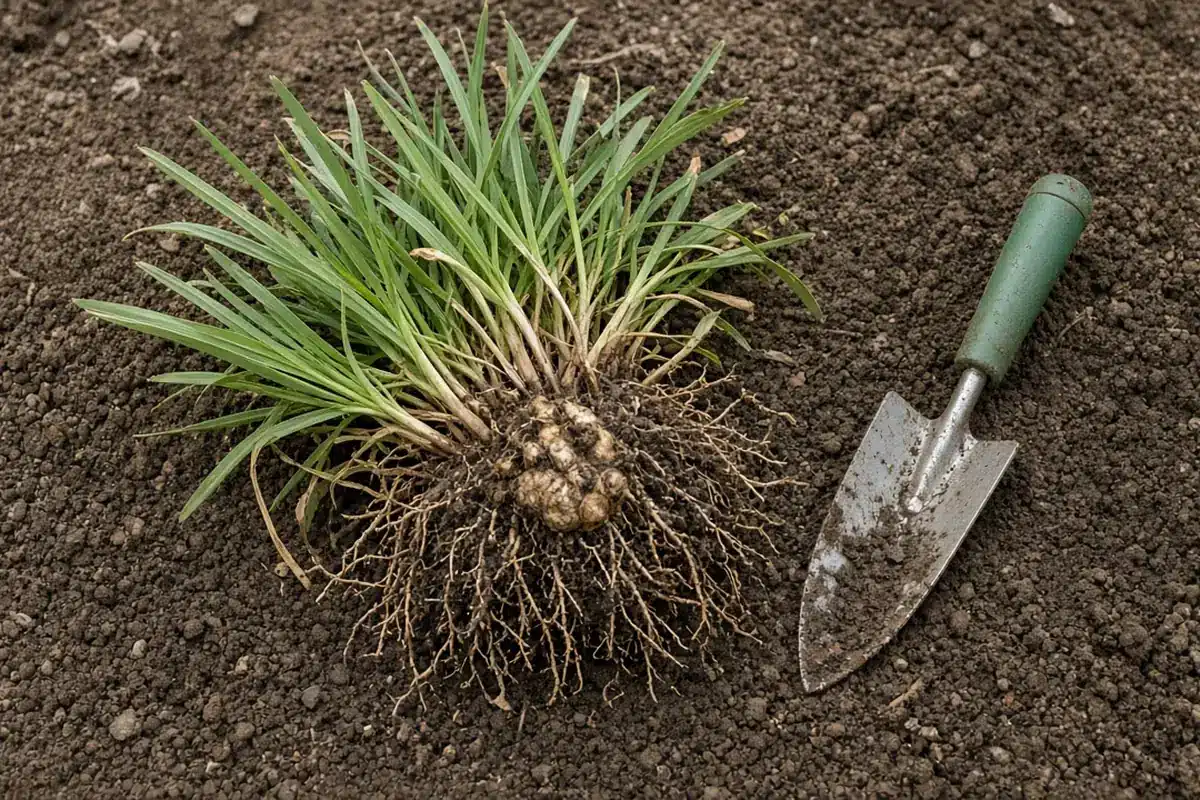
It spreads, and then it stays. NC State says dallisgrass spreads from a short rhizome, has thick, deep fibrous roots and produces abundant seed. Its dense growth habit tends to smother other plants. Once a clump settles into a bed edge, it does not leave on its own.
Its seed heads also carry a fungus. UC IPM and NC State both say the seed heads are susceptible to an ergot fungus that is toxic to livestock when eaten. Neither source addresses cannabis or people, but bagging seed heads before they mature keeps them out of the garden.
When Does Dallisgrass Grow?
Through the warm season. UC IPM says dallisgrass blooms from May through November, and NC State gives the same window. Each flowering stalk can stand 14 to 65 inches tall, according to NC State, which lines up with the 1 to 5 foot plant height UC IPM gives.
UC IPM’s landscape guide says perennials and summer annuals are easiest to identify in mid to late summer. Mark any dallisgrass clumps you find then, and plan to dig them out in fall or early spring, before your next cannabis planting.
Why Does Dallisgrass Come Back After Digging?
Small pieces stay behind. NC State says mature plants can be dug out, but they sometimes grow back if rhizomes are left in the soil. Young plants are much easier, which is why NC State calls digging out young plants before they form rhizomes or set seed the best strategy in home landscapes.
Use a sharp spade or a weeding knife and cut around the whole clump. Lift it out with the roots, shake off the soil and check the hole for short rhizome pieces. Our guide to tilling vs no till cannabis beds explains how soil disturbance affects weeds in general.
How to Control Dallisgrass in a Cannabis Bed
- Learn the sheath and seed head. UC IPM describes a hairy, reddish sheath base and drooping spikes.
- Dig young plants early. NC State calls this the best strategy in home landscapes.
- Remove the whole clump. NC State says mature plants can regrow if rhizomes are left behind.
- Bag seed heads. UC IPM and NC State warn of an ergot fungus on the seed heads.
- Do not rely on trimming. UC IPM’s landscape guide says grass growing points are usually below ground.
- Recheck the spot. Dig out any regrowth while it is small.
- Mulch the cleared area. UC IPM recommends a medium mulch kept 3 to 4 inches deep. Our guide to mulch for cannabis compares materials.
Dallisgrass at a Glance
| Subject | Extension finding | Attribution |
|---|---|---|
| Life cycle | Perennial grass | UC IPM, NC State |
| Height | 1 to 5 feet | UC IPM |
| Sheath | Flattened, hairy base, often reddish | UC IPM |
| Seed head | Three to six drooping spikes | UC IPM |
| Bloom | May through November | UC IPM, NC State |
| Spread | Short rhizomes and abundant seed | NC State |
Should You Use Herbicides Near Cannabis?
No. Pull, hoe shallowly and mulch. Remember that EPA has not registered any herbicide for use on marijuana, and state rules vary, so check with your state agriculture department. UC IPM says home gardeners who hand weed and mulch should not need herbicides. Before you plant cannabis outdoors, check your state’s home grow law.
Troubleshooting Dallisgrass
Clumps regrow after digging. NC State says rhizome pieces left behind can regrow. Dig wider and deeper.
It looks like crabgrass. UC IPM says dallisgrass leaves are stiffer than crabgrass leaves. Check the sheath base too.
Seed heads tower over the path. NC State says flowering stalks can reach 14 to 65 inches. Bag heads before they mature.
Trimming did not help. UC IPM says grass growing points are usually below ground. Dig the clump instead.
It grows along a ditch or wet edge. UC IPM lists ditches and stream banks as habitat. Clear those edges as well.
At Kind Seed Co, we dig perennial grass clumps in fall so the beds start clean in spring.
Frequently Asked Questions
Is dallisgrass a perennial?
Yes. UC IPM and NC State both describe dallisgrass as a perennial grass. NC State says it spreads from a short rhizome and has thick, deep fibrous roots, so clumps return year after year in the same spot. Digging out the whole clump, roots and rhizome pieces included, is the way to stop that cycle in a garden bed.
How can I identify dallisgrass?
Look for loose bunches with a flattened leaf sheath that is hairy at the base, often tinged red and usually inflated, as UC IPM describes. The seed head has three to six spikes that often droop. NC State adds that the leaf blades are about 1/4 to 1/2 inch wide and purplish at the stem base.
What is the best way to remove dallisgrass?
Dig it while it is young. NC State says digging out young plants before they form rhizomes or set seed is the best strategy in home landscapes. Mature plants can be dug too, but NC State warns they sometimes regrow if rhizomes are left behind, so remove the whole clump.
When does dallisgrass bloom?
UC IPM and NC State both say dallisgrass blooms from May through November. NC State says the flowering stalk grows 14 to 65 inches tall. Bag or cut off seed heads before they mature, since both sources note the seed heads are susceptible to an ergot fungus that is toxic to livestock when eaten.
Where does dallisgrass grow?
UC IPM lists gardens, turf, vineyards, orchards, irrigation and drainage ditches, canals, pond margins and stream banks. NC State says it is common in lawns and disturbed areas. In a home garden, look for it along lawn edges, paths and moist borders next to cannabis beds.
Sources
- UC Statewide IPM Program, Dallisgrass, Weed Gallery: https://ipm.ucanr.edu/weeds-identification-gallery/dallisgrass/
- NC State Extension Gardener Plant Toolbox, Paspalum dilatatum: https://plants.ces.ncsu.edu/plants/paspalum-dilatatum/
- UC Statewide IPM Program, Weed Management in Landscapes: https://ipm.ucanr.edu/home-and-landscape/weed-management-in-landscapes/


