
Stinging Nettle in Cannabis Gardens: Safe Removal Guide
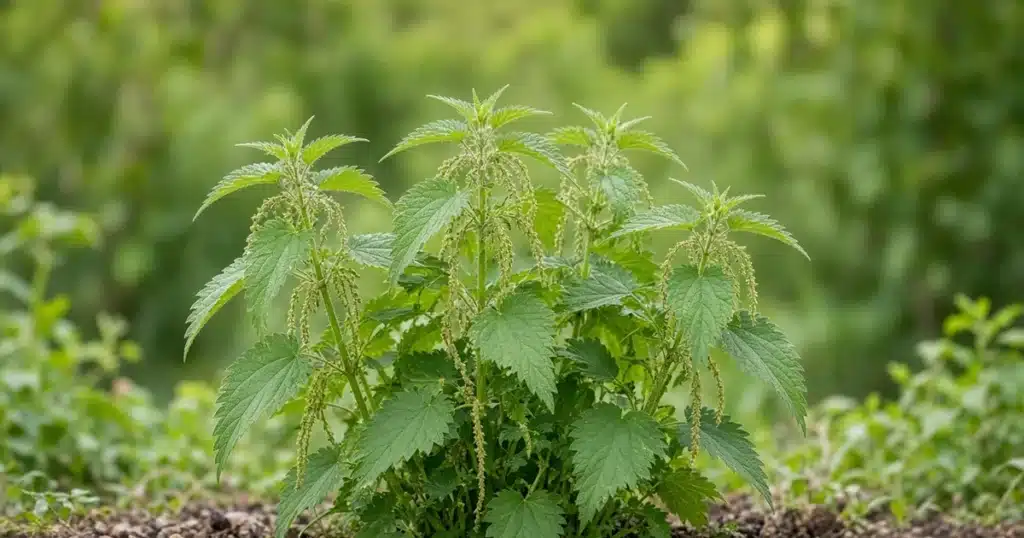
Quick answer: Stinging nettle is a tall perennial with toothed, heart based leaves and stinging hairs that cause a brief burning feeling. NC State says it spreads by rhizomes and seeds and favors deep, rich, moist soil. Wear gloves and long sleeves, dig out the rhizomes, pull young plants early and mulch the cleared ground.
What Is Stinging Nettle?
A perennial herb with stinging hairs. NC State Extension says stinging nettle grows nearly worldwide in moist sites along streams, meadows and ditches, in woodland clearings and in disturbed areas. It generally grows on deep, rich, moist soil and does not do well in drought.
A close relative, burning nettle, is an annual. The University of California Statewide IPM Program (UC IPM) says burning nettle grows in crop fields, gardens, ditches and roadsides, and that stinging nettle also causes a burning or stinging sensation. Our overview of weed control in outdoor cannabis covers the general plan. This guide covers both nettles, with the focus on the perennial.
How Do You Identify Stinging Nettle?
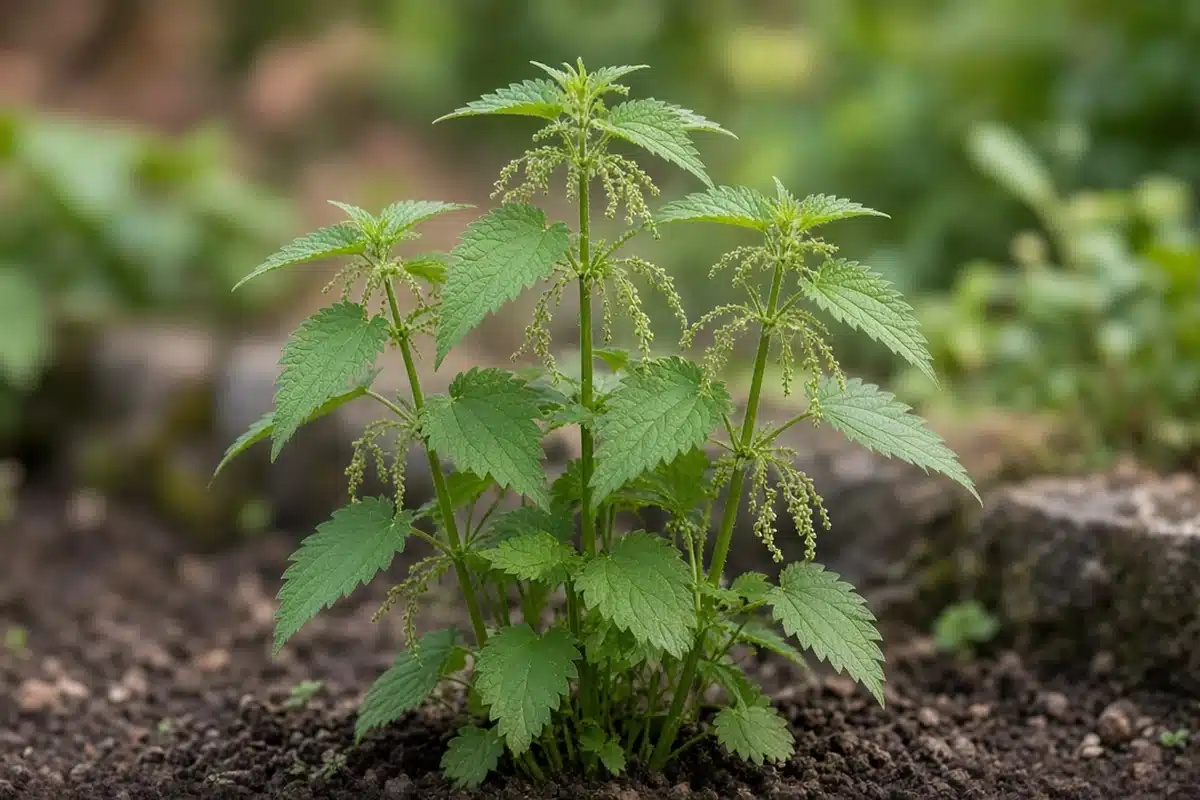
Look without touching. NC State describes stinging nettle as an erect perennial with these traits:
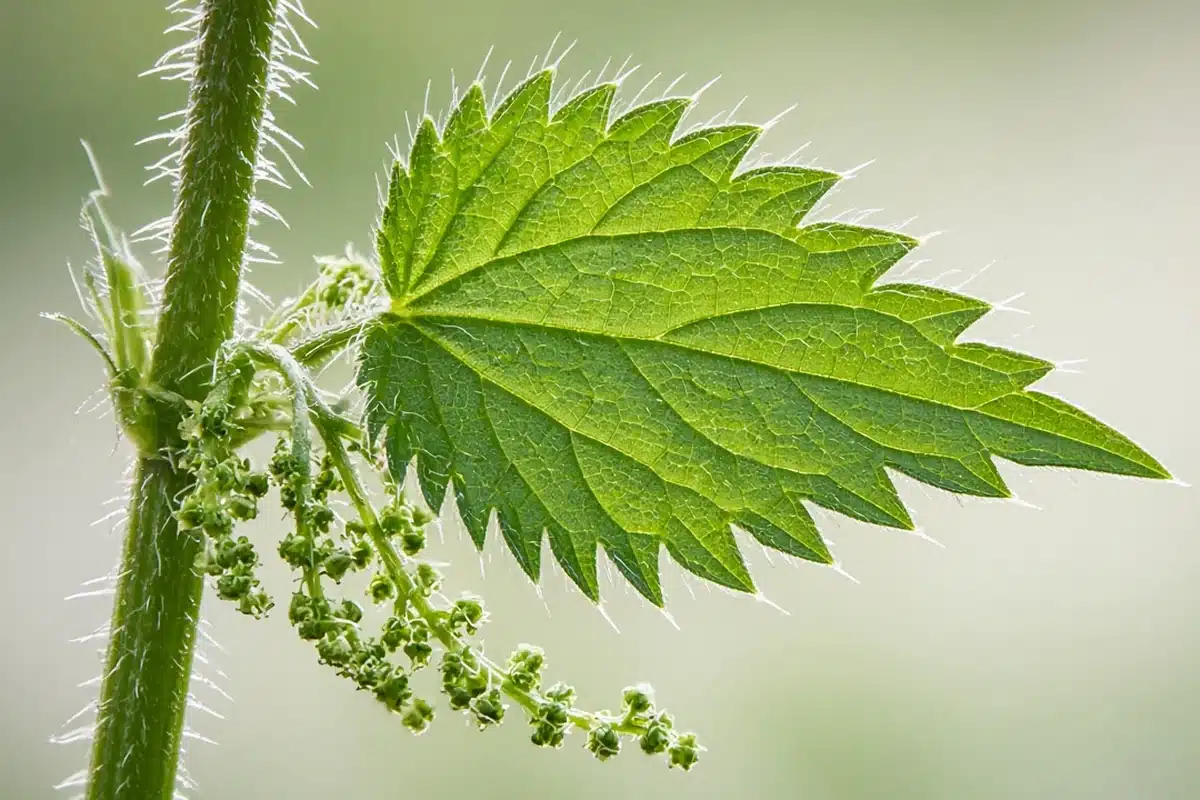
- Height. NC State gives a range of 3 to 9 feet tall.
- Stems. Wiry, green and fairly square, and they may carry stinging hairs.
- Leaves. Opposite, egg shaped and 1 to 6 inches long, with saw toothed edges, a heart shaped base and a pointed tip.
- Hairs. Both ordinary hairs and stinging hairs on the leaves.
- Flowers. Tiny green or white flowers in dense clusters in the leaf axils and at the stem tips.
UC IPM says the related burning nettle is shorter, 5 to 24 inches tall, with square stems that branch from the base. It adds that stinging nettle is taller and its leaves are less rounded than those of burning nettle.
What Happens If You Touch Nettle?
It stings, and the feeling lasts for a while. UC IPM says skin contact with burning nettle hairs usually causes a burning or stinging feeling for several minutes, which may be followed by a longer period of itching or numbness. NC State describes an intense burning and itching sensation lasting a few minutes from the hairs on stinging nettle leaves and stems.
Wear thick gloves, long sleeves and long pants when you work near a patch. UC IPM says most burning nettle stinging hairs sit on the stems, leaf stalks and the lower surface of leaves.
Why Does Stinging Nettle Matter Near Cannabis?
It spreads underground. NC State says stinging nettle reproduces by rhizomes and seeds and can form dense colonies covering an acre or more. Those rhizomes let a clump at a bed edge spread underground.
It also likes the same soil cannabis does. NC State says it grows on deep, rich, moist soil. Well amended beds and moist spots near hoses or downspouts can suit it. If one corner stays wet, a soil drainage test for cannabis beds can show whether water is pooling there.
When Does Nettle Grow?
Stinging nettle blooms in spring and summer, according to NC State. As a perennial, it returns each year from its rhizomes, so shoots often appear early in the season before your cannabis is planted.
Burning nettle follows a different schedule. UC IPM says it behaves as a winter annual in the interior valleys of California and grows year round on the coast, with flowers from January through April. Check beds in late winter for burning nettle seedlings and again in spring for new stinging nettle shoots. Our guide to fall garden cleanup after cannabis harvest is a good time to dig out old clumps.
Why Is Digging Better Than Pulling?
The rhizomes stay behind in the soil. NC State says stinging nettle spreads by rhizomes, and UC IPM’s landscape guide recommends using a dandelion knife or similar tool to dig up all roots and underground parts of perennial weeds without overly disturbing the soil. Pulling the top alone leaves those runners to sprout again.
Work after rain or a good watering, when the soil is soft. Lift the crown with a fork, follow each runner and remove as much as you can. Check the spot every week or two and dig out any new shoot while it is small.
How to Control Stinging Nettle in a Cannabis Garden

- Suit up first. Wear thick gloves, long sleeves and long pants, since NC State and UC IPM describe a burning sting.
- Identify the plant. Look for opposite, saw toothed leaves with a heart shaped base, as NC State describes.
- Dig out the rhizomes. UC IPM’s landscape guide says to dig up all roots and underground parts of perennial weeds.
- Pull burning nettle seedlings. UC IPM says burning nettle is an annual that reproduces by seed.
- Recheck every week or two. New shoots from leftover rhizomes are easiest to remove while small.
- Bag the plants. Remove dug plants from the garden rather than leaving them on the bed.
- Mulch the cleared area. UC IPM recommends a medium mulch kept 3 to 4 inches deep. Our guide to mulch for cannabis compares materials.
Stinging Nettle at a Glance
| Subject | Extension finding | Attribution |
|---|---|---|
| Life cycle | Perennial | NC State |
| Height | 3 to 9 feet | NC State |
| Leaves | Opposite, toothed, heart shaped base | NC State |
| Spread | Rhizomes and seeds | NC State |
| Soil | Deep, rich, moist | NC State |
| Annual relative | Burning nettle, 5 to 24 inches | UC IPM |
Should You Use Herbicides Near Cannabis?
No. Pull, hoe shallowly and mulch. Remember that EPA has not registered any herbicide for use on marijuana, and state rules vary, so check with your state agriculture department. UC IPM says home gardeners who hand weed and mulch should not need herbicides. Before you plant cannabis outdoors, check your state’s home grow law.
Troubleshooting Stinging Nettle
Shoots return after pulling. NC State says nettle spreads by rhizomes. Dig out the underground parts.
Your skin burns after weeding. UC IPM says the sting usually lasts several minutes. Wear gloves and long sleeves next time.
A colony keeps getting bigger. NC State says it can form dense colonies. Dig the edges of the patch first and work inward.
Small nettles appear in winter. UC IPM says burning nettle is a winter annual in some areas. Pull seedlings early.
Nettle favors one wet corner. NC State says it grows on deep, rich, moist soil. Check drainage there.
At Kind Seed Co, we keep a dedicated pair of thick gloves by the shed just for nettle patches.
Frequently Asked Questions
Is stinging nettle a perennial?
Yes. NC State lists stinging nettle as a perennial that reproduces by rhizomes and seeds and can form dense colonies. Its relative, burning nettle, is an annual, according to UC IPM. If nettle keeps coming back in the same spot after you pull it, you are most likely dealing with the perennial and its spreading rhizomes.
How do I remove stinging nettle safely?
Wear thick gloves, long sleeves and long pants. UC IPM says contact with nettle hairs usually causes a burning or stinging feeling for several minutes, and NC State describes intense burning and itching. Dig the plant out with a fork, following the rhizomes, and bag the plants so nobody brushes against them later.
How can I tell stinging nettle from burning nettle?
Check the height and life cycle. NC State says stinging nettle is a perennial that grows 3 to 9 feet tall. UC IPM says burning nettle is an annual that reaches 5 to 24 inches, and that stinging nettle is taller with leaves that are less rounded. Both sting, so handle either one with gloves.
Why does nettle grow in my garden?
It likes rich, moist ground. NC State says stinging nettle generally grows on deep, rich, moist soil and does not do well in drought. Garden beds rich in compost and spots that stay wet near hoses or downspouts can suit it. Watch those spots, dig out any plants you find and mulch the cleared soil.
Can stinging nettle spread into my beds?
Yes. NC State says stinging nettle reproduces by rhizomes and seeds and can form dense colonies covering an acre or more. Its rhizomes can spread underground from a fence line or bed edge. Dig out as much of the rhizomes as you can, check the area every week or two and remove new shoots while small.
Sources
- NC State Extension Gardener Plant Toolbox, Urtica dioica: https://plants.ces.ncsu.edu/plants/urtica-dioica/
- UC Statewide IPM Program, Burning Nettle, Weed Gallery: https://ipm.ucanr.edu/weeds-identification-gallery/burning-nettle/
- UC Statewide IPM Program, Weed Management in Landscapes: https://ipm.ucanr.edu/home-and-landscape/weed-management-in-landscapes/


