
Persian Speedwell in Cannabis Beds: Winter Weed Guide
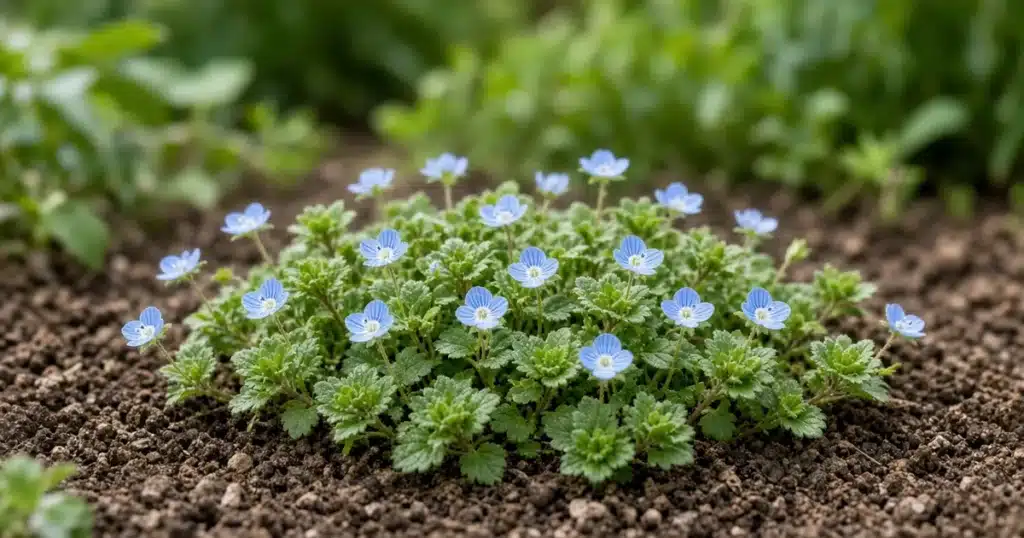
Quick answer: Persian speedwell, also called birdseye speedwell, is a low, hairy winter annual with creeping stems and small blue flowers marked with dark lines and a white center. UC IPM says it reproduces by seed and blooms from February through May. Pull or hoe it in late winter, before the capsules mature and release seed, then mulch bare soil.
What Is Persian Speedwell?
A small, sprawling annual that does most of its growing in cool weather. The University of California Statewide IPM Program (UC IPM) says Persian speedwell, also called birdseye speedwell, is primarily a winter annual but can be a summer annual in cooler locations. Its habitat list includes gardens, landscaped areas, turf, crop fields and roadsides.
NC State Extension says it is native to Eurasia and has naturalized throughout North America. It prefers partial to full sun, moist conditions and rich loamy soil, but adapts to poor soil. Our overview of weed control in outdoor cannabis covers the general plan, and this guide focuses on one of the first weeds to show up in a resting bed.
How Do You Identify Persian Speedwell?
Look for the flowers. UC IPM says the single flowers are about 1/3 to 1/2 inch wide and blue with darker lines and white centers. Other features from UC IPM and NC State:
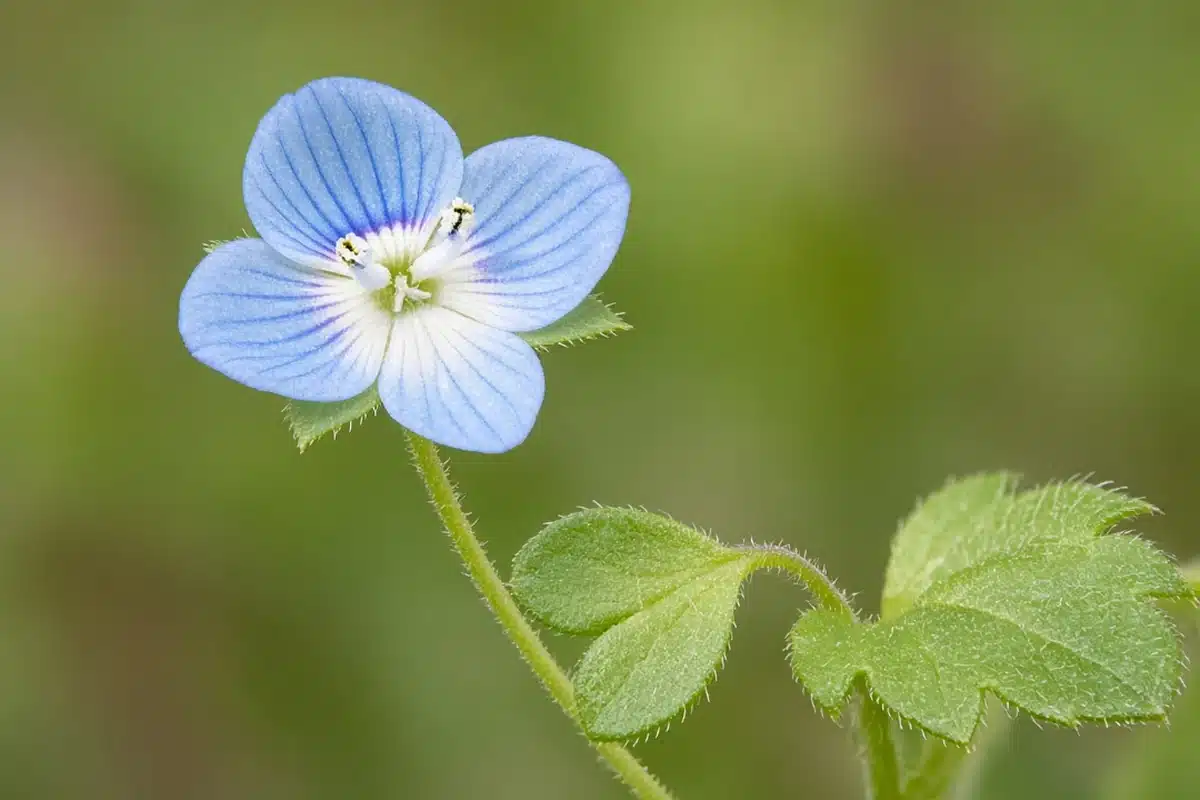
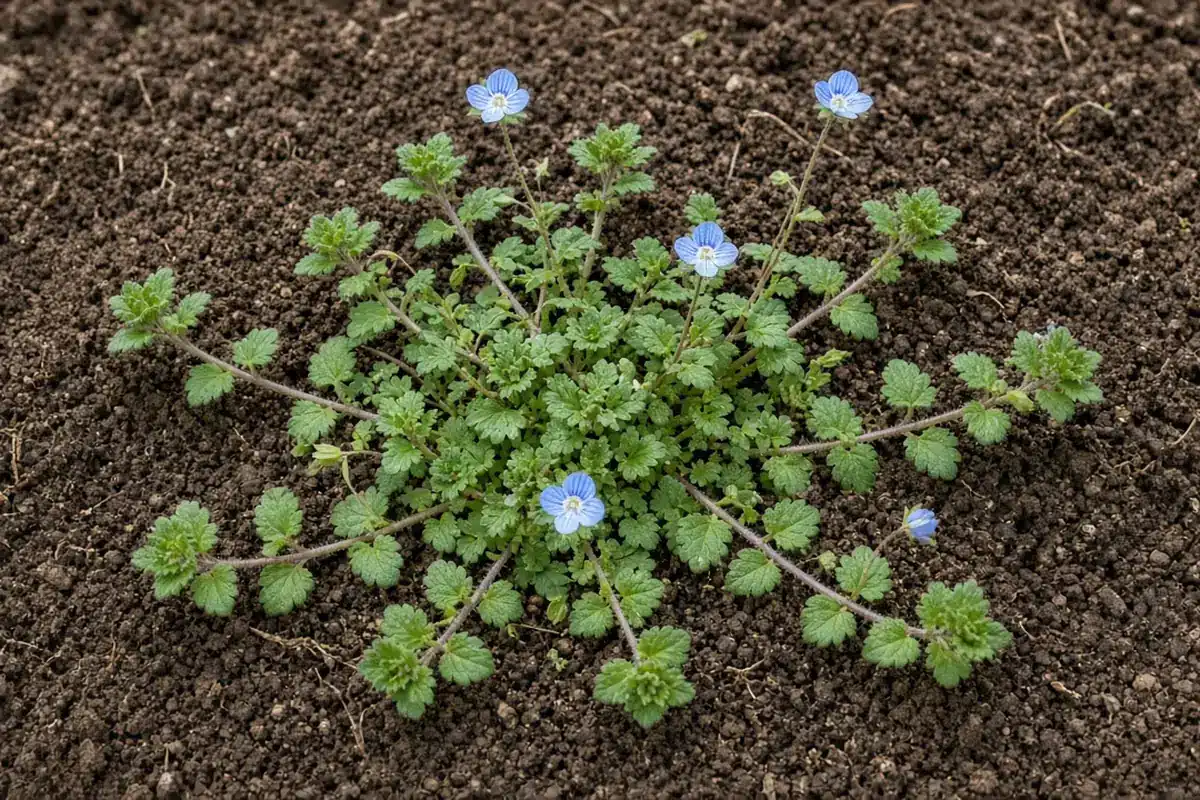
- Habit. UC IPM says the stem is prostrate and up to 2 feet long. NC State says the reddish, hairy stems lie low with upright ends.
- Height. NC State gives a height of about 4 to 8 inches.
- Hairs. UC IPM says the entire plant is covered with hairs.
- Leaves. Roundish or oval and stalked. NC State says they are up to 1/2 inch long, medium to dark green and slightly hairy.
- Leaf pattern. Opposite on the lower stems and alternate on flowering stems.
- Flower stalks. Long, about 3/5 to 1 1/5 inches, arising where the leaf stalk meets the stem.
UC IPM says the seedlings have triangular to egg shaped seed leaves and hairy first leaves with shallow teeth.
How Is It Different From Thymeleaf Speedwell?
Check the upper leaves. UC IPM says Persian speedwell leaves are stalked, while thymeleaf speedwell has stalked lower leaves but stalkless upper leaves. UC IPM adds that thymeleaf speedwell has mostly hairless leaves, while Persian speedwell is hairy all over.
If the flowers are pink to purple rather than blue, compare the plant with our guide to henbit in cannabis beds. Pull henbit before it sets seed too.
Why Does Persian Speedwell Matter Near Cannabis?
It claims bare soil early. NC State says most of its growth and development happens during the cool weather of late winter or early spring. That is the time a cannabis bed often sits empty, waiting for planting.
It also tends to seed before you plant. UC IPM says the fruits are small, heart shaped, two chambered capsules that open at the top to release several seeds. NC State counts 5 to 10 seeds per lobe. Plants left until spring can drop that seed into the bed right before your cannabis goes in.
When Does Persian Speedwell Grow?
From late fall into spring. UC IPM says flowering takes place from February through May, and NC State says it blooms from winter through early summer depending on the region. NC State adds that it is found in lawns, fields, gardens and other disturbed soil.
UC IPM’s landscape guide says the best time to look for winter annual weeds is mid to late winter. Make a pass then, and make another a few weeks later. Our guide to fall garden cleanup after cannabis harvest covers the first chance to keep beds clear after harvest.
Why Does It Spread Across Paths and Edges?
It hugs the ground closely. UC IPM says that when it is mowed often, the plant becomes compressed and low growing. That habit lets it live in turf and along lawn edges where taller weeds would be cut back.
From those edges, it moves into open soil. UC IPM’s landscape guide says mulch prevents weed seed germination by blocking sunlight, and it advises covering bare areas quickly. Keeping the strip between lawn and bed mulched gives speedwell seed fewer places to start.
How to Control Persian Speedwell in a Cannabis Bed

- Learn the flower. Blue petals with darker lines and a white center mark it, as UC IPM describes.
- Scout in late winter. UC IPM’s landscape guide says that is the best time to find winter annuals.
- Pull or hoe young plants. UC IPM’s landscape guide says to remove young weeds by hand before they flower and set seed.
- Lift the whole stem. UC IPM says stems creep up to 2 feet, so lift the whole plant with all its stems.
- Clear lawn edges. UC IPM says mowed plants become compressed and keep growing in turf.
- Bag plants with capsules. UC IPM says the capsules open at the top to release seed.
- Mulch bare soil. UC IPM recommends a medium mulch kept 3 to 4 inches deep. Our guide to mulch for cannabis compares materials.
Persian Speedwell at a Glance
| Subject | Extension finding | Attribution |
|---|---|---|
| Life cycle | Mostly winter annual | UC IPM, NC State |
| Height | About 4 to 8 inches | NC State |
| Stems | Prostrate, up to 2 feet long | UC IPM |
| Flowers | Blue with darker lines, white center | UC IPM, NC State |
| Bloom | February through May | UC IPM |
| Reproduction | By seed | UC IPM |
Should You Use Herbicides Near Cannabis?
No. Pull, hoe shallowly and mulch. Remember that EPA has not registered any herbicide for use on marijuana, and state rules vary, so check with your state agriculture department. UC IPM says home gardeners who hand weed and mulch should not need herbicides. Before you plant cannabis outdoors, check your state’s home grow law.
Troubleshooting Persian Speedwell
A blue carpet covers the bed in spring. NC State says most growth happens in late winter and early spring. Scout earlier next season.
Pieces break off when you pull. UC IPM says stems creep up to 2 feet. Follow each stem to its root.
It keeps coming in from the lawn. UC IPM says mowed plants stay compressed in turf. Mulch the strip at the lawn edge.
You cannot tell which speedwell it is. UC IPM says Persian speedwell has stalked, hairy leaves. Manage all speedwells the same way.
Seedlings return after cleanup. UC IPM says capsules release several seeds. Bag plants that already flowered.
At Kind Seed Co, we give resting beds a quick late winter walk, because tiny blue flowers are easy to miss.
Frequently Asked Questions
Is Persian speedwell an annual?
Yes. UC IPM says Persian speedwell is primarily a winter annual, though it can be a summer annual in cooler locations. NC State calls it a weedy annual that does most of its growing in the cool weather of late winter and early spring. It reproduces by seed, so pulling it before flowers become capsules is the key.
How can I identify Persian speedwell?
Look for a low, hairy plant with creeping stems and small blue flowers with darker lines and a white center. UC IPM says each flower sits on a long stalk and the whole plant is covered with hairs. NC State says the leaves are up to 1/2 inch long and the stems are reddish and hairy.
When does Persian speedwell bloom?
UC IPM says it flowers from February through May. NC State says it blooms from winter through early summer, depending on the region. UC IPM’s landscape guide says mid to late winter is the best time to look for winter annual weeds, so scout resting cannabis beds then and pull plants before they flower.
Is birdseye speedwell the same plant?
Yes. UC IPM says Persian speedwell is also called birdseye speedwell, and NC State lists it under the name birdeye speedwell. Both names refer to Veronica persica, the same low, hairy winter annual with small blue flowers, creeping stems and heart shaped seed capsules that open at the top to release several seeds.
Where does Persian speedwell grow?
UC IPM lists gardens, landscaped areas, turf, orchards, vineyards, crop fields and roadsides. NC State says it prefers partial to full sun, moist conditions and rich loamy soil but adapts to poor soil. In a home garden, look for it in resting beds, lawn edges and any patch of bare soil through late winter.
Sources
- UC Statewide IPM Program, Persian Speedwell, Weed Gallery: https://ipm.ucanr.edu/weeds-identification-gallery/persian-speedwell/
- NC State Extension Gardener Plant Toolbox, Veronica persica: https://plants.ces.ncsu.edu/plants/veronica-persica/
- UC Statewide IPM Program, Weed Management in Landscapes: https://ipm.ucanr.edu/home-and-landscape/weed-management-in-landscapes/


