
Dandelions in Cannabis Beds: Taproots and Prevention
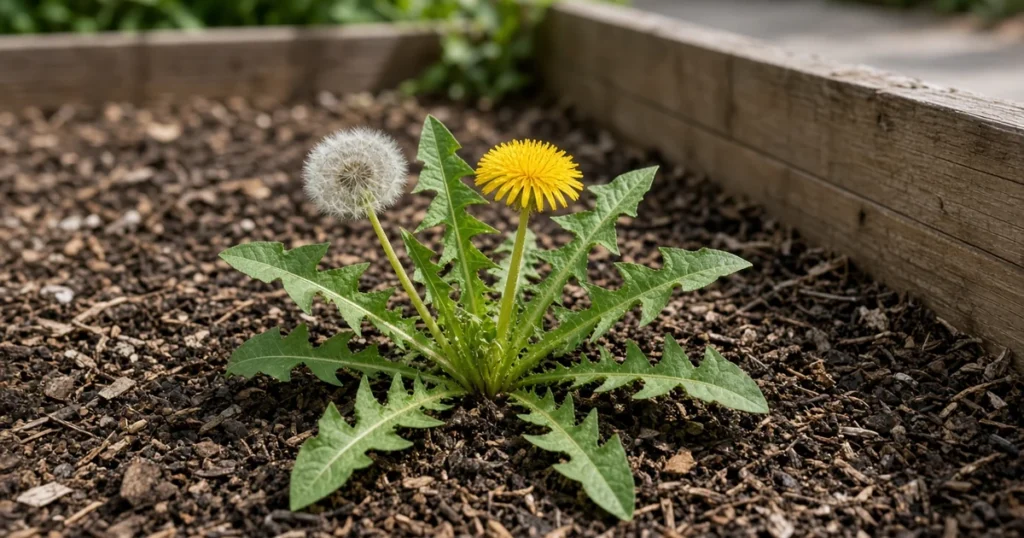
Quick answer: Dandelion is a perennial with a deep taproot, and UC IPM says a piece of root just 1 inch long can grow a new plant. Iowa State Extension says hand pulling and digging work best in garden beds. Dig out the whole taproot after a soaking rain, remove plants before they seed, then mulch.
What Is a Dandelion?
A long lived perennial weed. The University of California Statewide IPM Program (UC IPM) calls dandelion a common perennial weed in lawns and landscapes and a major problem in ornamental plantings, pastures and crops. UC IPM says it grows best in moist areas in full sun, but once established it can survive some shade and dry conditions.
In a cannabis bed, UC IPM’s note on impact is the one to remember. Dandelions can form a dense mat of leaves 6 to 14 inches across that crowds out other plants and reduces the vigor of the ones that survive. Our overview of weed control in outdoor cannabis covers the wider picture.
How Do You Identify a Dandelion?
It has no true stem. UC IPM says the leaves cluster in a rosette at the base of the plant, ranging from 2 to 14 inches long and 1/2 to 3 inches wide. The edges are deeply toothed, giving the classic lion’s tooth outline that the common name comes from.
Other clues from UC IPM:
- Flower stalks. Stalks 6 to 24 inches long, each topped with one yellow head made of 100 to 300 small ray flowers.
- Seed heads. The familiar puffball. Each seed sits on a slender stalk that ends in a tiny parachute.
- Crown. UC IPM says plants can survive for many years and develop thickened crowns 6 to 10 inches across, with leaves 2 to 14 inches long.
- Root. A strong taproot, most commonly in the top 6 to 18 inches of soil.
Why Do Dandelions Grow Back After Pulling?
The root just regrows. UC IPM explains that buds form on the top of the root and build a crown that can regenerate a new plant even when the plant is cut off at or below the soil surface. Sections of root as short as 1 inch can also grow new plants.
That is why UC IPM says hand pulling or hoeing is usually futile unless it is repeated over a long period. Snapping off the leaves leaves the engine in the ground. Removing the whole taproot is the goal every time.
How Far Do Dandelion Seeds Travel?
They can travel for miles. UC IPM says the puffball structure lets seeds ride wind currents for miles, and that seeds can also be moved by equipment. That is what makes preventing new infestations so hard. Even a clean bed can pick up seed from a neighbor’s lawn.
Seeds sprout at or very near the soil surface, UC IPM notes. Germination happens through the growing season whenever soil is moist and at least 50°F, runs faster near 77°F, and increases with light. The seedling stage lasts 8 to 15 weeks depending on conditions.
Does Mowing or Cutting Stop Dandelions?
No. UC IPM says dandelion grows from a basal rosette lower than a mower blade can reach, so mowing alone will not control it. Cutting the tops in a bed works the same way. The crown stays put and simply sends up more leaves and flower stalks.
When Is the Best Time to Dig Dandelions?
Right after a soaking rain. Iowa State University Extension says pulling and digging are best done after a soaking rain or deep watering, when the soil lets go of the root more easily. If rain is scarce, water the area deeply the day before. Our guide to drip irrigation for cannabis can help you soak just the spots you plan to weed.
How to Control Dandelions in a Cannabis Bed
- Soften the soil first. Iowa State says to dig after a soaking rain or deep watering.
- Use a narrow digging tool. For lawns, Iowa State suggests a fishtail weeder, also called an asparagus knife or dandelion digger, or a spade, trowel or pocket knife. UC IPM says dandelion knives remove the root while limiting soil disturbance. Keep the blade clean and sharp with our guide to cleaning and storing garden tools for winter.
- Get the whole taproot. UC IPM says to grub out the entire plant, taproot and all. Iowa State says pulling the full root prevents resprouting.
- Beat the seed heads. UC IPM says to dig new plants out before they produce seed. Iowa State adds that preventing seed further reduces spread.
- Mulch the bed. Once beds are clear, Iowa State says to keep them clean by mulching and removing new plants as soon as you see them. Our guide to mulch for cannabis compares materials.
- Watch the spot for months. UC IPM says to monitor the area for several months to make sure removal of the taproot was complete.
- Stay persistent. Iowa State calls persistence the key to effective control. Pull new plants whenever you notice them.
Dandelion at a Glance
| Subject | Extension finding | Attribution |
|---|---|---|
| Life cycle | Perennial | UC IPM |
| Taproot depth | Mostly top 6 to 18 inches | UC IPM |
| Regrowth | From root pieces as short as 1 inch | UC IPM |
| Germination | Soil at least 50°F, faster near 77°F | UC IPM |
| Best removal | Hand pulling and digging in garden beds | Iowa State |
| Best timing | After a soaking rain or deep watering | Iowa State |
Should You Use Herbicides Near Cannabis?
No. Dig, mulch and keep at it. No EPA registered herbicide label lists cannabis as a use site, and state rules vary, so check your state agriculture department. UC IPM says herbicides should not normally be needed by home gardeners.
Troubleshooting Dandelions
The same plant keeps coming back. UC IPM says 1 inch of root can regrow. Dig deeper and check the spot for several months.
The root snaps every time. Iowa State says to dig after a soaking rain. Moist soil releases the root more cleanly.
New seedlings show up in a clean bed. UC IPM says seed travels miles on the wind. Pull seedlings as soon as you spot them and keep mulch in place.
Cutting the tops did nothing. UC IPM explains the rosette sits too low for a blade. Remove the crown and root instead.
Plants are already in bloom. Pull them now. UC IPM and Iowa State both stress removal before seed.
For dandelions in cannabis beds, digging out the whole root and keeping mulch in place does most of the work, and the Kind Seed Co weed guides cover more species.
Sources
- UC Statewide IPM Program, Dandelion Pest Notes: https://ipm.ucanr.edu/home-and-landscape/dandelion/
- Iowa State University Extension Yard and Garden, Control of Dandelions: https://yardandgarden.extension.iastate.edu/how-to/control-dandelions
- UC Statewide IPM Program, Weed Management in Landscapes: https://ipm.ucanr.edu/home-and-landscape/weed-management-in-landscapes/
FAQ
Why do dandelions keep coming back in my cannabis bed?
Dandelion is a perennial with a strong taproot. UC IPM says the crown can regenerate a new plant even when cut at or below the soil surface, and root pieces as short as 1 inch can grow too. Leaving part of the root behind is the most common reason the same plant returns in the same spot.
What is the best way to remove dandelions from a garden bed?
Iowa State Extension says hand pulling and digging are the best methods in garden areas. Use a fishtail weeder, trowel or spade to lift the rosette and the whole taproot. Dig after a soaking rain or deep watering, and repeat whenever new plants appear, because persistence is the key to control.
How long does it take dandelion seedlings to mature?
UC IPM says the dandelion seedling stage can last 8 to 15 weeks, depending on temperature and growing conditions, and growth slows in cold weather. Flowering starts early and continues for the life of the plant. Pulling seedlings during that window is far easier than digging an established crown later.
Does mulch stop dandelions?
Mulch helps. Iowa State Extension says to keep cleared beds clean by mulching and removing new plants as soon as they appear. UC IPM notes that dandelion seed sprouts at or near the soil surface and that light increases germination, which is why a covered surface gives new seedlings a harder start.


