
Common Groundsel in Cannabis Beds: Fast Cycle Weed
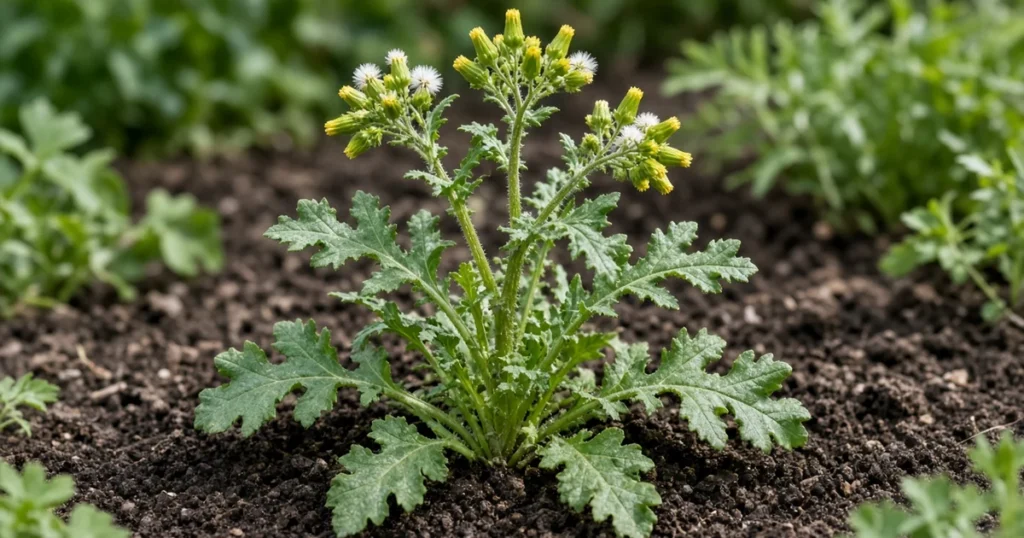
Quick answer: Common groundsel is a winter annual that thrives in cool, moist weather and turns tiny yellow flowers into white puffball seed heads. The UC ANR Pests in the Urban Landscape blog says it is best controlled before it flowers, that mulch is highly effective, and that young plants can be hoed out. Act in fall and early spring.
What Is Common Groundsel?
It is a quick cool season weed. The University of California Statewide IPM Program (UC IPM) calls common groundsel a widespread winter annual broadleaf that can grow all year in mild coastal areas. Infestations are most problematic during cool, moist periods, and plants die during extended hot, dry spells.
The UC Agriculture and Natural Resources (UC ANR) Pests in the Urban Landscape blog lists groundsel among the most troublesome weeds in planting beds in late winter and early spring. It says the plant is most prolific in cool weather, produces many seeds and can rapidly infest beds. For cannabis growers, that means groundsel is mainly a problem in empty beds before planting and after harvest. Our overview of weed control in outdoor cannabis covers the wider picture.
How Do You Identify Common Groundsel?
The black tipped bracts are the giveaway. UC IPM says small green leaflike bracts with conspicuous black tips hug the base of each flower head, which sets groundsel apart from its relatives. Other traits from UC IPM:
- Seedlings. Narrow, football shaped seed leaves 1/10 to 2/5 inch long, often purplish underneath. The first true leaves are egg shaped with shallow teeth, and the third and fourth leaves are more deeply lobed.
- Young plants. These stay as rosettes until maturity.
- Mature plants. Up to 2 feet tall, with one stem or several branching from the base.
- Leaves. Highly variable, deeply lobed with toothed edges. Upper leaves attach directly to the stem, while lower leaves have short stalks.
- Flowers. Tiny yellow flowers in small, plain flower heads at the stem tips.
- Seed heads. White puffballs similar to dandelion seed heads.
Why Does Groundsel Spread So Fast?
It flowers nearly all year and seeds heavily. UC IPM says common groundsel blooms nearly year round, and each flower head matures into a puffball of tiny fruits tipped with delicate white hairs. The UC ANR blog adds that it produces many seeds and can rapidly infest landscape beds.
A short cycle and a big seed crop mean a missed plant in fall can leave many more by spring. Catching plants before the first puffballs open is the whole game.
When Is Groundsel Most Active?
It is most active during cool, moist months. UC IPM says it is most problematic in cool, moist periods and dies in extended hot, dry weather. The UC ANR blog says it germinates from seed in cool weather and is especially troublesome from late winter into early spring.
In many outdoor gardens, that timing lines up with the off season. Beds left bare after harvest are an open invitation. Our guide to fall garden cleanup after cannabis harvest is a good time to check for seedlings.
Does Mulch Work on Groundsel?
It works very well. The UC ANR blog says mulch is highly effective at controlling common groundsel. UC IPM’s landscape guide explains that mulch blocks the sunlight weed seeds need to sprout, and recommends a medium mulch about 3/4 inch in size kept 3 to 4 inches deep. Our guide to mulch for cannabis compares materials.
How Often Should You Cultivate for Groundsel?
Every few weeks is about right. For annual flower beds, the UC ANR blog says periodic cultivation every 3 to 4 weeks will suppress many weeds, and that dense planting shades out weeds. UC IPM’s landscape guide adds that cultivation should stay shallow, since deep tilling brings buried weed seed to the surface.
How to Control Common Groundsel in a Cannabis Bed
- Scout in cool weather. UC IPM and the UC ANR blog both point to cool, moist periods. Check beds from fall through early spring.
- Hoe young plants. The UC ANR blog says young groundsel can be hoed out. Hoeing works best on young plants.
- Remove plants before flowering. The blog says groundsel is best controlled before it flowers. Watch for the black tipped bracts.
- Bag plants with puffballs. UC IPM describes puffball seed heads. Bag those plants so seeds do not drift.
- Mulch bare beds. The UC ANR blog calls mulch highly effective. Keep it 3 to 4 inches deep, as UC IPM’s landscape guide advises.
- Cultivate every 3 to 4 weeks. The blog recommends that interval for annual beds, and UC IPM’s landscape guide says to keep it shallow.
- Clean tools between beds. UC IPM’s landscape guide recommends cleaning hoes, shovels and other equipment to avoid moving weed seed. See our guide to cleaning and storing garden tools for winter.
Common Groundsel at a Glance
| Subject | Extension finding | Attribution |
|---|---|---|
| Life cycle | Winter annual, all year in mild coastal areas | UC IPM |
| Peak season | Cool, moist periods | UC IPM, UC ANR blog |
| Heat | Dies in extended hot, dry periods | UC IPM |
| Mature height | Up to 2 feet | UC IPM |
| Key trait | Black tipped bracts under flower heads | UC IPM |
| Best control | Before flowering, with mulch and hoeing | UC ANR blog |
Should You Use Herbicides Near Cannabis?
No. Hoe, pull and mulch. No EPA registered herbicide label lists cannabis as a use site, and state rules vary, so check your state agriculture department. UC IPM says herbicides should not normally be needed by home gardeners.
Troubleshooting Common Groundsel
Beds fill with groundsel every spring. The UC ANR blog says it is most prolific in cool weather. Mulch beds after harvest and check them through winter.
Plants already have white puffballs. UC IPM describes puffball seed heads. Pull and bag those plants now.
Hoed plants keep coming back. Groundsel produces many seeds, the UC ANR blog says, and young plants can be hoed out. Hoe new seedlings before they flower.
It disappeared in summer and returned in fall. UC IPM says plants die in hot, dry weather. New plants come from seed when it cools.
You are not sure it is groundsel. Look for UC IPM’s black tipped bracts at the base of the flower heads.
Hand pulling, hoeing and mulch are enough for groundsel in most cannabis beds, and the Kind Seed Co weed guides cover more species.
Sources
- UC Statewide IPM Program, Common Groundsel, Weed Gallery: https://ipm.ucanr.edu/weeds-identification-gallery/common-groundsel/
- UC ANR Pests in the Urban Landscape, Weeds in Landscape Plantings: https://ucanr.edu/blog/pests-urban-landscape/article/weeds-landscape-plantings
- UC Statewide IPM Program, Weed Management in Landscapes: https://ipm.ucanr.edu/home-and-landscape/weed-management-in-landscapes/
FAQ
When does common groundsel grow?
UC IPM says common groundsel is a winter annual that is most problematic during cool, moist periods, and it can grow all year in mild coastal areas. Plants die back during extended hot, dry weather. In many outdoor cannabis gardens, that makes fall, winter and early spring the seasons to watch your beds closely.
How do I identify common groundsel?
Look at the base of the small yellow flower heads. UC IPM says green bracts with conspicuous black tips hug the base, which sets groundsel apart from similar plants. Mature plants reach about 2 feet, with deeply lobed, toothed leaves, and the flower heads turn into white puffball seed heads.
Does mulch stop common groundsel?
Yes. The UC ANR Pests in the Urban Landscape blog says mulch is highly effective at controlling common groundsel. UC IPM's landscape guide recommends a medium mulch kept about 3 to 4 inches deep to block the light weed seeds need. Add mulch after clearing plants, and hoe out any seedlings that appear.
When should I remove groundsel from my beds?
Remove it before it flowers. The UC ANR blog says common groundsel is best controlled before flowering, because it produces many seeds and can rapidly infest beds. Hoe or pull young rosettes during cool weather, and bag any plants with white puffball seed heads so the seeds do not drift into nearby beds.


