
Deer Resistant Plants: How Ratings Work and Which Plants Deer Avoid
The short answer
Deer resistant plants are ones deer tend to avoid, but no plant is fully deer proof. Rutgers lists plants by how often deer damage them, from rarely to frequently. Choose plants rated rarely or seldom damaged, favor aromatic or fuzzy leaves and use fencing for the plants deer love most.
Deer browse gardens across much of the US. A hungry herd can strip hostas and roses overnight. Smart plant choices cut losses a great deal, even where deer visit often.

What does deer resistant mean?
Deer resistant doesn’t mean deer proof. It means deer eat the plant less often than others.
Deer are browsers. They taste many plants and pick the ones they like most. When food is scarce, they eat plants they would usually skip.
That is why a plant may thrive untouched for years, then get eaten in a hard winter. Hunger, herd size and season all change what deer will eat.
The Rutgers Cooperative Extension deer resistance ratings explain that ratings reflect how often damage is seen, not a promise.
Our post on deer in gardens covers deer habits and the signs of browsing.
How are plants rated?
Rutgers groups plants into four ratings based on reports from gardeners and nurseries.
| Rating | Meaning | Examples |
|---|---|---|
| Rarely damaged | Deer usually skip it | Daffodils, lavender, boxwood |
| Seldom severely damaged | Light browsing at times | Bee balm, catmint, spirea |
| Occasionally severely damaged | Eaten in some years | Hydrangea, viburnum |
| Frequently severely damaged | Deer favorites | Hostas, tulips, roses, arborvitae |
Source: Rutgers Cooperative Extension.
Ratings vary by region. Local deer pressure affects which plants get browsed. Ask local gardeners and nurseries which plants hold up near you.
Which traits do deer avoid?
Many deer resistant plants share a few traits.
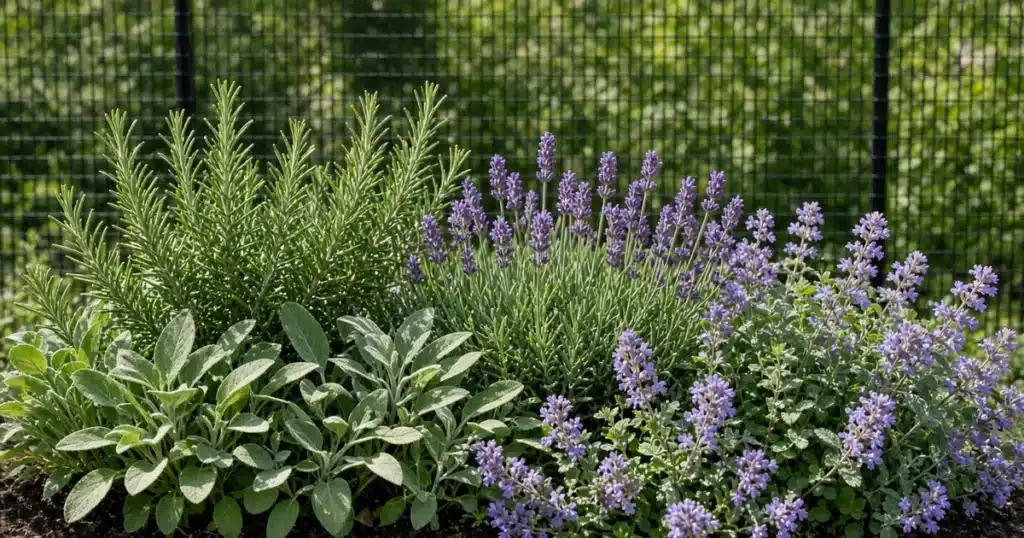
Heavy scent. Aromatic herbs such as lavender, sage, rosemary and mint often go untouched.
Fuzzy or hairy leaves. Lamb’s ear and some salvias feel unpleasant to deer.
Tough or leathery leaves. Thick evergreen foliage is harder to chew.
Bitter or milky sap. Daffodils and milkweed taste bitter to deer.
Grassy texture. Many ornamental grasses rank low on deer menus.
Plants with soft, tender, smooth leaves are usually favorites. Hostas, daylilies and tulips top most lists.
Which flowers and shrubs hold up well?
Spring bulbs are a good start. Daffodils, alliums and snowdrops are rarely browsed.
For summer color, try catmint, yarrow, Russian sage, coreopsis and black eyed Susan. Many of these also feed bees and butterflies.
For shrubs, boxwood, barberry alternatives such as bayberry, and many junipers see little damage. Spirea and potentilla hold up well in many regions.
Ornamental grasses such as switchgrass, little bluestem and fountain grass rank low on deer menus. They add texture and winter interest.
Ferns are another good pick for shady beds, and most deer leave them alone.
Start small with new choices. Watch them through one full year before you plant more.

How to: step by step
- Learn how often deer visit your yard.
- Check a deer resistance rating list.
- Choose plants rated rarely damaged.
- Favor aromatic, fuzzy or tough leaves.
- Group vulnerable plants inside fencing.
- Watch for damage and adjust plantings.
How do you plan beds around deer?
Put the most resistant plants along the outer edges of beds, since deer tend to nibble edges first.
Plant favorites closer to the house, where deer visit less often. Group them so one fence or barrier protects all of them.
Mix heavily scented plants among vulnerable ones. Some gardeners find the scent masks tastier plants.
Our post on companion plants lists aromatic herbs that pair well with flowers and vegetables.
Do barriers and repellents help?
Fencing is the most reliable way to stop deer. Many gardeners use fences about eight feet tall for open yards.
Netting or cages protect single shrubs and young trees.
Repellents help for short spells. Rotate products, since deer get used to one scent. Reapply after heavy rain.
Our post on ways to protect plants from pests covers fences, covers and other barriers.
Which vegetables do deer skip?
Deer tend to leave onions, garlic, leeks and many herbs alone. Rhubarb leaves and hot peppers are also less appealing.
Lettuce, beans, peas, squash and sweet corn are favorites. Grow these inside a fenced area if deer visit often.
Troubleshooting
Resistant plants still eaten. Deer may be hungry or the herd large. Add fencing or repellents.
Damage only in winter. Food is scarce then. Wrap shrubs in netting from late fall.
New plants browsed first. Young growth is tender. Protect transplants until they toughen.
Repellent stopped working. Switch to a different scent or type.
Only edges damaged. Line the bed with more resistant plants.
The right plant list and a few barriers leave beds looking full. Kind Seed Co shares more garden ideas in outdoor growing.
Sources
- Landscape plants rated by deer resistance, Rutgers Cooperative Extension, Landscape plants rated by deer resistance
FAQ
Are any plants deer proof?
No. Hungry deer eat almost anything, but some plants are rarely damaged.
Do repellents work?
They help for a while. Rotate products and reapply after rain.
Do deer eat herbs?
Deer usually avoid aromatic herbs such as lavender, sage and rosemary.
How tall must a deer fence be?
Many gardeners use about eight feet for open yards.
Do deer eat daffodils?
Rarely. Daffodils taste bitter, so deer usually skip them.



