
Rabbit Proof Garden: Fencing and Barrier Guide

The short answer
A rabbit proof garden relies on a physical barrier. Missouri and Georgia Extension suggest small mesh wire fencing about two feet tall, with the bottom buried or bent outward so rabbits cannot dig under. Close every gap at gates and corners, and use cages or row covers to guard single plants.
Rabbits can clear a row of young beans or lettuce in one night. Sprays and scare tactics give mixed results. A well built fence is the one method that works season after season.
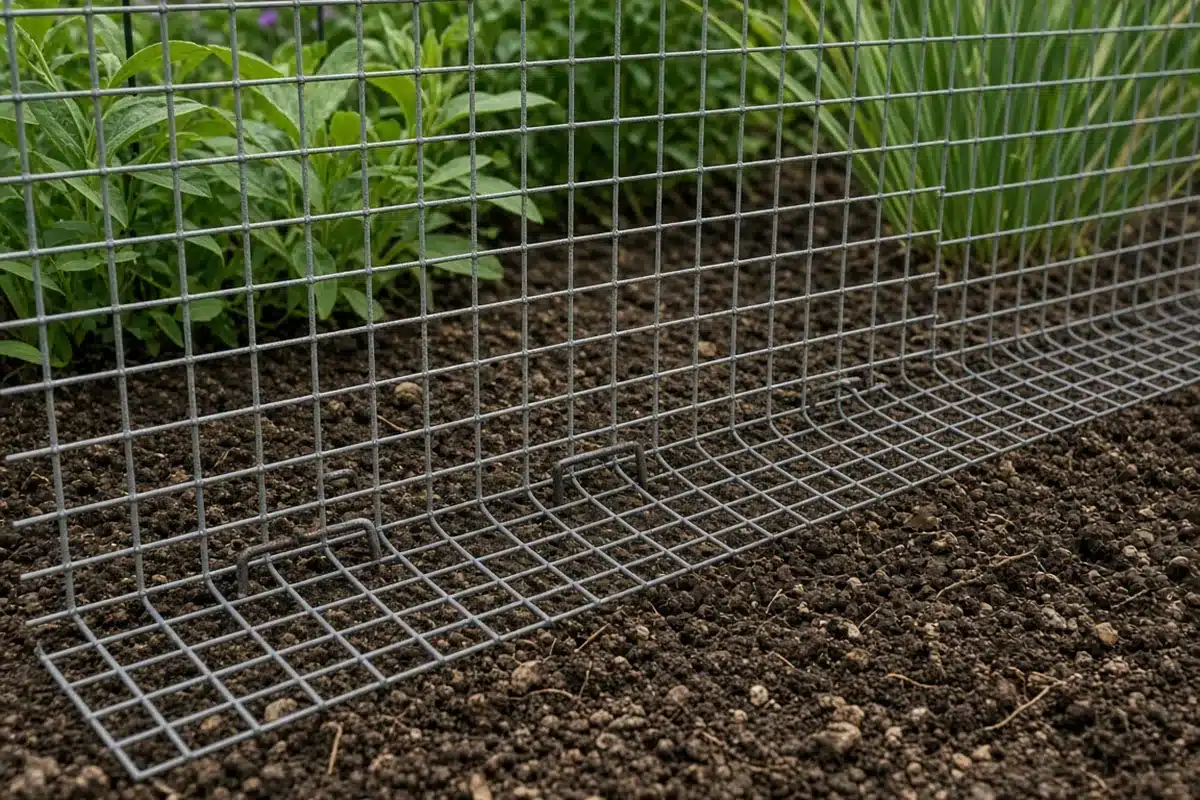
Which fence shuts rabbits out?
Cottontail rabbits are small and quick, but they are poor climbers or jumpers. A low, tight fence stops most of them.
The University of Missouri Extension guide to cottontail rabbit damage recommends mesh of one inch or smaller so young rabbits cannot squeeze through.
Hardware cloth with half inch mesh is the most durable choice. Galvanized poultry netting costs less but may rust and sag after a few seasons.
Use steel T posts or wooden stakes every six to eight feet. Fasten the mesh tightly so it does not bulge at the bottom.
Our post on rabbits in gardens explains rabbit habits and signs of their feeding.
How tall should the fence be?
Most guides suggest a fence about two feet tall for cottontails, since they rarely jump higher.
In areas with deep snow, build it taller. Snow drifts let rabbits walk over a short fence in winter.
The University of Georgia Extension garden fencing guide compares fence heights and materials for different garden animals.
| Material | Mesh size | Height | Lifespan |
|---|---|---|---|
| Hardware cloth | 1/2 inch | 24 to 30 inches | Many years |
| Poultry netting | 1 inch | 24 to 30 inches | A few seasons |
| Welded wire with liner | 1 inch at base | 30 to 36 inches | Many years |
| Floating row cover | Fabric | Over the crop | One or two seasons |
Sources: University of Missouri Extension, University of Georgia Extension, University of Arizona Cooperative Extension.
How deep should fencing go?
Rabbits dig shallow holes to get under fences. Stop them with one of two methods.
Bury the bottom. Dig a trench about four to six inches deep and set the bottom of the mesh in it. Backfill and tamp the soil.
Bend an apron outward. Bend the bottom six inches of mesh outward in an L shape. Lay it flat on the ground and pin it with garden staples or rocks. Rabbits dig at the fence line and hit the wire.
The apron method is quicker and suits rocky soil. Grass grows through it and holds it in place.
How do you close gaps?
Gates and corners are the weak spots. Rabbits find any gap a few inches wide.
Hang gates so they close tight to the ground. Add a board or mesh strip along the bottom.
Overlap mesh at corners by a few inches and tie it with wire. Check where the fence meets buildings or raised beds.
Our post on woodchucks in gardens covers fences for bigger diggers that need deeper barriers.
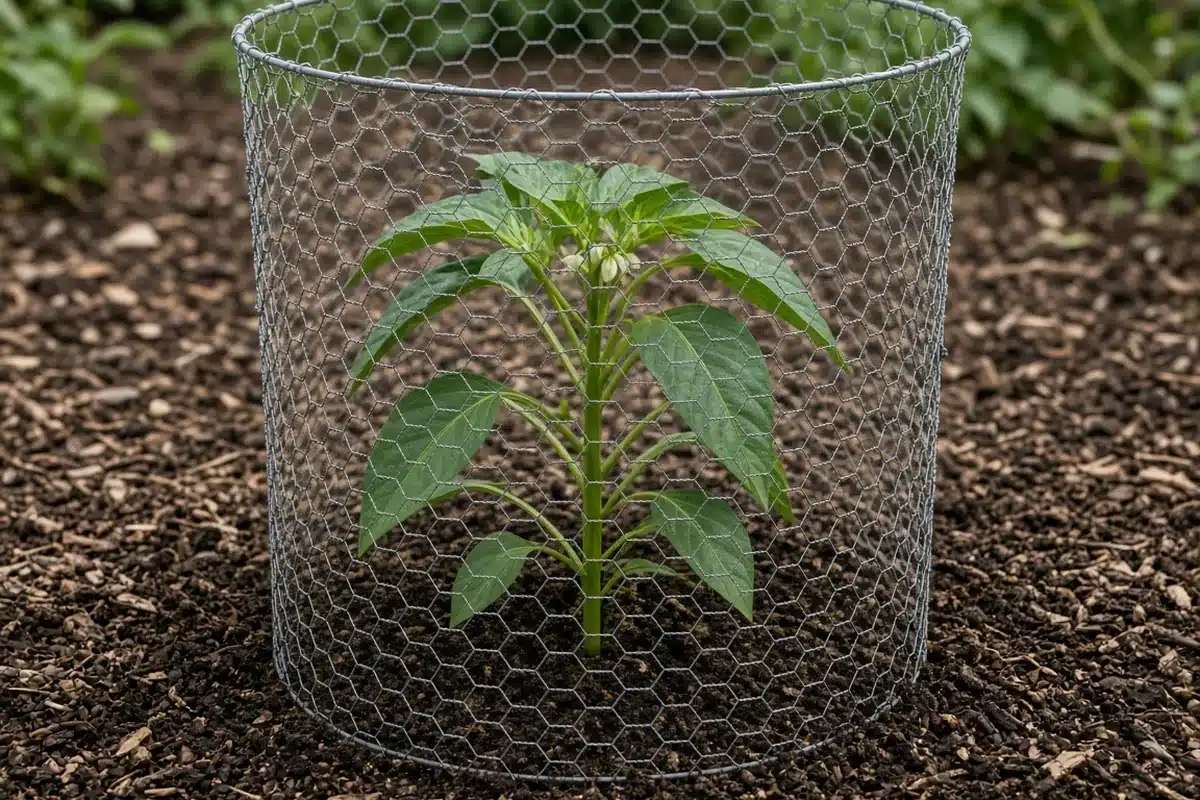
How do you protect single plants?
Not every garden needs a full fence. Cages and covers protect a few plants at a time.
Wire cylinders. Wrap hardware cloth around young shrubs and fruit trees. Rabbits gnaw bark in winter when food is scarce.
Row covers. Light fabric over hoops shields seedlings and greens from rabbits.
Raised beds with mesh sides. Beds two feet tall with a wire band shut most rabbits out.
The University of Arizona guide to managing critters in vegetable gardens describes cages, covers and fencing for small gardens.
Our companion planting guide shares bed layouts for small gardens.
How to: step by step
- Choose small mesh wire fencing.
- Set the fence about two feet tall.
- Bury the bottom or bend it outward.
- Close gaps at gates and corners.
- Use cages or row covers for single plants.
- Check the fence often for holes.
How do you maintain the fence?
Walk the fence every week or two. Look for holes, sagging mesh and dig marks along the base.
Patch holes with scrap mesh and wire ties. Pin down any aprons that lift.
Before winter, check that snow will not bury the top. Add height or move snow away from the fence.
Troubleshooting
Rabbits still inside. A gap remains. Check gates, corners and the base.
Dig holes along the fence. Add an apron or bury the mesh deeper.
Damage in winter only. Snow lets rabbits over the fence. Raise the height.
Bark chewed on young trees. Wrap trunks with hardware cloth cylinders.
Fence sags between posts. Add more posts and tighten the mesh.
A tight, low fence saves the harvest for you. Kind Seed Co shares more garden ideas in outdoor growing.
Sources
- Preventing and controlling damage caused by cottontail rabbits (G9441), University of Missouri Extension, Preventing and controlling damage caused by cottontail rabbits (G9441)
- Garden fencing (C 1027-9), University of Georgia Extension, Garden fencing (C 1027-9)
- Managing critters in vegetable gardens, University of Arizona Cooperative Extension, Managing critters in vegetable gardens
FAQ
How tall should a rabbit fence be?
About two feet stops most cottontails. Go taller where snow drifts.
Does chicken wire stop rabbits?
Yes, if the mesh is one inch or smaller and the base is sealed.
Do rabbits climb fences?
Rarely. They dig under or slip through gaps instead.
Should I use electric fencing?
Most home gardens do well with mesh alone. Mesh needs less upkeep.
What mesh size shuts baby rabbits out?
Half inch hardware cloth stops even young rabbits.



