
Drip Hydroponics for Beginners: Emitters, Media and Timers
The short answer
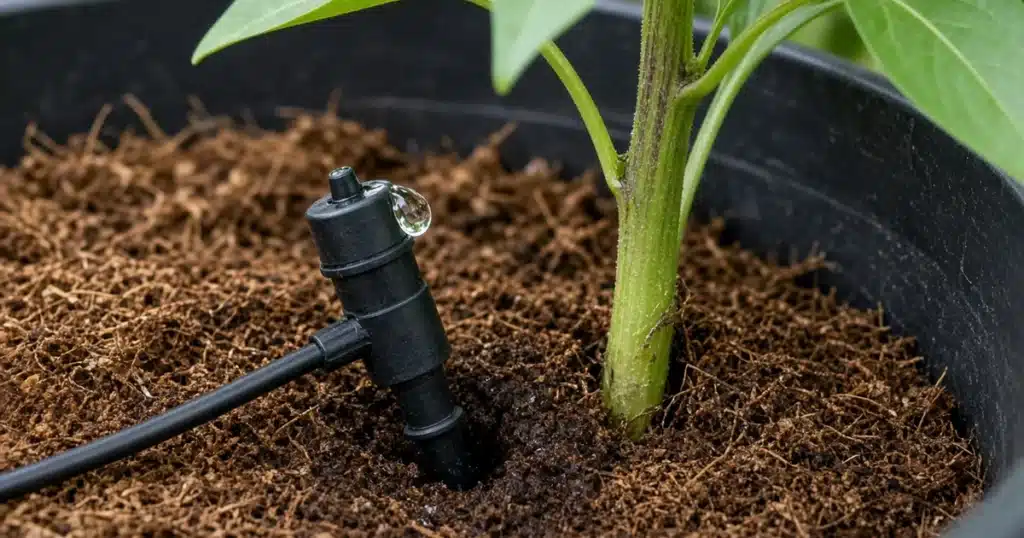
Drip hydroponics feeds nutrient solution through tubing to an emitter at the base of each plant. The plants grow in containers of inert media such as coco or perlite. A pump on a timer runs short, regular cycles. For beginners, drip hydroponics is one of the most flexible systems because it works for small herbs and large fruiting crops alike.
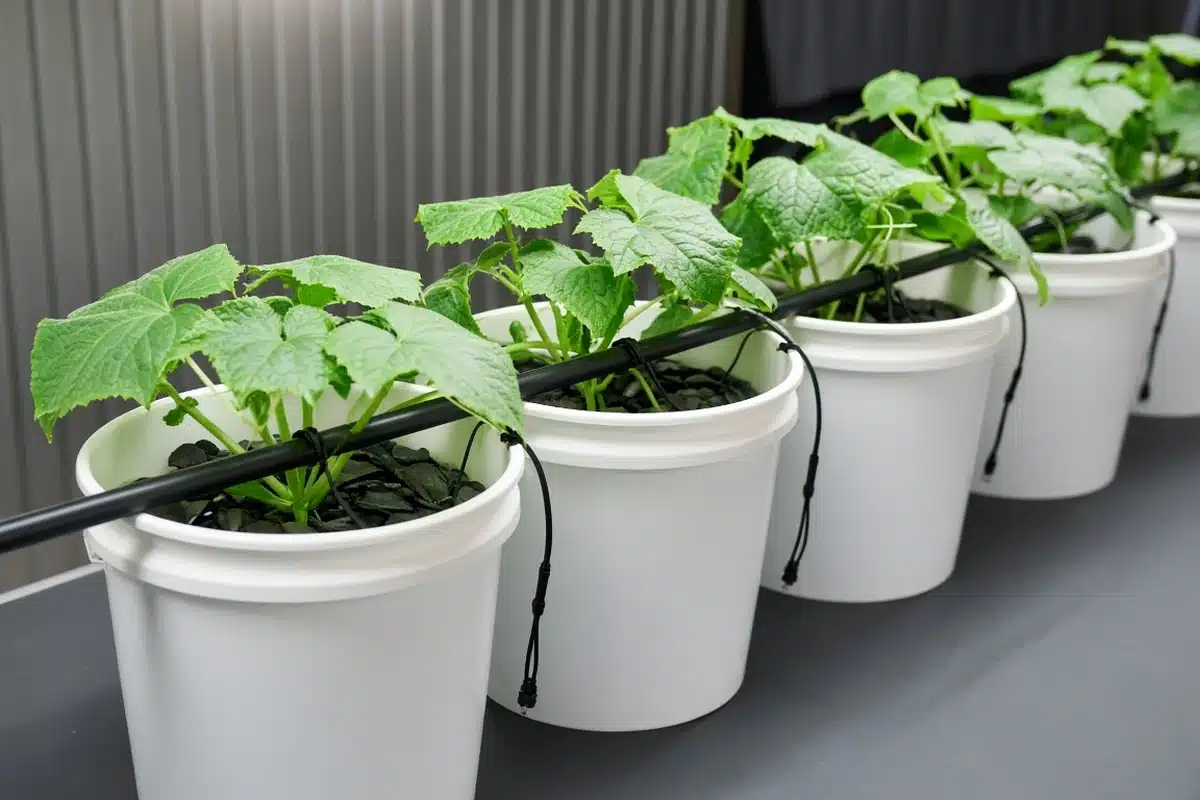
Drip is the system many greenhouse tomato and pepper growers use. At home, a simple bucket and a few lines are enough to start.
How does drip hydroponics work?
A pump sits in a reservoir, and it pushes solution into a main line. Smaller tubes branch off to each plant and end in an emitter or a stake. When the pump runs, each emitter releases solution onto the media.
The solution soaks through the media and wets the roots. Extra solution drains out the bottom. In a drain to waste setup, that runoff leaves the system. In a recirculating setup, it flows back to the tank.
The University of Tennessee Extension guide to tomatoes, peppers and cucumbers in soilless systems covers drip feeding for fruiting crops in small systems. It explains how growers use containers of media, emitters and timed feeding to grow these bigger plants.
The UMass Amherst fact sheet on hydroponic systems places drip among the main hydroponic styles. It notes that drip with inert media is common in greenhouses for long season crops.
Which media and emitters suit beginners?
Pick a medium that drains well but holds some water. Coco coir, perlite, a coco and perlite blend and rockwool are common. Clay pebbles drain fast, so they need more frequent cycles.
| Medium | Water holding | Notes |
|---|---|---|
| Coco coir | Holds moisture well | Forgiving for beginners |
| Perlite | Drains fast, holds little | Often mixed with coco |
| Rockwool | Holds a lot | Good in slabs for fruiting crops |
| Clay pebbles | Holds very little | Needs short, frequent cycles |
Sources: University of Tennessee Extension, University of Illinois Extension.
Our post on hydroponic in different mediums goes into each one in more detail.
Emitters come in a few styles. Pressure compensating emitters release the same flow along a line, even if pressure varies. Adjustable emitters let you turn flow up or down. Stakes push into the media and spread water at the root zone. For beginners, pressure compensating emitters make it easier to get even feeding.
How should you set the pump timer?
Drip systems run in short cycles. The goal is to wet the media, let some drain out and then let air back into the root zone.
The University of Illinois Extension home hydroponics handouts describe timers for small systems. They show how cycle length and frequency depend on the medium and plant size.
Start with short runs a few times a day. Watch the media and the runoff. If the media dries out between runs, add more cycles. If water pools or the media stays soggy, shorten the runs.
Big plants in warm rooms drink more, so they need more cycles. Seedlings need fewer.
How do you stop emitters clogging?
Clogs interrupt drip flow. Salts, algae and bits of media block small openings.
Use a filter on the pump intake. Cover the reservoir so light doesn’t grow algae. Flush lines with plain water between crops.
Check every emitter each day while the pump runs. A dry pot signals a clog.
Our post on drip irrigation for cannabis covers emitter layouts and line care in more depth. For cleaning routines, see caring for your hydroponic system.

How many plants can one pump feed?
A pump has a rated flow at a given height, and each emitter also has a rated flow. Add up the emitters, then pick a pump that delivers more than that total at the height of your highest line.
Leave some headroom. Filters, fittings and long tubing all reduce flow. A pump running near its limit gives weak flow at the far end of the line.
If the far plants get less, split the system into two shorter loops or add a second pump. A manifold that feeds several short lines holds pressure even.
When should you change the solution?
In a drain to waste drip system, every feeding is fresh, so you only mix new solution in the tank as it runs low. In a recirculating drip system, the solution drifts and needs full changes on a schedule. Check EC and pH every few days in either case.
How to: step by step
- Choose containers and an inert medium.
- Run main tubing from the pump.
- Add one emitter or stake per plant.
- Set a timer for short, regular cycles.
- Check flow at every emitter.
- Flush lines and clean emitters often.
Lay out the main line so each branch is short. Long branches lose pressure.
Pre wet the media before planting. Dry coco and rockwool can repel water at first.
Raise containers slightly so they drain freely into a tray or gutter.
Troubleshooting
Dry plants can mean an emitter is clogged. Clean or replace it.
Runoff pools. Cycles run too long. Shorten run time.
Uneven growth. Pressure drops along the line. Shorten lines or use a bigger pump.
Algae in lines can mean light reached the tubing. Use dark tubing and cover the tank.
Salt crust on media. There’s too little runoff. Run cycles slightly longer.
Drip hydroponics grows with you, from a few herbs to a row of tomatoes. Kind Seed Co carries cannabis seeds for growers building their first drip system.
Sources
- Tomatoes, peppers and cucumbers in small scale soilless and hydroponic systems (W 844-C), University of Tennessee Extension, Tomatoes
- Hydroponic systems, UMass Amherst Center for Agriculture, Food, and the Environment, Hydroponic systems
- Home hydroponics handouts, University of Illinois Extension, Home hydroponics handouts
FAQ
Is drip hydroponics good for tomatoes?
Yes. Drip with inert media is one of the main ways greenhouse growers raise tomatoes, peppers and cucumbers. It suits large, long season plants.
Can drip systems recirculate?
Yes. Runoff can drain back to the tank. You then monitor and adjust the solution, since it drifts as plants feed.
Which media hold the most water?
Coco coir and rockwool hold the most. Perlite and clay pebbles drain fast and need more frequent cycles.
How often should the pump run?
Start with short runs a few times a day and adjust. Large plants and warm rooms need more cycles.
What causes emitter clogs?
Salts, algae and bits of media. Filter the intake, cover the tank and flush lines often.



