
Early Blight on Tomatoes: Target Spots, Rotation and Resistant Varieties
The short answer
Early blight is a fungal disease that causes brown spots with rings, like a target, on lower tomato leaves. Those leaves then yellow and drop. The fungus spreads in splashing water and survives on old plant debris. Rotating crops, mulching, watering at the base and choosing tolerant varieties hold it in check.
Early blight is among the most common tomato problems in home gardens. Start with mulch, careful watering and enough space between plants.
How do you identify early blight?
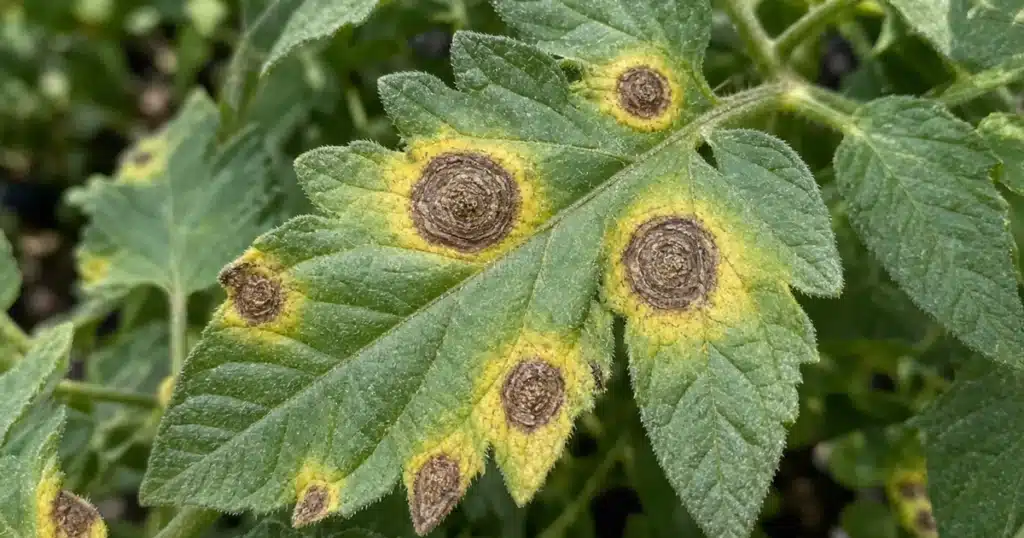
Look at the oldest, lowest leaves first. Early blight starts there. Spots are brown to black and often have rings inside them, like a target. A yellow halo often surrounds each spot.
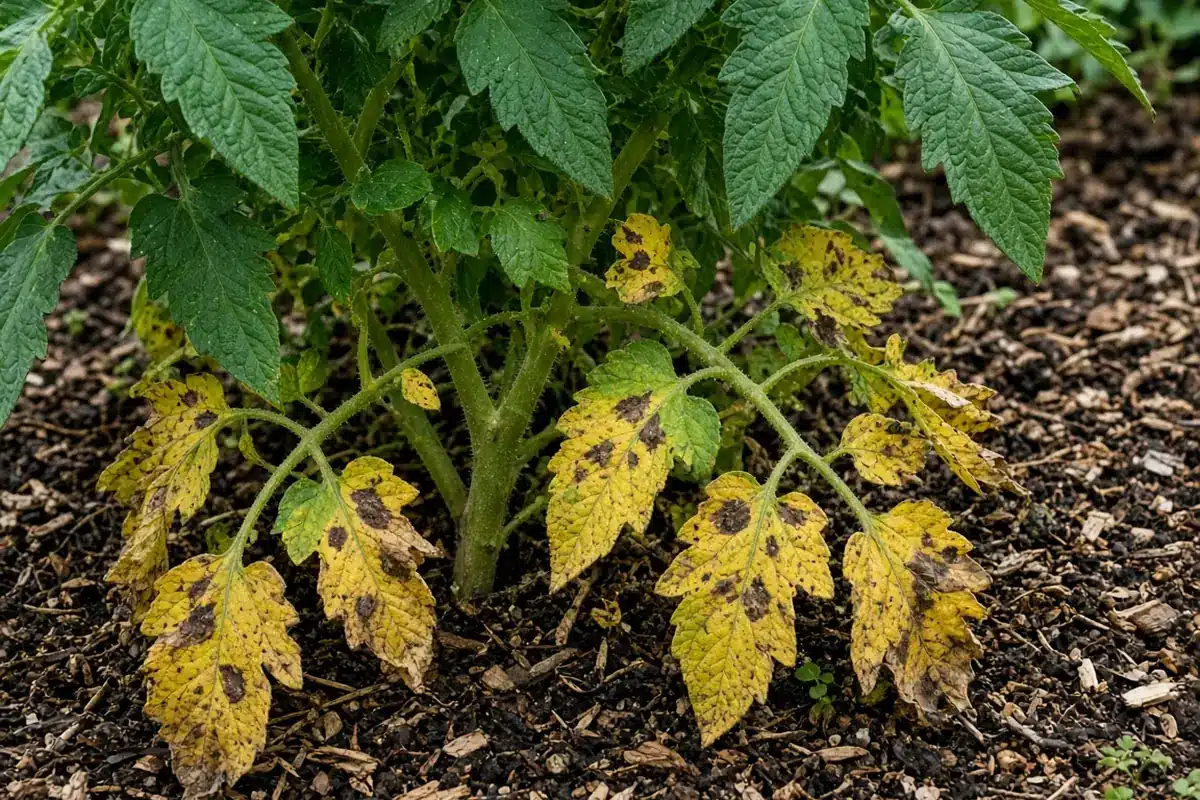
As spots grow, the whole leaf yellows and falls off. The problem climbs the plant from the bottom up.
Stems can show dark, sunken spots, often near the soil line, and fruit can show dark, leathery spots near the stem end.
The University of Minnesota Extension page on early blight shows early blight symptoms on tomato and potato plants.
| Sign | Where | What to do |
|---|---|---|
| Brown spots with rings | Lower leaves first | Remove affected leaves |
| Yellowing around spots | Leaf tissue near spots | Remove leaves as they yellow |
| Dark sunken spots | Stems near the soil line | Note for next year, rotate beds |
| Leathery dark spots | Fruit near the stem end | Pick and discard affected fruit |
Sources: University of Minnesota Extension, NC State Extension.
How does it spread?
The fungus can survive on infected plant debris and in soil. In spring, spores splash up onto lower leaves when rain or a sprinkler hits bare soil.
Warm, humid weather helps it spread. Leaves that stay wet for hours give spores time to infect.
The NC State Extension page on early blight of tomato notes that the fungus can arrive on seeds or transplants. It survives between seasons on plant remains.
How do you prevent early blight?
Rotate crops. Avoid planting tomatoes, potatoes, peppers or eggplants in the same bed for a few years. Those crops share the same family.
Mulch the soil. A layer of straw, shredded leaves or other mulch stops soil from splashing onto leaves. Our post on mulch for cannabis compares mulch types that work in many gardens.
Water at the base. Drip lines or soaker hoses hold leaves dry. If you hand water, aim at the soil in the morning so any splashed leaves dry fast.
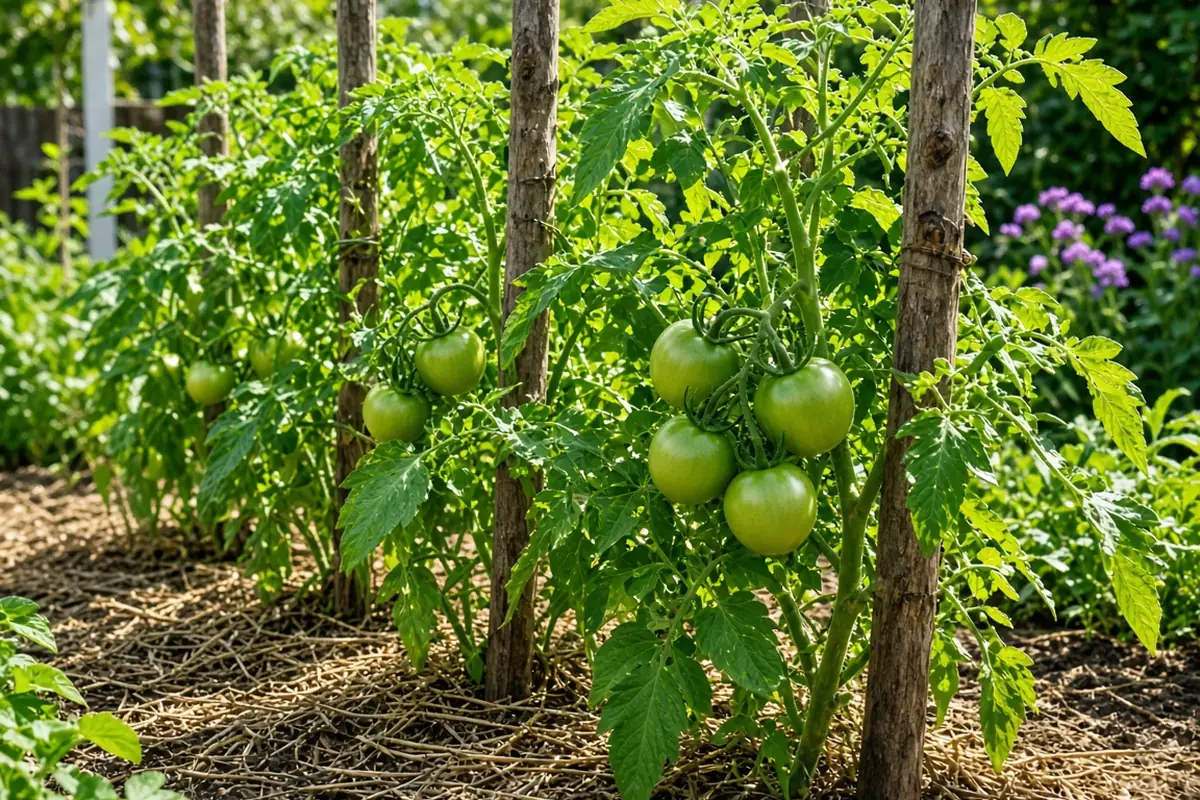
Space and stake plants. Air moving through the canopy dries leaves faster.
Pick tolerant varieties. The Colorado State University Extension page on tomato early blight notes that some varieties show more tolerance than others. Seed catalogs often mark them.
How do you manage it once it appears?
Remove spotted leaves as soon as you see them. Pinch or clip them and put them in the trash or in a properly managed compost pile.
Prune lower leaves that touch the soil. This removes the leaves most likely to catch splashed spores.
Hold mulch in place and water at the base. These steps slow the climb up the plant.
Plants with early blight often continue producing. Losing lower leaves is common, and fruit higher up can still ripen.
How is it different from other leaf spots?
Septoria leaf spot starts low on tomatoes. Its spots are smaller, with gray centers and tiny dark specks, and lack the target rings. Our post on septoria leaf spot on cannabis explains how septoria looks on another crop.
Late blight is a separate disease. It causes large, greasy looking patches and can spread fast in cool, wet weather.
What should you do at season’s end?
Pull and remove tomato plants after harvest. Rake up fallen leaves. This takes away much of the debris the fungus needs to survive winter.
Our post on fall garden cleanup after cannabis harvest covers end of season steps that apply to many garden beds.
Does weather make a difference?
Early blight thrives in warm weather with long periods of leaf wetness. Heavy dew, frequent rain and overhead watering all hold leaves wet.
In dry summers, the disease often stays low on the plant. In wet summers, it can climb fast. Watch the forecast and check plants more often after rainy stretches.
Plants under stress from drought or low fertility show more damage. Steady watering and balanced feeding help plants hold leaves longer, even when spots appear.
How to: step by step
- Check lower leaves for ringed brown spots.
- Remove infected leaves promptly.
- Mulch to stop soil splash.
- Water at the base in the morning.
- Space and stake plants for airflow.
- Rotate away from tomato family crops for a few years.
Check plants each week, mainly after warm, wet spells.
Clean pruners between plants when removing spotted leaves.
Troubleshooting
Spots climbing the plant. Foliage stays wet. Water at the base.
Disease every year. The same bed is used. Rotate crops.
Spots on stems of seedlings. Inspect transplants, since infections can start before planting.
Bare soil splashing. There is no mulch. Add a layer.
Crowded plants. Air can’t move. Space and prune.
With rotation, mulch and steady care, early blight becomes a minor nuisance. Kind Seed Co shares more garden projects in outdoor growing.
Sources
- Early blight in tomato and potato, UMN Extension, Early blight in tomato and potato
- Early blight of tomato, NC State Extension, Early blight of tomato
- Tomato early blight, Colorado State University Extension, Tomato early blight
FAQ
Is early blight the same as late blight?
No. Early blight makes ringed spots on lower leaves and moves slowly. Late blight makes large greasy patches and spreads fast in cool, wet weather.
Can I eat tomatoes from infected plants?
Yes, fruit without spots is fine to eat. Discard fruit with dark leathery spots.
Which varieties tolerate early blight?
Several do. Seed catalogs and University extension lists mark tolerant varieties.
Should I compost infected leaves?
Only in a hot compost pile. Otherwise put them in the trash.
Does pruning help?
Yes. Removing lower leaves near the soil cuts splash and lets air move.



