
Fire Blight: Shepherd’s Crook Tips and Pruning Cuts
The short answer
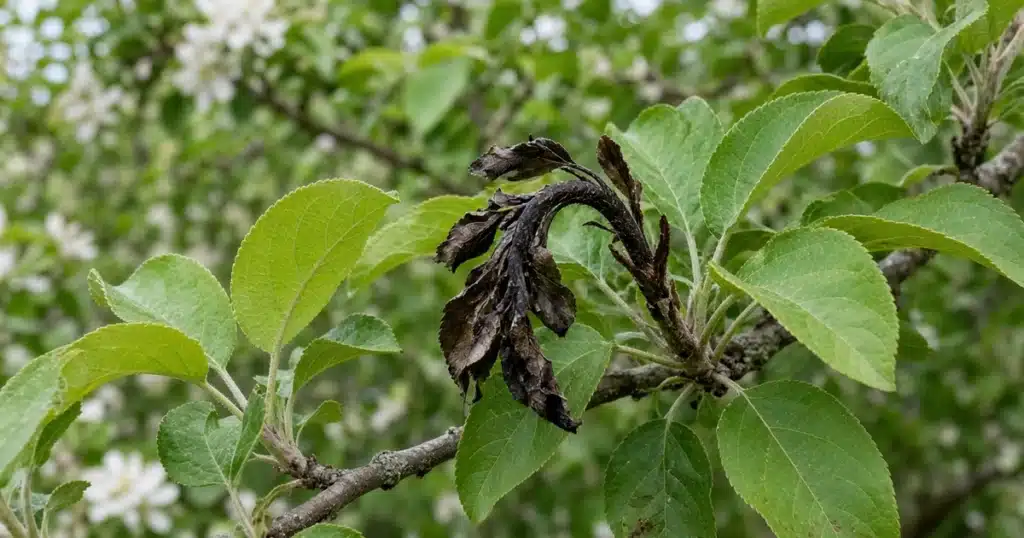
Fire blight is a bacterial disease of apples, pears and related plants. It makes shoots turn black and bend into a shepherd’s crook. Prune infected shoots well below the visible damage in dry weather and clean tools between cuts. Avoid heavy nitrogen, which drives the soft growth the bacteria favor.
It gets its name from the scorched look of infected branches. Careful pruning holds it in check.
How do you spot fire blight?
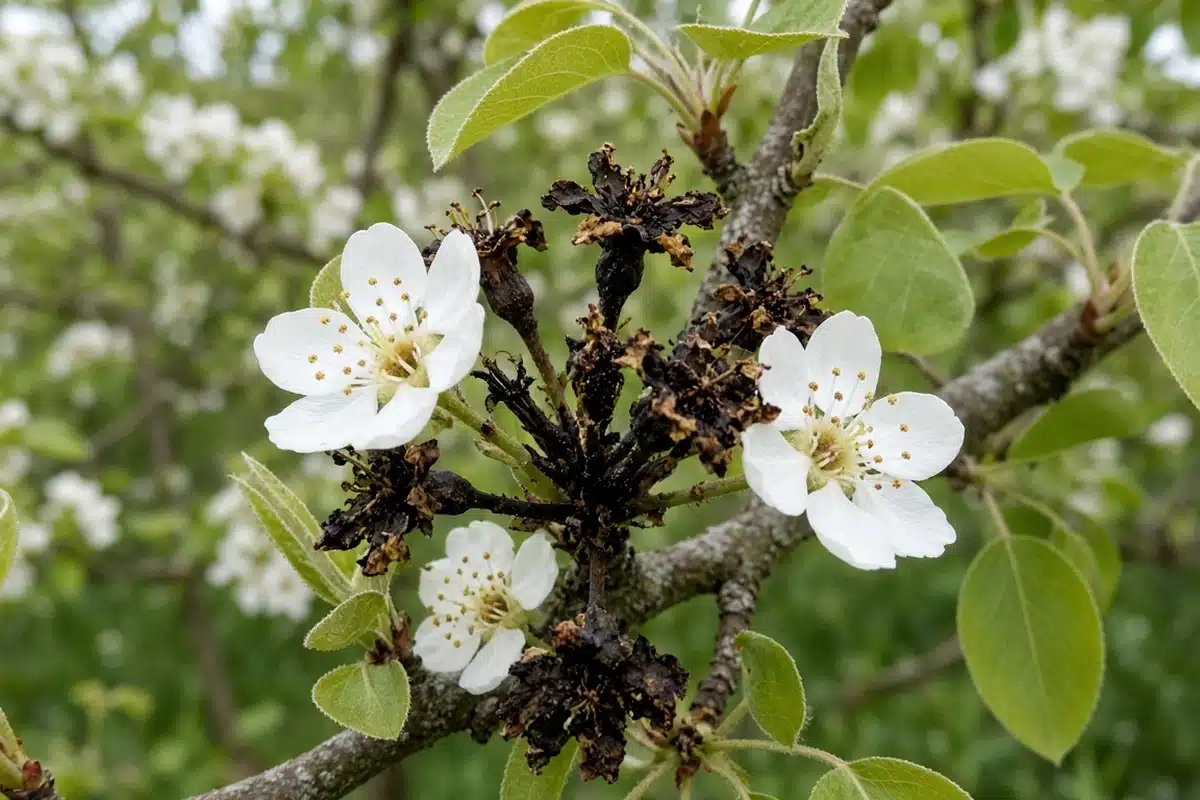
Blossoms show it first in spring. They wilt, turn brown or black and stay attached to the tree.
Next, young shoots wilt from the tip. The tip bends over into a hook, like a shepherd’s crook. Leaves on the shoot turn brown on apples or black on pears and stay attached. The branch looks burned.
In warm, humid weather, beads of sticky, amber ooze can form on infected parts. That ooze is full of bacteria.
On bigger limbs and trunks, the bacteria form cankers. Bark sinks, darkens and may crack at the edge.
The University of Minnesota Extension page on fire blight shows each sign with photos and explains how the disease moves from blossoms into shoots and limbs.
| Sign | Plant part | Action |
|---|---|---|
| Wilted brown or black blossoms | Flower clusters | Watch nearby shoots |
| Shepherd’s crook tip | Young shoots | Prune well below damage |
| Leaves dark and attached | Infected shoots | Prune and remove |
| Amber ooze | Shoots, cankers | Prune in dry weather |
| Sunken dark bark | Limbs and trunk | Prune out cankers in winter |
Sources: University of Minnesota Extension, UC Statewide IPM.
Which plants get fire blight?
Apples and pears get it most often. Pears are most susceptible. Quince, crabapple, hawthorn, mountain ash, cotoneaster, serviceberry and pyracantha are hosts.
The UC Statewide IPM page on fire blight lists host plants and explains which ones suffer the most damage.
Where should you make pruning cuts?
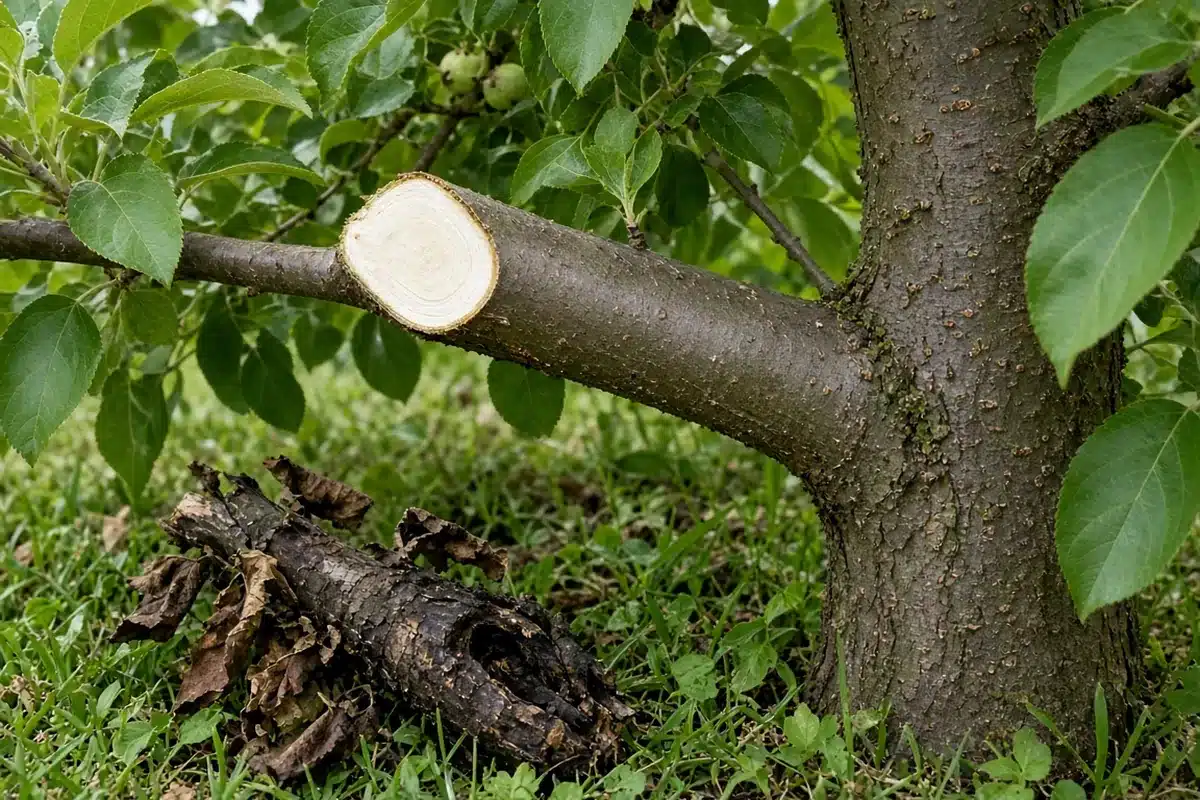
The bacteria move inside the branch ahead of the visible damage. A cut right at the edge of the black area often leaves bacteria behind.
Cut well below the damage, into healthy wood. Many Extension guides suggest 8 to 12 inches below the last sign of disease. On big limbs, cut back to a branch union.
The University of Wisconsin Extension article on fire blight explains these cuts and recommends removing cankers during winter dormancy, when bacteria are less active.
Our post on pruning marijuana plants covers general cutting technique that applies to many plants.
Why does dry weather matter?
The bacteria spread in rain, ooze and splashing water. Pruning in wet weather moves them to fresh cuts.
Prune on dry days when rain isn’t expected for a day or two. Cuts dry and seal faster.
How do you limit spread?
Clean tools between cuts. Dip or wipe blades with a household disinfectant or rubbing alcohol. Our post on sanitizing pruning shears for cannabis shows a simple routine.
Bag and remove prunings. Don’t leave them under the tree or put them in compost.
Remove water sprouts and suckers. They’re soft and easily infected.
How does nitrogen affect fire blight?
Heavy nitrogen feeding pushes lots of soft, fast growth. That tender growth is where fire blight spreads most easily.
Feed apple and pear trees modestly. A soil analysis helps you decide how much they need. Our post on too much nitrogen in plants explains the signs of overfeeding.
Avoid heavy pruning that triggers a flush of new shoots in summer.
Are there resistant varieties?
Yes. Some apple and pear varieties resist fire blight much better than others. Resistant rootstocks help. Nurseries and Extension offices can suggest varieties for your area.
Resistance doesn’t mean immunity. Even resistant trees can show some blight in bad years.
How does bloom weather raise the odds?
Most new infections start at bloom. Bees and rain carry bacteria from flower to flower. Warm, humid days during bloom favor the disease most.
Some states run fire blight forecasting tools based on temperature and rain. Extension offices share alerts when conditions favor infection, so growers know when to watch closely.
Remove any blighted blossom clusters you see early. That cuts the amount of ooze that can reach shoots.
What about young trees?
Young trees grow fast and have more soft shoots, so they can lose a larger share of wood. Check them more often. A single strike low on a young trunk can do more harm than many strikes on an older tree.
Feed young trees modestly and avoid planting very susceptible varieties where fire blight is common.
How to: step by step
- Look for blackened, crooked shoot tips.
- Prune in dry weather.
- Cut well below visible damage.
- Clean tools between cuts.
- Bag and remove prunings.
- Avoid heavy nitrogen feeding.
Walk trees weekly from bloom through early summer. Early cuts remove less wood.
Troubleshooting
Blight returns after pruning. The cut was too close. Cut farther below.
Spread by tools. Tools were not cleaned. Clean them between cuts.
Lots of soft shoots. There is excess nitrogen. Feed less.
Cankers on trunk. Old infections remain. Prune them out in winter.
Blossoms blight every spring. Weather favors it at bloom. Watch closely during warm, wet bloom periods.
Patient pruning and modest feeding stop fire blight from spreading through a tree. Kind Seed Co shares more garden projects in outdoor growing.
Sources
- Fire blight, UMN Extension, Fire blight
- Fire blight, UC Statewide IPM Program, Fire blight
- Fire blight, University of Wisconsin Extension Horticulture, Fire blight
FAQ
Can fire blight kill a tree?
It can on very susceptible trees, especially young pears. Most trees survive with prompt pruning.
Which plants get fire blight?
Apples, pears, quince, crabapple, hawthorn, mountain ash and other relatives.
When is the ideal time to prune?
Prune active shoots on dry days during the season. Remove cankers in winter dormancy.
Are there resistant varieties?
Yes. Several apples and pears resist it better. Ask a local nursery.
Should I compost blighted wood?
No. Bag and remove it.



