
Cedar Apple Rust: The Two Host Cycle and Resistant Apples
The short answer
Cedar apple rust is a fungal disease that needs two hosts to complete its life cycle. It moves between junipers such as eastern red cedar and apples or crabapples. Junipers grow orange jelly like galls in spring, and apple leaves develop yellow orange spots in summer. Choosing resistant apple varieties is the main home garden defense.
The disease rarely kills either host, but it can strip apple trees of leaves and spot the fruit. Once you understand the two host cycle, management is simple.
How does the two host cycle work?
The fungus spends part of its life on junipers and part on apples. It can’t spread from apple to apple or from juniper to juniper.
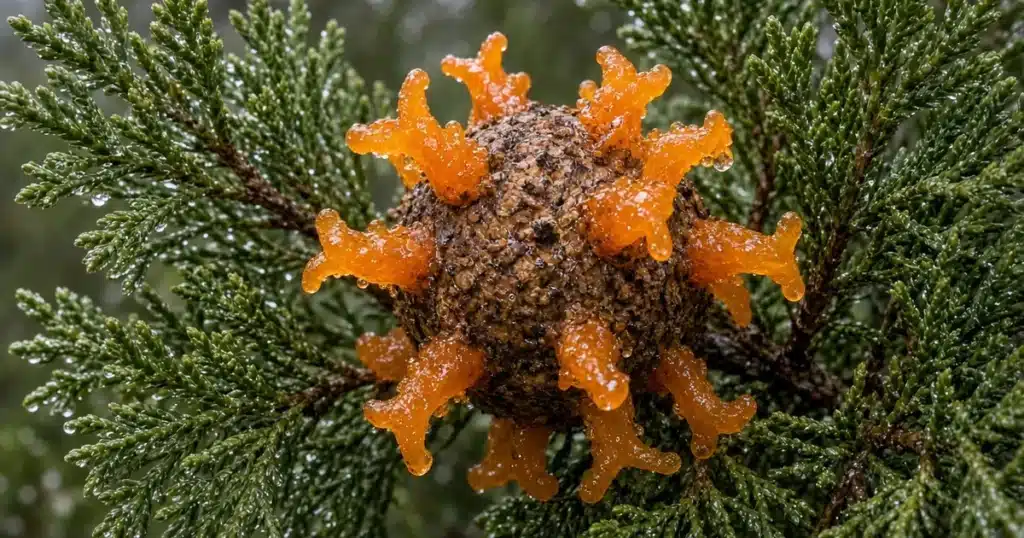
On junipers, the fungus forms hard brown galls on twigs, and these galls take nearly two years to mature. In a wet spring, mature galls swell and push out bright orange, jelly like horns. Those horns release spores that ride the wind to apple trees.
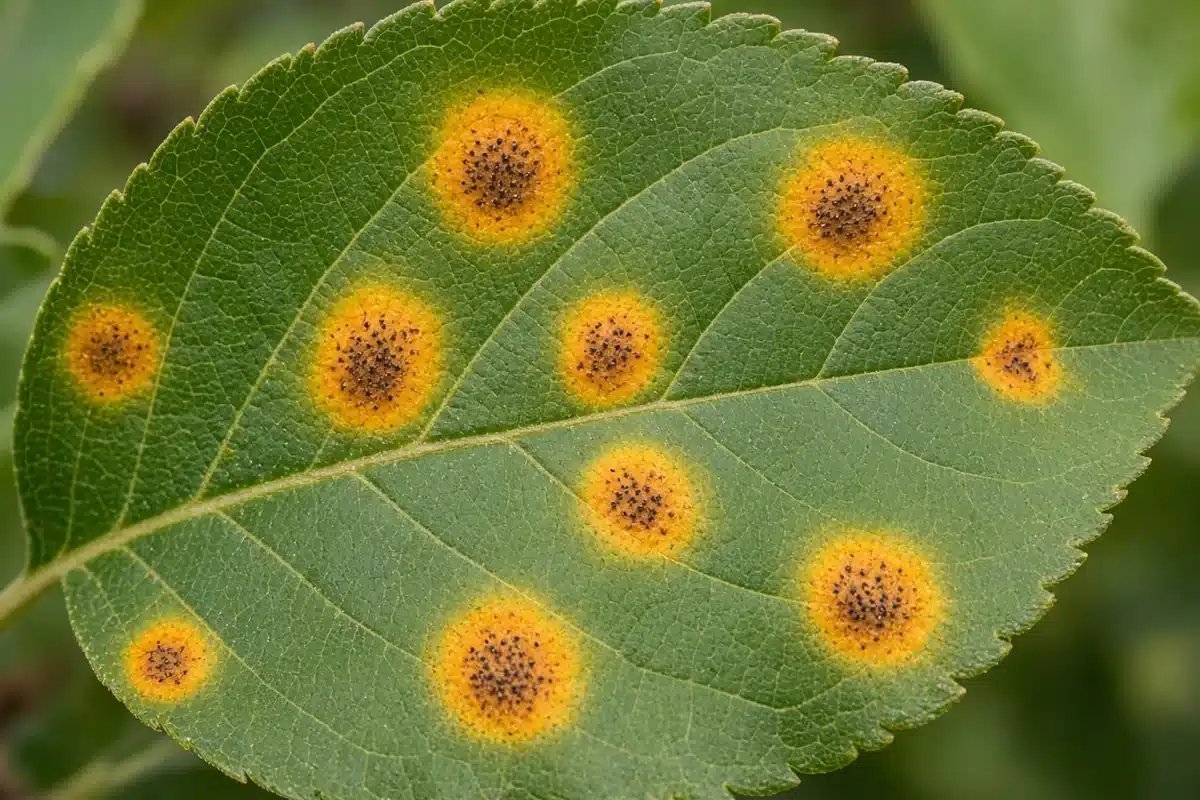
On apples, spores infect young leaves and fruit. Yellow spots form on the upper leaf surface. By midsummer, small tube like structures form on the underside of each spot. Those release a different spore type that blows back to junipers. The cycle starts over.
The University of Minnesota Extension page on cedar apple rust explains this cycle with photos of each stage and covers related rusts that move between junipers and hawthorn or quince.
| Stage | Host | Sign |
|---|---|---|
| Galls form | Juniper | Hard brown balls on twigs |
| Spring spore release | Juniper | Orange jelly horns after rain |
| Leaf and fruit infection | Apple or crabapple | Yellow orange spots on leaves |
| Summer spore release | Apple or crabapple | Small tubes under leaf spots |
| Return to juniper | Juniper | New galls begin forming |
Sources: University of Minnesota Extension, University of Wisconsin Extension.
What does cedar apple rust look like?
On apples, look for small yellow spots on leaves in late spring. They grow and turn orange, often with a red border. Badly spotted leaves yellow and drop early.
Fruit can show similar spots, often near the blossom end. Spotted fruit may be small or misshapen.
On junipers, look for brown, golf ball like galls on twigs in winter and early spring. After warm rain, they sprout orange horns that look almost unreal. The horns shrink and dry within a day or two of dry weather, then swell again with the next rain.
The University of Wisconsin Extension article on Gymnosporangium rusts shows these signs and explains that junipers suffer little harm from the galls.
Which apples resist it?
Resistance varies a lot between apple varieties, and some get heavy spotting every year. Others barely show it.
The Clemson Cooperative Extension HGIC fact sheet on cedar apple rust recommends resistant cultivars for home yard plantings. Many disease resistant apple varieties now carry resistance to rust as well as scab.
Crabapples vary too. Some ornamental crabapples resist rust well. Check nursery tags and ask local Extension staff.
Do I need to remove cedars?
Usually not. Spores can travel a mile or more, so removing a single juniper in your yard rarely stops the disease if others grow nearby.
On small junipers, you can clip off galls in late winter before they sprout horns. That lowers the spore load close to your apples.
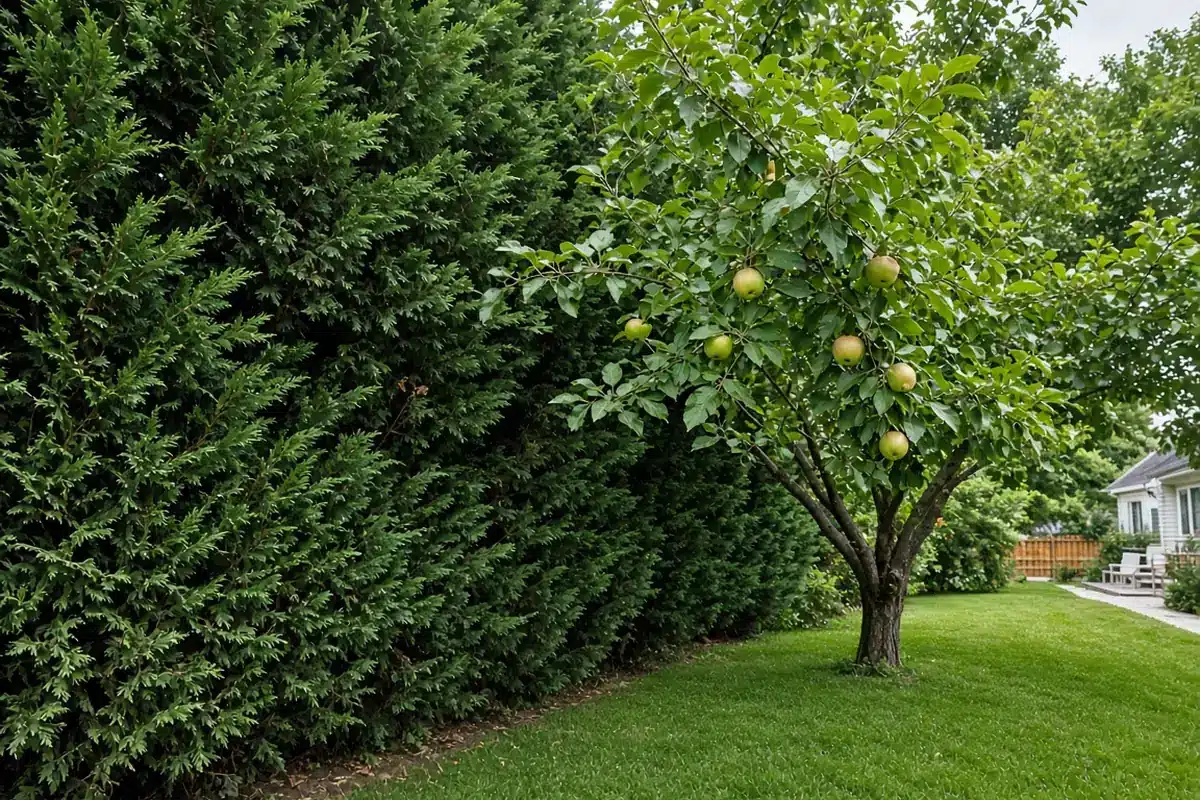
If you’re planting new trees, avoid placing apples right next to junipers. A little distance helps.
Our post on garden microclimates for cannabis explains how wind, shelter and moisture vary across a yard, which shapes where spores land and where leaves stay wet.
How do airflow and cleanup help?
Wet leaves give spores time to infect. An open apple canopy helps leaves dry faster.
Rake fallen apple leaves in fall. While cedar apple rust mostly lives on junipers over winter, cleaning up leaves helps with apple scab and other diseases. Our post on fall garden cleanup after cannabis harvest covers end of season steps.
Can companion planting help?
Mixed plantings between apples and junipers can break up the path of wind borne spores a little. Tall, dense plantings act as a partial screen. They will not stop the disease, but they can slow it.
Our post on companion plants when growing marijuana covers how mixed plantings work in a garden.
How do you record what you find?
Write down which apple trees show the most spots each year and when galls sprout on nearby junipers. Over a few seasons, patterns appear. Those notes guide variety choices when you replace or add trees.
How to: step by step
- Look for galls on nearby junipers in spring.
- Check apple leaves for yellow orange spots.
- Remove galls on small junipers if practical.
- Rake fallen apple leaves.
- Choose resistant apple varieties.
- Record which trees show the most spots each year.
Check junipers after the first warm spring rains. That is when horns appear.
Troubleshooting
Spots every year. The apple is susceptible. Plant resistant types.
Galls on cedars. A host is nearby. Remove galls where possible.
Fruit spots. Infection is heavy. Improve airflow and pick resistant types.
Early leaf drop. Many spots formed. Rake leaves and prune for airflow.
Spots on hawthorn or quince. A related rust is present. Use the same steps.
With resistant trees and a little cleanup, cedar apple rust becomes a curiosity rather than a problem. Kind Seed Co shares more garden projects in outdoor growing.
Sources
- Cedar apple rust and related rust diseases, UMN Extension, Cedar apple rust and related rust diseases
- Gymnosporangium rusts (cedar apple rusts), University of Wisconsin Extension Horticulture, Gymnosporangium rusts (cedar apple rusts)
- Cedar apple rust, Clemson Cooperative Extension HGIC, Cedar apple rust
FAQ
Does cedar apple rust kill trees?
Rarely. It can cause early leaf drop on apples, which weakens trees over many years. Junipers suffer little harm.
How far do spores travel?
A mile or more on the wind. That is why removing one juniper rarely solves it.
Do I need to remove cedars?
Usually not. Resistant apples are the better answer.
Are crabapples affected?
Yes. Many crabapples get it, though some varieties resist it well.
Does rust harm the fruit?
Yes. Spotted fruit can be small and misshapen.



