
Peach Leaf Curl: Dormant Timing and Resistant Varieties
The short answer
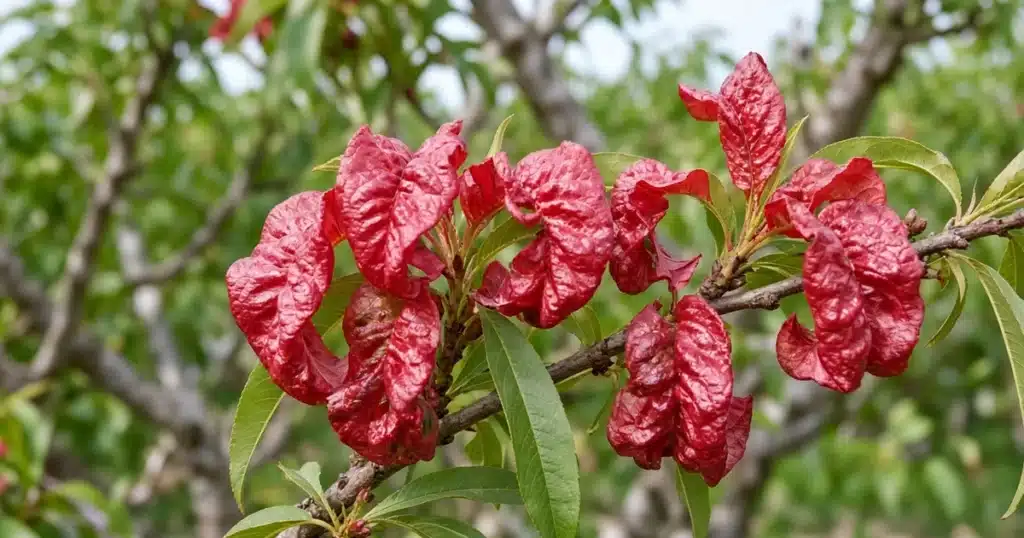
Peach leaf curl is a fungal disease that makes new peach and nectarine leaves thick, puckered and reddish in spring. Sprays only work during dormancy, before buds swell. Once leaves curl, nothing reverses it that season. Planting resistant varieties is the simplest long term answer, and good care helps trees regrow healthy leaves.
Leaf curl looks alarming but rarely ruins a tree on its own. Timing is the whole story.
What causes peach leaf curl?
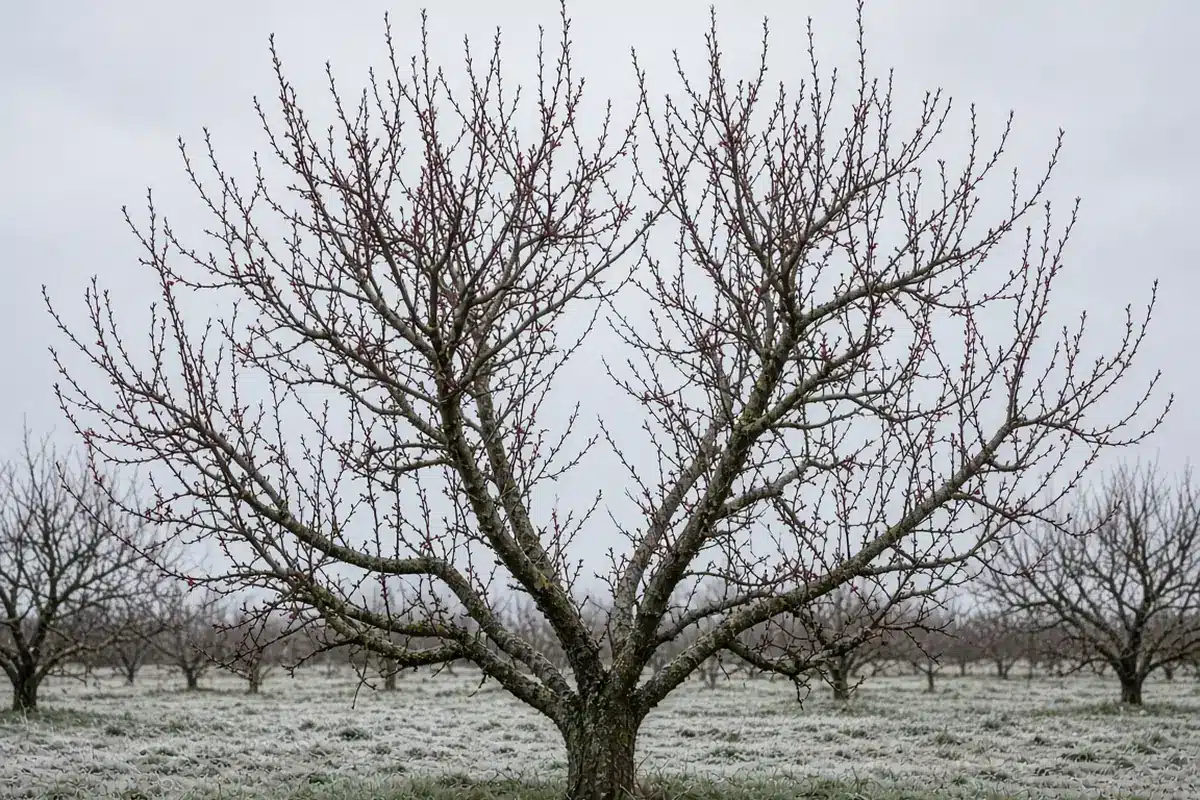
A fungus causes it. Spores rest on twigs and bud scales through winter. As buds swell and open in late winter or early spring, rain washes spores onto the new leaf tissue inside. The fungus infects those tender leaves before they unfold.
Infected leaves grow thick, puckered and curled, and they turn red, purple or pale yellow. Later, a whitish dusty layer forms on the surface. That layer releases new spores, which settle on twigs and wait for next spring.
The UC Statewide IPM page on peach leaf curl shows each stage and explains why the disease is worse in cool, wet springs.
Infected leaves drop by early summer. Trees then push out a second flush of leaves, which often stays healthy because the weather has turned warm and dry.
Why does timing matter?
The fungus infects leaves inside buds as they swell. After that, it’s already inside the leaf. Steps taken after bud swell can’t reach it.
That means the only window is dormancy. The UC ANR blog article on peach leaf curl spray timing explains that the time to manage the disease is late fall and winter, after leaf drop but before flower buds swell. Steps taken on curled spring leaves do nothing.
| Season | Sign | Action |
|---|---|---|
| Fall after leaf drop | Bare twigs | First dormant window |
| Late winter | Buds tight, not yet swelling | Second dormant window |
| Spring | Thick, red, curled leaves | Wait, remove leaves if desired |
| Early summer | Second flush of healthy leaves | Water and feed to support regrowth |
Sources: UC Statewide IPM, UC ANR.
Which varieties resist leaf curl?
A few peach varieties resist leaf curl. UC IPM lists planting them as the first way to prevent it.
The Clemson Cooperative Extension HGIC fact sheet on peach diseases lists leaf curl among common peach diseases and stresses picking varieties suited to the local climate. Local nurseries and Extension offices can suggest resistant types for your area.
Nectarines are very susceptible. Few nectarine varieties resist leaf curl.
Does leaf curl affect fruit?
Indirectly, yes. Trees that lose their first flush of leaves spend energy regrowing them. Fruit set can drop, and young fruit may fall.
Rarely, fruit shows raised, reddish, wrinkled patches. Later in the season these patches can turn corky and crack.
A tree that gets leaf curl year after year without care can weaken over time. Good watering, mulch and balanced feeding help it recover each spring.
What can you do in spring?
Not much for the current season. You can pick off badly curled leaves to tidy the tree and remove some spores, but it won’t stop the disease.
Focus on helping the tree regrow. Water during dry spells and hold weeds down under the canopy. Avoid heavy feeding, which drives soft growth.
Mark your calendar for fall and late winter so you’re ready next year.
How does weather change the outlook?
Cool, rainy weather during bud swell brings the worst outbreaks. Dry springs see much less.
Frost can harm opening buds and is a separate problem. Our post on frost damage on cannabis explains how cold affects tender growth on many plants.
How do fall habits help?
Rake up fallen peach leaves in fall. While spores mostly live on twigs, clean ground under trees reduces other diseases too. Our post on fall garden cleanup after cannabis harvest covers end of season steps.
Some gardeners prefer gentler options for other pests. Our post on top 5 natural pest repellents for cannabis growers covers some of those ideas.
How do you care for a tree after an outbreak?
Water deeply every week or two during dry spells in late spring and summer. The tree is building a second set of leaves and needs steady moisture.
Spread a layer of mulch under the canopy, setting it a few inches from the trunk. Mulch holds moisture and suppresses weeds.
Thin fruit if the crop looks heavy for a tree that lost its first leaves. Fewer fruits let the tree put more energy into new leaves.
How to: step by step
- Learn the signs in spring.
- Note when your trees drop leaves in fall.
- Plan prevention for the bare season.
- Ask your local Extension office about options.
- Remove badly curled leaves if desired.
- Choose resistant varieties for new trees.
Write the leaf drop date on your calendar. It sets your first window.
Troubleshooting
Curled leaves after prevention. The timing was late. Act before bud swell.
Tree weakens. Infection repeats each year. Feed and water trees well.
Problem yearly. The variety is susceptible. Plant resistant types.
Only some trees curl. Varieties differ. Note which ones do well.
Curl after a dry winter. A rainy spell hit at bud swell. Watch the forecast in late winter.
With good timing and the right variety, peach leaf curl becomes a small spring nuisance. Kind Seed Co shares more garden projects in outdoor growing.
Sources
- Peach leaf curl, UC Statewide IPM Program, Peach leaf curl
- Peach leaf curl spray timing, UC ANR Pests in the Urban Landscape, Peach leaf curl spray timing
- Peach diseases, Clemson Cooperative Extension HGIC, Peach diseases
FAQ
Can you fix leaf curl in spring?
No. Once leaves curl, the fungus is already inside. Plan for dormancy next year.
Does leaf curl affect fruit?
Yes, indirectly. Trees spend energy regrowing leaves, so fruit set can drop.
Do nectarines get leaf curl?
Yes. Nectarines are very susceptible, often more than peaches.
Is leaf curl worse in wet years?
Yes. Cool, rainy weather at bud swell brings the worst outbreaks.
Will the tree grow new leaves?
Usually. A second flush of healthy leaves follows once the weather warms.



