
Grow Light for Aporocactus: Rat Tail Cactus Indoors
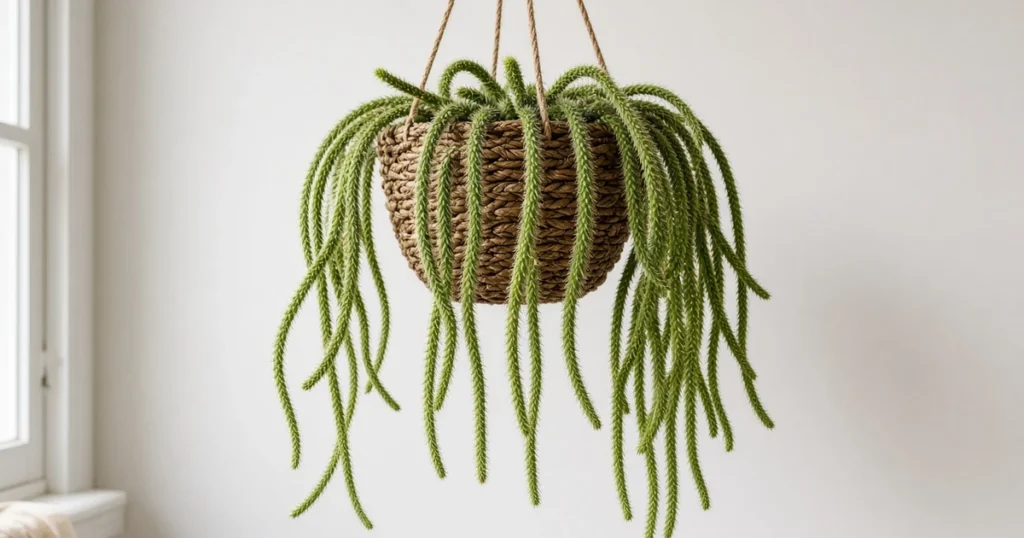
A grow light for aporocactus gives rat tail cactus the bright light it asks for in a home. An Ask Extension expert says rat tail cactus houseplants require bright light even during their dormant period.
The short answer
Rat tail cactus needs lots of light all year. University of Minnesota Extension says cacti do well under a cool white fluorescent tube placed 6 to 12 inches above the plants for 14 to 16 hours each day. LEDs work too. The Royal Horticultural Society lists full sun for this trailing cactus.
How much light does aporocactus need?
Plenty. Ask Extension calls it an epiphytic cactus whose long trailing stems look like rat tails, and it still needs bright light while dormant. The RHS lists its position as full sun facing east or south, and its cultivation note says bright filtered light. Minnesota says succulents need lots of light and belong in a bright, sunny window. UF IFAS adds that indoor cacti prefer a sunny spot.
Which grow light suits aporocactus?
LEDs or fluorescent tubes. University of Maine Cooperative Extension calls LEDs the usual lights for small houseplants and notes many models dim. Maine says fluorescent lamps have a slim bulb and low heat output. University of Missouri Extension says LEDs and fluorescent lamps can both sit near plants without scorching them. Light choices are covered in grow lights for cannabis.
| Light | Why | Source |
|---|---|---|
| LED | Most common for small houseplants, often dimmable | University of Maine |
| Fluorescent tube | Slim bulb with low heat output | University of Maine |
| Distance | 6 to 12 inches above cacti | University of Minnesota |
| Hours | 14 to 16 hours a day | University of Minnesota |
How do you tell if aporocactus has the right light?
Watch new growth. Maine says too little light is a main reason plants grow and bloom poorly, show pale foliage and make spindly new growth. Missouri says light intensity rises as the source moves nearer the plants. Hanging height is covered in led light distance cannabis.
How to: step by step
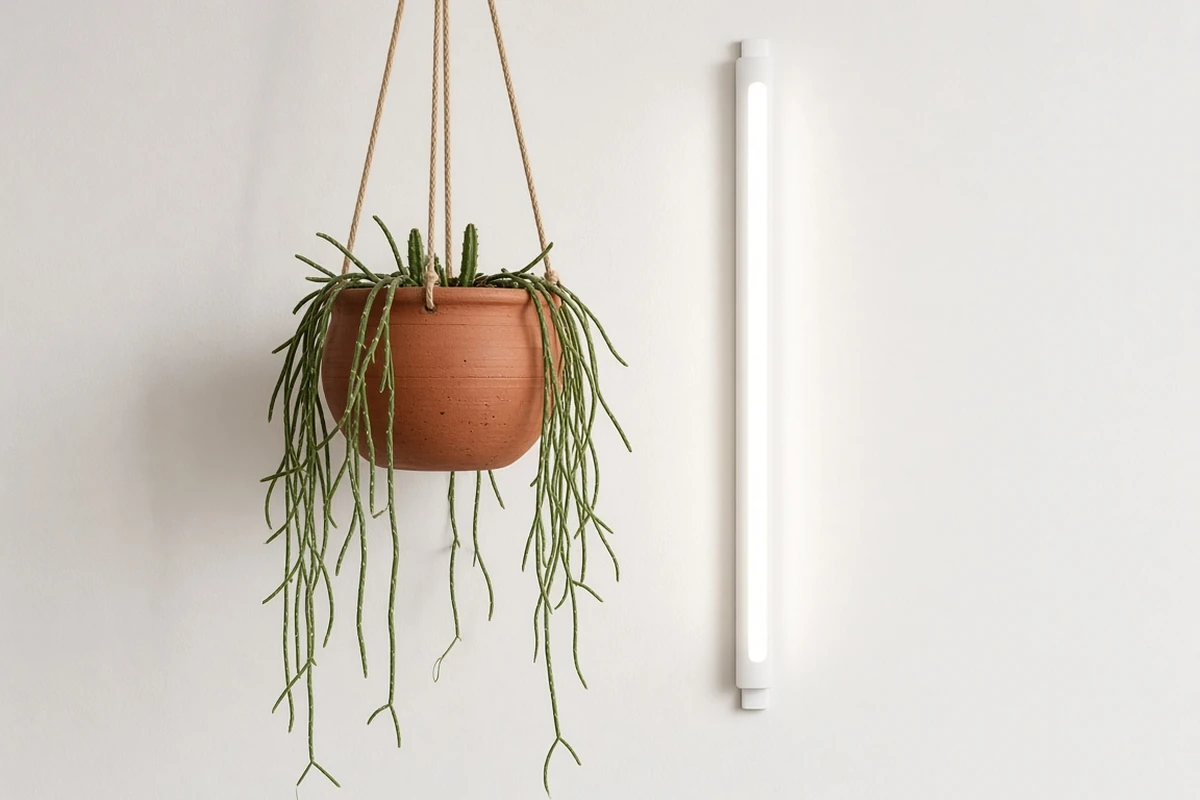
- Hang or pot the cactus where its stems can trail.
- Set an LED or fluorescent light 6 to 12 inches above it.
- Run the light 14 to 16 hours a day.
- Use a timer so the hours stay even.
- Look for pale or spindly new stems.
- Lower the light if growth stays pale.
Troubleshooting
Spindly new growth: Maine ties it to low light. Bring the light closer.
Pale stems: add hours inside Minnesota’s 14 to 16 hour range.
No flowers: Maine blames poor bloom on low light. Check light first.
Kind Seed Co shares these plant notes for growers of all kinds. Timer setups are covered in grow light timers and seed choices in cannabis seeds.
Sources
- Cacti and succulents, University of Minnesota Extension
- Cactus, UF IFAS Gardening Solutions
- Growing houseplants under artificial lights (Bulletin 2614), University of Maine Cooperative Extension
- Controlled environment agriculture: understanding grow lights (G6987), University of Missouri Extension
- Cactus identification (rat tail cactus reply), Ask Extension
- Disocactus flagelliformis (rat tail cactus), Royal Horticultural Society
FAQ
Is rat tail cactus easy to grow?
An Ask Extension expert says most gardeners will find care for rat tail cactus minimal. It grows moderately in a warm room with low humidity and should dry between watering.
Should it hang or sit on a shelf?
The Royal Horticultural Society describes slender stems that are pendent or trailing, spreading up to 1.5 metres. A hanging spot gives those stems room to trail under the light.
How many hours of light does it need?
University of Minnesota Extension suggests fluorescent light for cacti for 14 to 16 hours each day, with the tubes 6 to 12 inches above the plants.
When does rat tail cactus flower?
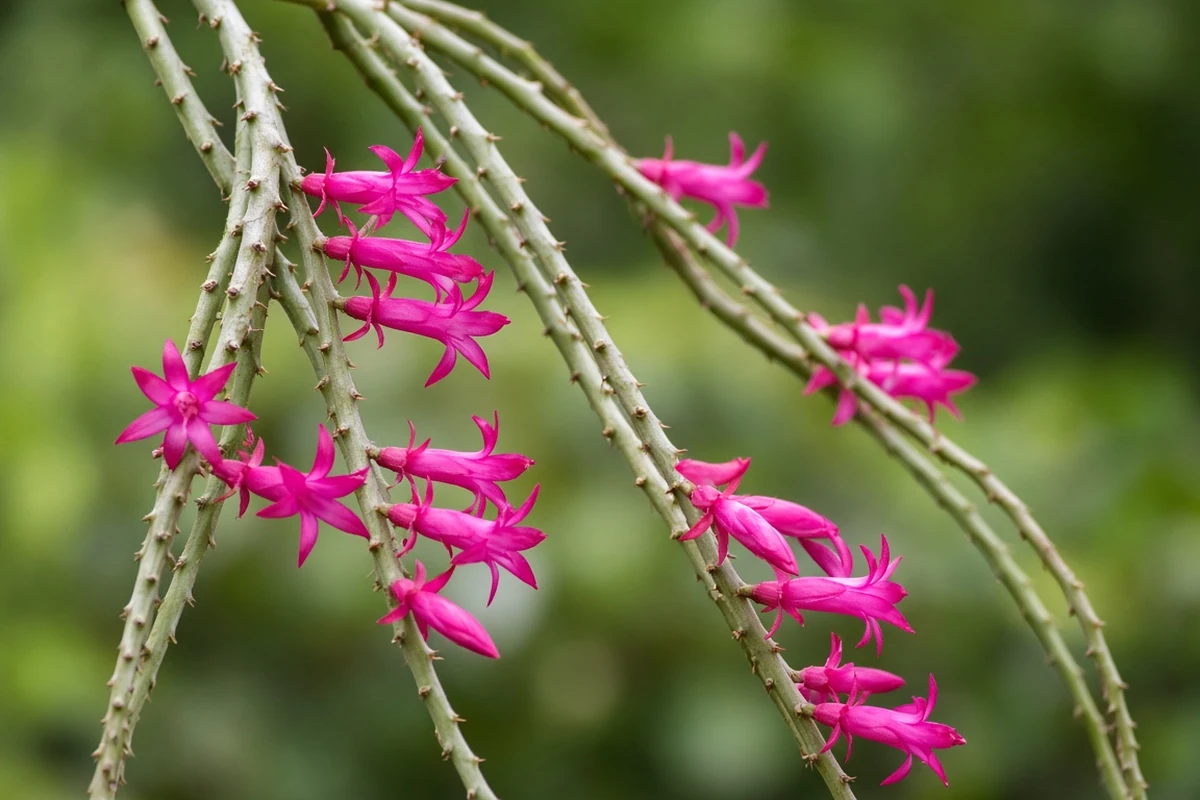
Ask Extension says it makes tubular bright pink flowers in spring and summer. The RHS lists funnel shaped flowers up to 8 cm long from late spring.
Should I pick LED or fluorescent?
Either works. University of Maine Cooperative Extension says LEDs are the most common for small houseplants. University of Missouri Extension says LEDs are the most energy efficient and last longer.



