
Trellis Wall: Growing Vegetables Up a Wall or Fence
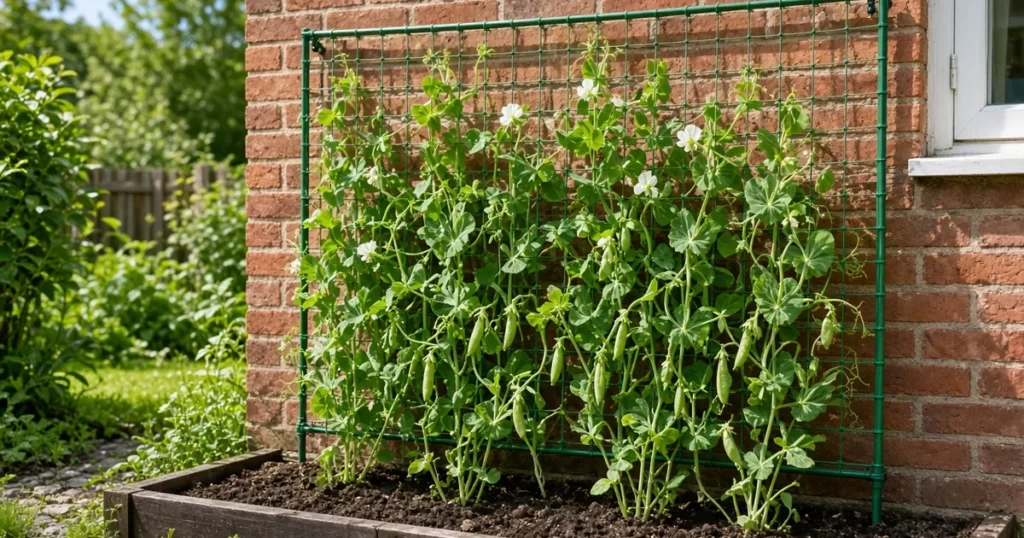
A trellis wall is a vertical support set against a wall or fence so climbing vegetables grow up rather than out. University of Minnesota Extension says pole beans are well suited to smaller gardens because they take up less ground than bush beans.
The short answer
A trellis wall gives vines something to climb. Minnesota says a trellis can be two vertical stakes with string or netting between them. Tall peas climb by tendrils and pole beans twine. Put supports in at planting time and sow seeds in a row at the base. It suits small spaces well.
What is a trellis wall?
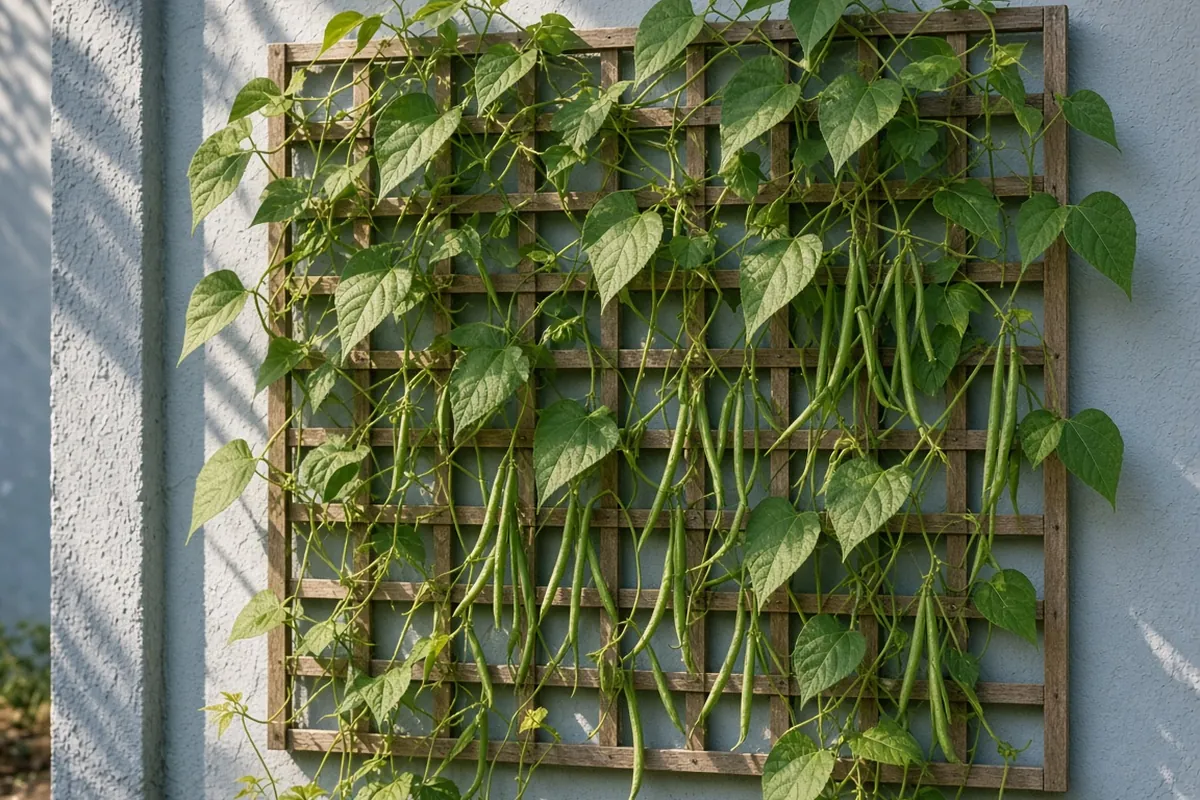
It’s a trellis used as a growing surface on a wall or fence. Minnesota says tall vine peas can reach five feet and need a trellis to hold them as they climb. Pole beans are twining vines up to six feet or taller that need a trellis or similar structure. Layout ideas are covered in planning an outdoor cannabis garden layout.
How do you set up a trellis wall?
Begin simply. Minnesota suggests six foot stakes and twine, or a teepee of bamboo poles or long branches. It says to set pole bean supports at planting time. NC State Extension notes a trellis is a simple addition for vining plants on a raised frame. Warm spots near walls are covered in garden microclimates for cannabis.
Which vegetables grow on a trellis wall?
Climbers do the work.
| Crop | Habit | Source |
|---|---|---|
| Tall vining peas | Up to five feet, need a trellis | Minnesota peas |
| Pole beans | Twining vines up to six feet or taller | Minnesota beans |
| Scarlet runner beans | Long vines up to ten feet | Minnesota beans |
| Half runner beans | Some support helps, under three feet | Minnesota beans |
Minnesota adds that pole beans flower and bear until frost, so succession planting isn’t needed. Plant pairings are covered in companion plants when growing marijuana.
How to: step by step
- Pick a wall or fence with room for vines.
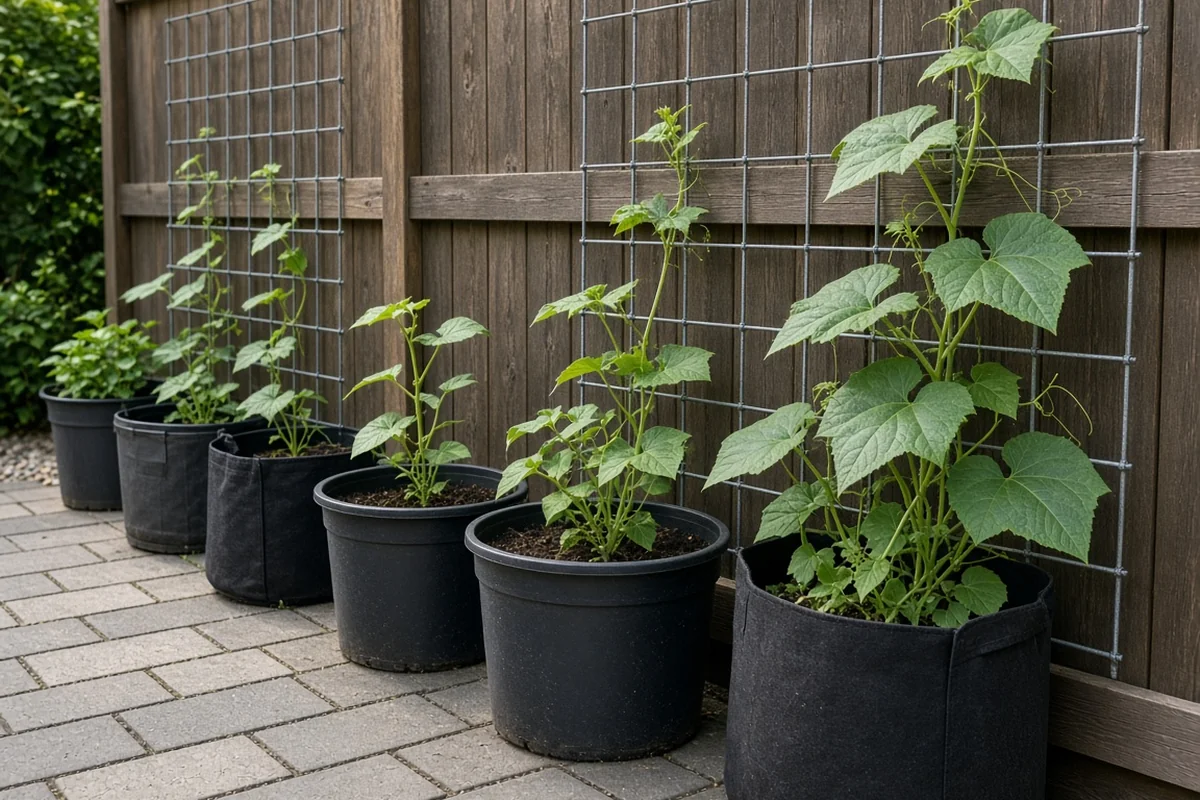
- Set two stakes and run string or netting between them.
- Put supports in at planting time.
- Sow peas or beans in a row at the base.
- Water the soil, not the vines.
- Remove the trellis after the harvest ends.
Troubleshooting
Vines sprawl on the ground: lead them to the string early.
Peas stop climbing: short bush types may not need a trellis. Minnesota says they hold each other up.
Leaves stay wet: Minnesota says to water the soil, not the vines.
Kind Seed Co shares these plant notes for growers of all kinds. Watering by touch is covered in checking soil moisture by feel.
Sources
- Growing peas in home gardens, University of Minnesota Extension
- Growing beans in home gardens, University of Minnesota Extension
- Raised bed gardens, University of Minnesota Extension
- Accessible gardening: raised beds, containers and garden tables, NC State Extension Gardener
FAQ
When should I put up the trellis?
University of Minnesota Extension says to install pole bean supports at planting time, then plant seeds in a row in front of the trellis.
How tall do pole beans grow?
Minnesota says pole beans are twining vines growing up to six feet and sometimes taller. Scarlet runner beans make long vines up to ten feet.
Can I use containers at the base?
NC State Extension describes raised beds and containers. It notes a trellis is an easy addition for vining plants.
Which flowers climb a trellis wall?
University of Minnesota Extension says the hyacinth bean, with its purple flowers, is common as an ornamental vine in Minnesota.
What do I do after the harvest?
For peas, Minnesota says that after harvest, typically in June, you remove any trellises and turn the pea plants into the soil.



