
Grow Light for Caladium Bulbs: Early Indoor Starts
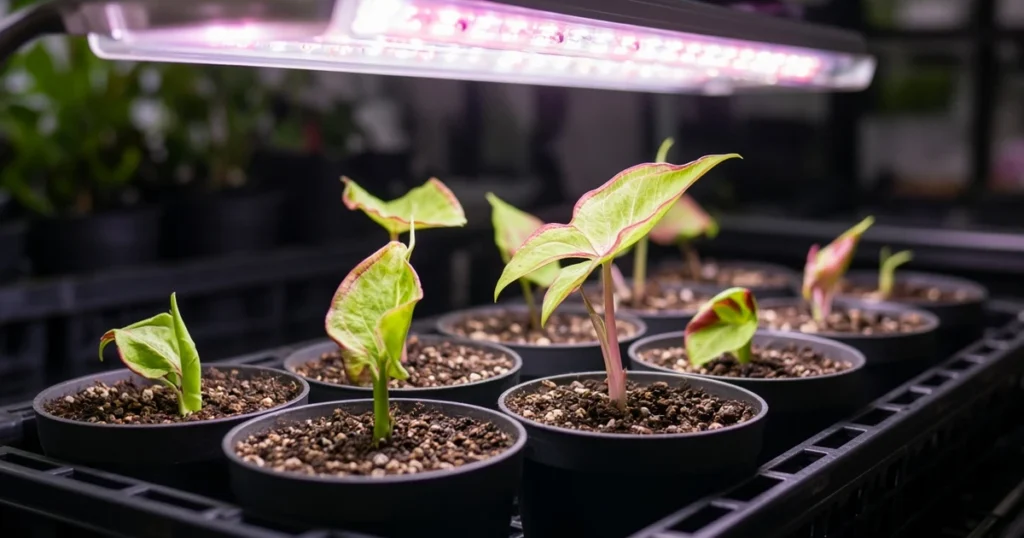
A grow light for caladium bulbs helps tubers start early indoors so plants are leafy when outdoor weather warms. University of Wisconsin Madison Extension suggests starting caladiums indoors 4 to 6 weeks before the average last frost. Set pots in a warm room with bright light.
The short answer
Start caladium tubers indoors 4 to 6 weeks before your last frost. Plant them knobby side up, barely covered, in a room at 70°F or warmer with bright light. A grow light fills in where window light is weak. Move plants outside once the soil reaches at least 70°F.
Why start caladiums indoors?
Wisconsin Extension notes that in the Midwest, caladium tubers can be planted indoors 4 to 6 weeks before the average last frost. Plants are damaged by low temperatures plus do not grow well until it is warm.
Starting indoors gives plants an early lead, so they have leaves ready when outdoor conditions suit them.
How warm should tubers be?
Wisconsin Extension advises a warm room at 70°F or warmer with bright light. Caladiums do well when soil is at least 70°F, while cold soil promotes rot.
UF/IFAS advises planting tubers in soil that is at least 60 to 70°F. Cooler soil brings tuber rot plus slow growth.
| Step | Timing or setting | Why |
|---|---|---|
| Start indoors | 4 to 6 weeks before last frost | Head start on leaves |
| Room warmth | 70°F or warmer | Avoid tuber rot |
| Move outside | Soil at least 70°F | Plants dislike cold |
Source: University of Wisconsin Madison Extension plus UF/IFAS Gardening Solutions.
Why use a grow light?
University of Maryland Extension notes that natural light from a window is seldom enough for good seedling growth. Plants stretch plus bend toward the light.
Fluorescent tubes are the easiest way for home gardeners to control growing conditions. Incandescent bulbs give off more heat plus less light, so they do not produce good transplants alone.
How to: step by step
- Count back 4 to 6 weeks from your last frost date.
- Place tubers knobby side up in a pot.
- Lightly cover tubers with mix.
- Set pots in a room at 70°F or warmer.
- Place pots under fluorescent lights.
- Move plants out after frost once soil is warm.
Troubleshooting
No shoots: cold mix. Move pots to a room at 70°F or warmer.
Rotting tubers: cold, wet mix. Heat the room plus water less.
Stretched, leaning shoots: weak window light. Add fluorescent grow lights.
For related reading see grow lights, seedling heat mats plus hardening off. Kind Seed Co also stocks cannabis seeds.
Sources
- Caladiums, UF/IFAS Gardening Solutions
- Caladiums, University of Wisconsin Madison Extension
- Caladium, NC State Extension Gardener Plant Toolbox
- Grow lights for starting seeds indoors, University of Maryland Extension
FAQ
Which side of a caladium tuber goes up?
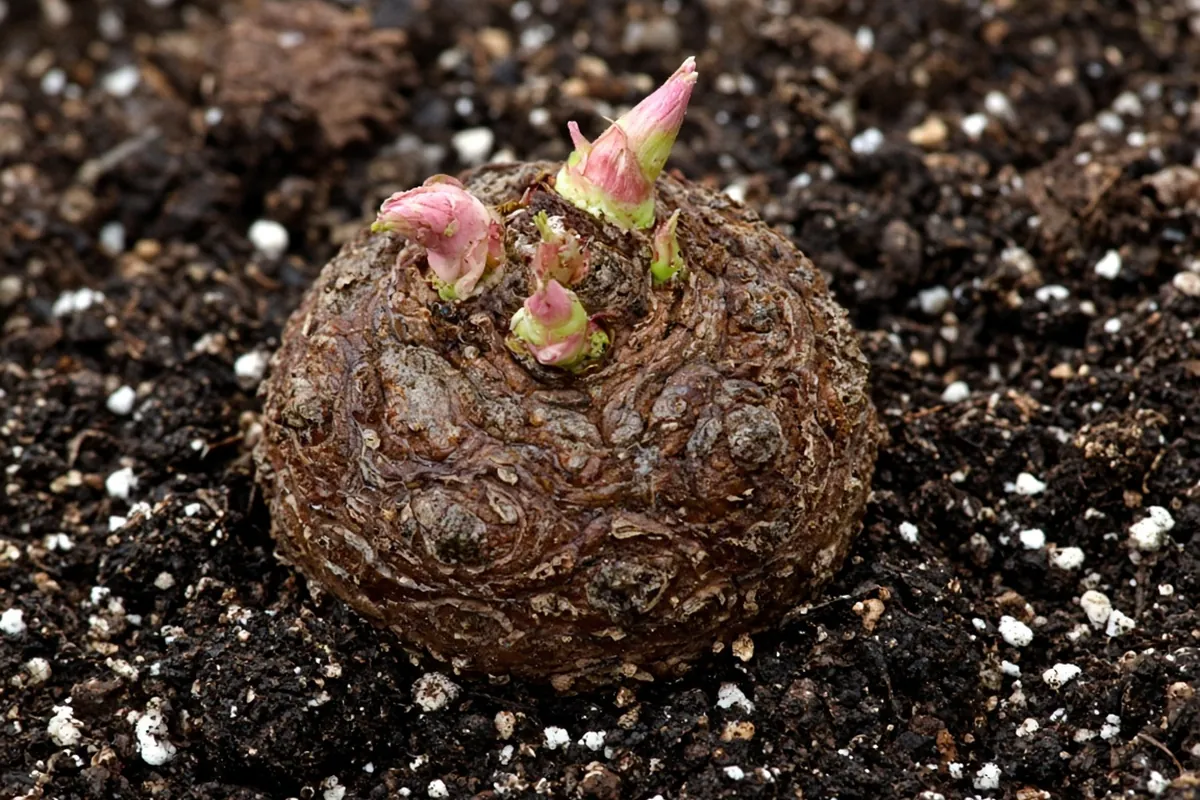
Wisconsin Extension advises placing the knobby side with the eyes facing up, since both roots plus shoots emerge from the top. Barely cover the tuber with soil. UF/IFAS also describes the eye side as the puckered, knobby side, planted 2 inches deep outdoors.
Do caladiums need sun or shade?
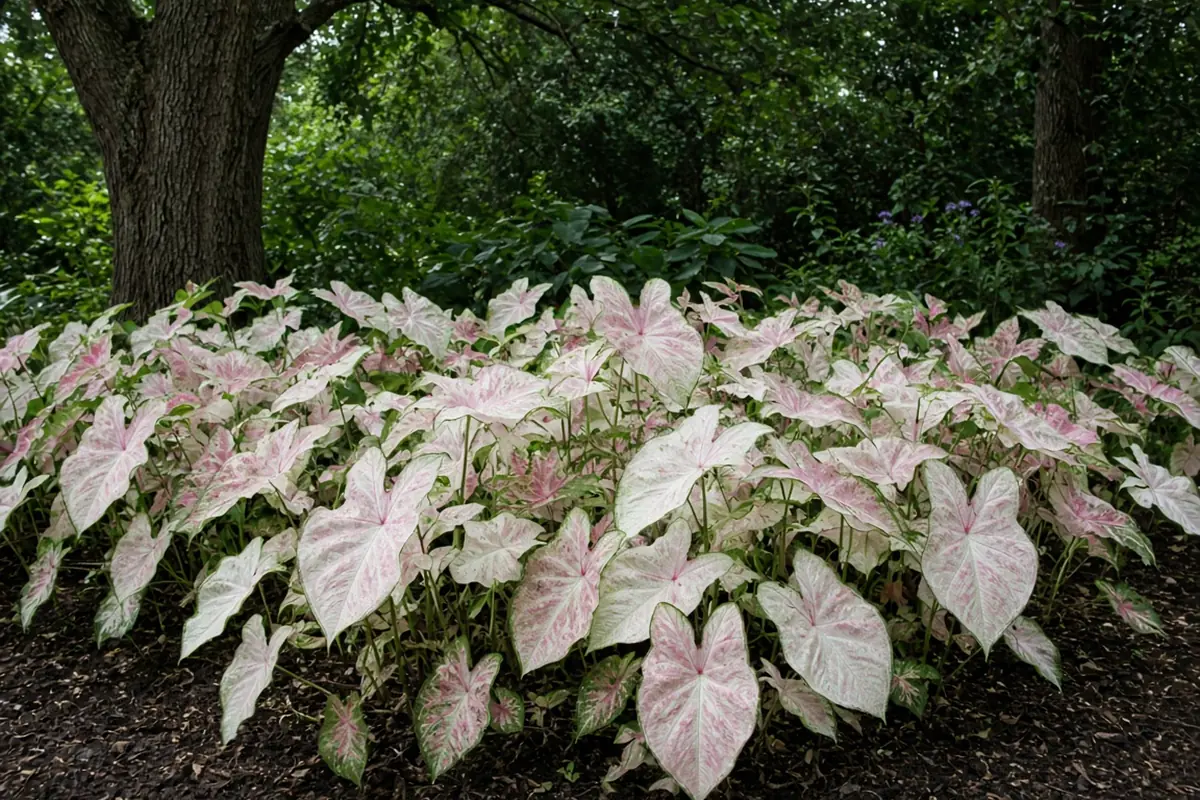
UF/IFAS notes that most caladiums thrive in partial shade with two to four hours of direct sun per day. Morning sun followed by shade is ideal. NC State Extension notes that full sun generally reduces leaf color intensity, though some newer cultivars tolerate more sun.
Can caladium tubers be saved?
Yes. NC State Extension notes that caladiums do not overwinter in North Carolina plus are damaged below 45°F. Dig tubers in fall, store them in a dry spot at 70 to 75°F plus replant in spring after frost once soil has warmed.
Should the central eye be removed?
It is optional. Wisconsin Extension notes that the large central bud produces the largest leaves but suppresses smaller buds. Removing it with a sharp knife, cutting about 1/8 to 1/4 inch deep, encourages more, slightly smaller leaves. Take care not to injure the surrounding buds.
When should caladiums move outdoors?
Wisconsin Extension advises moving plants out after the last frost, either in containers or planted so the tuber is 1 1/2 to 2 inches deep. Do not rush, since plants do not grow well until temperatures are warm. Wait until soil reaches at least 70°F.



