
Grow Light for Cryptanthus: Bringing Out Earth Star Color
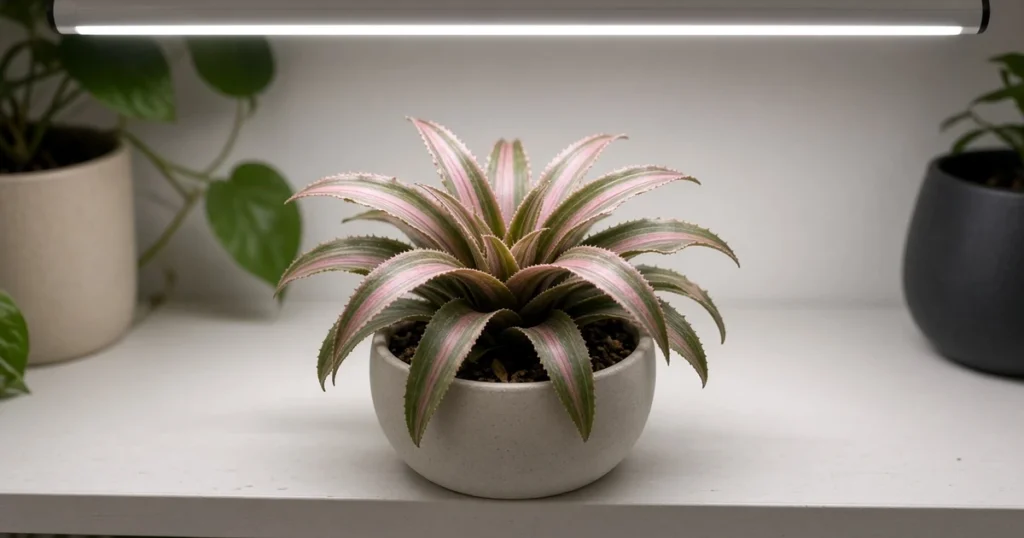
A grow light for cryptanthus gives earth star bromeliads the steady, moderate light that brings out their stripes and pink tones. NC State Extension notes that earth star is a ground dwelling bromeliad whose color fades in too much shade and bleaches in too much sun.
The short answer
Give cryptanthus bright light that isn’t harsh. NC State Extension says too much shade dulls the leaves and too much sun bleaches them. A lamp 6 to 12 inches above the leaves on a timer for 12 to 14 hours a day suits most foliage houseplants and is a sound starting point.
How much light does cryptanthus need?
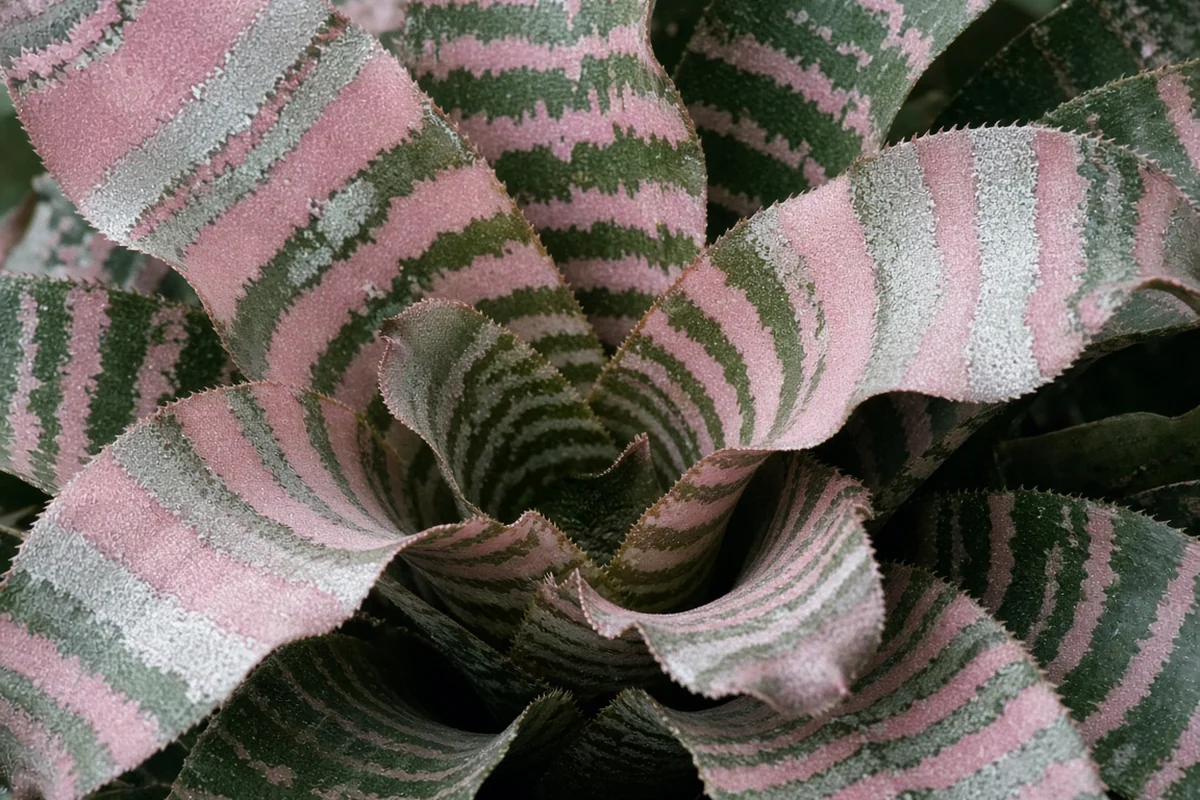
NC State Extension lists earth star for dappled sunlight and partial shade, with morning and evening sun preferred over midday sun. UF IFAS says bromeliads suit bright, diffused light indoors. In Extension light bands, University of Minnesota Extension places medium light at 250 to 1,000 foot candles, and University of Missouri Extension says medium light plants prefer that same range. Based on these descriptions, cryptanthus fits that medium band. For general background on lamp choice see grow lights for cannabis.
Which grow light suits cryptanthus?
University of Missouri Extension lists four types of artificial light: incandescent, fluorescent, high intensity discharge and LEDs. Red and blue wavelengths drive plant growth, it explains. Minnesota Extension notes grow lights are sold as blue, red or white balanced light. A small LED panel or fluorescent fixture over a shelf covers a few earth stars. Spacing advice is in led light distance cannabis.
How do you tell if cryptanthus has the right light?
Read the leaves. UF IFAS says light that is too low gives long, thin and greener leaves, while light that is too high gives shorter, thicker and lighter colored leaves. NC State Extension adds that heat from too much sun can bleach and shrivel the foliage. Minnesota Extension notes plants exposed to too much light may scorch. Adjust lamp height and hours to what you see, using a timer as in grow light timers.
Earth star light guide
| Factor | Target | Source |
|---|---|---|
| Light band | Medium, 250 to 1,000 fc | UMN, Missouri |
| Lamp distance | 6 to 12 in from tips | Missouri |
| Daily hours | 12 to 14 for foliage | UMN |
| Too little light | Color fades | NC State |
| Too much light | Leaves bleach | NC State |
Sources: NC State Extension, UF IFAS, University of Minnesota Extension, University of Missouri Extension.

How to: step by step
- Place the plant under an LED or fluorescent lamp.
- Set the lamp 6 to 12 inches above the leaves.
- Run the light 12 to 14 hours on a timer.
- Water when the soil is dry to the touch.
- Check leaf color after a few weeks.
- Raise or lower the lamp to match.
Troubleshooting
Green, stretched leaves: too little light. Lower the lamp or add hours.
Pale, bleached leaves: too much light or heat. Raise the lamp.
Soggy soil: overwatering. Let the top dry before you water again.
Kind Seed Co covers related topics in cannabis seeds.
Sources
- Cryptanthus bivittatus (earth star), NC State Extension Gardener Plant Toolbox
- Bromeliads, UF IFAS Gardening Solutions
- Lighting for indoor plants and starting seeds, University of Minnesota Extension
- Lighting indoor houseplants (G6515), University of Missouri Extension
FAQ
Do earth stars need direct sun?
Not at midday. NC State Extension says morning and evening sun suits earth star and the midday sun is too intense. UF IFAS says bromeliads grow indoors in bright, diffused light without direct sun.
Why is my cryptanthus losing color?
NC State Extension says too much shade makes the foliage lose its brilliant color. UF IFAS adds that light too low for a bromeliad gives long, thin and greener leaves. Raise the light level or move the lamp closer.
How long should the light run?
University of Minnesota Extension suggests 12 to 14 hours a day for foliage houseplants on a timer. Since earth star is grown for its leaves, that range is a sensible start.
Do cryptanthus like humidity?
NC State Extension tags earth star as humidity tolerant and UF IFAS notes many bromeliads come from tropical areas and prefer high humidity. UF also warns against overwatering since they dislike wet feet.
How far should the light be from the plant?
University of Missouri Extension says most plants should sit with their tips 6 to 12 inches from the light source. It also notes intensity drops quickly as distance grows.



