Grow Light for Nerve Plant Growth: Gentle LEDs for Fittonia
The short answer
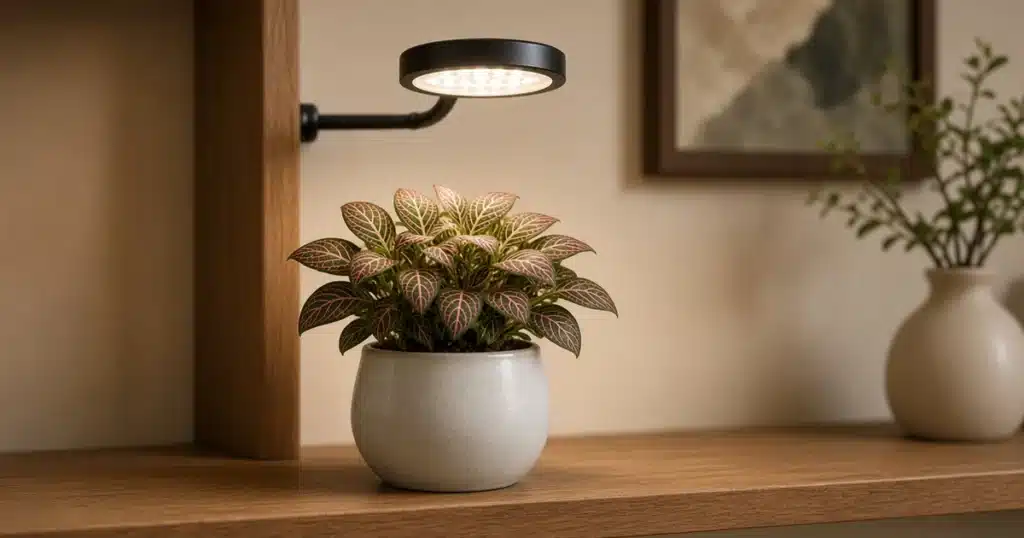
A grow light for nerve plant growth should be gentle. NC State Extension says fittonia likes bright to medium light and that direct sun can scorch its leaves. A full spectrum LED set 12 to 24 inches above the foliage on a 12 to 14 hour timer is a sound start for most homes.
How much light does a nerve plant need?
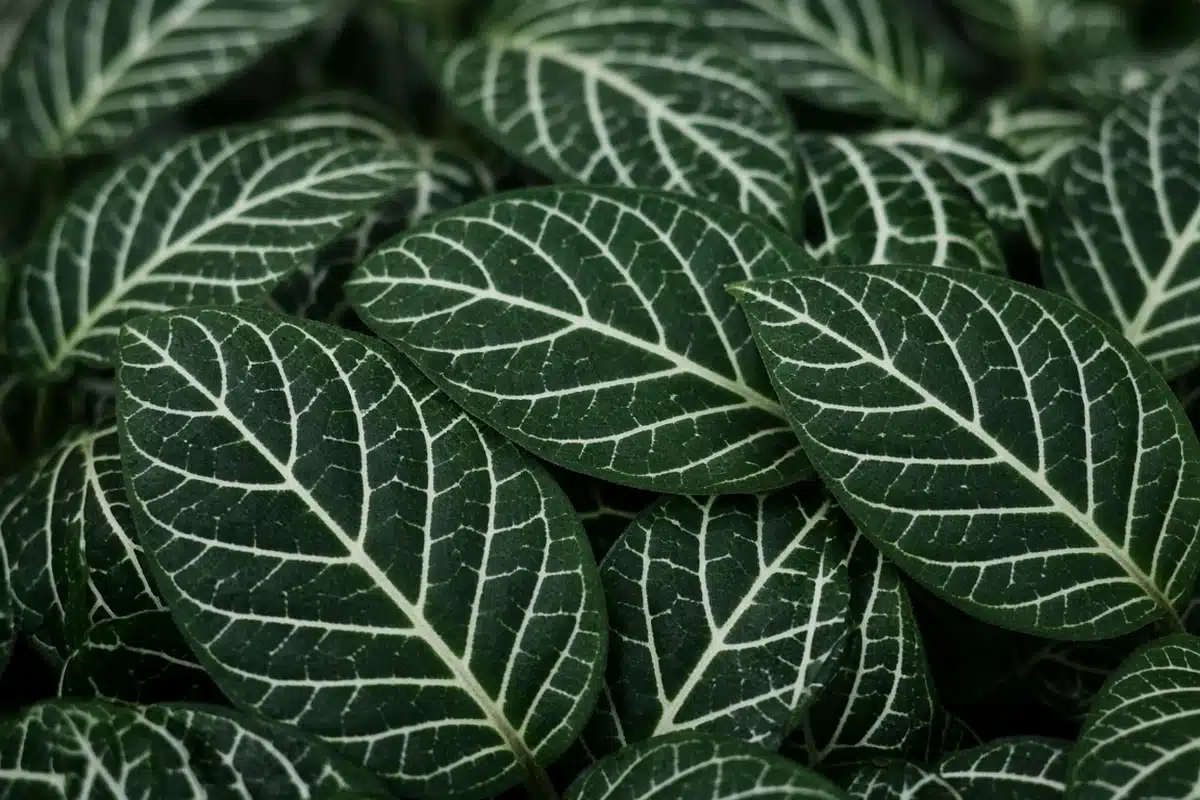
Nerve plants are grown for their veined leaves. NC State Extension describes leaves that are green and veined in red, and notes the plant can serve as a desktop plant or a ground cover. It says fittonia likes bright to medium light, average to cool room temperature and medium humidity.
Too much sun is the main risk. NC State notes that leaves will shrivel and fall off in dry air, drafts or direct sun, and that leaves may become scorched from direct sunlight. That means soft, indirect light, not a bright south window.
University of Minnesota Extension gives a medium light range of 250 to 1,000 foot candles. That’s an east window or a spot near a west window but out of direct light. Illinois Extension adds that in low light, plants benefit from more hours.
Which grow light suits a nerve plant?
NC State notes that fittonia performs well under fluorescent lights. University of Minnesota Extension says the most common grow lights are LED and fluorescent. It lists LEDs as very energy efficient, long lasting, wide in spectrum and low in heat.
Illinois Extension says cool white fluorescent bulbs work well for foliage plants. For more on matching light to plants, read optimal lighting for growing indoors and grow lights for cannabis, which cover the same LED basics.
Distance and hours set the dose. Minnesota Extension lists 12 to 24 inches between the light and foliage houseplants, and 12 to 14 hours of light per day for them. Illinois Extension warns not to give plants more than 16 hours of light, since they need a rest period too. A timer makes this easy, and grow light timers explains how to set one.
How do you tell if a nerve plant has the right light?
Watch the leaves and stems. The signs below come from the sources under the table.
| Sign | Meaning | Fix |
|---|---|---|
| Scorched leaves | Too much direct light | Raise the light or move from sun |
| Pale or yellowing leaves | Too little light | Lower the light or add hours |
| Long, thin stems | Too little light | Add hours or intensity |
| Dramatic wilt | Soil too dry | Water and check again |
| Yellow leaves with wet soil | Overwatering | Let the soil dry a little |
Sources: NC State Extension Gardener Plant Toolbox, University of Minnesota Extension.
Good light shows as bright veins on compact plants. NC State notes the creeping stems root, so steady light helps the plant spread in an even mat.
How to: step by step
- Place the nerve plant in bright, indirect light first.
- Pick a full spectrum LED for extra light.
- Hang the light at the maker’s suggested distance.
- Run a timer for a steady day length.
- Watch new growth for a few weeks.
- Adjust height or hours in small steps.
If the maker gives no distance, Minnesota Extension’s 12 to 24 inches for foliage houseplants is a reasonable start.
Troubleshooting
Bleached or scorched leaves: light too intense. Minnesota Extension says too much light can scorch and bleach leaves. Raise the light.
Leggy stems: too dim. Minnesota Extension describes stems that grow long and thin when light is short. Lower the light a little or add hours.
Collapse: often dry soil, not light. NC State says fittonia will wilt dramatically when too dry but comes back after a drink. Water and check.
Withered leaves in a closed case: NC State notes leaves may wither if humidity is too high. Open the cover awhile.
Soft light, bright veins
A grow light lets a nerve plant hold its color through dark months. Gentle light, a fixed day length and even moisture matter more than raw power. The Kind Seed Co blog covers grow lights in depth, and if you also grow from seed, browse our cannabis seeds range.
Sources
- Fittonia albivenis (nerve plant), NC State Extension Gardener Plant Toolbox
- Lighting for indoor plants and starting seeds, University of Minnesota Extension
- Lighting, houseplants, Illinois Extension
FAQ
Can nerve plants grow in a terrarium with a light?
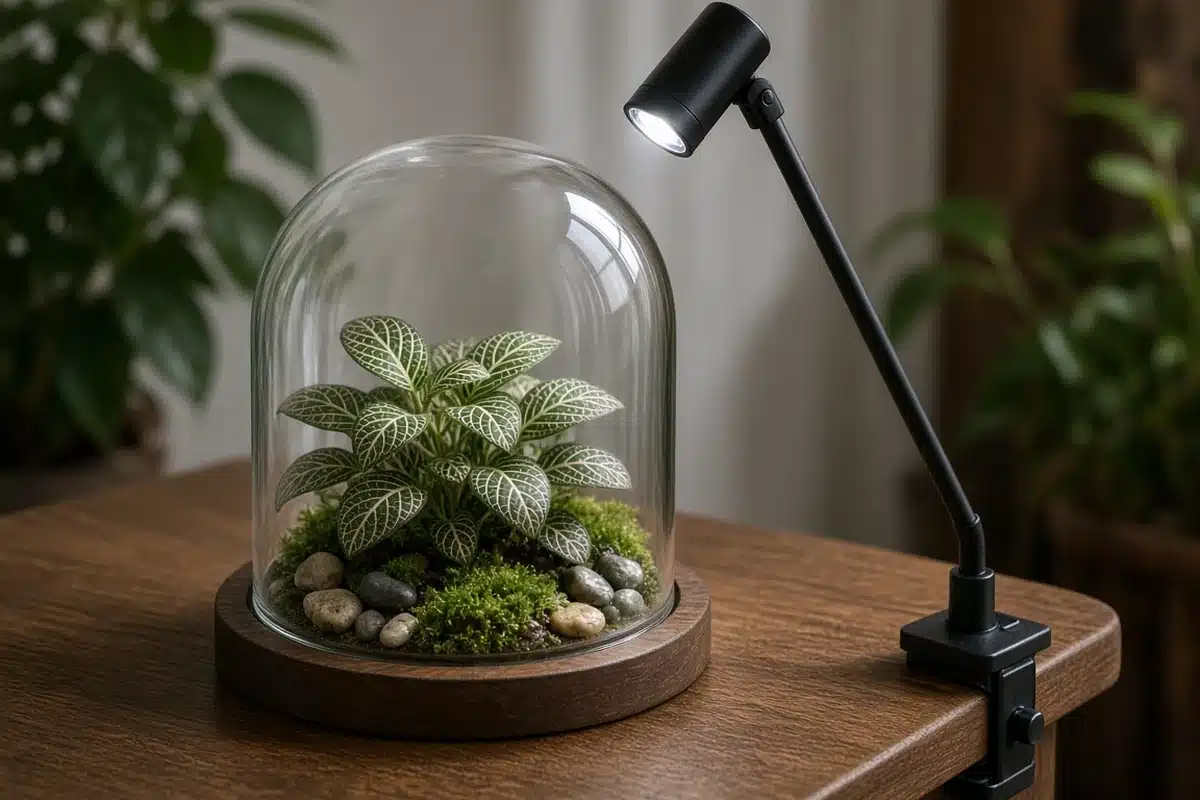
Yes. NC State Extension notes that dwarf plants can be used in terrariums and that fittonia performs well under fluorescent lights. Watch humidity in a closed case, since NC State says leaves may wither if humidity is too high. Open the lid now and then for fresh air.
How far should the light be?
University of Minnesota Extension lists 12 to 24 inches between the light and foliage houseplants. Start there unless the maker of the light gives its own distance. If leaves look scorched or bleached, raise the light. If stems stretch, lower it a little and watch the next new leaves.
Do nerve plants need darkness at night?
Yes, a rest period helps. Illinois Extension says not to expose plants to more than 16 hours of light, since they need a rest period too. University of Minnesota Extension suggests 12 to 14 hours of light per day for foliage houseplants, so a timer set in that range works well.
Why is my nerve plant leggy?
Leggy growth often means too little light. University of Minnesota Extension says stems become long and thin and seem to reach toward the light when plants lack light. Move the light a little closer or add hours on the timer, then watch new growth for a few weeks before you change it again.
Why are my nerve plant leaves yellow?
NC State Extension notes that yellowing leaves may indicate overwatering, and that overwatering can cause root rot. Too little light can also turn leaves pale, according to University of Minnesota Extension. Check the soil first, then check light height and hours.