Grow Light for Polka Dot Plant Color: Keeping Spots Bright
The short answer
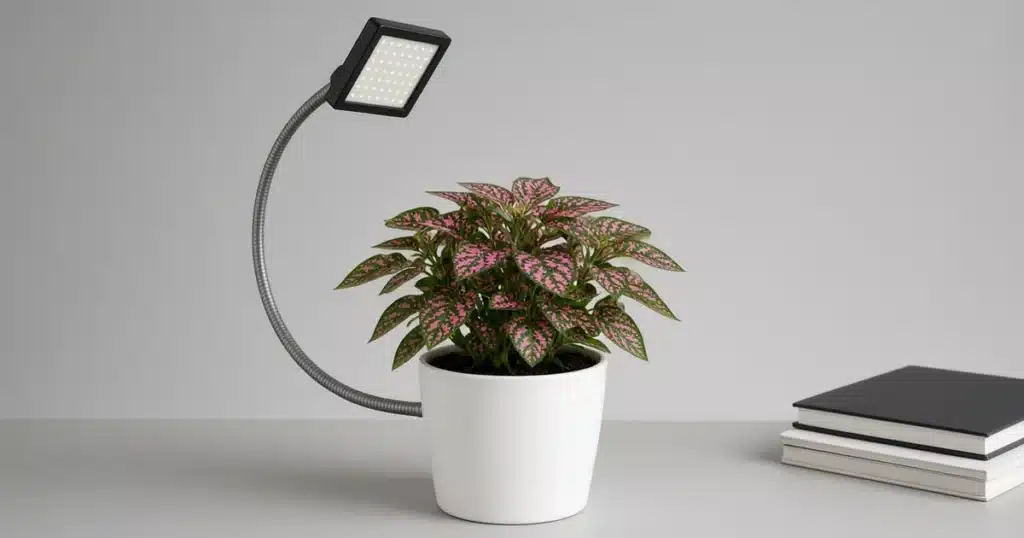
A grow light for polka dot plant color should be bright but filtered. University of Wisconsin Extension says hypoestes grows well in bright, filtered light and that its leaves fade in very low light. A full spectrum LED set 12 to 24 inches above the leaves on a 12 to 14 hour timer is a sound start.
How much light does a polka dot plant need?
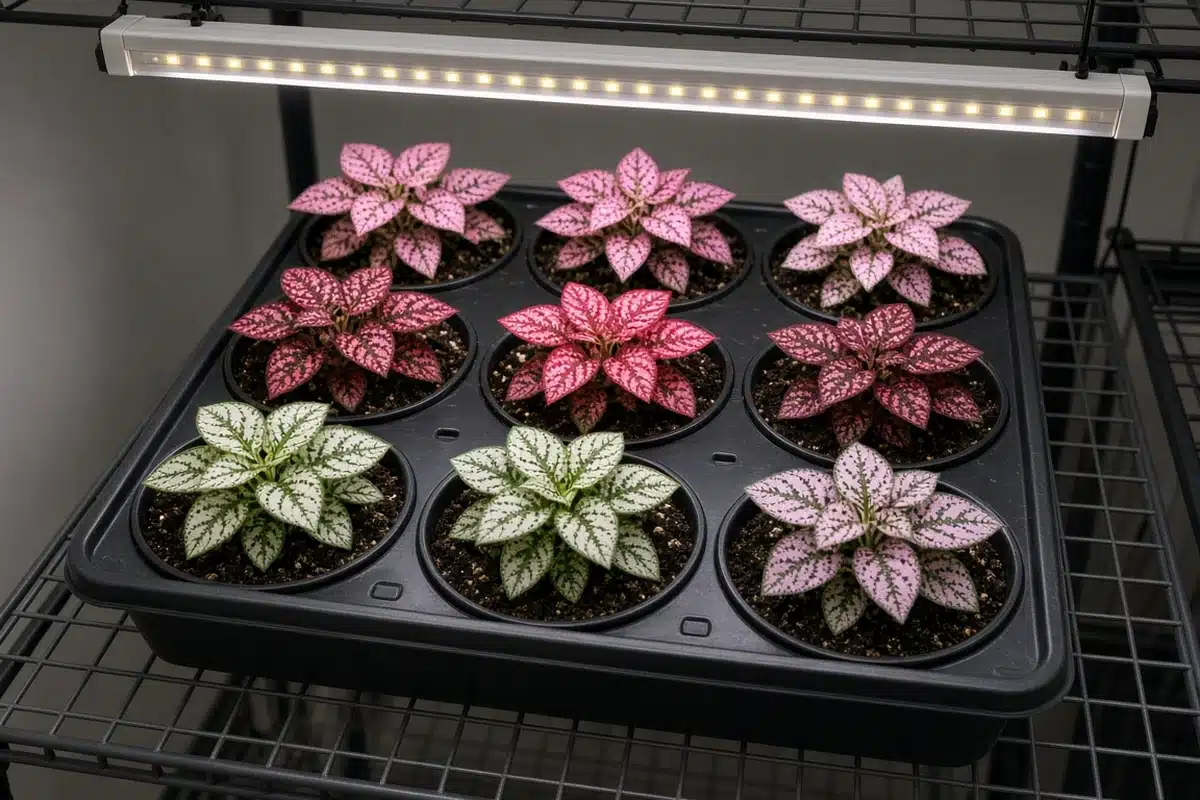
Polka dot plants are grown for their spotted leaves. University of Wisconsin Extension describes small, dark green foliage with pink spots. Newer hybrids are splashed with red, white or lighter green. NC State Extension notes it isn’t grown for its flowers.
Light sets the color. Wisconsin Extension says hypoestes grows well in bright, filtered light but tolerates some sun. It adds that the plants color better in partial shade than full sun, while leaves also fade in very low light. NC State agrees that bright, filtered lighting gives the richest color, and warns that too much direct sunlight can cause the leaves to crinkle and curl.
Wisconsin Extension also notes the plants can be grown under artificial light. University of Minnesota Extension says supplemental lighting can make up for missing sunlight.
Which grow light suits a polka dot plant?
University of Minnesota Extension notes that the most common grow lights are LED and fluorescent. It lists LEDs as very energy efficient, long lasting, wide in spectrum and low in heat. For more on fixtures, see grow lights for cannabis, which covers the same LED basics.
Minnesota Extension lists 12 to 24 inches between the light and foliage houseplants. For more on how distance changes intensity, read led light distance cannabis.
Day length matters too. Minnesota Extension suggests 12 to 14 hours of light per day for foliage houseplants. Wisconsin Extension notes that long day lengths hold the plants in vegetative growth. Flowering occurs in late summer or fall, if at all on houseplants. A timer keeps the schedule steady, and grow light timers explains how to set one.
How do you tell if a polka dot plant has the right light?
Watch the spots and the stems. The signs below come from the sources under the table.
| Sign | Meaning | Fix |
|---|---|---|
| Faded spots | Too little light | Lower the light or add hours |
| Crinkled, curled leaves | Too much direct light | Raise the light or move from sun |
| Long, stretched stems | Low light | Add light and pinch back |
| Scorched or bleached leaves | Too much light | Raise the light or cut hours |
Sources: University of Wisconsin Extension, NC State Extension Gardener Plant Toolbox, University of Minnesota Extension.
Good light shows as crisp, colorful spots on a compact plant. Wisconsin Extension notes that the first true leaves are already colored, so new growth is a quick guide to how the light is working.
How to: step by step
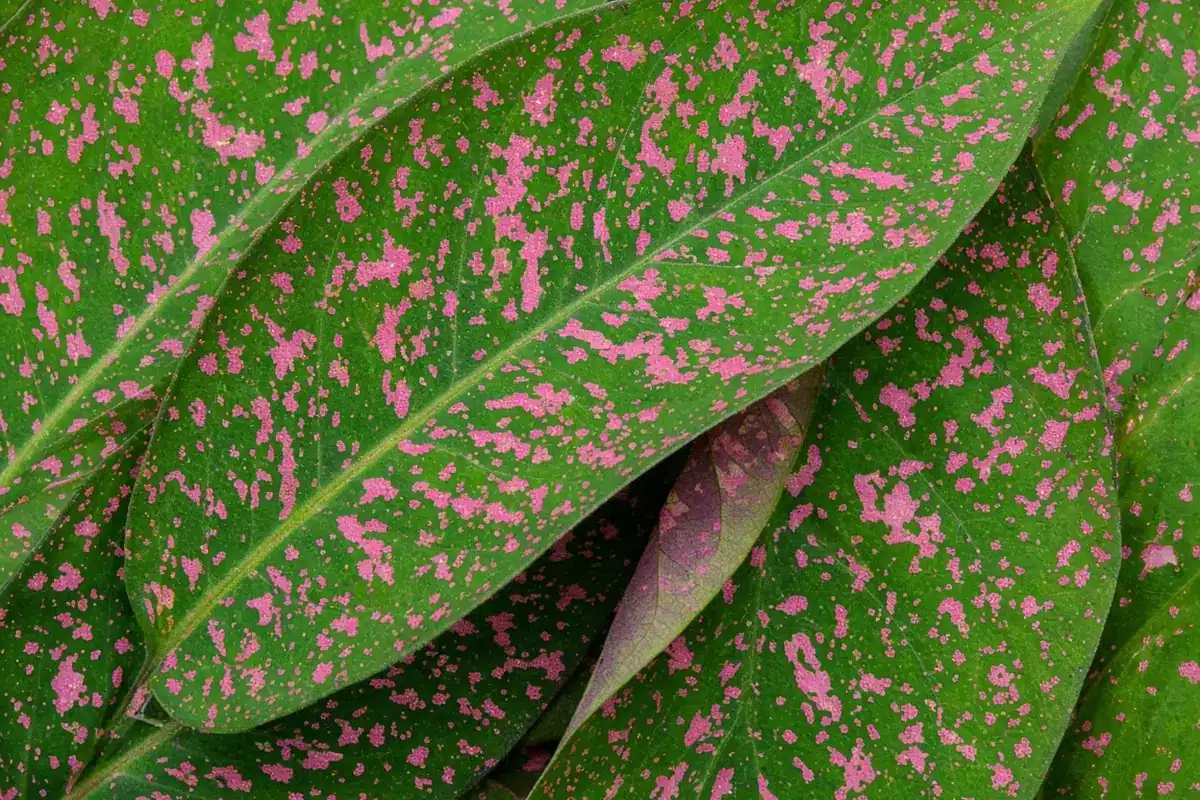
- Place the polka dot plant in bright, filtered light first.
- Pick a full spectrum LED for extra light.
- Hang the light at the maker’s suggested distance.
- Run a timer for a steady day length.
- Pinch back stems that start to stretch.
- Adjust height or hours in small steps.
If the maker gives no distance, Minnesota Extension’s 12 to 24 inches for foliage houseplants is a reasonable start.
Troubleshooting
Fading spots: too little light. Wisconsin Extension says the leaves fade out in very low light. Lower the light or add hours.
Crinkled or scorched leaves: light too intense. NC State notes direct sun can make leaves crinkle and curl. Raise the light.
Leggy stems: low light and no pinching. Wisconsin Extension says the plants get leggy with age, mostly in lower than ideal light, and that regular pinching keeps them compact. Add light and pinch.
Dry, tired plant: Wisconsin Extension notes the plant grows better with plenty of water and may need winter misting indoors.
Bright spots all year
A grow light lets a polka dot plant hold its color when window light runs short. Filtered light, a steady day length and regular pinching matter more than raw power. The Kind Seed Co blog covers grow lights in depth, and if you also grow from seed, browse our cannabis seeds range.
Sources
- Polka dot plant, Hypoestes phyllostachya, University of Wisconsin Extension Horticulture
- Hypoestes phyllostachya (polka dot plant), NC State Extension Gardener Plant Toolbox
- Lighting for indoor plants and starting seeds, University of Minnesota Extension
FAQ
Why do polka dot plant spots fade?
Low light is the usual cause. University of Wisconsin Extension says leaves fade in very low light, and NC State Extension notes too little light can fade the leaves and make the plant leggy. Move the plant to brighter, filtered light or add a grow light on a timer.
Can polka dot plants take direct sun?
Some, but not much. Wisconsin Extension says hypoestes tolerates some sun but has better color in partial shade than full sun. NC State Extension warns that too much direct sunlight can cause the leaves to crinkle and curl. Bright, filtered light gives the richest spots.
How long should the light be on?
University of Minnesota Extension suggests 12 to 14 hours of light per day for foliage houseplants. Wisconsin Extension notes that long day lengths hold polka dot plants in vegetative growth, which suits a plant grown for its leaves. Use a timer so the schedule stays steady.
Should I pinch my polka dot plant?
Yes. University of Wisconsin Extension says regular pinching back holds the plants more compact, and NC State Extension agrees that pinching leggy plants maintains a compact shape. NC State also notes that cutting off the blooms lets more of the plant's energy go to the foliage.
Can I root polka dot plant cuttings?
Yes. University of Wisconsin Extension says cuttings quickly produce roots when placed in water, and often grow when stuck into moist potting mix, sand or vermiculite, mainly in spring and summer. NC State Extension suggests placing the cutting in water in a bright location.