Grow Light for Paphiopedilum Orchids: Moderate Light for Slipper Blooms
The short answer
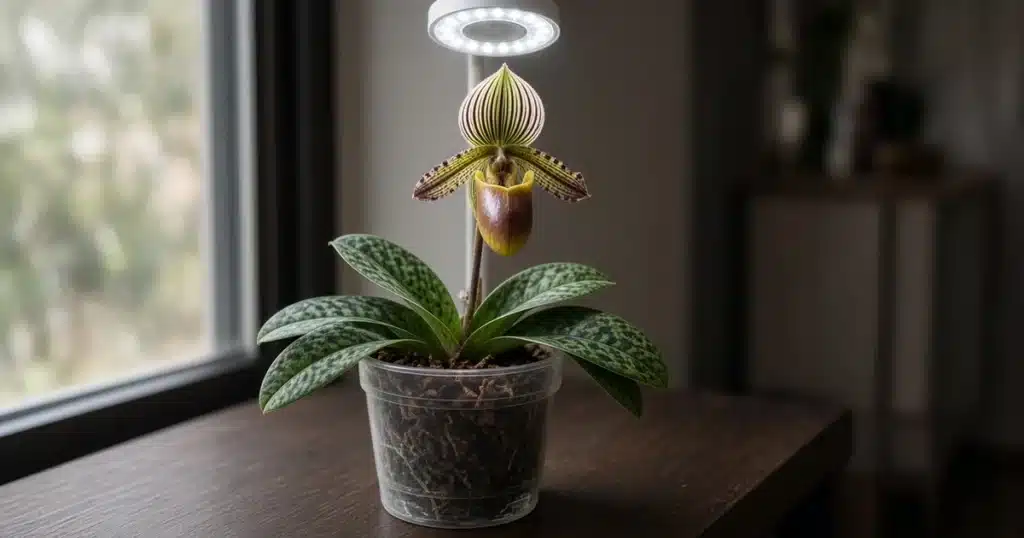
A grow light for paphiopedilum orchids only needs moderate light. NC State Extension says these slipper orchids tolerate low light and shade, needing 500 to 2,500 foot candles. Penn State Extension notes paphs do well under artificial light, so a full spectrum LED on a steady timer can carry them through winter.
How much light does a paphiopedilum need?
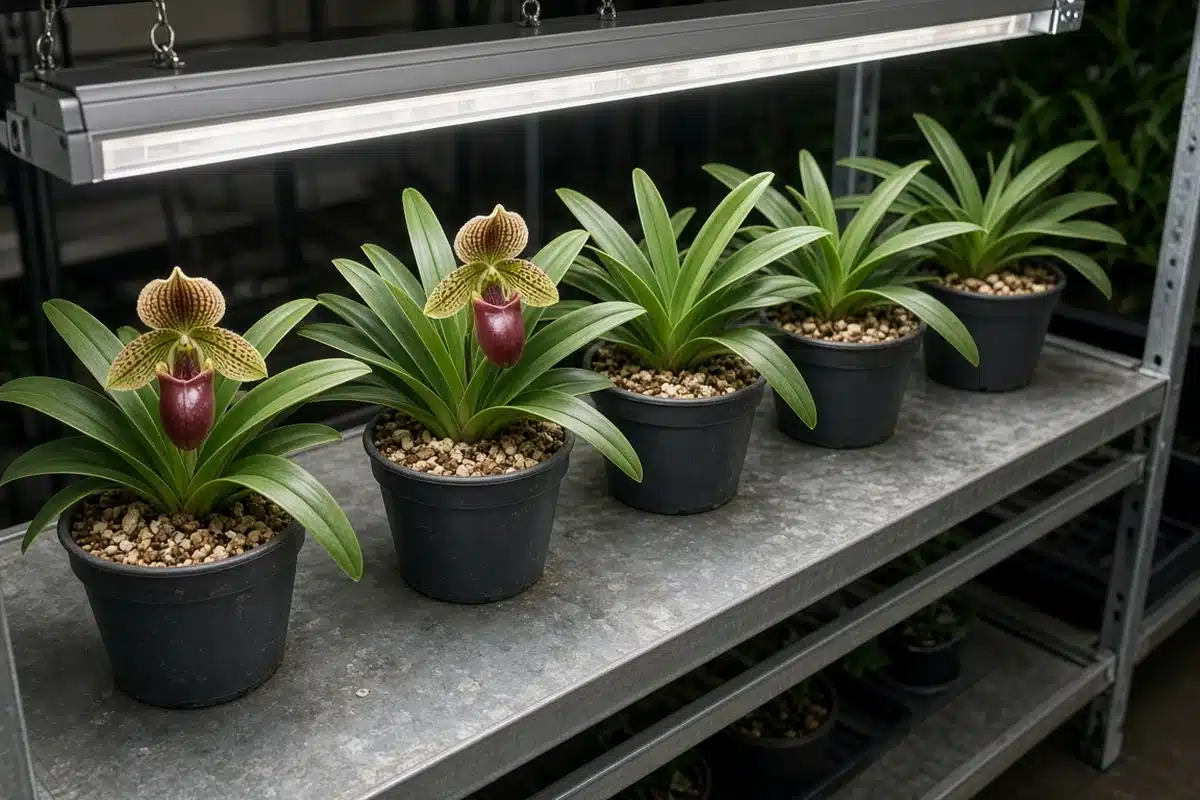
Paphiopedilum are the lady slipper orchids. NC State Extension says all have the slipper shaped lip, and that the waxy flowers last long. It puts their need at only 500 to 2,500 foot candles, against about 10,000 for full, direct sun.
Penn State Extension says slipper orchids grow on the shaded floor of tropical forests. At home, it suggests an east or west window, and notes a north window probably won’t have enough light. Penn State adds that paphs also do well under artificial light.
UF IFAS Gardening Solutions says orchids usually prefer at least partial shade or filtered sun. It notes most orchids prefer bright, indirect light and won’t bloom without it.
Which grow light suits a paphiopedilum?
Penn State Extension notes that paphs do well under artificial light. University of Minnesota Extension says the most common grow lights are LED and fluorescent, and lists LEDs as very energy efficient, long lasting, wide in spectrum and low in heat. For more on fixtures, see grow lights for cannabis, which covers the same LED basics.
Minnesota Extension lists 6 to 12 inches between the light and flowering houseplants. Slipper orchids need far less light than most bloomers, so start at the far end of that range. For more on how distance changes intensity, read led light distance cannabis.
Minnesota Extension suggests 14 to 16 hours of light a day for flowering houseplants. A timer holds the schedule steady, and grow light timers explains how to set one.
How do you tell if a paphiopedilum has the right light?
Watch the leaves and the bloom cycle. The signs below come from the sources under the table.
| Sign | Meaning | Fix |
|---|---|---|
| No blooms | Too little light | Lower the light or add hours |
| Pale or yellow leaves | Too little light | Lower the light or add hours |
| Scorched or bleached leaves | Too much light | Raise the light |
| Streaks or blotches on leaves | Possible disease | Keep foliage dry and improve air flow |
Sources: University of Minnesota Extension, UF IFAS Gardening Solutions.
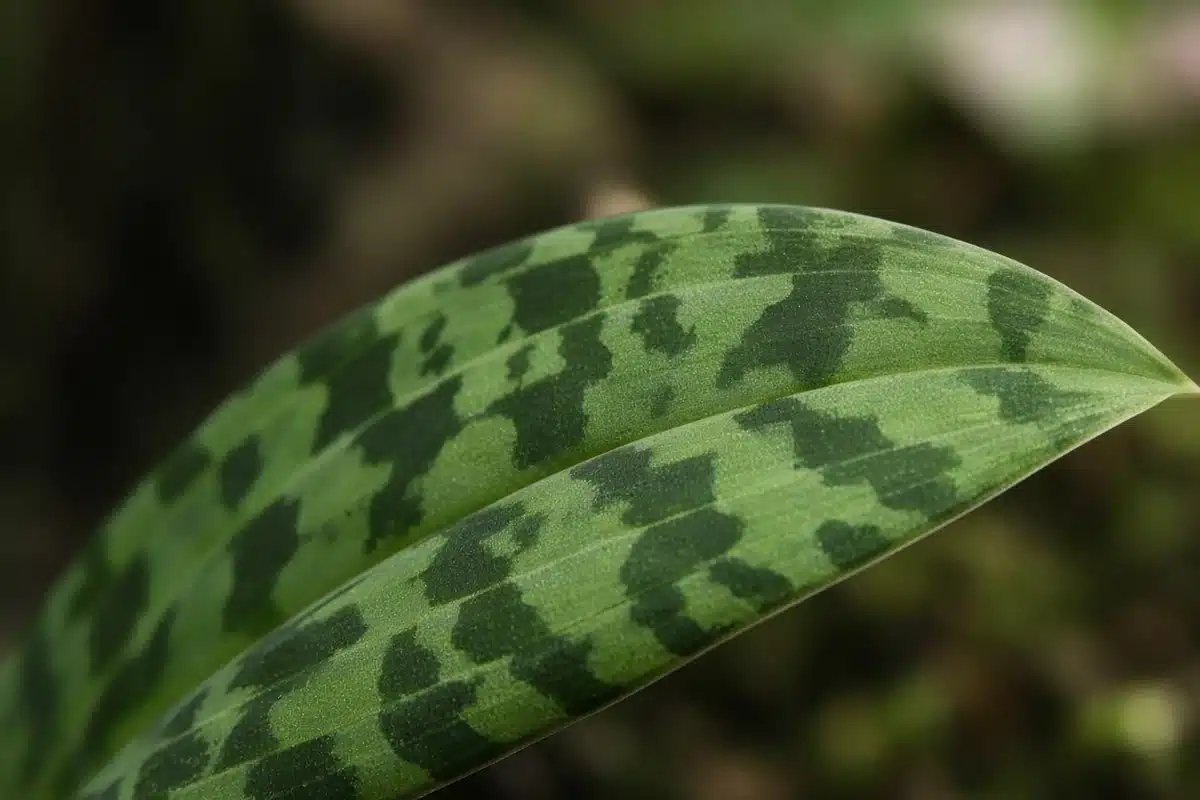
Leaf pattern is normal variation. NC State notes that warm growing lady slippers usually have mottled foliage, while those without mottled leaves prefer cool, moist air.
How to: step by step
- Place the orchid in an east or west window first.
- Pick a full spectrum LED for extra light.
- Hang the light at the maker’s suggested distance.
- Run a timer for a steady day length.
- Hold the mix moist but not soggy.
- Adjust height or hours in small steps.
If the maker gives no distance, start at the far end of Minnesota Extension’s 6 to 12 inch range for flowering houseplants.
Troubleshooting
No flowers: too little light. UF IFAS says most orchids won’t bloom without bright, indirect light, and suggests moving a plant from a dark corner nearer a window. Lower the light or add hours.
Yellow or scorched leaves: too much light. Minnesota Extension says too much light can scorch and bleach leaves. Raise the light.
Still no flowers with good light: UF IFAS notes too much fertilizer can inhibit blooming, and most orchids need a 15 to 20 degree gap between day and night temperatures to flower.
Spotted or streaked leaves: UF IFAS says disease can show as streaks or blotches. Keep foliage dry and improve airflow.
Soft light for slipper blooms
A grow light gives a paphiopedilum steady, moderate light when windows fall short. Gentle intensity, a fixed day length and even moisture matter more than raw power. The Kind Seed Co blog covers grow lights in depth, and if you also grow from seed, browse our cannabis seeds range.
Sources
- Paphiopedilum (lady slipper orchid), NC State Extension Gardener Plant Toolbox
- Orchids as houseplants, Penn State Extension
- Orchids, UF IFAS Gardening Solutions
- Lighting for indoor plants and starting seeds, University of Minnesota Extension
FAQ
Are slipper orchids low light orchids?
Yes, compared with many orchids. NC State Extension says paphiopedilum tolerate low light and shade, needing only 500 to 2,500 foot candles. Penn State Extension notes their natural light need is low. They suggest an east or west window, as a north window likely lacks sufficient light.
How many hours of light do they need?
University of Minnesota Extension suggests 14 to 16 hours of light per day for flowering houseplants. Slipper orchids need moderate intensity, so set the light at a gentle distance and use a timer so the day length stays steady. Watch the leaves for scorch or paling and adjust.
Can paphiopedilum grow under shop lights?
Penn State Extension says paphs do well under artificial light. University of Minnesota Extension notes that the most common grow lights are LED and fluorescent, which covers many shop lights. Since NC State Extension puts their need at only 500 to 2,500 foot candles, a modest fixture can work.
Why won't my slipper orchid bloom?
Light is the first thing to check. UF IFAS Gardening Solutions says most orchids will not bloom without bright, indirect light. It also notes that too much fertilizer can inhibit blooming and that most orchids need a 15 to 20 degree difference between day and night temperatures to flower.
How warm should a slipper orchid be?
NC State Extension says paphiopedilum enjoy temperatures of 60 to 80 degrees F and relatively high humidity. Penn State Extension says slipper orchids indoors generally need 60 degrees F at night to no more than 90 degrees F during the day, and that most will tolerate lower home humidity.