
Horseradish Roots Woody: Old Roots plus Dry Soil
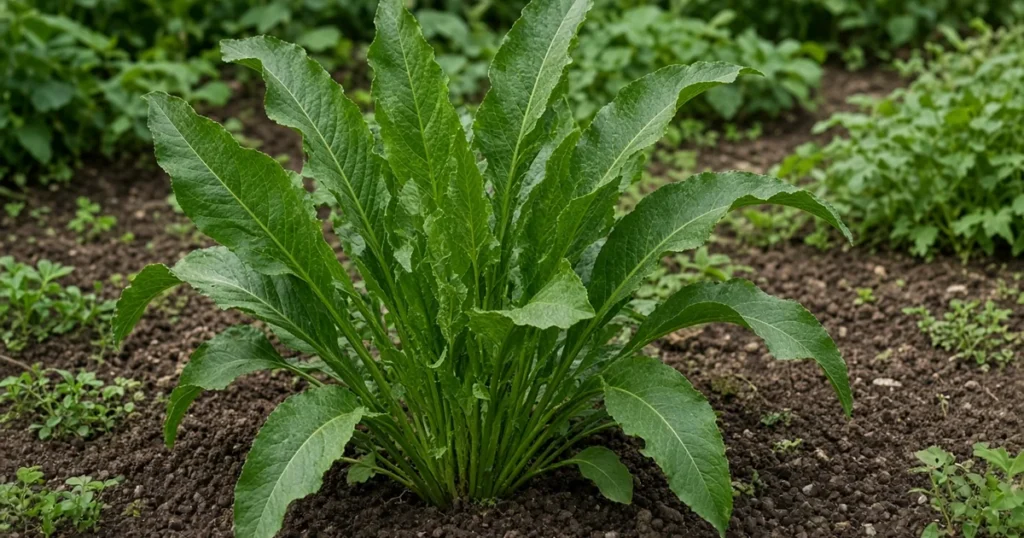
Horseradish roots woody plus stringy have usually stayed in the ground too long. University of Minnesota Extension notes roots left in the ground for two growing seasons become stringy plus woody, while Utah State University Extension notes drought stress also makes roots woody with weak flavor.
The short answer
Dig horseradish every year. University of Minnesota Extension notes roots left for two growing seasons turn stringy plus woody. It advises digging in late October or early November, before the ground freezes, plus saving side roots for replanting. Utah State notes drought stress also makes roots woody with weak flavor.
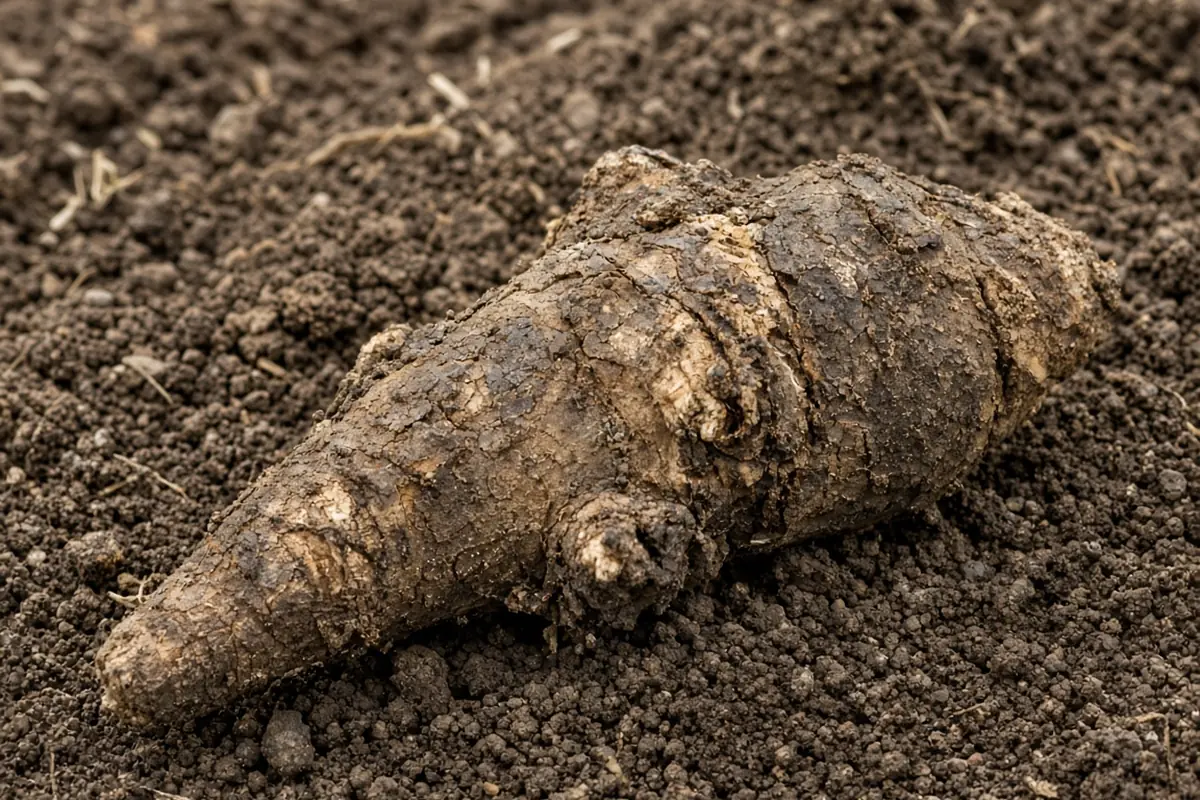
Why are my horseradish roots woody?
Minnesota notes roots left for two seasons become stringy plus woody. Utah State notes drought stress gives woody roots, while overwatering makes them soft.
| Cause | Sign | Fix | Source |
|---|---|---|---|
| Two seasons in the ground | Stringy, woody roots | Dig every fall | Minnesota |
| Drought stress | Woody roots, weak flavor | 1 to 2 inches of water a week | Utah State |
| Overwatering | Soft roots, sharp flavor | Water once a week | Utah State |
| Too much nitrogen | Branched roots | Feed lightly | Utah State |
| Fresh manure | Forked roots | Use only aged manure | Minnesota |
When should horseradish be dug?
Minnesota notes horseradish grows most in late summer plus early autumn, so it advises delaying harvest until late October or early November. Wisconsin advises digging in fall after frost kills the leaves or in early spring before growth resumes.
How do you restart a horseradish bed?
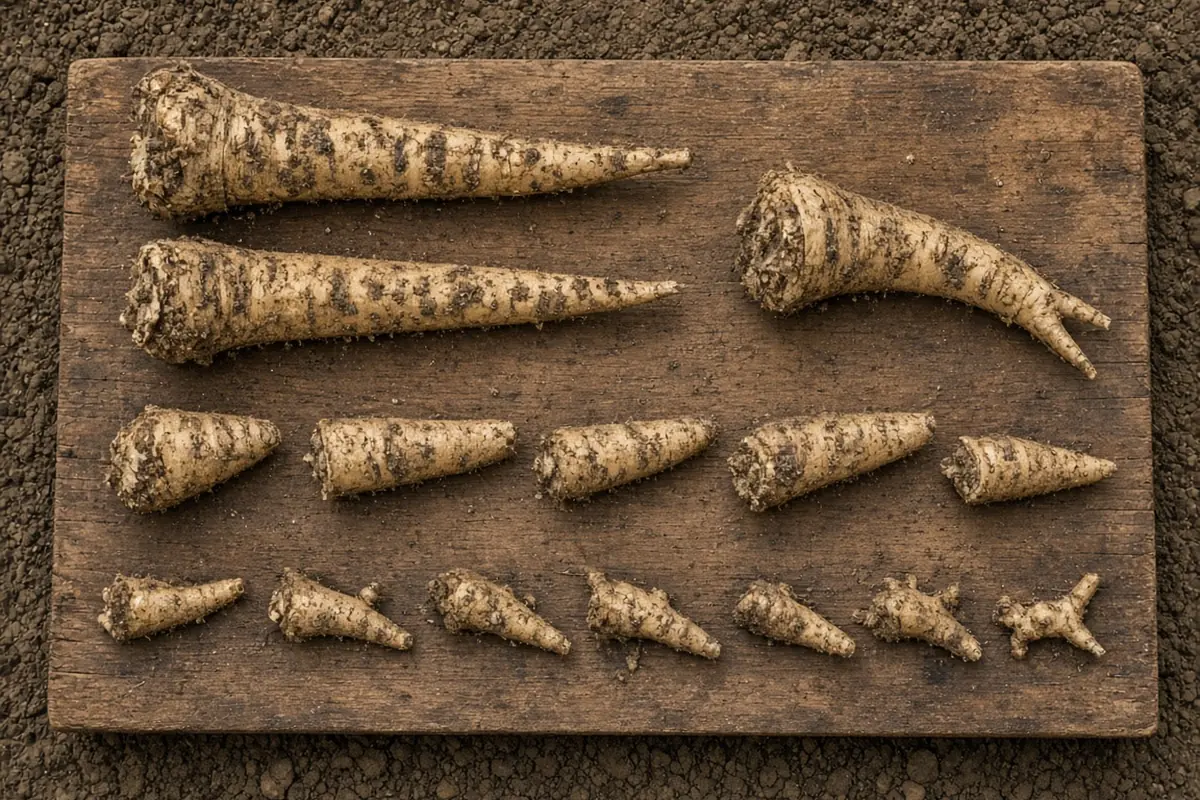
Minnesota advises saving side roots 8 inches or longer for planting next spring. Cut the top end square plus the bottom end on a slant to mark which end is up. Plant sets 1 foot apart at a slant, then cover with 2 to 3 inches of soil.
How to: step by step
- Note each patch’s planting date.
- Dig roots in late October or early November.
- Save straight side roots 8 inches or longer.
- Replant sets 1 foot apart in early spring.
- Water 1 to 2 inches a week in dry spells.
- Dig out every root piece you want gone.
Troubleshooting
Hard, stringy roots: they stayed in for two seasons. Dig every fall.
Woody roots with weak flavor: drought stress, per Utah State. Water deeply each week.
Spreading patch: Utah State notes small root bits left behind become weeds. Dig all roots.
Branched roots: Utah State links branching to too much nitrogen.
For root growth see the effects of environmental stresses on weed plants, underwatering cannabis plus cannabis root hairs. Kind Seed Co also stocks cannabis seeds.
Sources
- Growing horseradish in home gardens, University of Minnesota Extension
- How to grow horseradish in your garden, Utah State University Extension
- Horseradish, Armoracia rusticana, University of Wisconsin Extension Horticulture
- Armoracia rusticana (horseradish), NC State Extension Gardener Plant Toolbox
FAQ
Can woody horseradish roots be used?
The sources do not cover cooking woody roots. Minnesota notes roots left for two seasons are stringy plus woody, so it advises digging fresh roots each fall. It advises storing roots in the dark in a refrigerator, since light turns them green over time.
How long does horseradish take to grow?
Utah State notes roots can be dug at the end of the first year where the season is long, about 150 days. Minnesota notes horseradish grows most in late summer plus early autumn, so roots planted in early spring are dug in late October or early November.
Does horseradish spread?
Yes. Wisconsin notes the smallest piece of root can grow a new plant plus horseradish can become invasive. Utah State advises digging all roots, since pieces left behind become weeds. Wisconsin suggests growing it in a buried tub with the bottom cut out to contain the roots.
Can horseradish be dug in spring?
Yes. Minnesota advises a spring harvest as soon as new growth appears if you lack good storage, then replanting side roots. Wisconsin advises digging in early spring before growth resumes. Either way, dig the whole plant so no stray pieces regrow in the bed later.
How much water does horseradish need?
Utah State advises watering once a week with 1 to 2 inches of water. It notes horseradish is fairly drought tolerant, but stressed roots turn woody with weak flavor. Overwatered roots turn soft with a sharp flavor, plus root rot is common in wet soil.



