
How to Landscape a Backyard With No Grass: Beds Plus Covers

Here is how to landscape a backyard with no grass. Remove the sod, define patios and paths with hardscape, then fill the rest with planting beds and ground covers. University of Maryland Extension says ground covers spread but do not grow tall, so no mowing is needed. Weed and mulch until they fill in.
The short answer
Swap lawn for hardscape, beds and ground covers. University of Maryland Extension says ground covers need no mowing and little maintenance once established. Iowa State University Extension describes removing sod by smothering, digging or tilling. NC State Extension notes that a clearly defined ground plane, such as a brick walkway, shows people where to walk.
How is lawn removed without chemicals?
Iowa State University Extension says smothering with newspaper, cardboard or plastic excludes light so the grass dies. It is one of the least labor intensive methods but often takes six weeks or longer.
Lay 6 to 8 sheets of newspaper or 1 to 2 layers of cardboard, then cover them with compost, shredded bark or leaf mold. Thicker is not better, since it can block water and air.
Digging with a spade, fork or sod cutter clears an area quickly but requires a lot of labor and removes topsoil. Tilling retains more organic matter but can bring up weed seeds.
How much hardscape is right?
NC State Extension calls the ground plane the floor of the space. Examples include lawns, patios, terraces, decks plus walkways.
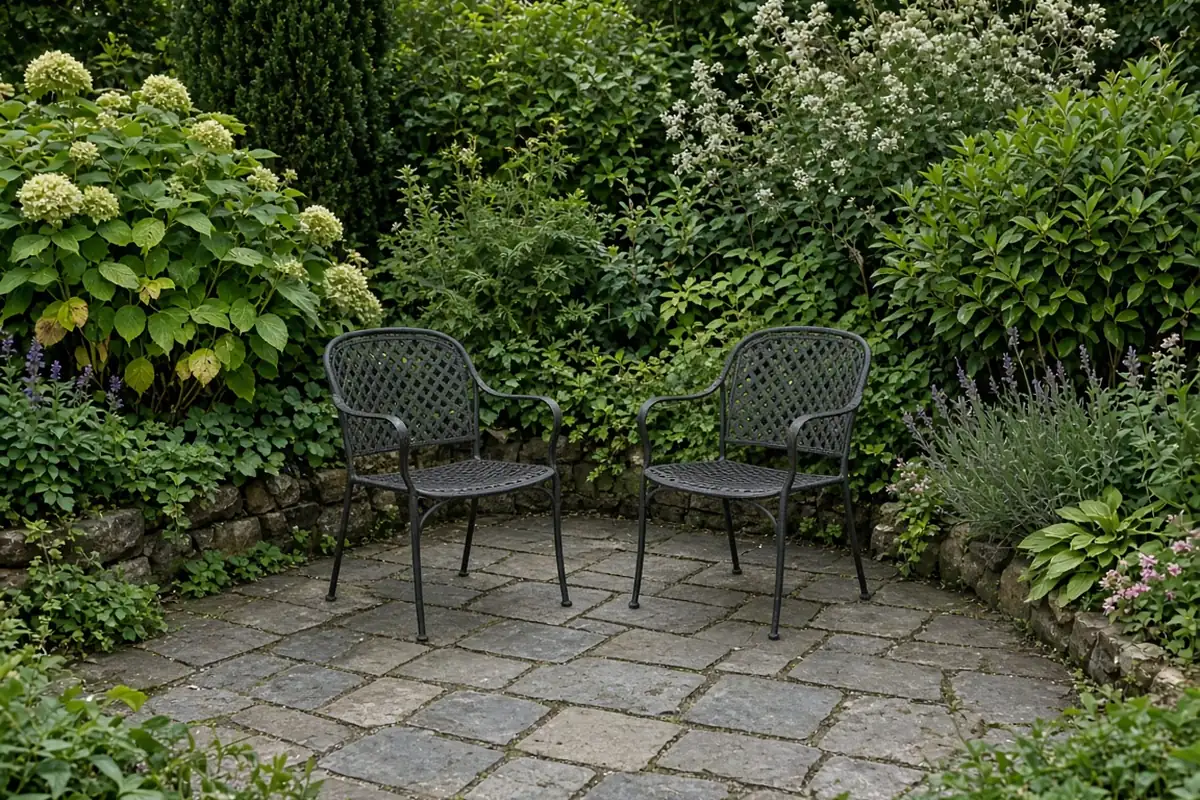
A walkway defined with a hardscape such as brick clearly tells people the surface is for walking. When the ground plane is clearly defined, people understand where to walk.
Colorado State University Extension suggests converting odd shaped turf areas to xeric plantings or hardscape. Adjust sprinklers so they do not water hardscapes.
| Removal method | Speed | Source note |
|---|---|---|
| Smothering | Six weeks or longer | Organic matter stays in place |
| Digging | Fast | Removes topsoil |
| Tilling | Fast | Can bring up weed seeds |
Source: Iowa State University Extension plus University of Maryland Extension.
Which ground covers fill space?
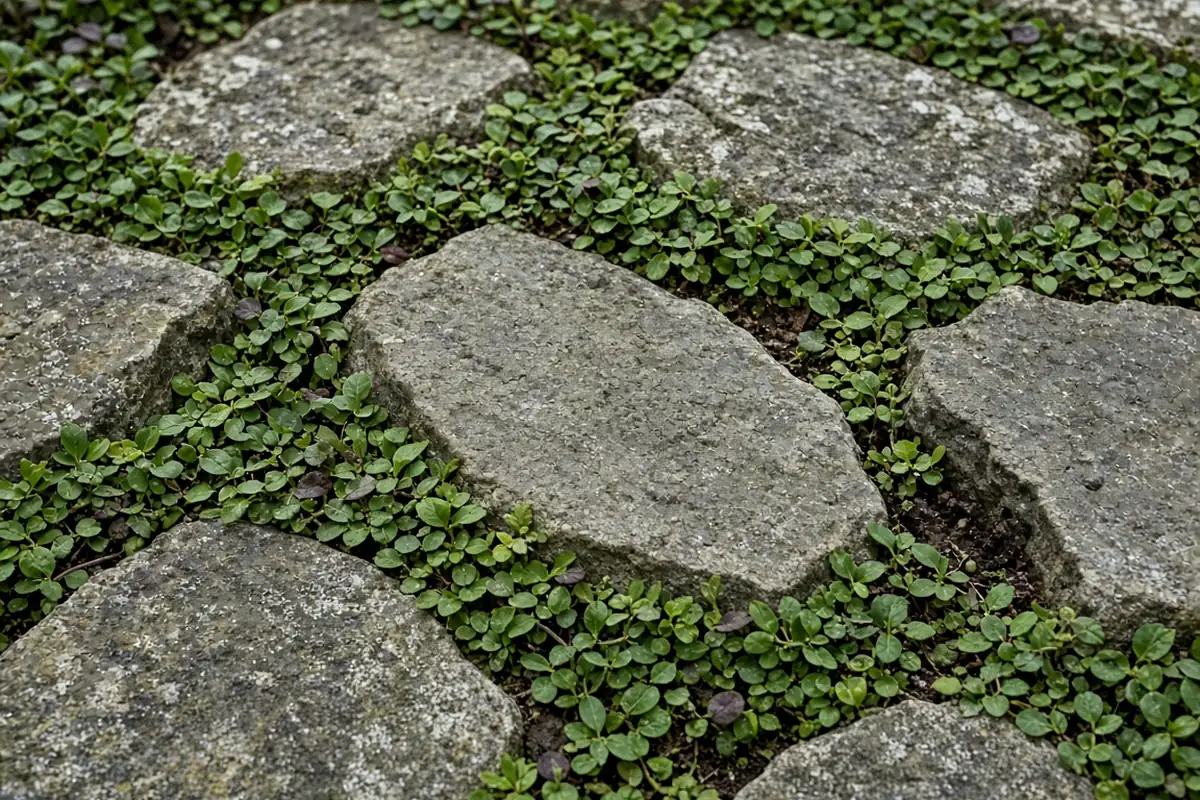
University of Maryland Extension says perennial evergreen ground covers can choke out weeds with time. You will need to weed and mulch until they are established.
Use an edge barrier to confine spreading ground covers. Maryland natives it names include wild ginger, alumroot plus green and gold.
Sedges have a grass like look and do not need frequent mowing, the same source notes. Under trees, place 2 to 3 inches of mulch beneath the dripline or plant ground covers there.
How to: step by step
- Mark patios, paths and beds on a plan.
- Smother or dig out the existing sod.
- Lay hardscape for seating and walking.
- Form planting beds around the hardscape.
- Plant ground covers in open areas.
- Weed and mulch until covers are established.
Troubleshooting
Weeds in open areas: covers not filled in. Mulch and weed.
Covers spreading into paths: no edge. Add an edge barrier.
Grass coming back: sod not fully dead. Smother longer.
For related reading see planning an outdoor cannabis garden layout, mulch for cannabis plus cover crops for cannabis. Kind Seed Co also stocks cannabis seeds.
Sources
- Lawn alternatives, University of Maryland Extension
- How to kill grass to create a new garden bed, Iowa State University Extension
- Xeriscaping: retrofit your yard, Colorado State University Extension
- Extension Gardener Handbook, chapter 19, NC State Extension
FAQ
Is a no grass yard low care?
University of Maryland Extension says ground covers need no mowing and little maintenance once they spread. Until then you will need to weed and mulch. Colorado State University Extension adds that any new planting needs maintenance to stay weed free, so start with an area you can manage.
Can a no grass yard support wildlife?
University of Maryland Extension says a meadow can enhance biodiversity with shelter, food and nest sites for birds, butterflies plus pollinators. A meadow needs a large area with at least 6 hours of sunlight daily. Native plant gardens also create a sense of place in the yard.
Should cardboard be removed after smothering?
Iowa State University Extension says the paper or cardboard is ideally removed or broken up once the grass beneath is dead. Left in place, it can obstruct water and air movement into the soil. Avoid waxed cardboard and glossy paper, and remove tape and staples.
When is the soil ready to dig or till?
Iowa State University Extension suggests removing sod a couple of days after a soaking rain, or irrigating two or three days ahead. Do not till soil that is too wet. If soil sticks to the tines or forms a ball, wait a day or two.
Where does a rain garden fit?
University of Maryland Extension says a rain garden may suit an area where you want to slow rainwater runoff and increase water infiltration into the soil. It lists rain gardens with pollinator gardens and xeriscaping as alternatives to lawn that still need some maintenance.



