
How to Make a Container Garden on a Patio: Pots plus Sun
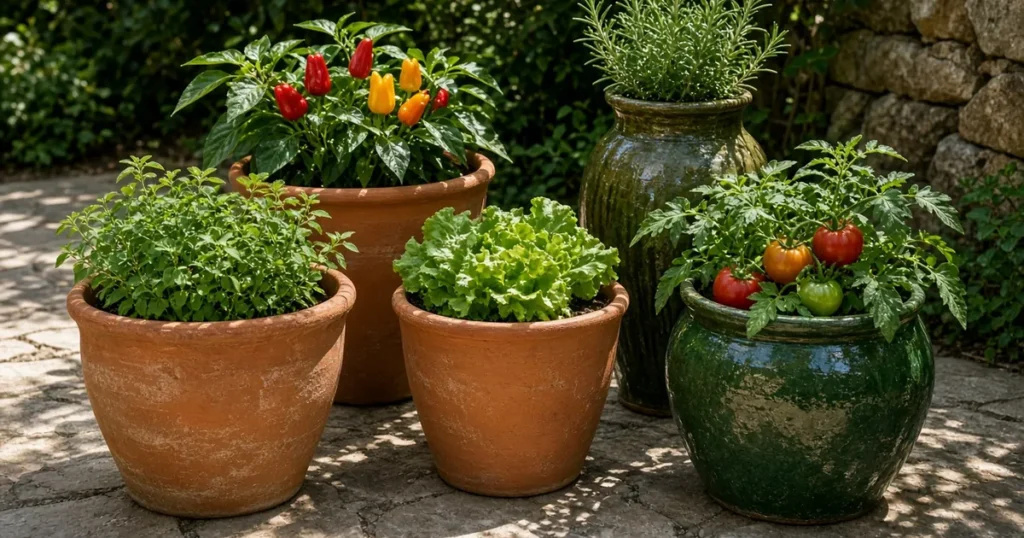
Learning how to make a container garden on a patio starts with sun, pot size plus grouping. UF/IFAS Gardening Solutions notes plants that share a pot should have the same light, water plus fertilizer needs. University of Illinois Extension notes container material affects how fast soil dries.
The short answer
Find a patio spot with at least six hours of direct sun. Choose pots with drainage holes that match the size of each plant. Fill them with a light potting mix, not garden soil. Group plants with the same light plus water needs. Check soil moisture with a finger before you water.
What pot sizes suit patio crops?
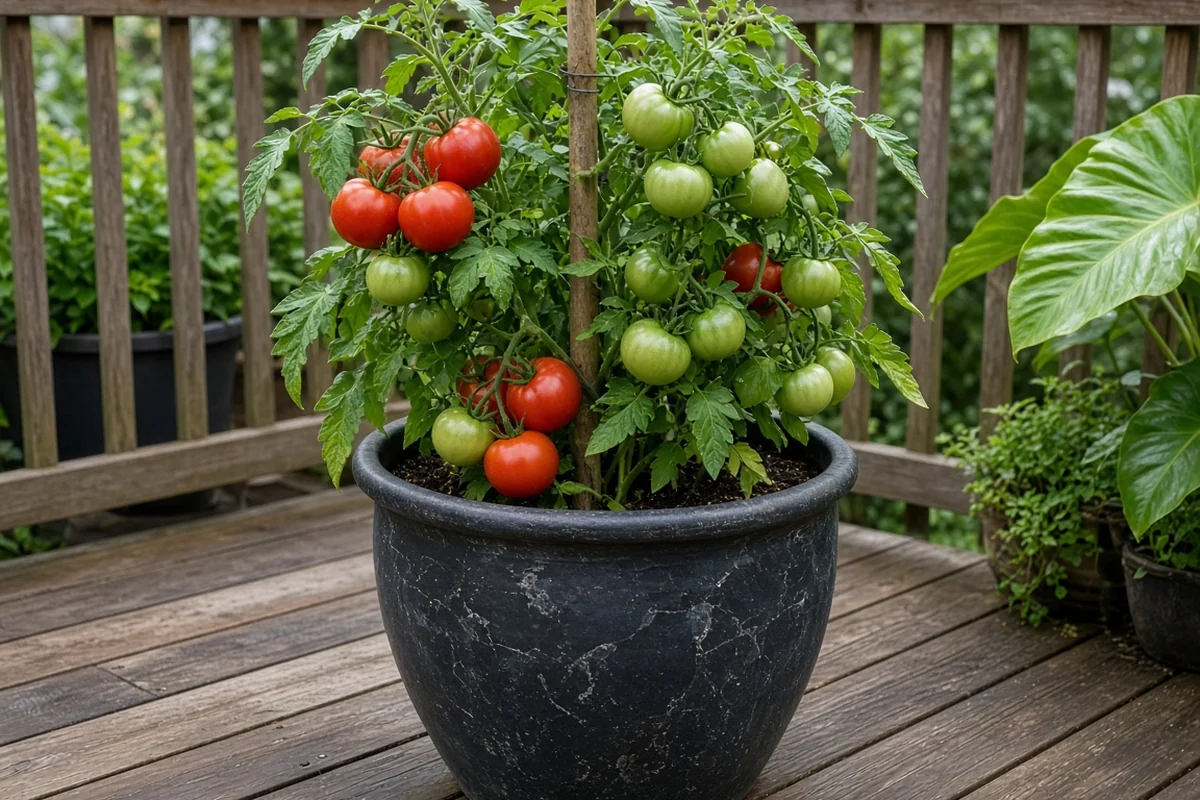
UF/IFAS notes the size of the container should match the size of the plant. NC State Extension notes the bigger the container, the easier it is to succeed. The larger the mature plant, the larger the container needs to be. Enough lettuce for a salad can grow in a 12 inch pot. Radishes plus carrots also grow in 12 inch containers.
University of New Hampshire Extension notes many containers work, from nursery pots to wooden buckets. Each needs drainage. If needed, drill holes along the sides near the bottom. Garden soil is too heavy for containers, so use a light mix that holds moisture yet drains well.
| Plant | Container note | Sun |
|---|---|---|
| Lettuce | Enough for a salad grows in a 12 inch pot | Tolerates less light than fruiting crops |
| Radishes plus carrots | Grow in 12 inch containers | Can grow in as little as six hours |
| Spinach plus Swiss chard | Cut and come again in large boxlike containers | Tolerate less light than fruiting crops |
| Herbs like basil | Replant every 3 to 4 weeks for steady harvests | Tolerate less light than fruiting crops |
| Tomatoes plus peppers | Larger plants need larger containers | Full sun, at least six hours |
Source: NC State Extension plus University of New Hampshire Extension.
How should containers be grouped?
UF/IFAS advises that all plants in one pot share the same needs for light, water plus fertilizer. Height, color plus texture add interest. Its “thrillers, spillers plus fillers” guideline pairs a bold plant with plants that spill over the sides plus plants with rounded forms.
Group pots on the patio the same way. University of New Hampshire Extension notes leafy crops like lettuce plus spinach tolerate less light than tomatoes, peppers plus cucumbers. Put fruiting crops in the sunniest spots.
How do hard surfaces affect pots?
Heat builds fast on a patio. University of Illinois Extension notes dark colors absorb more heat than light colors. Dark pots in intense summer sun can get hot, which can damage roots plus dry the mix quickly. Soil temperature swings more in metal pots plus small pots. These problems are bigger in sun than in shade.
Material matters too. Clay plus terra cotta soak up water, so porous pots lose water faster than plastic. Illinois Extension notes wind plus reflected heat dry raised containers faster. Heavy pots can sit on a dolly with casters so you can move them for light.
How to: step by step
- Count the hours of direct sun the patio gets.
- Pick pots with drainage holes.
- Size each pot to the mature plant.
- Use a light potting mix, not garden soil.
- Cluster plants by light plus water needs.
- Water when the soil dries to a depth of 1/4 inch.
Troubleshooting
Pots dry out fast: small, dark or porous pots. Use larger or light colored pots, or line clay pots with plastic.
Roots overheat: dark pots in full sun. Move pots to light shade or line them with foam insulation.
Waterlogged roots: no drainage. Drill holes in the sides near the base.
For related reading see fabric pots for cannabis, terracotta vs plastic pots for cannabis plus self watering pots for cannabis. Kind Seed Co also stocks cannabis seeds.
Sources
- Container material choices, University of Illinois Extension
- Container gardening, UF/IFAS Gardening Solutions
- Growing vegetables in containers, University of New Hampshire Extension
- Vegetable gardening for beginners, NC State Extension
FAQ
Which vegetables suit a patio?
Many do. NC State Extension notes lettuce, radishes plus carrots grow in 12 inch containers. University of New Hampshire Extension notes leafy crops like lettuce, spinach plus Swiss chard tolerate less light than fruiting crops. Tomatoes, peppers plus cucumbers need full sun, so give them the brightest spot on the patio.
How big should a tomato pot be?
NC State Extension notes the larger the mature plant, the larger the container needs to be, plus bigger containers make success easier. Tomatoes are large plants, so choose a large pot with drainage. University of New Hampshire Extension notes crops that bear fruit often become top heavy, so stake them.
Can I use garden soil in pots?
No. University of New Hampshire Extension notes garden soil is too heavy for containers. Use a light mix that holds nutrients plus moisture yet drains well. Mixes of peat moss with sand, perlite or vermiculite work well. Soak a soilless mix with water a day before use, since it can be hard to wet.
How often should patio containers be watered?
Check first. UF/IFAS notes overwatering is the most common reason container plants die, so push a finger into the soil before watering. University of New Hampshire Extension advises watering thoroughly when the soil dries to a depth of 1/4 inch. UF/IFAS notes morning watering lets leaves dry.
Do pot materials matter on a patio?
Yes. University of Illinois Extension notes clay plus terra cotta soak up water, so porous pots dry faster than plastic. Metal pots plus small pots see bigger swings in soil temperature. Dark pots absorb more heat in summer sun, which can damage roots. Lining a pot with foam can help.


