Hydroponic Basil Leaves Turning Yellow: Main Causes
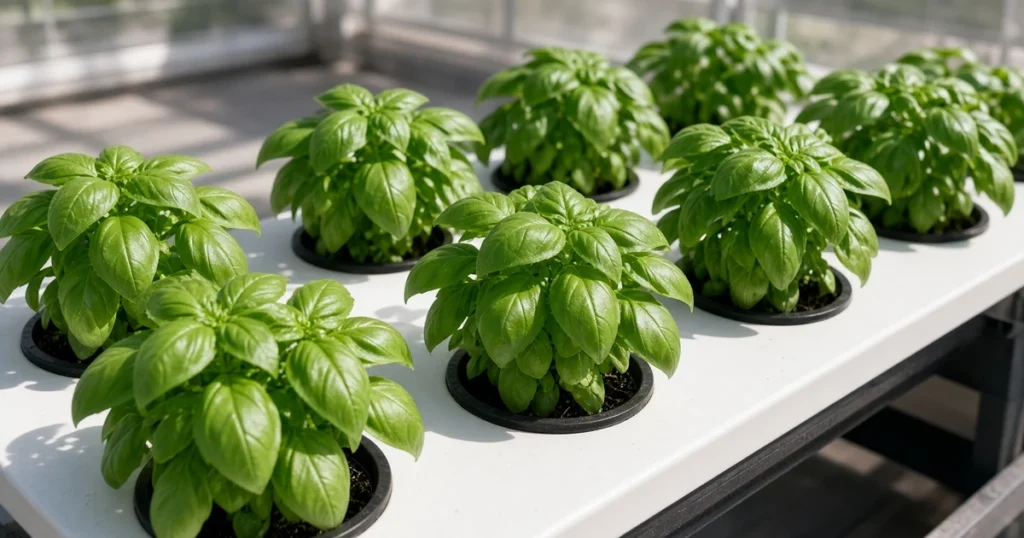
Hydroponic basil leaves turning yellow usually mean the plant is under stress at the roots, in the air or under the lights. Colorado State University Extension notes root disease shows first as wilting, with brown roots. Basil also dislikes cold plus dim light. Check those three areas before you change the feed.
The short answer
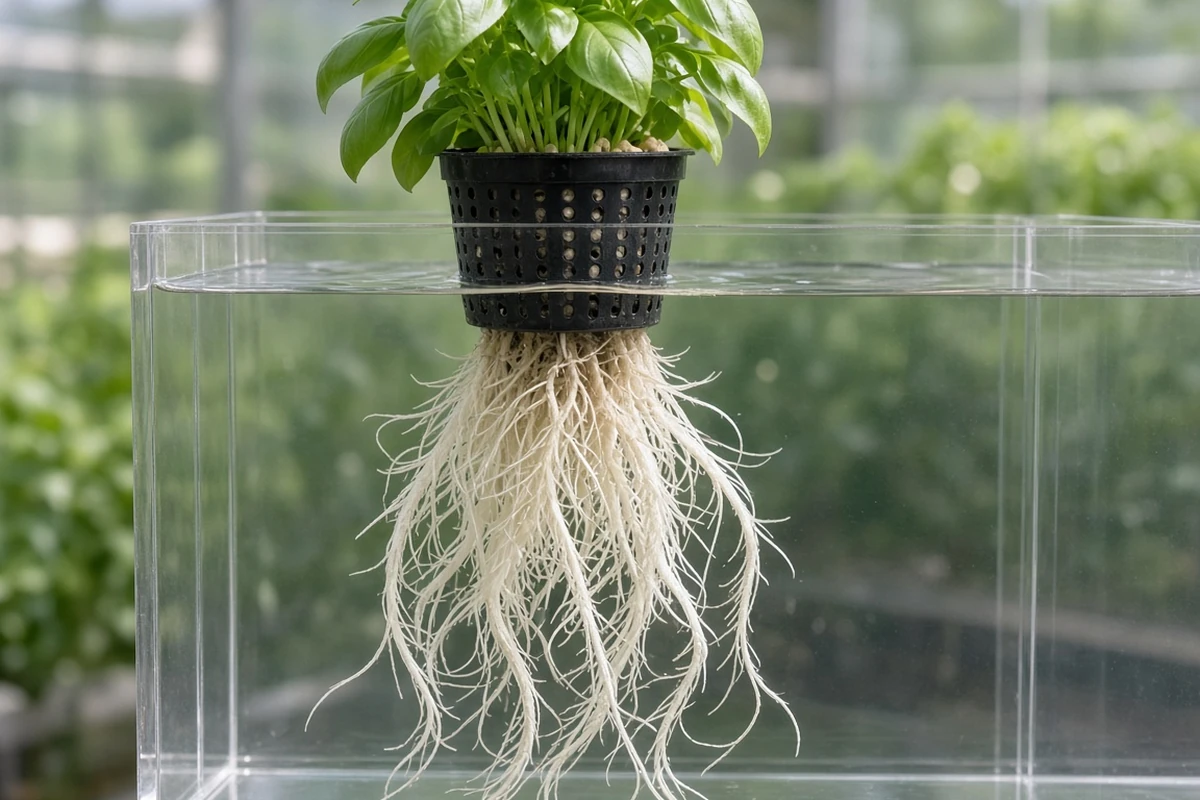
Start with the roots. Colorado State University Extension notes diseased roots turn brown with sparse root hairs and favors aeration plus a 68 to 72 F root zone. Illinois Extension notes cold can stunt basil and blacken leaves at 50 F. University of Minnesota Extension notes basil needs six to eight hours of bright light.
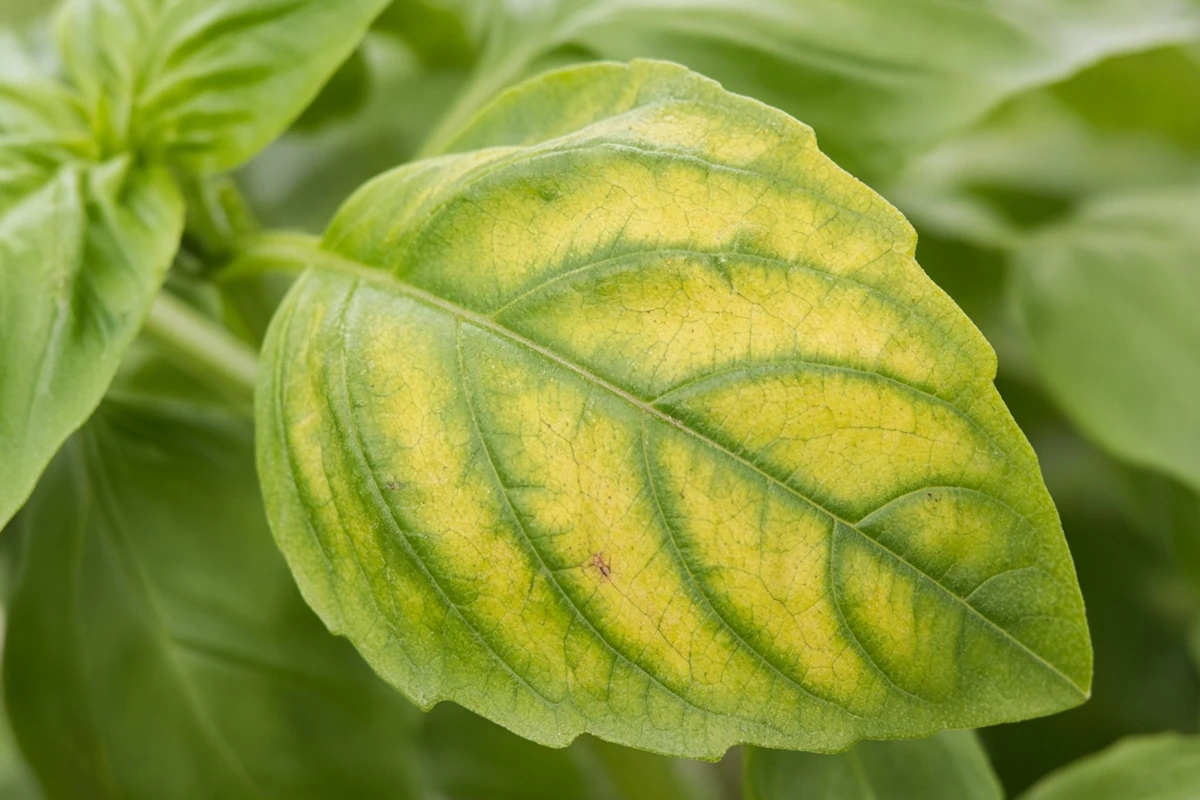
Why are my basil leaves turning yellow?
Basil that yellows or fades often has roots short on oxygen. Colorado State University Extension notes low oxygen in the solution favors root disease. It adds that symptoms are first noticed as wilting or tip burn on leaves. Firm roots with no browning steer you toward light or temperature instead.
| Pattern | Likely cause | Action |
|---|---|---|
| Wilting with brown roots | Root disease | Aerate plus cool the water |
| Stunted plants with dark leaves | Cold air or water | Move to a warmer spot |
| Pale, stretched growth | Too little light | Add hours of light |
| Plant going to flower | Flower buds left on | Pinch the buds |
| Disease in a prone variety | Downy mildew | Grow a resistant variety |
Source: Colorado State University Extension, Illinois Extension plus University of Minnesota Extension.
How does temperature affect basil?
Illinois Extension notes basil is sensitive to cold. Seeds sprout and grow well when the media temperature is at least 70 F. Cold soil plus cold air can stunt growth and even blacken leaves at 50 F. Colorado State University Extension favors a root zone of 68 to 72 F.
How much light does hydroponic basil need?
University of Minnesota Extension notes basil needs at least six to eight hours of bright light. Indoors, it suggests running artificial lights for 10 to 12 hours daily in darker months. It notes downy mildew is the most common basil issue in Minnesota, so it advises choosing a resistant variety.
How to: step by step
- Lift a plant plus study the roots.
- Check the reservoir temperature.
- Run an air pump plus air stone.
- Pull the system away from cold windows.
- Set lights for 10 to 12 hours daily.
- Pinch tips plus flower buds as they form.
Troubleshooting
Brown, sparse roots: root disease. Aerate plus cool the water.
Dark, stunted leaves: cold. Relocate the system somewhere warmer.
Pale, stretched stems: low light. Add hours of light.
For related reading see how to spot 8 common cannabis plant deficiencies by leaf symptoms, understanding ph and how it affects cannabis plants plus hot pots root zone heat in cannabis containers. Kind Seed Co also stocks cannabis seeds.
Sources
- Growing basil, University of Minnesota Extension
- Basil, University of Illinois Extension
- Root disease problems and management in hydroponic systems (PlantTalk 2043), Colorado State University Extension
FAQ
Can root rot turn basil yellow?
Root disease can make basil look poor. Colorado State University Extension notes symptoms are first noticed as wilting or tip burn on leaves. The roots turn brown with sparse root hairs and may be soft or stunted. It advises raising dissolved oxygen through aeration plus holding the root zone near 68 to 72 F.
Is cold water bad for basil?
Yes, basil dislikes cold. Illinois Extension notes basil is sensitive to cold and grows well with media at 70 F or more. It notes cold soil plus air can stunt basil and blacken leaves at 50 F. Move the system off cold windowsills and check that the reservoir stays mild through the night.
Should I pinch my hydroponic basil?
Yes. Illinois Extension notes pinching stem tips gives a bushy plant with more leaves. It advises removing flower buds by pinching as soon as they form. University of Minnesota Extension advises cutting just above a pair of leaves when you harvest whole stems, so new shoots can grow from there.
How many hours of light does basil need?
University of Minnesota Extension notes basil needs at least six to eight hours of bright light per day. Indoors, it suggests running artificial lights for 10 to 12 hours daily in darker months, since window light falls short. Pale, stretched stems are a sign that the light is too weak or too brief.
Which basil variety holds up indoors?
University of Minnesota Extension notes basil downy mildew is the most common basil issue in Minnesota. It advises choosing a variety resistant to this disease. Resistant seed gives the plant a better start in a humid indoor kit. Pair it with steady airflow, enough light plus a warm, aerated reservoir.