Hydroponic Kale Turning Yellow: Nitrogen plus pH Fixes
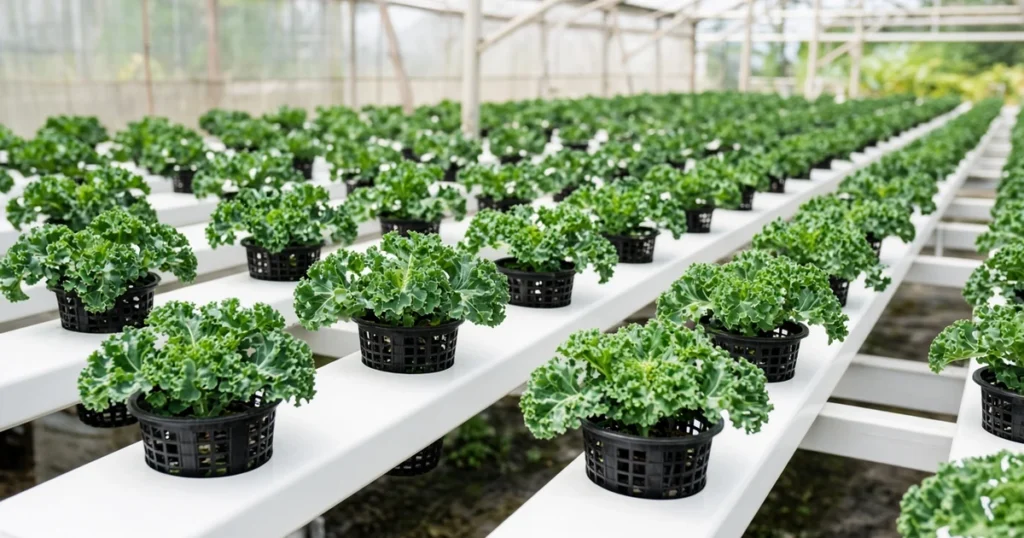
Hydroponic kale turning yellow most often traces back to the nutrient solution. Low nitrogen, pH that has drifted or a solution out of balance can all fade the leaves. NC State Extension notes that kale especially needs nitrogen for good color plus tenderness.
The short answer
Check where the yellow starts. Pale, stunted kale points to low nitrogen. Yellow between veins on lower leaves suggests low magnesium. Yellow between veins on new leaves suggests high pH blocking iron. Measure EC plus pH, correct the pH, then refresh the solution if it has run weak or old.
Why do lower kale leaves yellow first?
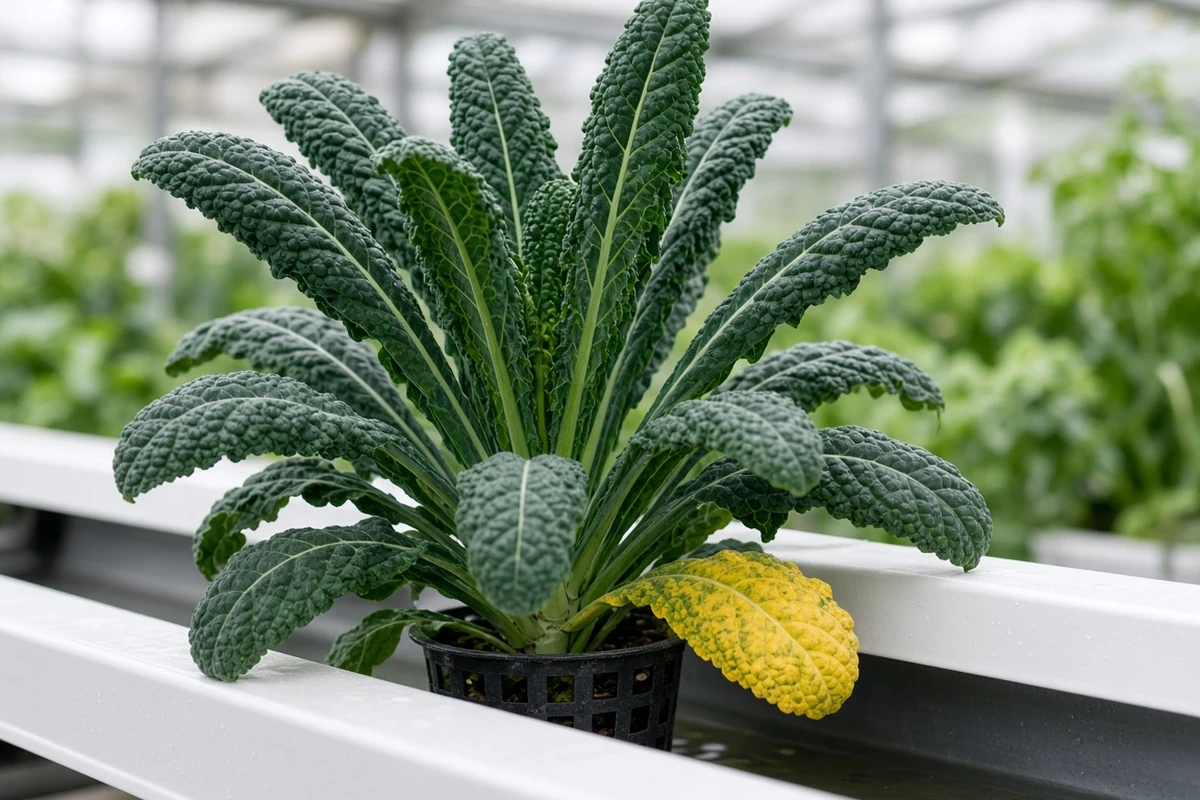
Some shortages show on older leaves before new ones. Penn State Extension notes that magnesium deficiency usually shows up first on lower to middle leaves as yellow between the veins. That pattern helps tell it apart from iron deficiency.
Iron shortage looks similar but starts on new growth. So the position of the yellow narrows the cause quickly. Penn State Extension adds that hydroponic systems are less forgiving than soil, so symptoms appear fast.
| Pattern | Likely cause | Fix |
|---|---|---|
| Light green leaves plus stunted plants | Low nitrogen | Add nutrients if EC is low |
| Yellow between veins on lower leaves | Low magnesium, high pH or imbalance | Correct solution pH |
| Yellow between veins on new leaves | Low iron, often from high pH | Correct solution pH |
Source: Penn State Extension plus University of Missouri Extension.
How does low nitrogen show on kale?
Penn State Extension lists light green foliage plus overall stunting as the typical first signs of nitrogen deficiency. You may also see yellow or dead leaf margins. Causes include under fertilizing, nutrient imbalance plus too much leaching.
Excess of one nutrient can also cause a shortage of another. Penn State Extension calls this nutrient antagonism. Too much potassium, for example, can lead to nitrogen deficiency even when nitrogen was added. Tracking EC helps catch a solution that runs weak or too rich.
How does pH drift cause yellowing?
pH controls how available each nutrient is. University of Missouri Extension explains that plants may not take up all the nutrients when pH sits outside the optimum range. As a rule of thumb, most hydroponic crops do well at pH 5.5 to 6.5.
Penn State Extension names high pH as the most common cause of iron deficiency. The fix is to correct the pH of the nutrient solution. EC alone will not reveal this, since EC shows total dissolved ions rather than each nutrient, per University of Missouri Extension.
How to: step by step
- Count the yellow leaves plus note whether they are old or new.
- Read solution EC plus pH.
- Compare readings with your nutrient guide.
- Adjust pH if it falls outside 5.5 to 6.5.
- Replace the solution if it is old or weak.
- Watch new growth over a week.
Troubleshooting
Pale, stunted kale: low nitrogen. Penn State Extension advises finding the source plus adding nitrogen if the solution runs weak.
Yellow between veins on lower leaves: low magnesium, often from high pH or imbalance. Correct the pH of the solution, per Penn State Extension.
Yellow between veins on new leaves: high pH limiting iron. Bring the solution pH back into range, per University of Missouri Extension.
For related reading see how to spot 8 common cannabis plant deficiencies by leaf symptoms, understanding ph and how it affects cannabis plants plus caring for your hydroponic system. Kind Seed Co also stocks cannabis seeds.
Sources
- Hydroponics systems and principles of plant nutrition, Penn State Extension
- Kale, NC State Extension
- Hydroponic nutrient solutions (G6984), University of Missouri Extension
- Hydroponic leafy greens (HS1279), UF/IFAS Extension
FAQ
Should yellow kale leaves be removed?
Leaves that are fully yellow rarely regain color, so the aim is clean new growth. Fix the solution first. UF/IFAS Extension describes cropping leafy greens like collards, where leaves are picked so the center bud carries on growing. Picking older outer leaves fits the same approach for kale.
How often should kale be harvested?
NC State Extension suggests picking baby greens 20 to 30 days after seeding. Mature leaves are ready 50 to 75 days after seeding. Regular picking of outer leaves lets the center continue to grow, an approach UF/IFAS Extension describes as cropping for leafy greens like collards.
Does kale need cool water?
Kale is a cool season leafy green, per NC State Extension. Cool water also matters for roots. University of Missouri Extension explains that warmer water holds less oxygen. UF/IFAS Extension notes that warm water lowers oxygen in hydroponic systems, which can favor Pythium on leafy greens.
Can kale grow in a small system?
Yes, though plants get large. NC State Extension advises thinning garden seedlings to 1 foot apart, which hints at the room mature kale needs. Picking leaves at the baby stage, 20 to 30 days after seeding, is one way to fit kale into a compact setup.
What pH suits hydroponic kale?
University of Missouri Extension gives pH 5.5 to 6.5 as a rule of thumb for most hydroponic crops. Penn State Extension gives 5.0 to 7.0 as the general range for hydroponic vegetables. High pH is the most common cause of iron deficiency, so check pH whenever new leaves fade.