
Hydroponic Lettuce Turning Yellow: Causes plus Fixes
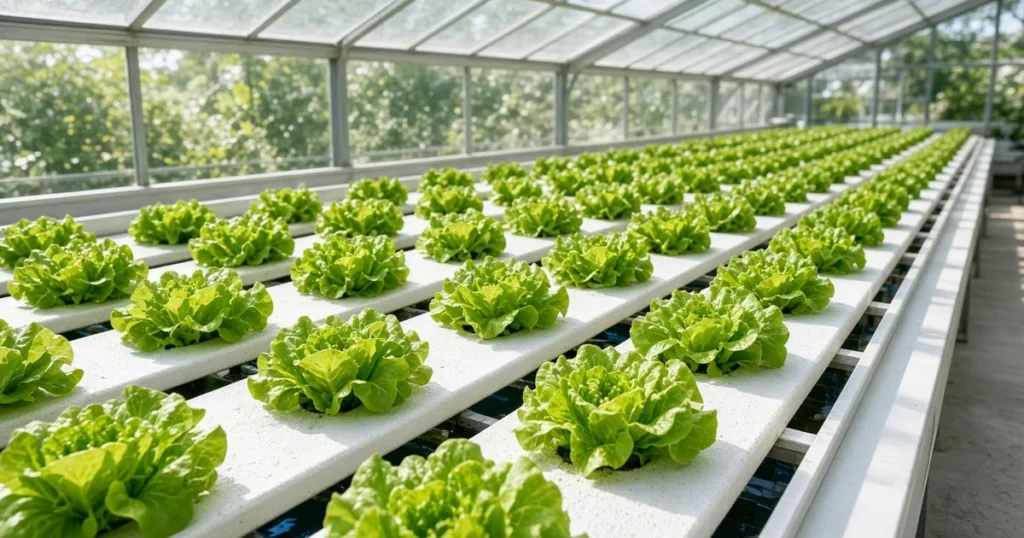
Hydroponic lettuce turning yellow usually points to a weak nutrient solution, warm water around the roots or pH that has drifted out of range. Hydroponic systems are less forgiving than soil, per Penn State Extension. Nutrient problems show up on leaves quickly, so a fast check pays off.
The short answer
Look at which leaves turn yellow first. Pale, stunted plants suggest low nitrogen. Yellow between veins on new growth suggests a pH problem. Brown roots with wilting point to warm, low oxygen water. Check EC, pH plus water temperature, then refresh or cool the solution as needed.
Which leaves yellow first on hydroponic lettuce?
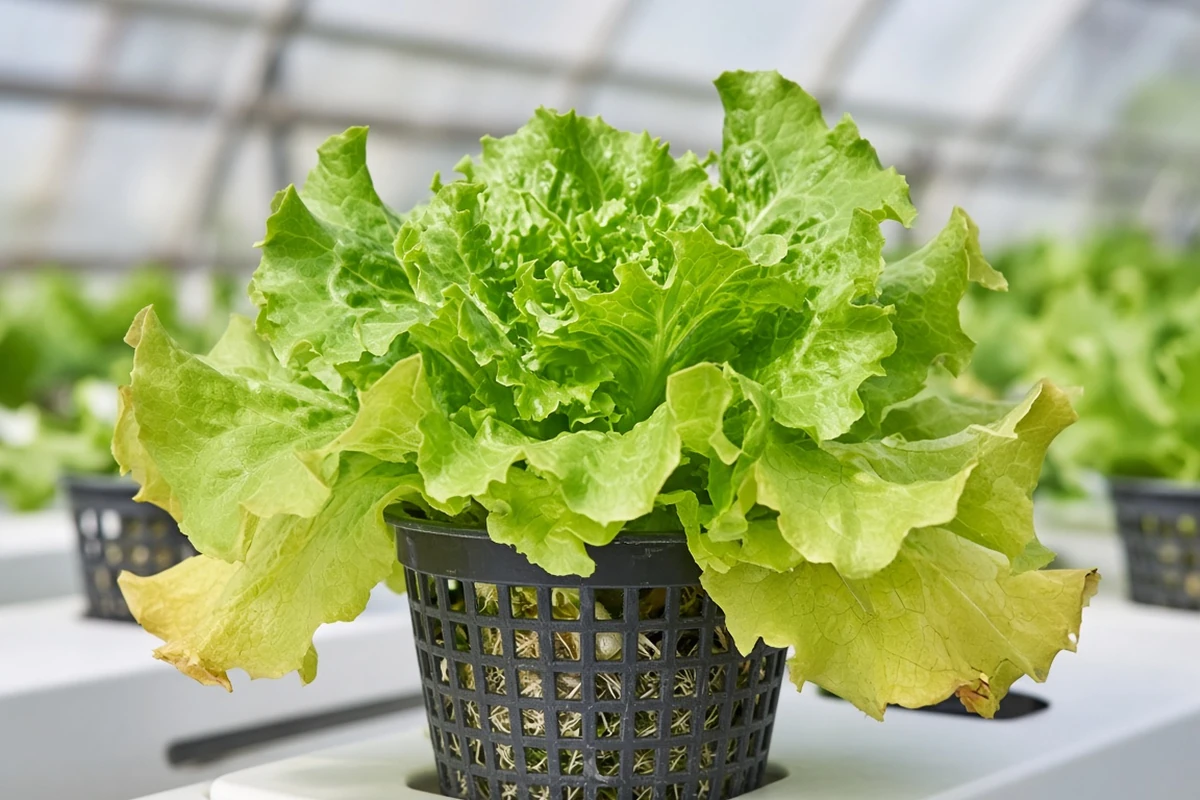
The location of the yellow tells you a lot. Penn State Extension notes that the first signs of nitrogen deficiency are light green foliage plus overall stunting. You may also see yellow or dead leaf margins. Magnesium shortage shows as yellow between leaf veins, usually on lower to middle leaves.
Iron shortage also causes yellow between the veins, but it shows up first on new growth. The most common cause is high pH in the water, per Penn State Extension. So yellow on the newest leaves often means a pH check comes first.
| Pattern | Likely cause | First check |
|---|---|---|
| Light green leaves plus stunted plants | Low nitrogen | Solution EC |
| Yellow between veins on lower leaves | Low magnesium | Solution pH plus balance |
| Yellow between veins on new leaves | Low iron, often from high pH | Solution pH |
| Wilting or tip burn with brown roots | Root rot in warm, low oxygen water | Water temperature plus roots |
Source: Penn State Extension plus Colorado State University Extension.
How does warm water affect lettuce roots?
Warm water holds less oxygen. University of Missouri Extension explains that water temperature caps how much oxygen the solution can hold, no matter how much air you pump in. Low oxygen may slow growth. A dissolved oxygen level over 6 ppm is optimum for hydroponics.
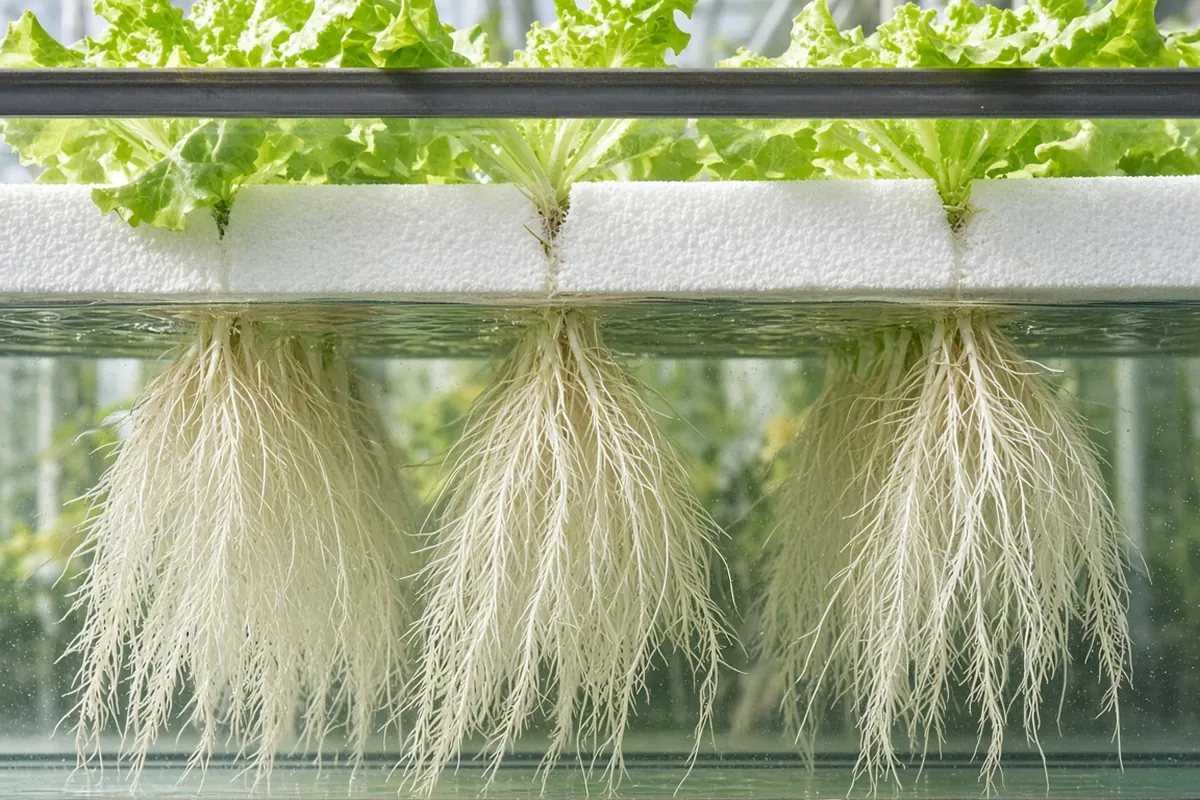
Low oxygen also favors root disease. Colorado State University Extension names Pythium root rot as the most common root disease in hydroponic systems. Symptoms often start as wilting or tip burn. Roots turn brown with sparse root hairs. The same source lists 68 to 72°F as the optimum root zone temperature.
UF/IFAS Extension advises holding the nutrient solution between 65°F plus 80°F for small home systems. It also suggests dissolved oxygen of 5 mg/L.
How does a weak solution look?
A weak or unbalanced solution often shows as pale, slow plants. Penn State Extension notes that nitrogen deficiency can come from under fertilizing, nutrient imbalance or too much leaching. Tracking EC helps catch it early.
EC is only part of the picture. University of Missouri Extension notes that EC shows total dissolved ions. It does not confirm that each nutrient sits at its target. As a rule of thumb, most hydroponic crops do well at pH 5.5 to 6.5. UF/IFAS Extension suggests EC between 1.2 plus 1.8 mS/cm for home lettuce systems.
How to: step by step
- Note whether old or new leaves are turning yellow.
- Read the solution with an EC meter.
- Compare pH with the 5.5 to 6.5 range.
- Take the reservoir water temperature.
- Add aeration when roots look brown or the water runs warm.
- Top up or replace the nutrient solution, then watch new growth.
Troubleshooting
Pale leaves plus slow growth: low nitrogen. Penn State Extension advises finding the source plus adding nitrogen to the solution if EC runs low.
Brown roots with wilting: root rot linked to low oxygen. Colorado State University Extension advises better aeration plus a root zone near 68 to 72°F.
Yellow between veins on new leaves: high pH limiting iron. Adjust the pH of the nutrient solution, per Penn State Extension.
For related reading see how to spot 8 common cannabis plant deficiencies by leaf symptoms, hot pots root zone heat in cannabis containers plus understanding ph and how it affects cannabis plants. Kind Seed Co also stocks cannabis seeds.
Sources
- Growing lettuce in small hydroponic systems (HS1422), UF/IFAS Extension
- Hydroponic nutrient solutions (G6984), University of Missouri Extension
- Root disease problems and management in hydroponic systems, Colorado State University Extension
- Hydroponics systems and principles of plant nutrition, Penn State Extension
FAQ
Can yellow lettuce leaves turn green again?
Leaves that are already yellow rarely recover fully. The goal is clean new growth. Penn State Extension notes that once iron was added to a hydroponic basil crop, the new growth was not affected. Fix the solution first, then judge success by the color of the leaves that form next.
How often should the solution be checked?
Check it often. University of Missouri Extension lists constant measuring plus adjusting of pH plus EC as a core step in solution management. Penn State Extension notes that hydroponic systems are less forgiving than soil. Nutrient problems can show up in plants quickly, so regular checks catch drift early.
Does water temperature matter for lettuce?
Yes. UF/IFAS Extension advises holding the nutrient solution between 65°F plus 80°F in small home systems. Warm water holds less oxygen, per University of Missouri Extension. Colorado State University Extension adds that low oxygen favors root disease. It lists 68 to 72°F as the optimum root zone temperature.
What pH suits hydroponic lettuce?
University of Missouri Extension gives pH 5.5 to 6.5 as a rule of thumb for most hydroponic crops. Penn State Extension gives 5.0 to 7.0 as the general range for vegetables. If pH drifts outside the range, plants may not take up all the nutrients in the solution, even when they are present.
What do good hydroponic lettuce roots look like?
Roots with root rot are brown with sparse root hairs, per Colorado State University Extension. They can also be soft or stunted. Firm roots with plenty of fine root hairs are the goal. If roots darken, improve aeration plus check that the root zone stays near 68 to 72°F.



