Hydroponic Spinach Wilting: Root Heat Plus Bolting
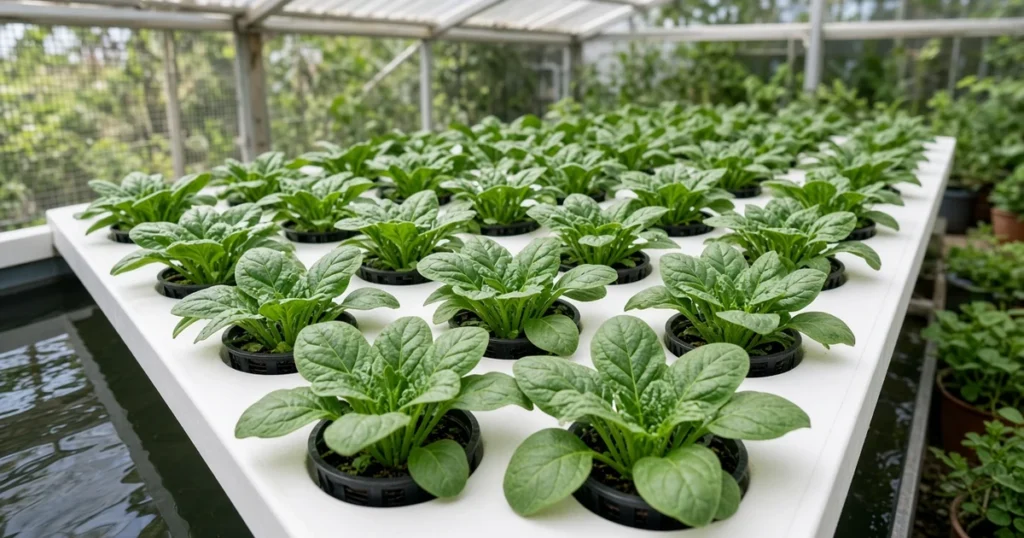
Hydroponic spinach wilting usually starts at the roots or with heat. Colorado State University Extension says root rot from Pythium is the most common root disease in hydroponic systems. Its symptoms are usually first noticed as wilting or tip burn on leaves.
The short answer
Hydroponic spinach wilting most often signals root rot, heat or bolting. Colorado State University Extension says wilting is the first sign of Pythium and similar root rots. It gives 68 to 72 degrees as the optimum root zone. Utah State University Extension says spinach grows well when air stays at or below 75 degrees.
How do warm roots make spinach wilt?
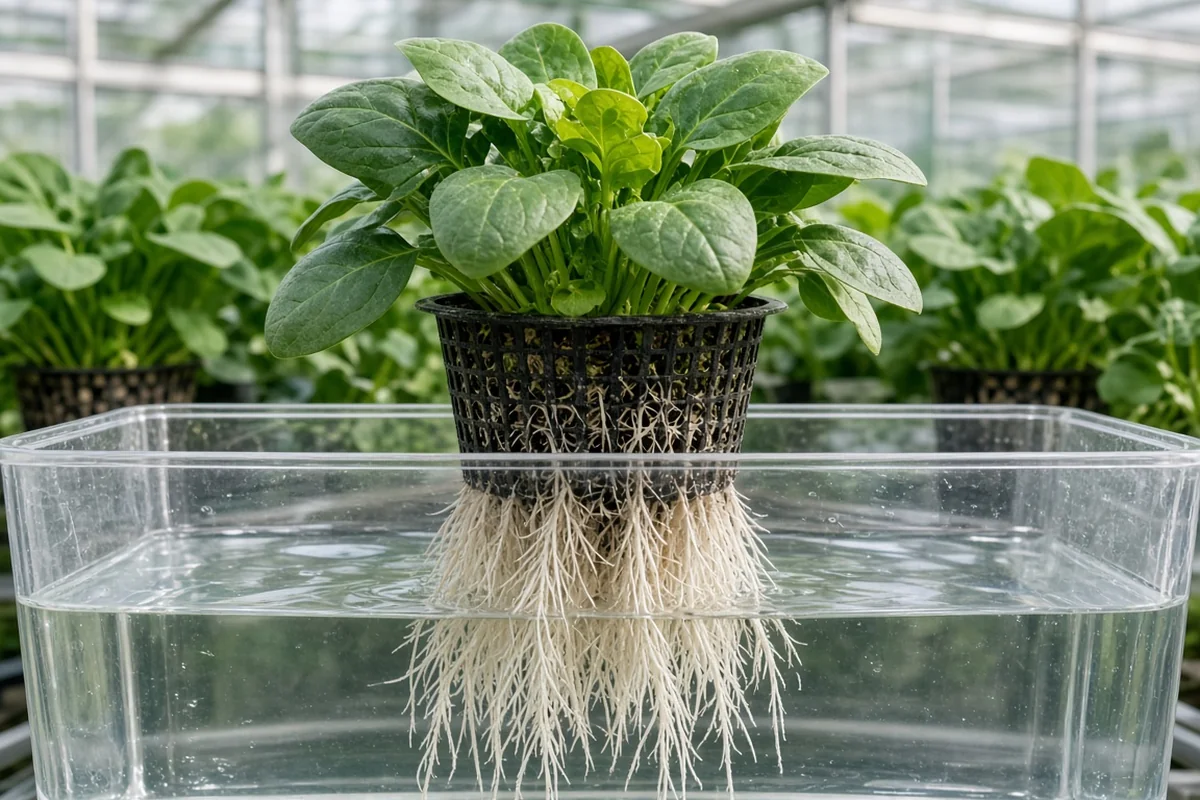
Colorado State University Extension says the most common root disease in hydroponics is root rot caused by Pythium, a fungal like organism.
Fusarium, Phytophthora and Rhizoctonia are occasional problems. Symptoms are very similar and usually show first as wilting or tip burn.
Affected roots turn brown with sparse root hairs. They may also be stunted or soft.
How does heat stress spinach?
Utah State University Extension says spinach grows well when temperatures do not exceed 75 degrees.
High summer temperatures decrease quality and reduce growth. They also cause plants to flower.
Colorado State says root pathogens are opportunists that do the most damage on plants already under stress. Warm rooms add to this stress.
| Cause | Sign | Response |
|---|---|---|
| Root rot | Brown roots, sparse root hairs | Clean system, more aeration |
| Heat | Slow growth above 75 degrees | Cool the room |
| Bolting | Seed stalk forms | Harvest the crop |
Source: Colorado State University Extension plus Utah State University Extension.
Does bolting cause wilting?
Bolting is a distinct problem. Utah State says spinach flowers during long days and warm temperatures.
University of Illinois Extension says spinach bolts quickly during the long days of late spring or summer. Warm temperatures speed this up.
Illinois adds that leaves quickly deteriorate as flowering begins. It advises harvesting the whole crop once seed stalks start to form.
How to: step by step
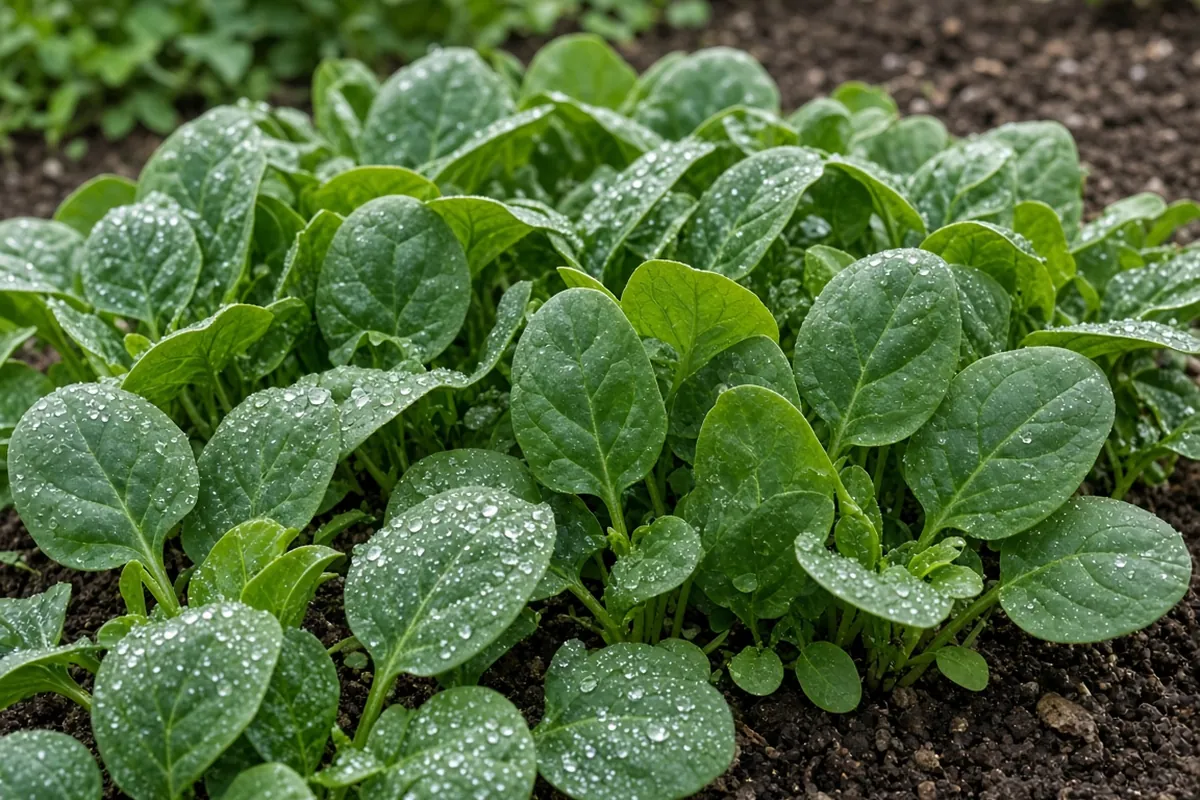
- Lift a plant and inspect the roots.
- Spot brown, soft roots or sparse root hairs.
- Check the root zone sits near 68 to 72 degrees.
- Increase aeration in the nutrient solution.
- Hold room air at or below 75 degrees.
- Choose slow bolting varieties for long days.
Troubleshooting
Brown soft roots: root rot. Clean the system plus boost aeration.
Wilting in a warm room: heat. Cool the space.
Tall center stalk: bolting. Harvest plus resow.
For related reading see how to deal with pythium root rot in cannabis plants, hot pots root zone heat in cannabis containers plus cannabis heat stress. Kind Seed Co also stocks cannabis seeds.
Sources
- Spinach, home vegetable gardening, University of Illinois Extension
- Spinach in the garden, Utah State University Extension
- Root disease problems plus management in hydroponic systems (PlantTalk 2043), Colorado State University Extension
- Leafy greens in hydroponics plus protected culture for Florida (HS1279), UF/IFAS Extension
FAQ
How can root rot be prevented in hydroponics?
Colorado State University Extension says to start with a clean system by properly disinfecting trays, rafts, beds and troughs. It notes that low oxygen in the nutrient solution favors disease. Increase dissolved oxygen through proper aeration. It also lists a root zone temperature of 68 to 72 degrees as optimum.
Why does spinach bolt indoors?
Utah State University Extension says spinach flowers during long days and warm temperatures. Long light periods plus a warm room can trigger the same response indoors. Utah State says long standing or slow bolting varieties are better adapted to late spring plantings, and the same choice helps under long light schedules.
Can leaves be picked before bolting?
Yes. Utah State University Extension says individual spinach leaves may be picked any time before the flower stalk forms. University of Illinois Extension says to harvest the entire remaining crop when seed stalk formation begins. Leaves quickly deteriorate once flowering starts, so act at the first sign of a stalk.
What temperature does spinach seed need?
Utah State University Extension says spinach seeds germinate well at 55 to 65 degrees and take 7 to 10 days to emerge. Temperatures above 80 degrees reduce germination. Starting seed in a cool spot gives a hydroponic crop a steady start before it moves into the main system.
What causes yellowing plus stunting in spinach?
University of Illinois Extension says yellowing, stunting and early death of spinach are caused by blight disease, which is cucumber mosaic virus. It advises growing resistant varieties. Root rot is a separate cause that Colorado State University Extension links to wilting and tip burn, so check the roots as well as the leaves.