
Japanese Beetles on Cannabis: Picking, Netting and Timing
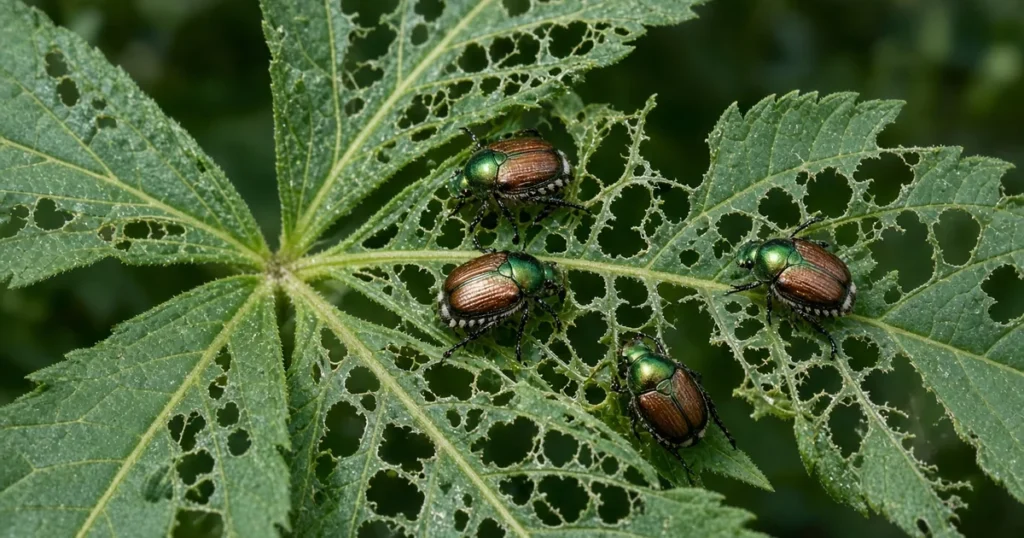
Quick answer: Japanese beetles are shiny green and copper beetles that eat the tissue between leaf veins, leaving a lacy skeleton. On outdoor cannabis they show up from about late June through August. The best home garden steps are hand picking into soapy water each cool morning, covering small plants with insect netting with holes 1/4 inch or smaller, and skipping pheromone bag traps, which the Wisconsin Horticulture team at UW Madison says draw in more beetles than they catch.
What Do Japanese Beetles Look Like?
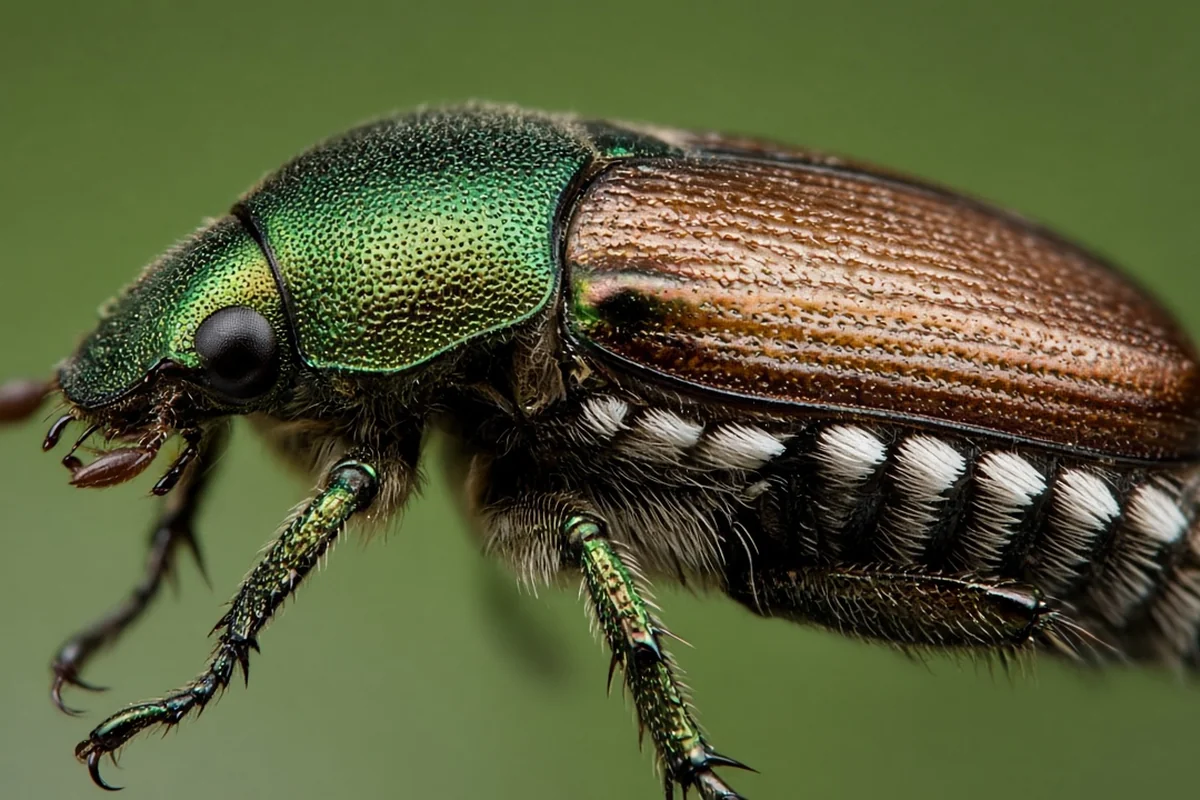
UW Madison describes adults as shiny, metallic green and just under 1/2 inch long, with copper brown wing covers. Iowa State University points to a handy field mark: a row of five tufts of white hair along each side of the abdomen. That feature separates them from other green beetles.
The young beetles are white grubs living in the soil. They are C shaped and grow to about 1 to 1.25 inches by fall. Grubs feed mostly on grass roots, so the lawn next to your cannabis bed may be where the beetles started. Our page on white grubs in cannabis soil covers the soil stage.
Do Japanese Beetles Eat Cannabis?
Yes. Iowa State says adults feed on the foliage, flowers and fruit of more than 300 kinds of plants, and UW Madison puts the number above 350. Cannabis is on the menu wherever these beetles are common, which today is a broad band from the Atlantic coast to the Rocky Mountains, according to Iowa State.
The damage pattern is distinctive. Iowa State calls it skeletonization, where beetles eat the leaf tissue but leave the veins. UW Madison notes they often start in the upper canopy. On cannabis, that means the top fan leaves turn lacy and brown first. Beetles also tend to cluster, so a dozen may pile onto one cola.
When Are Japanese Beetles Active?
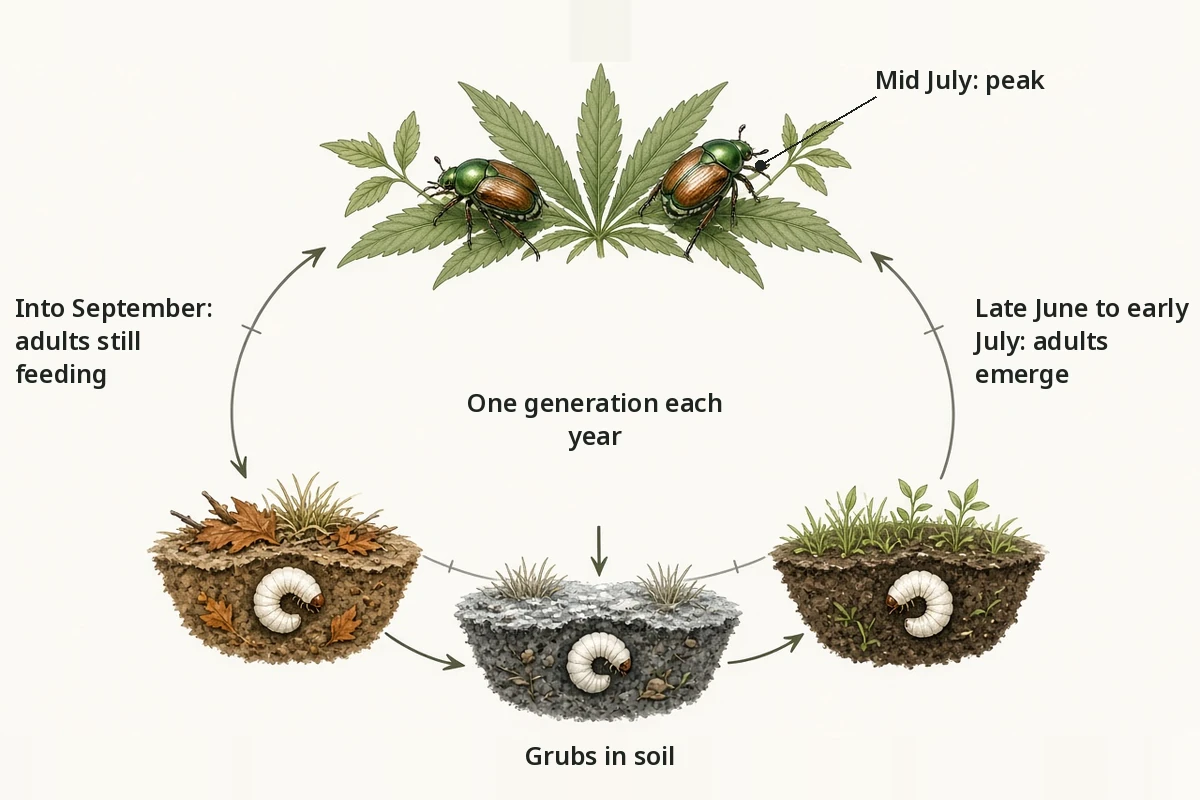
UW Madison says adults usually emerge in late June or early July and can be found into September, with one generation each year. Iowa State notes emergence peaks around mid July. Adults are most active on warm, sunny afternoons.
That timing lands right in late veg and early flower for most outdoor cannabis, when the plant is building the leaf area it needs to fill out buds. See our guide to the final weeks of flowering for why leaf health matters late in the season.
How to Stop Japanese Beetles on Cannabis
- Start the day you see the first beetle. Iowa State stresses removing beetles early and often, since feeding attracts more of them.
- Hand pick in cool mornings. Iowa State recommends picking early when beetles are sluggish. Hold a bucket of soapy water under the branch and tap them in. Many drop when disturbed, so the bucket catches them.
- Repeat daily. Iowa State notes beetles emerge every day for several weeks, so one round is never enough.
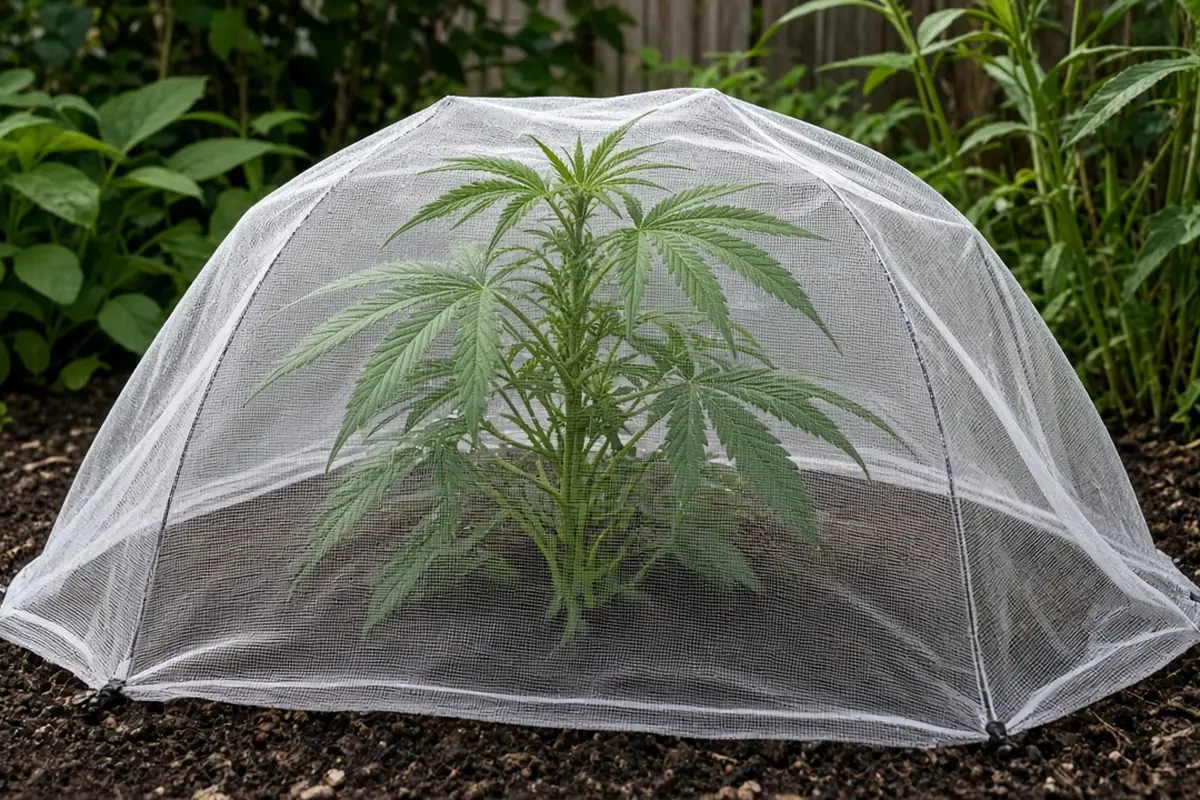
- Cover small plants. From late June to early September, UW Madison suggests covering plants with nylon insect screen, mesh 1/4 inch or smaller, pinned to the ground at the edges.
- Lift the netting off the leaves. Iowa State recommends hoops or supports so the mesh does not trap heat against foliage, and pinning the bottom snug to the stem area.
- Skip bag traps. UW Madison says pheromone lure traps catch many beetles but attract many more to the area that are not trapped.
- Keep plants watered. A well watered plant tolerates leaf loss far better. Our page on the best time to water outdoor cannabis can help.
What About Sprays for Japanese Beetles?
Sprays are a poor first choice for cannabis. Both sources list them mostly for ornamental trees and shrubs, and both warn about tradeoffs. UW Madison finds that horticultural oils such as neem, and insecticidal soaps too, do very little against these beetles. Iowa State says contact products like soap and pyrethrin have no residual effect and would need near daily use. The longer lasting sprays both sources name are broad spectrum and can kill pollinators and predators.
For cannabis, the combination of hand picking and netting is usually enough and keeps buds free of residue. If you consider any product, use one whose label covers your crop and your state, and never spray open flowers.
Netting Setup at a Glance
| Item | What to use |
|---|---|
| Mesh size | 1/4 inch or smaller |
| Season | Late June to early September |
| Support | Wire hoops or stakes so mesh clears leaves |
| Bottom edge | Pinned to the soil |
| Plant size | Best for small to medium plants |
Netting also blocks birds and some caterpillars. Netting works best on plants small enough to cover fully, with the edge secured to the ground.
Japanese Beetles vs Look Alike Beetles
Several green or bronze beetles visit cannabis gardens, and only some of them are a problem. Japanese beetles have that row of white hair tufts along each side, which Iowa State calls a distinguishing feature, and they feed in groups in bright sun. Other green or brown beetles can look similar at a glance, but they lack those white tufts. If you are unsure, catch one in a jar, look closely at the sides of the abdomen, and compare it with the photos on the Iowa State page listed in the sources below. Correct identification keeps you from wasting time on a harmless visitor.
How to Reduce Japanese Beetles Next Year
- Remember the grubs. UW Madison notes females lay eggs in moist soil, often under turf and in mulched spots. Grub control in nearby lawns will not stop adults flying in from other yards, so plan on picking and netting each summer.
- Expect cycles. Iowa State describes an invasion cycle where a new area sees a few quiet years, then a boom, then natural ups and downs.
- Talk with neighbors. Beetles fly between yards, so shared effort helps.
Troubleshooting Japanese Beetles
More beetles showed up after you hung a trap. That is the effect UW Madison describes. Take the trap down or move it far from the garden.
Netting is on but beetles are inside. The bottom may be loose, or beetles came up from the soil under the net. Iowa State advises pinning the bottom tight around the stem.
Leaves under the net are scorched. The mesh is touching foliage and holding heat. Add hoops to lift it.
Damage keeps appearing at the top of the plant. That is normal feeding behavior. Focus picking time on the upper canopy.
Damage stops in late August. Adults die off toward September. Leaves will not regrow on damaged sections, but new growth should look clean.
The lawn next to the garden has brown patches. That can be grub feeding. UW Madison explains that Japanese beetle grubs eat grass roots and cause pale, brown turf that looks like drought damage. Grub control in that lawn is a separate job, but it can lower beetle pressure in later years.
Sources
- University of Wisconsin Madison Extension, Wisconsin Horticulture, Japanese Beetle: https://hort.extension.wisc.edu/articles/japanese-beetle/
- Iowa State University Extension and Outreach, Yard and Garden Encyclopedia, Japanese Beetle: https://yardandgarden.extension.iastate.edu/encyclopedia/japanese-beetle
FAQ
Can Japanese beetle feeding ruin a plant?
Iowa State notes defoliation is rarely fatal to healthy plants. On cannabis, heavy feeding can reduce growth and bud development, especially on small plants.
Do Japanese beetle traps work?
UW Madison does not recommend pheromone traps because they attract more beetles than they catch.
What time of day should I pick off Japanese beetles?
Early morning, when temperatures are cool and beetles move slowly, as Iowa State recommends.
Does neem oil stop Japanese beetles?
UW Madison says horticultural oils such as neem have very limited effectiveness against them.
Are Japanese beetles a problem indoors?
Almost never. They are an outdoor pest that flies in summer. Plants moved outside for the season are at risk.
Do grubs in my lawn turn into Japanese beetles?
Many can. UW Madison says the grubs spend winter 6 to 8 inches down, move back toward the roots when soil reaches 50°F in spring, and come out as adults in summer.


