
Grasshoppers on Cannabis: How to Protect Outdoor Plants
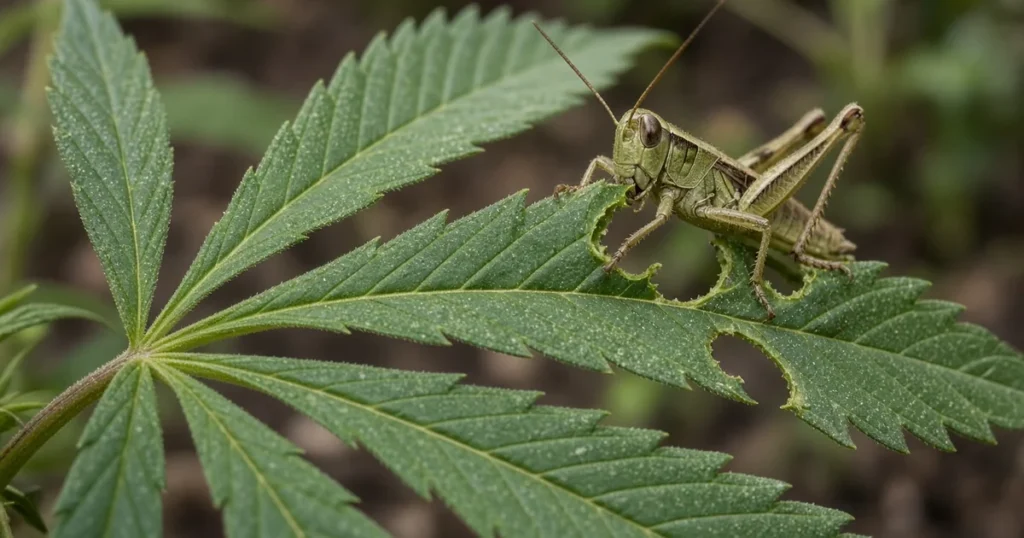
Quick answer: Grasshoppers chew large, jagged pieces out of cannabis leaves and are hard to stop because they move so much. For a home garden, the University of California IPM program recommends hand picking when numbers are low, covering young plants with metal window screen, and keeping a lush green border of tall grass to pull them away from the crop. Colorado State University Extension adds that Nosema locustae bait works only on young nymphs and acts slowly, so it fits early season plans.
Do Grasshoppers Eat Cannabis?
They do, though cannabis is not their favorite. UC IPM says most grasshoppers prefer young green plants such as lettuce, beans, corn, carrots and onions. Colorado State notes the same list. When those run out, or when a big outbreak moves through, grasshoppers eat almost anything green, and a row of outdoor cannabis plants in a dry yard is an easy target.
Damage is mostly on leaves. According to UC IPM, grasshoppers chew with their mouthparts and take out big pieces of foliage. Small plants can be stripped. Big plants usually survive, but heavy feeding during flowering cuts the leaf area that feeds the buds.
How to Identify Grasshopper Damage
- Big, ragged bites from leaf edges inward
- Damage that appears during the day, often in hot, dry weeks
- Insects that jump or fly off when you walk past
- Dark droppings on lower leaves
Caterpillars leave neater holes and stay put. Deer tear leaves higher up and leave tracks. If you are not sure, walk the garden in the warm part of the afternoon and watch.
Why Are There So Many Grasshoppers This Year?
A warm spring with plenty of food lets more young nymphs survive, so numbers swing from year to year. UC IPM notes severe outbreaks usually come every 8 to 10 years and can last two or three seasons. Colorado State says weather at egg hatch matters most. Cold, wet weather kills many newly hatched nymphs, while a warm spring with plenty of food lets them thrive.
Where they come from matters too. Both sources say females lay eggs in the soil of undisturbed ground such as ditch banks, roadsides, fence rows and pastures. UC IPM notes cultivated gardens are not a common egg laying site. So the grasshoppers in your cannabis likely hatched nearby and walked or flew in once the wild plants dried out.
How to Protect Cannabis From Grasshoppers
- Hand pick early. UC IPM says hand picking works when numbers are low. Go out in the cool of early morning when grasshoppers are sluggish and drop them in a bucket of soapy water.
- Screen young plants. UC IPM notes hungry grasshoppers can chew through cloth or plastic row covers, so use metal window screening on frames or cones over seedlings and new transplants.
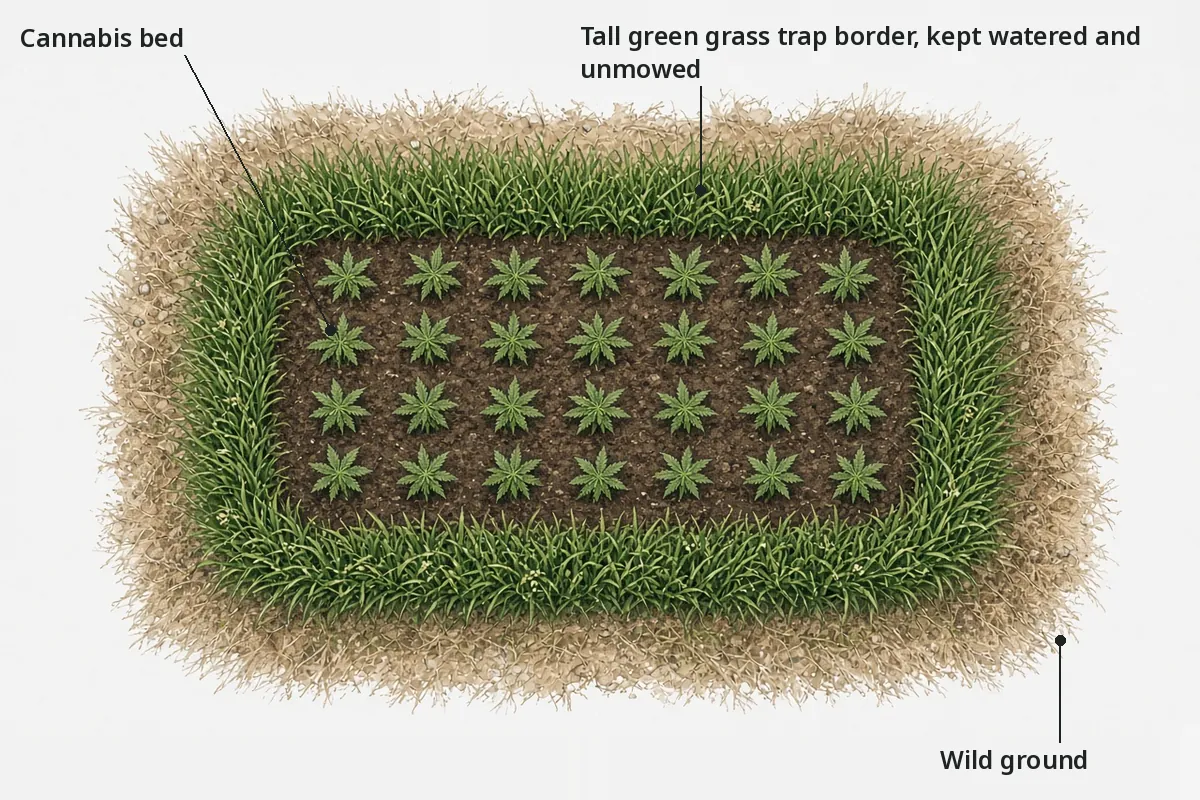
- Plant a trap border. UC IPM describes a green border of tall grass or lush plants around the garden edge to divert grasshoppers. Leave it unmowed and keep it from drying out, or the grasshoppers will head straight into the garden.
- Keep the crop healthy. Steady water and balanced feeding let plants regrow lost leaves. Our guide on watering cannabis during drought helps when the yard dries out.
- Use Nosema bait early. Colorado State explains that Nosema locustae bait infects only grasshoppers, works slowly and affects only young nymphs. It fits best as part of a long term plan on breeding areas in spring. UC IPM adds that it is unlikely to help much in some home garden situations.
- Bring in birds. Colorado State notes that grasshoppers make up a big part of the diet of many birds, horned larks and kestrels in particular. UC IPM mentions chickens and guinea hens as excellent predators, though they may peck at garden plants too.
- Coordinate with neighbors. Colorado State says control tends to work far better when a whole neighborhood takes part, since grasshoppers move across property lines.
How to Build a Screen Cover for Young Plants
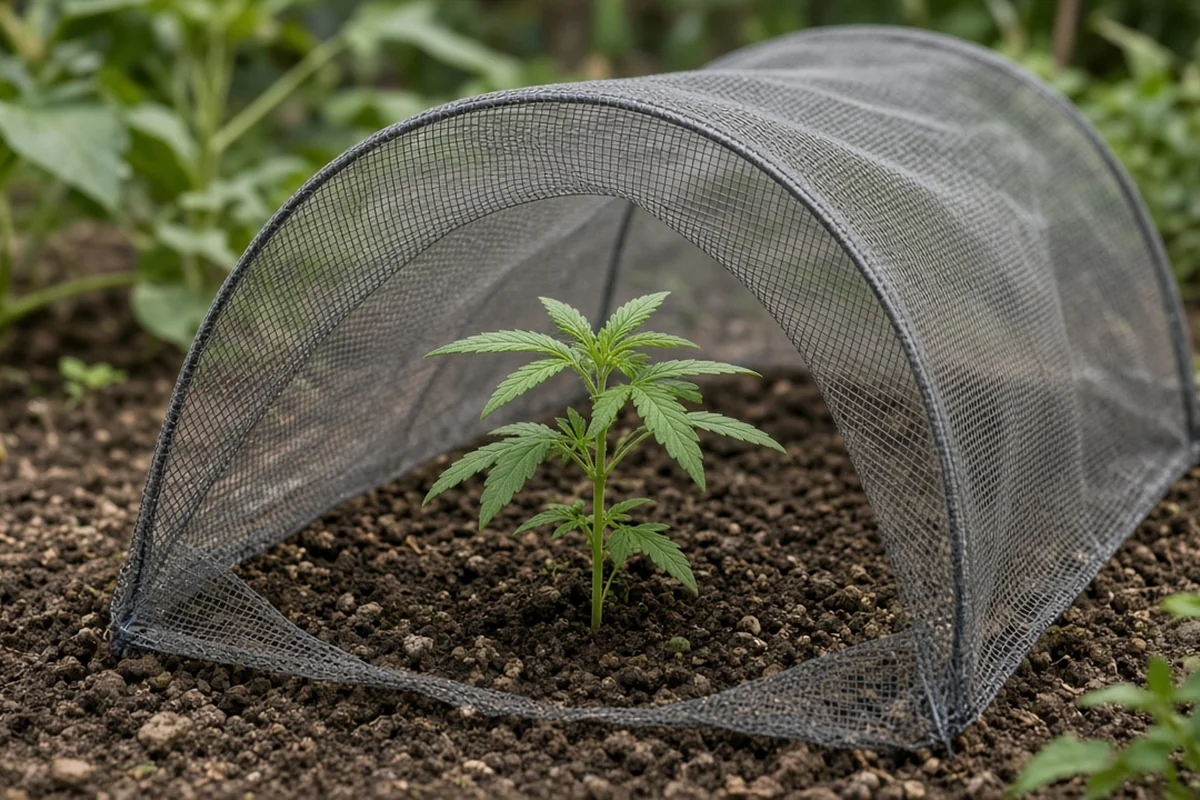
Bend two lengths of stiff wire or thin conduit into hoops and cross them over the plant. Wrap metal window screen around the frame and fold it over the top. Pin the bottom edge to the soil with landscape staples so grasshoppers cannot crawl underneath. Leave a few inches of air between the screen and the leaves so feeding through the mesh is harder and heat does not build up. Remove the cover once the plant is too large for it and is putting on growth faster than the insects can eat it.
What About Sprays?
Sprays are a weak tool here. UC IPM notes that once grasshoppers move into a garden, insecticides do little and have to be sprayed again every few days. Colorado State adds that sprays made directly to plants after adults migrate have limited effect, and that few products allow direct use on edible crops. Many common sprays are also very toxic to bees and to the natural enemies of grasshoppers. For a cannabis plant whose flowers will be harvested, physical protection is the safer bet. If you consider any product, use only one whose label covers your crop and your state.
Grasshopper Control Options Compared
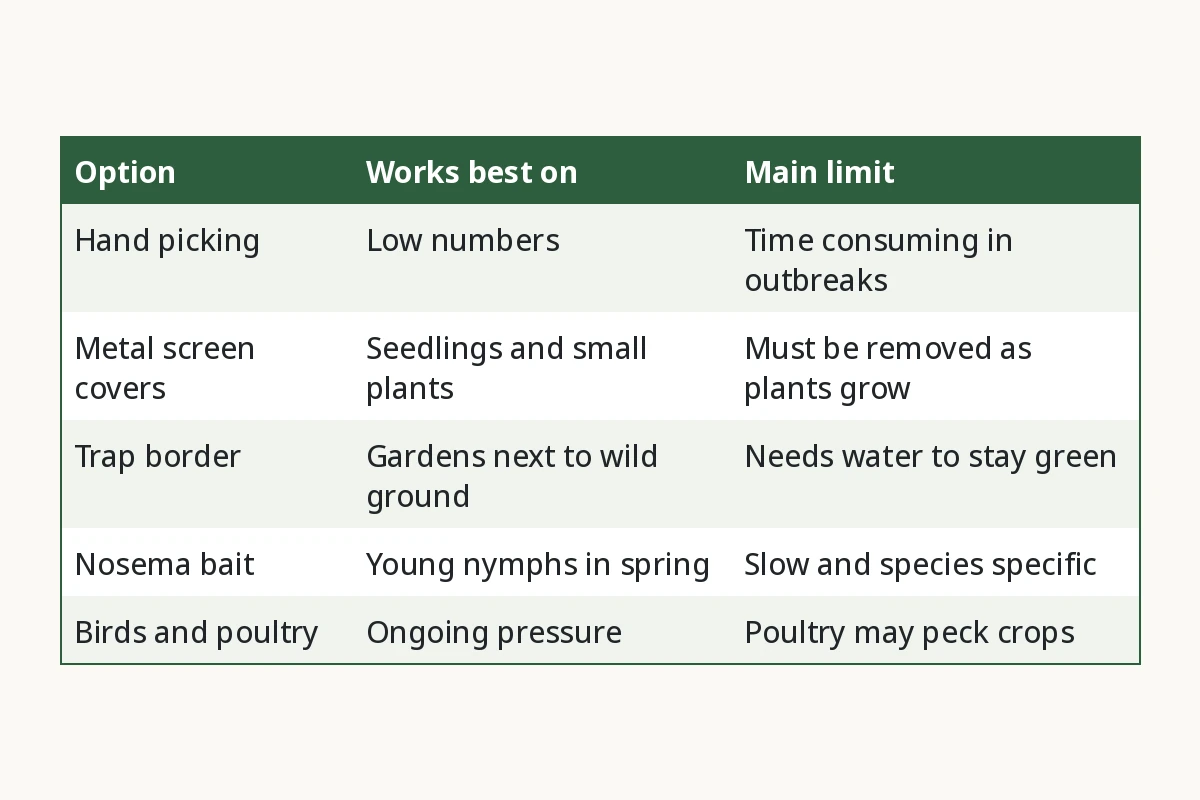
| Option | Works best on | Main limit |
|---|---|---|
| Hand picking | Low numbers | Time consuming in outbreaks |
| Metal screen covers | Seedlings and small plants | Must be removed as plants grow |
| Trap border | Gardens next to wild ground | Needs water to stay green |
| Nosema bait | Young nymphs in spring | Slow and species specific |
| Birds and poultry | Ongoing pressure | Poultry may peck crops |
Grasshoppers and the Garden Calendar
Colorado State says problems tend to build from early summer and can last until hard frost. Eggs hatch from mid to late spring as the soil warms. That gives a simple plan for outdoor cannabis:
- Spring: watch weedy edges for tiny nymphs and apply Nosema bait there if you use it.
- Early summer: screen transplants and start the trap border.
- Midsummer: hand pick each morning and remove covers as plants outgrow them.
- Late summer into fall: keep plants watered so they can outgrow feeding, and keep the border green.
See our guide to planning an outdoor cannabis garden layout for where to place the border, and windbreaks for outdoor cannabis for hedges that can double as habitat for birds.
Troubleshooting Grasshoppers
Plastic row covers have holes chewed through. Switch to metal window screen, as UC IPM recommends.
The trap border made things worse. It may have been mowed or allowed to dry. Water it and leave it tall.
Nosema bait had no effect. It works only on young nymphs and some species. Plan to apply earlier next spring on breeding areas.
Damage keeps climbing in late summer. Wild forage has dried up. Expect pressure until frost and keep up the morning hand picking.
Leaves have holes but you never see grasshoppers. Check at night for caterpillars, slugs or pill bugs instead.
Tiny nymphs cover the weedy lot next door. That is the best moment to act. UC IPM notes small nymphs are far easier to control than adults, so spring bait or mowing done by the owner of that lot can save your garden weeks of trouble.
Sources
- UC Statewide IPM Program, University of California, Grasshoppers, Home and Landscape: https://ipm.ucanr.edu/home-and-landscape/grasshoppers/
- Colorado State University Extension, Grasshopper Control in Gardens and Small Acreages: https://extension.colostate.edu/resource/grasshopper-control-in-gardens-and-small-acreages/
FAQ
Can grasshoppers kill a cannabis plant?
They can strip seedlings. Larger plants usually survive, though heavy feeding can strip leaf area and slow growth.
Do grasshoppers eat cannabis buds?
They mainly eat leaves, but in outbreaks they will feed on almost any tender tissue, including flowers.
What is the best barrier for grasshoppers?
UC IPM recommends metal window screening, since hungry grasshoppers can chew through cloth and plastic covers.
Are chickens good for grasshopper control?
UC IPM calls poultry excellent predators. Keep them away from young cannabis plants, since they may scratch and peck too.
When do grasshoppers stop being a problem?
Colorado State notes damage can last until hard frost. Most species that overwinter as eggs die out in late summer and fall.
Where do grasshoppers lay their eggs?
UC IPM says females lay pods of 20 to more than 100 eggs in the top 2 inches of undisturbed soil such as roadsides and ditch banks. Tilled garden beds are rarely used.


