Kohlrabi vs Turnip: Swollen Stem Plus True Root
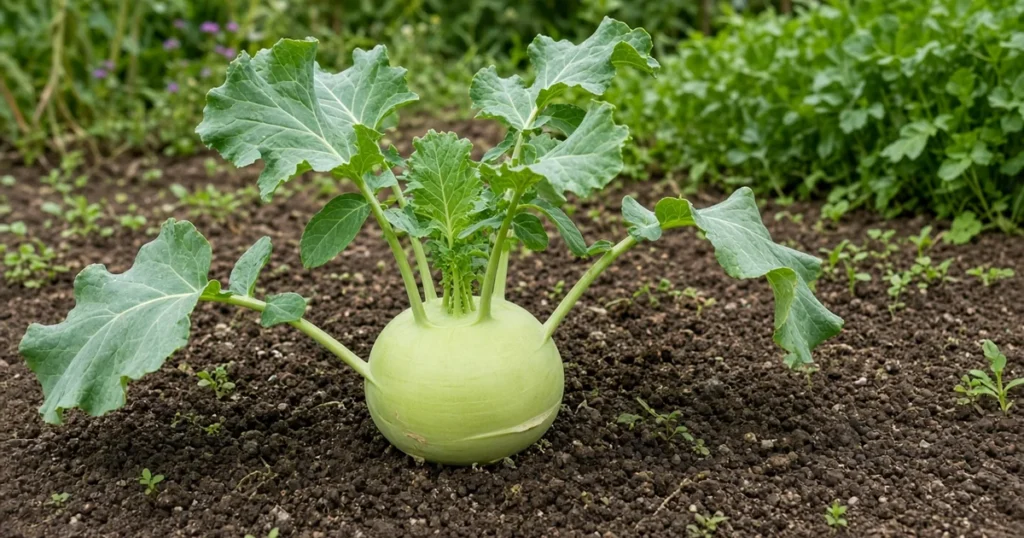
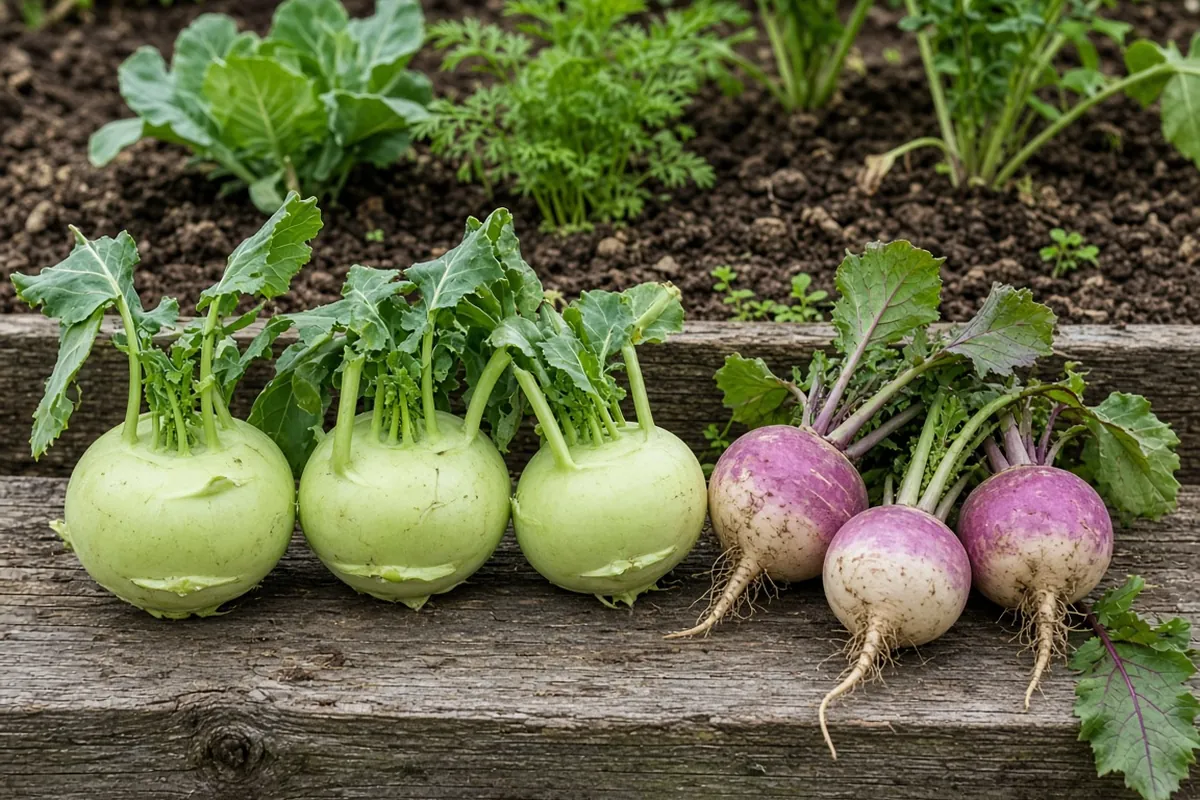
Kohlrabi vs turnip comes down to which part swells. University of Illinois Extension says kohlrabi forms a rounded, enlarged stem section just above the soil line. UF/IFAS Gardening Solutions describes turnip roots as rounded and white or white with a purple top, with crisp white flesh inside.
The short answer
Kohlrabi swells a stem above ground, while a turnip forms a root below it. University of Minnesota Extension says to harvest kohlrabi when the bulb is two to three inches wide. UF/IFAS says turnip roots mature in 40 to 60 days and should be pulled at 3 inches across or less.
How does a swollen stem differ from a root?
University of Illinois Extension says kohlrabi leaves stand out like spokes from a rounded, enlarged stem just above the soil line.
University of Minnesota Extension calls it a bulbous stem topped with upright thick leaves.
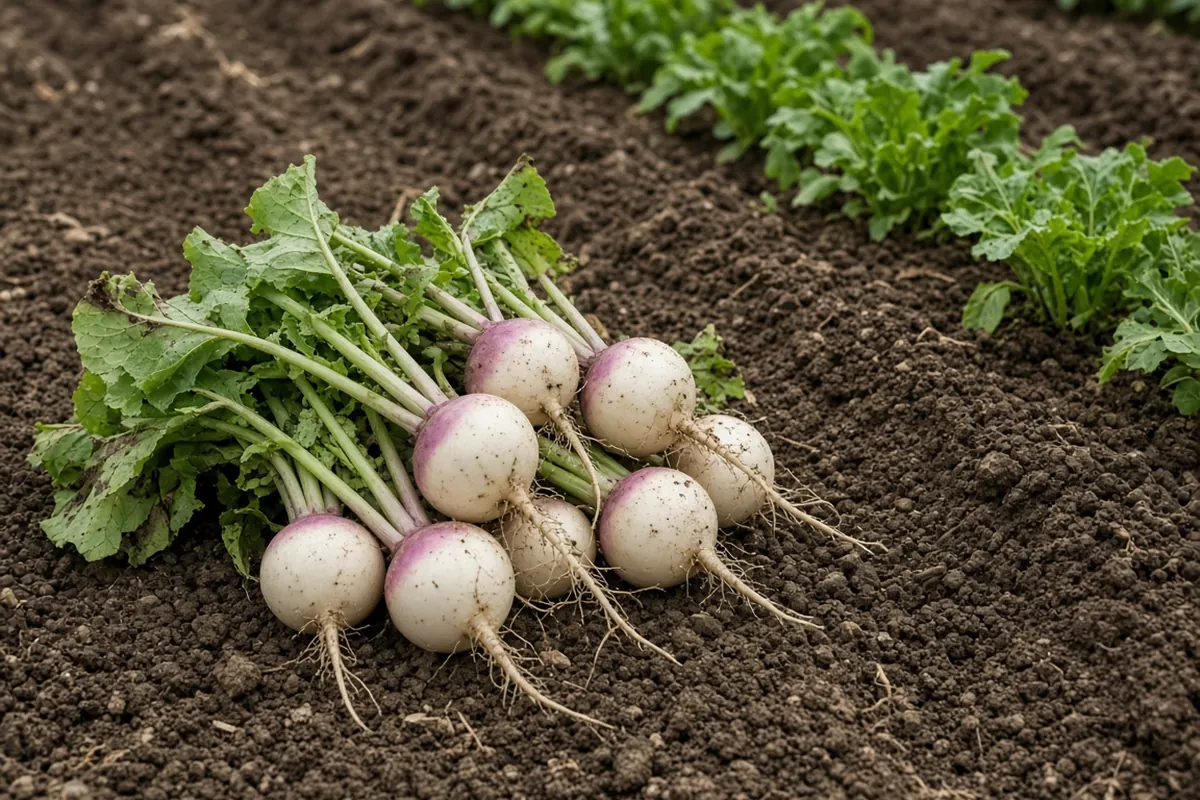
A turnip swells underground. UF/IFAS says the roots are rounded and white, often with a purple top. The leaves are green and fuzzy.
Which crop is faster?
University of Minnesota Extension says spring kohlrabi varieties list 35 to 45 days to harvest on the seed packet.
UF/IFAS says turnip roots need between 40 and 60 days to mature.
Turnip seeds need about 5 days to germinate. UF/IFAS adds that turnips grow well when sown directly into the garden.
| Trait | Kohlrabi | Turnip |
|---|---|---|
| Swollen part | Stem above soil | Root below soil |
| Days to harvest | 35 to 45 for spring types | 40 to 60 |
| Harvest size | 2 to 3 inches wide | 3 inches or less |
| Thinning | 2 to 5 inches | 3 to 6 inches |
Source: University of Minnesota Extension plus UF/IFAS Gardening Solutions.
When should each be harvested?
Minnesota says to harvest kohlrabi when the bulb is two to three inches wide. A bulb that grows too large turns tough and woody.
Illinois says to begin harvesting when the first stems are about one inch in diameter. Cut or pull at ground level.
UF/IFAS says to pull turnips at 3 inches in diameter or less. Larger roots turn pithy and stringy.
How to: step by step
- Choose a site with no cabbage family crops for four years.
- Sow kohlrabi 1/4 to 1/2 inch deep.
- Sow turnips a half inch deep.
- Thin kohlrabi to 2 to 5 inches apart.
- Thin turnips to 3 to 6 inches apart.
- Harvest each at 2 to 3 inches across.
Troubleshooting
Woody kohlrabi: harvested late. Pick at 2 to 3 inches.
Pithy turnips: roots too large. Harvest at 3 inches or less.
Poor growth: heat or moisture stress. Water evenly.
For related reading see cannabis leaf anatomy, frost damage on cannabis plus companion plants when growing marijuana. Kind Seed Co also stocks cannabis seeds.
Sources
- Kohlrabi (home vegetable gardening), University of Illinois Extension
- Growing kohlrabi in home gardens, University of Minnesota Extension
- Turnips, UF IFAS Gardening Solutions
- Growing turnips plus rutabagas in home gardens, University of Minnesota Extension
FAQ
Do turnips need deep soil?
UF/IFAS Gardening Solutions says turnips need 8 hours of sunlight, regular watering and rich, well drained soil that has been deeply tilled. University of Minnesota Extension says to improve soil by adding well rotted manure or compost in spring or fall. Loose, worked soil lets the roots swell evenly below ground.
Which is easier to grow?
UF/IFAS Gardening Solutions calls turnips easy to grow plants in the cabbage family. University of Minnesota Extension says kohlrabi does well in cool weather between 65 and 75 degrees. It adds that fast growth without heat or moisture stress results in a good crop. Both need steady water.
Can both be grown in fall?
Yes. University of Minnesota Extension says to plant turnips for spring or fall. It also says giant kohlrabi grows better as a fall crop. University of Illinois Extension says one or two late kohlrabi plantings can go in midsummer with late cabbage. UF/IFAS says turnips tolerate frosts and some freezing temperatures.
What soil does kohlrabi prefer?
University of Minnesota Extension says to grow kohlrabi in loamy, well drained soil with high organic matter. Heavier soil works if it drains well, and sandy soil works with frequent watering. A neutral soil pH of 6.0 to 7.5 is ideal. Have your soil checked before planting.
Why rotate kohlrabi plus turnips?
Both belong to the cabbage family. University of Minnesota Extension says to avoid planting kohlrabi where related crops grew during the previous four years. That list includes turnip, rutabaga, broccoli, cabbage, kale plus collards. University of Illinois Extension notes that cabbage maggots can feed on kohlrabi roots and injure plants.