
How to Make a Mandala Garden: Radial Beds Plus Paths
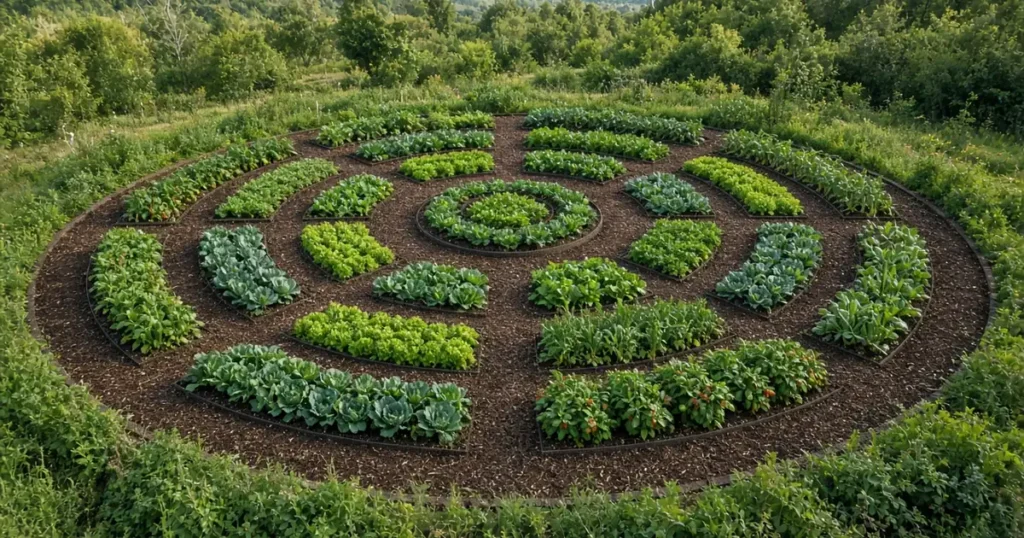
How to make a mandala garden starts with a center, a pattern and beds you can reach. NC State Extension says symmetrical balance mirrors elements on both sides of an axis. University of Georgia Extension says beds 4 feet wide suit adults, so no one has to step in.
The short answer
To make a mandala garden, mark a central focal point and lay out repeating beds around it. University of Georgia Extension suggests beds 3 feet wide for children and 4 feet wide for adults. University of Missouri Extension says 1 foot paths work for foot traffic, while 2 to 3 foot paths fit a cart.
How are radial beds laid out?
NC State Extension says balance creates equal visual weight on either side of a focal point. A mandala builds that balance around a center.
Symmetrical balance mirrors elements on both sides of an axis. NC State says symmetry is common in formal gardens.
Repetition also matters. NC State says repeated geometric shapes plus observable lines contribute to unity.
How should paths work?
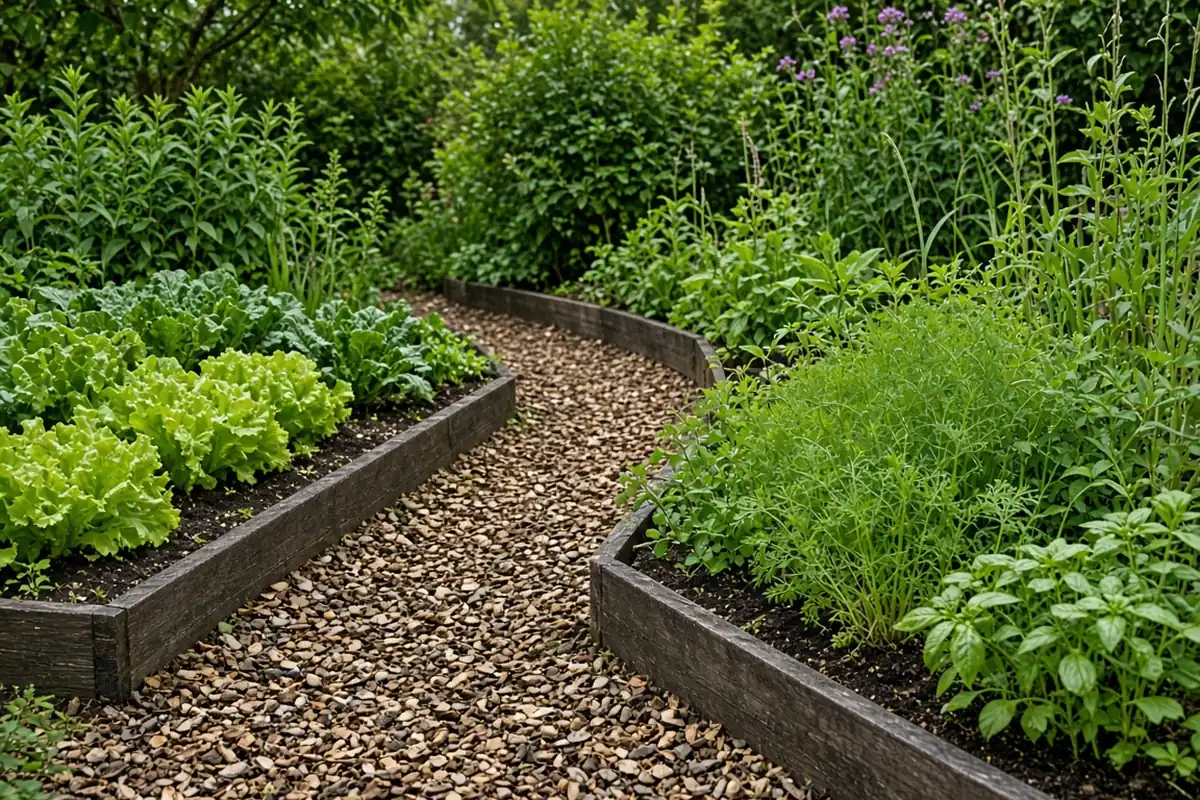
University of Georgia Extension says beds should allow access to one central path that runs across the garden.
University of Missouri Extension says 1 foot paths are adequate for foot traffic alone.
For a wheelbarrow or cart, plan 2 to 3 foot paths. Missouri notes that edge plants hang over and narrow the walking space.
How wide should beds be?
University of Georgia Extension says a major goal of raised beds is to avoid stepping into them. Plan beds 3 feet wide for children and 4 feet wide for adults.
University of Missouri Extension calls 4 feet a convenient width when a bed is reached from both sides.
If a bed is reached from one side only, Missouri says to limit the width to 3 feet.
| Element | Guide | Reason |
|---|---|---|
| Bed reached from both sides | 4 feet wide | Center within reach |
| Bed reached from one side | 3 feet wide | Comfortable reach |
| Foot path | 1 foot | Foot traffic only |
| Cart path | 2 to 3 feet | Wheelbarrow room |
Source: University of Missouri Extension plus University of Georgia Extension.
How to: step by step
- Choose a level, sunny site.
- Set a stake at the center as the focal point.
- Around the center, measure equal beds.
- Limit beds to 3 or 4 feet wide.
- Make paths 1 to 3 feet wide.
- Repeat plants plus shapes in each bed.
Troubleshooting
Beds hard to reach: too wide. Narrow them to 3 or 4 feet.
Paths crowded: edge plants hang over. Widen paths.
Uneven rings: no center stake. Remeasure from center.
For related reading see square foot gardening for cannabis, raised beds for cannabis plus planning an outdoor cannabis garden layout. Kind Seed Co also stocks cannabis seeds.
Sources
- Raised garden bed dimensions, University of Georgia Extension
- Spiral herb garden tutorial, UF/IFAS Gardening Solutions
- Raised bed gardening (G6985), University of Missouri Extension
- Extension Gardener Handbook, chapter 19 on design, NC State Extension
FAQ
How big should a mandala garden be?
No extension source sets one size. UF/IFAS Gardening Solutions says there are no set rules for the width of an herb spiral, a related circular bed, but six feet is typical. University of Georgia Extension suggests wood bed dimensions in multiples of 2 or 3 feet to minimize lumber waste.
What grows well in a mandala garden?
University of Missouri Extension says vegetables, fruits, flowers, trees and shrubs may all be grown in raised beds. Intensive planting fits more plants into a smaller area than row cropping. Missouri adds that dense foliage cover shades out much weed growth, which suits tightly planted rings.
Can a mandala garden be raised?
Yes. University of Missouri Extension says raised beds suit gardeners with heavy, poorly drained soils. Roots develop in soil held above waterlogged or compacted zones. Compost added as beds are built improves soil structure, drainage plus nutrient holding capacity. Temporary raised beds can be dug 3 to 4 feet wide.
Does a mandala garden need a centerpiece?
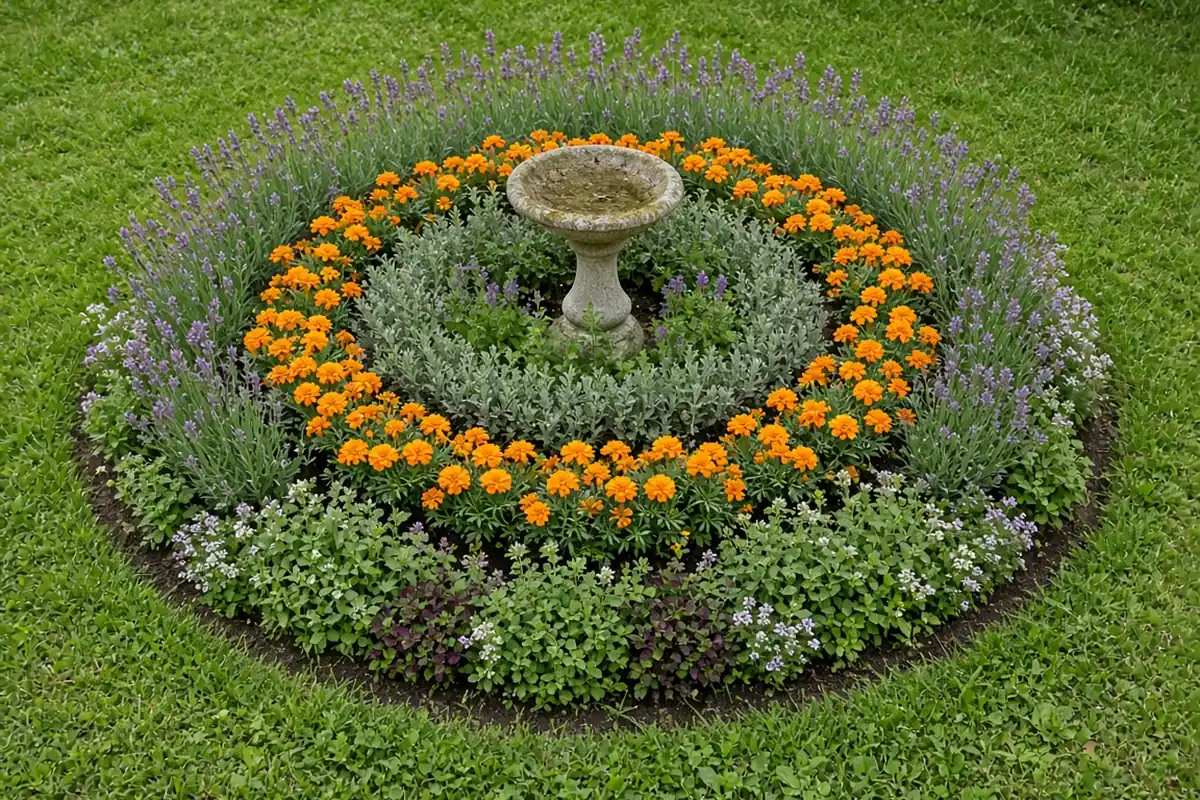
A focal point helps. NC State Extension says balance creates equal visual weight on either side of a focal point. It lists accent as one of the basic design concepts. NC State also says too many accent plants with contrasting forms can distract from a unified theme, so pick one central feature.
Can a mandala garden be wheelchair accessible?
Yes. University of Georgia Extension says to plan beds 2 feet wide for children and 3 feet wide for adults when providing wheelchair access. University of Missouri Extension says walls about 2 feet tall plus a bed width of about 3 feet make raised beds wheelchair accessible.


