Leeks Thin Stems: Spacing, Feeding plus Hilling
Leeks thin stems usually point to crowding, hungry plants, dry soil or too short a season. University of Minnesota Extension notes most leeks need about 120 to 150 days, while Utah State University Extension covers spacing, side dressing plus steady watering for good plant size.
The short answer
Leeks thin stems usually come from crowding, low nitrogen, uneven water or a short season. Utah State advises spacing plants 3 to 4 inches apart plus side dressing with nitrogen in early summer. Minnesota notes leeks need plentiful water plus hilling grows a longer white shaft.
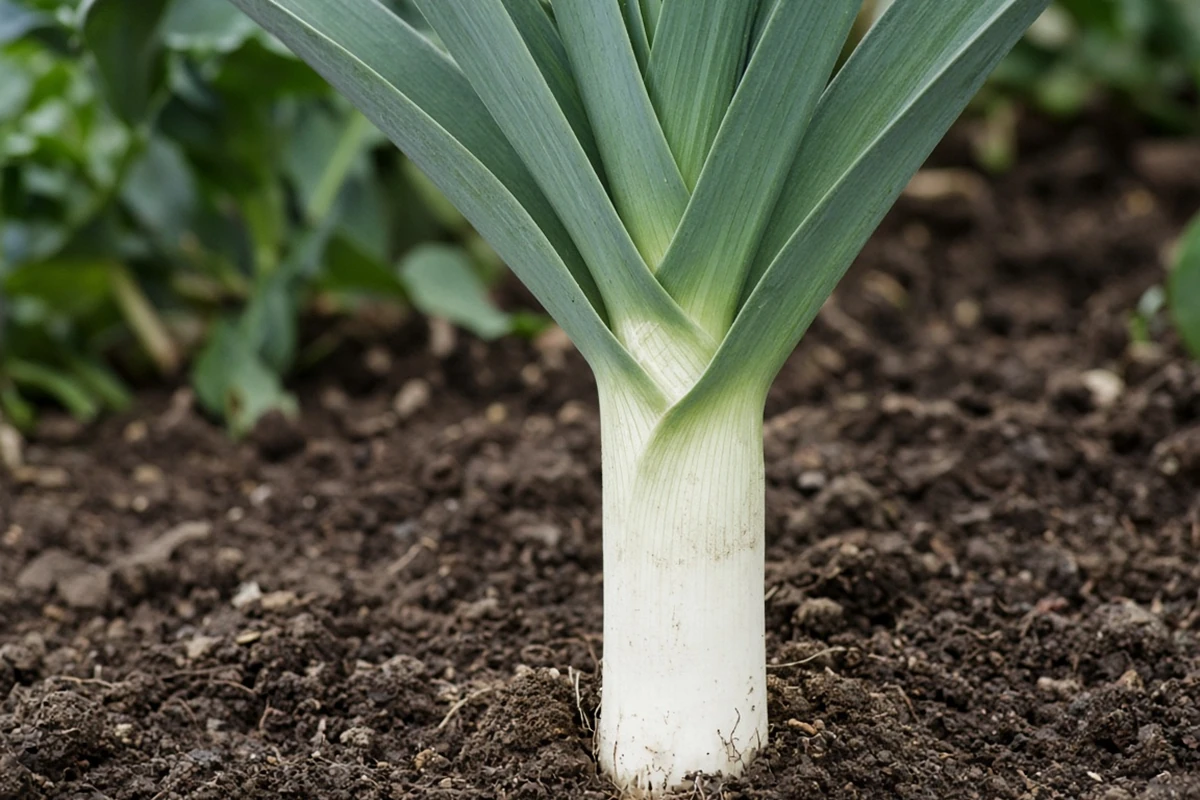
Why are my leeks so skinny?
Typical causes are crowded plants, too little nitrogen plus dry soil. Utah State notes water stress reduces plant size. Minnesota notes most leeks need about 120 to 150 days, so a late start leaves little time to swell.
| Factor | Target | Source |
|---|---|---|
| Spacing in row | 3 to 4 inches | Utah State |
| Spacing between rows | 8 to 16 inches | Utah State |
| Season | About 120 to 150 days | Minnesota |
| Sun | At least 8 hours | Minnesota |
| Harvest size | Over 1 inch across | Utah State |
Source: Utah State plus University of Minnesota Extension.
How far apart should leeks be planted?
Utah State advises 3 to 4 inches apart in the row with 8 to 16 inches between rows. Minnesota gives 2 to 6 inches apart with 12 to 36 inches between rows. Wider spacing gives each plant room.
Does hilling make leeks thicker?
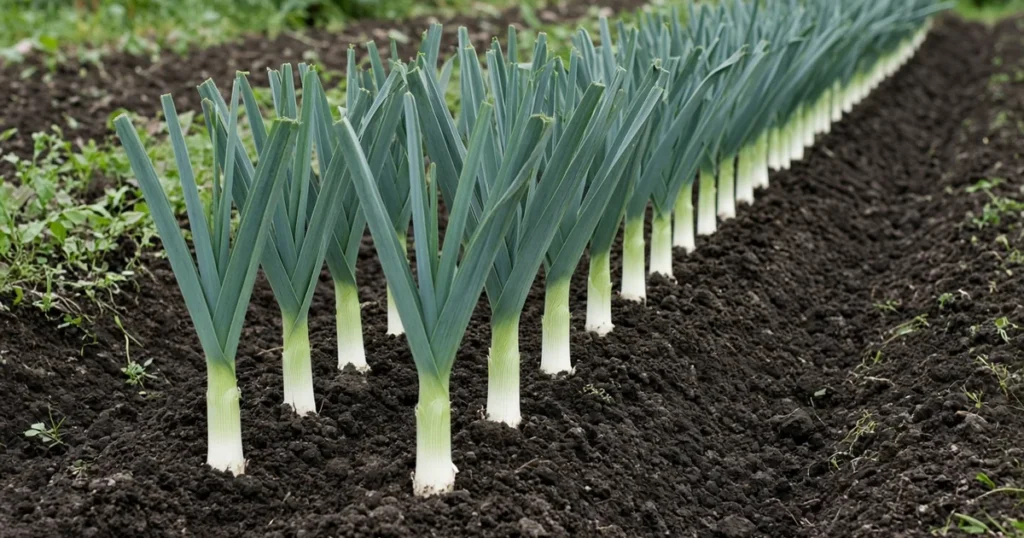
Minnesota notes hilling produces a longer white shaft, as does planting in a furrow plus filling it in. Hilling lengthens the blanched part more than it widens it, so pair it with spacing, food plus water.
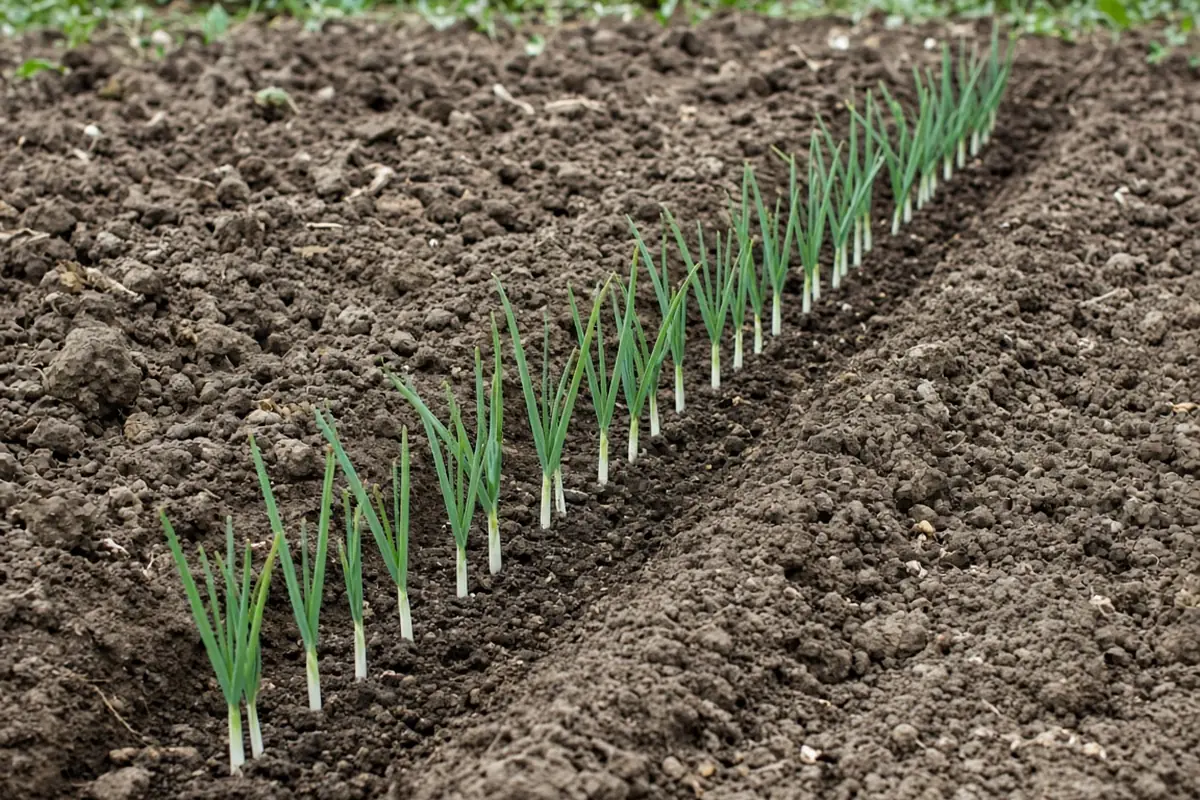
How to: step by step
- Start seed indoors early for a long season.
- Transplant into a furrow or deep holes.
- Space plants 3 to 4 inches apart.
- Side dress with nitrogen in early summer.
- Water evenly through dry spells.
- Hill soil around the shaft as it grows.
Troubleshooting
Pencil thin shafts: crowding. Thin plants or widen the spacing.
Pale, slow growth: low nitrogen. Side dress beside the row.
Short white shaft: no hilling. Mound soil slowly around the shaft.
For more on plant stress see the effects of environmental stresses on weed plants, underwatering cannabis plus mulch for cannabis. Kind Seed Co also stocks cannabis seeds.
Sources
- Growing leeks in home gardens, University of Minnesota Extension
- How to grow leeks in your garden, Utah State University Extension
- Leeks, University of Wisconsin Extension Horticulture
- Allium ampeloprasum (leek), NC State Extension Gardener Plant Toolbox
FAQ
Can thin leeks still be eaten?
Yes. Utah State notes leeks may be harvested plus used once they are larger than 1 inch in diameter, while Wisconsin lists a baby leek variety harvestable at ½ inch. Thin leeks cook quickly plus taste mild, so use them like large green onions in soups plus stir fries.
Do some leek varieties grow thicker?
Yes. Wisconsin notes varieties differ in the length plus thickness of the leaf shanks. Some are long plus slender while others have thicker, shorter white stems with blue green leaves. Utah State lists Large American Flag plus King Richard. Choose a type that suits the stems you want.
When should leeks be harvested?
Utah State notes leeks may be harvested once they are larger than 1 inch in diameter. Minnesota notes leeks tolerate cold, so harvest can wait until after the first frosts. Lifting them over several weeks lets the rest grow larger while you cook the first ones.
Can leeks be left in the ground in fall?
Yes, in mild areas. Utah State notes leeks can be stored in the garden by hilling soil around the plants plus covering them with mulch. In very cold areas it advises harvesting plus storing them at 32 to 40°F in humid conditions. Wisconsin notes varieties differ in their winter hardiness.
How long do leeks take to grow?
University of Minnesota Extension notes most leeks need a long season of about 120 to 150 days plus at least 8 hours of bright sun daily. Some newer cultivars mature in as few as 90 days. Start seed indoors early so transplants have the full season to build thick shafts.