Pole Beans Not Climbing: Support Height plus Timing
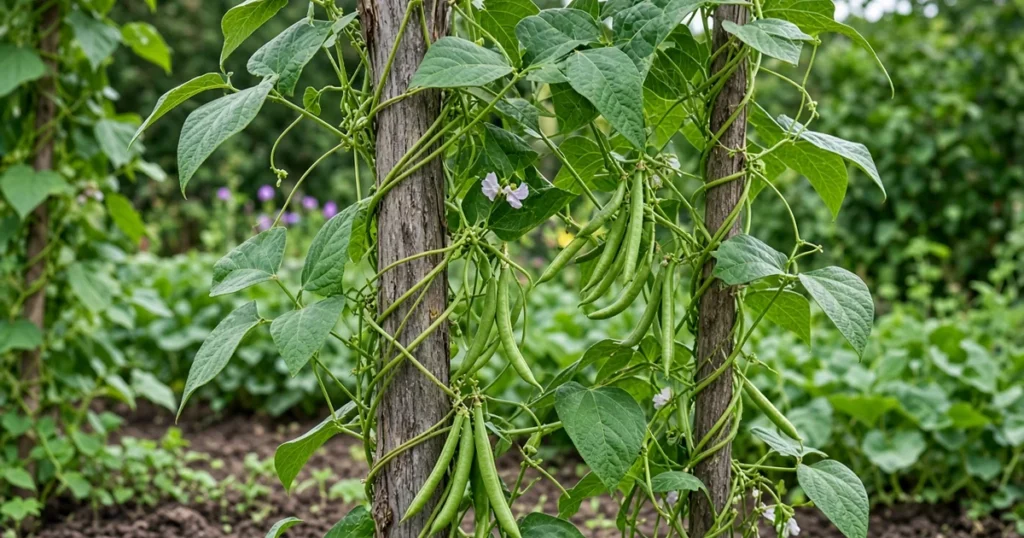
Pole beans not climbing usually lack a support they can reach plus grip in time. University of Maryland Extension notes pole beans are natural climbers but will not weave through horizontal wires, while University of Minnesota Extension advises installing supports at planting time.
The short answer
Pole beans not climbing usually have no support close by, a support set too late or only horizontal wires. Maryland notes vines will not weave through horizontal wires. Minnesota advises installing supports at planting. Maryland advises trellises 6 to 8 feet tall plus sturdy enough for summer storms.

Why won’t my pole beans climb?
Maryland notes pole beans are natural climbers but will not weave through horizontal wires. Late or distant supports leave vines sprawling. Minnesota advises installing supports at planting time.
| Factor | Target | Source |
|---|---|---|
| Support height | 6 to 8 feet | Maryland |
| Minimum height | At least 6 feet | Iowa State |
| When to install | At planting | Minnesota |
| Support type | Poles, tripods or fencing | Maryland plus Utah State |
| Wires | Vertical, not horizontal | Maryland |
Source: Maryland, Iowa State, Minnesota plus Utah State Extension.
What support works for pole beans?
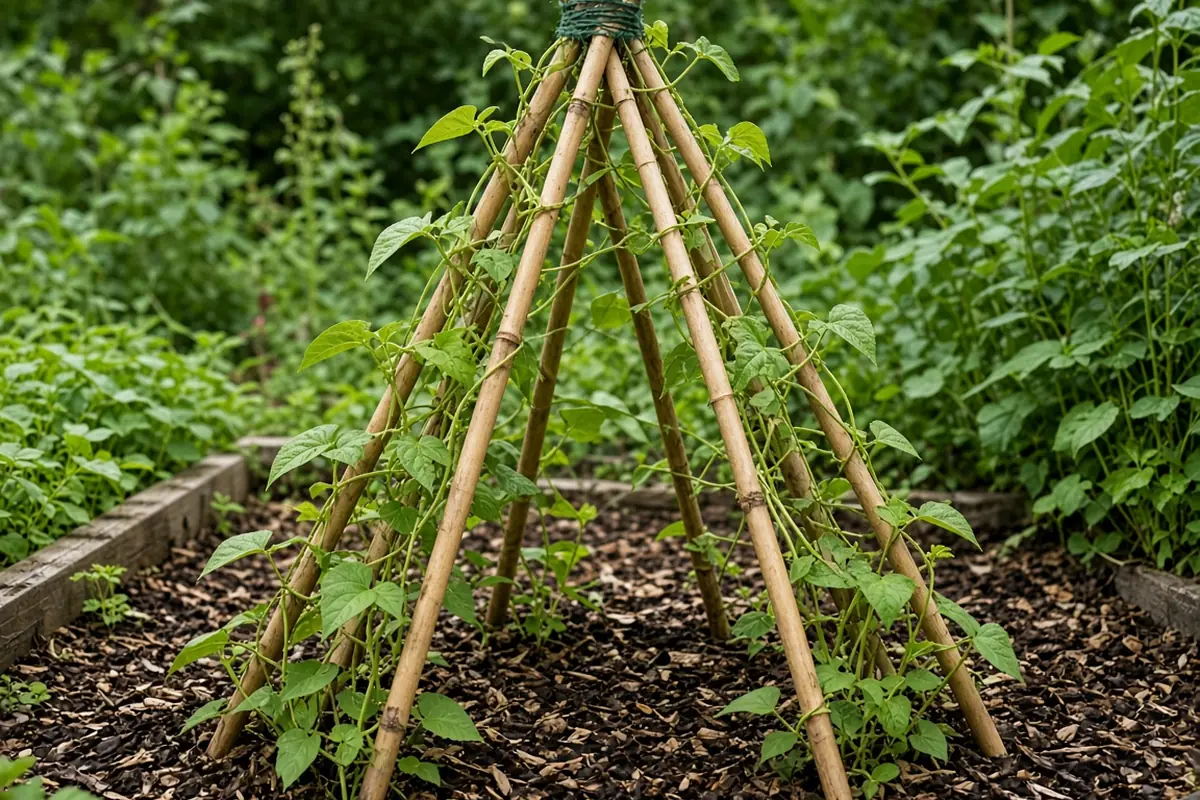
Utah State notes wooden poles or other fencing materials make ideal supports. Maryland notes homemade trellises, including tripods, work if they give the needed support plus stand 6 to 8 feet tall.
How do young vines find the support?
Minnesota notes pole beans are twining vines that you must support. Plant seed near each pole plus guide young tips onto it by hand until they grip.
How to: step by step
- Set poles, strings or a trellis before planting.
- Use vertical supports, not horizontal wires.
- Plant seeds close to the base of each support.
- Guide each young tip onto the support.
- Check every few days until vines grip.
- Add string or netting if vines slip.
Troubleshooting
Vines sprawl on the ground: support too far away. Set seed or support closer.
Vines slip down: support too smooth. Add string or netting.
Vines ignore the trellis: horizontal wires only. Add vertical strings.
For more on outdoor growing see the effects of environmental stresses on weed plants, underwatering cannabis plus what roles do bees play in outdoor cannabis. Kind Seed Co also stocks cannabis seeds.
Sources
- Growing beans in a home garden, University of Maryland Extension
- All about beans, Iowa State University Extension, Yard and Garden
- Growing beans in home gardens, University of Minnesota Extension
- How to grow beans in your garden, Utah State University Extension
FAQ
How tall should pole bean supports be?
Maryland advises trellises 6 to 8 feet tall plus sturdy enough to withstand summer storms. Iowa State notes pole beans often exceed 5 to 6 feet plus need sturdy supports at least 6 feet tall. Minnesota notes the vines grow up to 6 feet plus sometimes taller, so go taller.
Can pole beans climb a fence?
Yes. Utah State notes wooden poles or other fencing materials make ideal supports for beans. Maryland notes pole beans will not weave through horizontal wires, so a fence with vertical parts or added strings gives the vines something to wrap around. Plant seed close to the base of the fence.
Do pole beans need tying?
Usually not. Utah State notes the plants climb naturally, so little work is needed beyond building the supports. Young tips sometimes miss the pole, so guide them onto it by hand. Once a vine wraps the support, it climbs on its own through the rest of the season.
Can pole beans grow in small gardens?
Yes. Minnesota notes pole beans suit smaller gardens because they take up less ground than bush beans for similar harvests. Maryland notes they generally produce higher yields over a longer period in less space. Give them a tall support plus pick pods often to extend the harvest.
When should pole bean supports go in?
University of Minnesota Extension advises installing pole bean supports at planting time. Setting them first avoids damaging roots later plus gives young vines something to reach as soon as they start to run. Sow seeds close to the base of each pole or string so tips find it quickly.