Lima Beans Not Setting Pods: Heat and Humidity at Bloom
The short answer
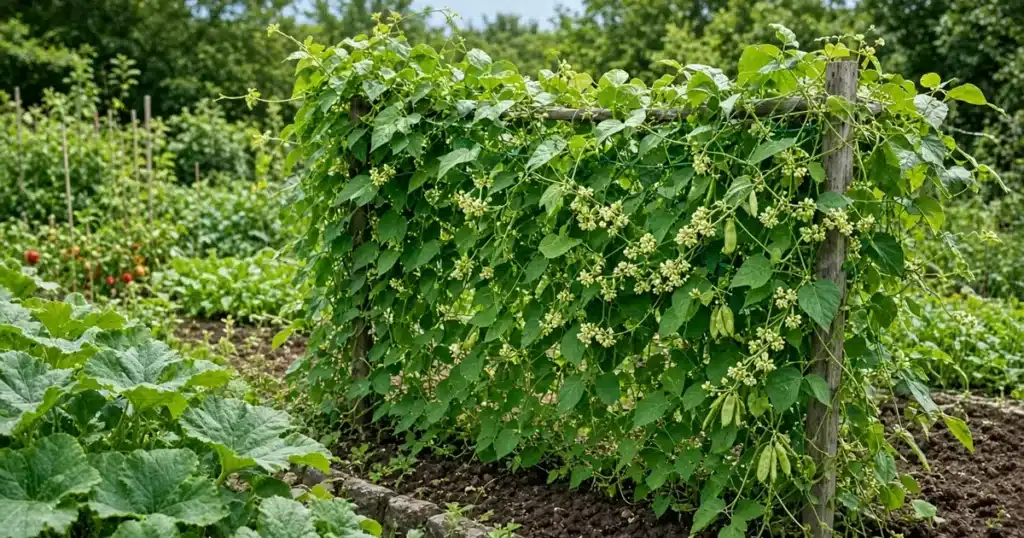
Lima beans not setting pods is most often a heat problem, and warm nights matter more than hot days. University of Delaware research found that night temperatures above about 70 degrees Fahrenheit in early flowering cut yields. Damaged flowers release no pollen, so flowers and small pods drop. Keep soil moist at bloom and wait for cooler nights.
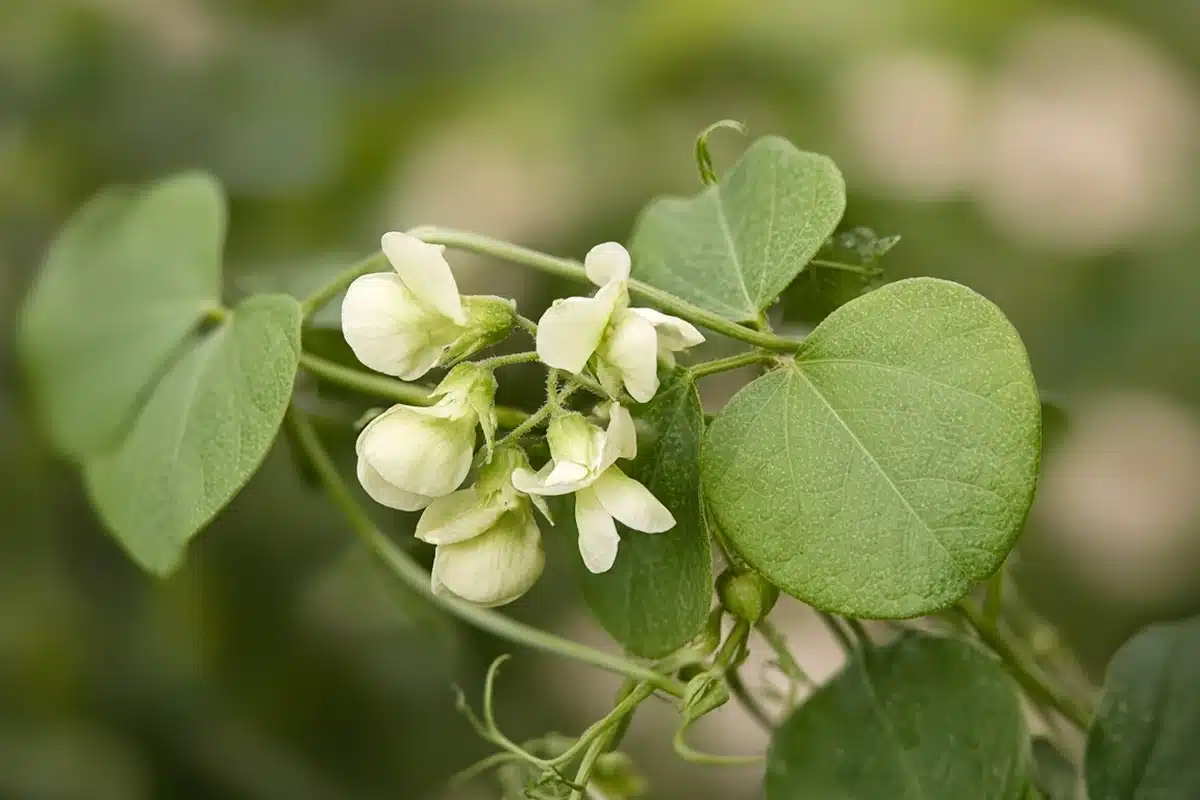
Why are my lima beans not setting pods?
Bloom time heat is the main cause. Iowa State University Extension says lima beans grow well when temperatures are between 70 and 80 degrees Fahrenheit, and hot, dry conditions during blossoming may cause many flowers to drop off without setting pods.
Feeding plays a part too. Iowa State says excessive nitrogen promotes lush growth but may also inhibit pod formation. For signs of too much nitrogen, see nitrogen toxicity in weed plants, which covers the same dark, leafy pattern.
Insects come third. University of Delaware Extension says that if conditions are cool and pods and flowers are still dropping, stink bugs are frequently the cause.
How does heat affect lima bean flowers?
Night heat does the most harm. University of Delaware scientist Emmalea Ernest writes that both lima and snap beans are more affected by high nighttime temperatures than high daytime temperatures. Limas handle hot days well.
When nights are warm, the anthers in developing flower buds do not form properly. Delaware Extension explains that the damaged anthers do not release pollen when the flower opens. Without viable pollen, seeds do not set and flowers or small pods drop. In lima beans, poorly fertilized pods tend to drop, new flowers form and harvest is delayed.
Timing matters, too. Delaware says early June plantings often see the most heat stress, since they flower in mid July, often the hottest part of summer. It also notes that large seeded limas are more heat sensitive than small seeded baby limas. For more on heat in other plants, read cannabis heat stress.
| Factor | Effect | Fix |
|---|---|---|
| Nights above about 70 F at early bloom | Lower yield, later harvest | Wait for cooler nights |
| Hot, dry weather at bloom | Flowers drop without pods | Give 1 inch of water a week |
| Excess nitrogen | Lush vines, few pods | Ease off feeding |
| Stink bugs | Dropped pods in cool weather | Scout pods closely |
| Large seeded types | More heat sensitive | Try baby limas |
Sources: University of Delaware Cooperative Extension, Iowa State University Extension.
How do you get more lima bean pods?
Start with water. Delaware Extension says it is important to keep adequate soil moisture during the heat sensitive early flowering and full flowering stages. Plants cool themselves through evaporation from leaf pores, and under drought stress those pores close and leaf temperatures rise. Iowa State says lima beans need 1 inch of water per week during blossoming and pod development.
Variety choice helps too. Delaware names Christmas Lima as the most heat tolerant large seeded lima currently available. Iowa State says bush types usually do better than pole types in Iowa, and lists Fordhook 242 as heat tolerant. NC State Extension adds that bush cultivars mature earlier than pole cultivars and that bean production may lag in hot summer temperatures.
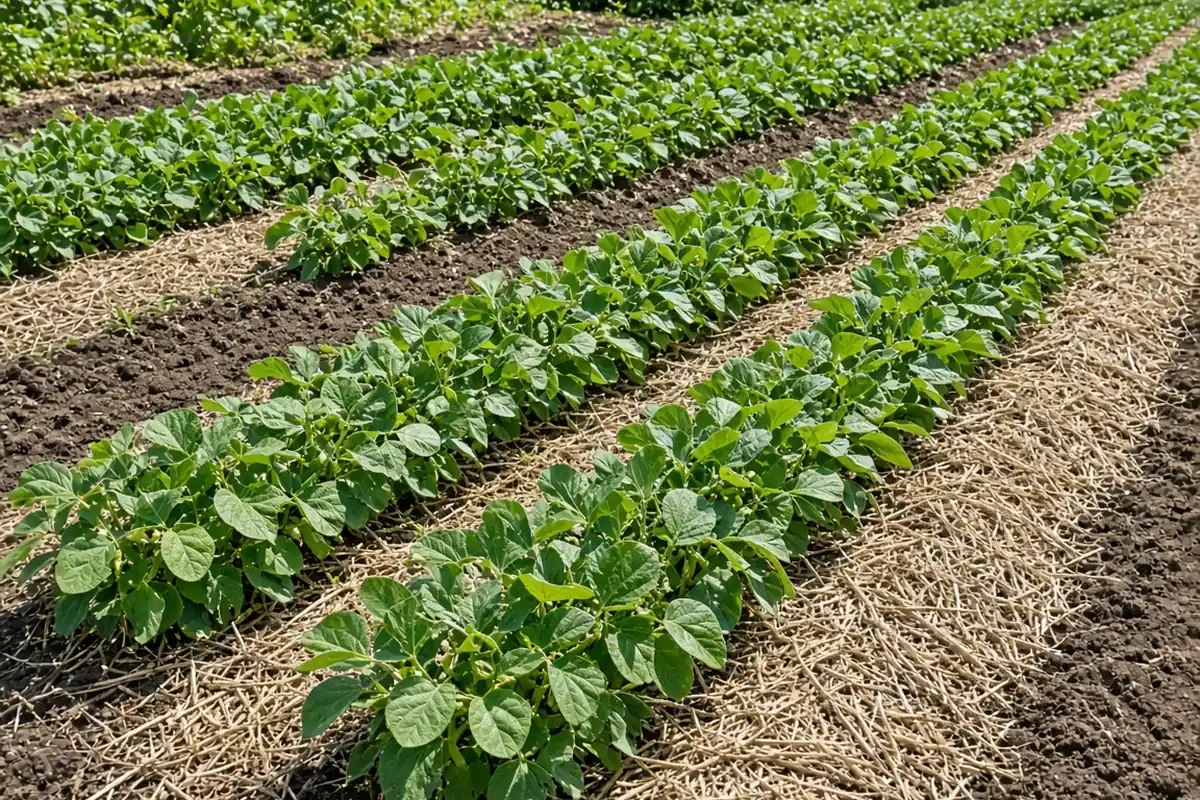
How to: step by step
- Check recent day and night temperatures.
- Look for flowers or small pods dropping.
- Keep soil evenly moist during bloom, about 1 inch a week.
- Ease off nitrogen if vines are lush with few pods.
- Scout pods for stink bugs if weather is cool.
- Wait for cooler nights for new pods to set.
Delaware notes that much of the pole lima yield often comes from pods set in August, and night temperatures that month drive the September and October harvest. Plants usually form new flowers after a hot spell. For general stress signs, see the effects of environmental stresses on weed plants.
Troubleshooting
Flowers dropping in a heat wave: warm nights, so water evenly and wait.
Lush vines, few pods: excess nitrogen. Iowa State says it may inhibit pod formation, so ease off feeding.
Large pods wilting and dropping: stink bugs. Delaware says this is usually stink bug feeding, not heat.
Misshapen seeds in pods: stink bugs piercing pods. Scout the vines closely.
Short, slow harvest: dry soil at bloom. Keep moisture steady through flowering and pod fill.
Cooler nights bring the pods back
Lima beans rarely fail for good, since most stop setting pods in hot spells and start again when nights cool. Steady water, moderate feeding and a heat tolerant variety go a long way. The Kind Seed Co blog has more help for garden plants beyond cannabis.
Sources
- Managing heat stress in lima and snap beans, University of Delaware Cooperative Extension, Weekly Crop Update
- High temps and stink bugs threaten pole limas, University of Delaware Cooperative Extension, Weekly Crop Update
- I planted some lima beans this spring, but the plants produced only a few pods. Why?, Iowa State University Extension and Outreach
- Phaseolus lunatus (lima bean), NC State Extension Gardener Plant Toolbox
FAQ
Are pole limas more heat sensitive?
Large seeded limas are. University of Delaware Extension says large seeded pole types are more heat sensitive than small seeded baby limas. It names Christmas Lima as the most heat tolerant large seeded lima available now. Iowa State says bush types usually do better than pole types in Iowa.
What night temperature hurts lima beans?
University of Delaware Extension says the exact point is not set, but problems begin at about 70 degrees Fahrenheit in heat sensitive limas. For pole limas the threshold is probably 68 to 70 degrees. Night temperatures above 70 degrees in early flowering reduce yields and delay harvest.
Does fertilizer affect pod set?
Yes. Iowa State University Extension says excessive nitrogen fertilization promotes lush growth but may also inhibit pod formation. If plants have large, leafy vines and few pods, ease off nitrogen. Focus instead on steady water, about 1 inch per week during blossoming and pod development.
When do lima beans struggle most with heat?
University of Delaware Extension says early June plantings often see the most heat stress because they flower in mid July, often the hottest part of summer. Developing buds are more heat sensitive than open flowers, so warm nights while buds form are most likely to cut yield.
Can bugs cause lima pods to drop?
Yes. University of Delaware Extension says stink bugs pierce developing pods and suck sap from pods or young seeds. This causes misshapen seeds and dropped pods. If weather is cool and pods still drop, or larger pods wilt and fall, stink bugs are often the cause.