
Manure for Cannabis Beds: Fresh vs Composted and When to Add It
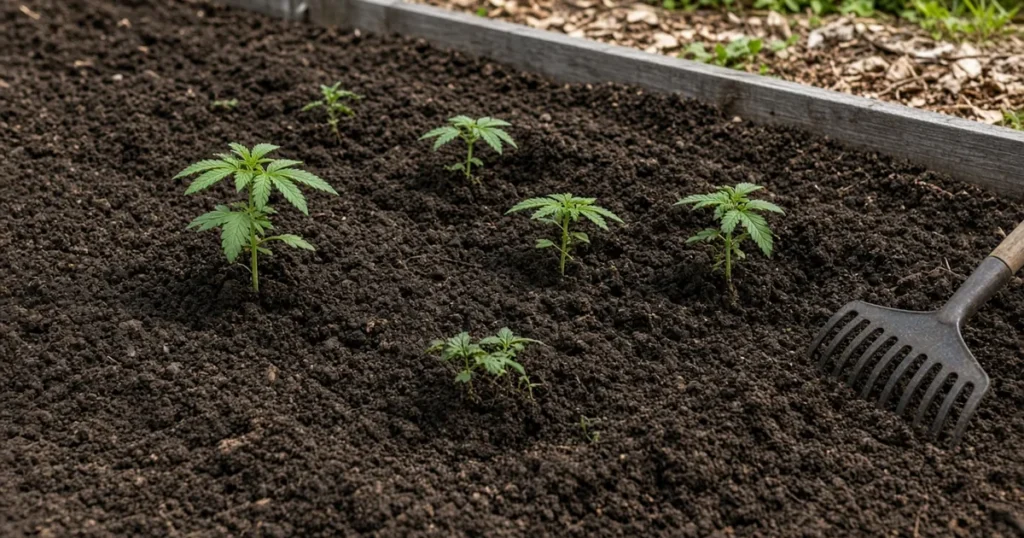
Quick answer: Composted manure is the safer choice for cannabis beds. Fresh manure can burn plants with ammonia and salts, may carry weed seeds and human pathogens such as E. coli, and Colorado State University Extension says never to mix it into soil or spread it as mulch around a growing crop. If you do use fresh manure, spread it in fall. Mix composted manure 6 to 8 inches into the soil and, in spring, wait about a month before planting.
Is Manure Good for Cannabis?
Used the right way, yes. The Wisconsin Horticulture team at UW Madison explains that manure improves soil structure, helps sandy soils hold water, improves drainage in clay soils, releases nutrients slowly and feeds beneficial soil life. Those are exactly the traits an outdoor cannabis bed needs to hold steady moisture and grow a big root system.
Manure is a soil builder first and a fertilizer second. Most of its nitrogen, UW Madison explains, is locked in organic forms that soil microbes release over time. Only about 30 to 50 percent of that organic nitrogen becomes available in the first year. That slow release suits cannabis in veg, but it also means manure alone may not meet the needs of a fast growing plant, a point UW Madison makes about composted manure. Our feeding schedule for cannabis in soil explains how to fill the gap.
Which Manure Is Best for Cannabis?
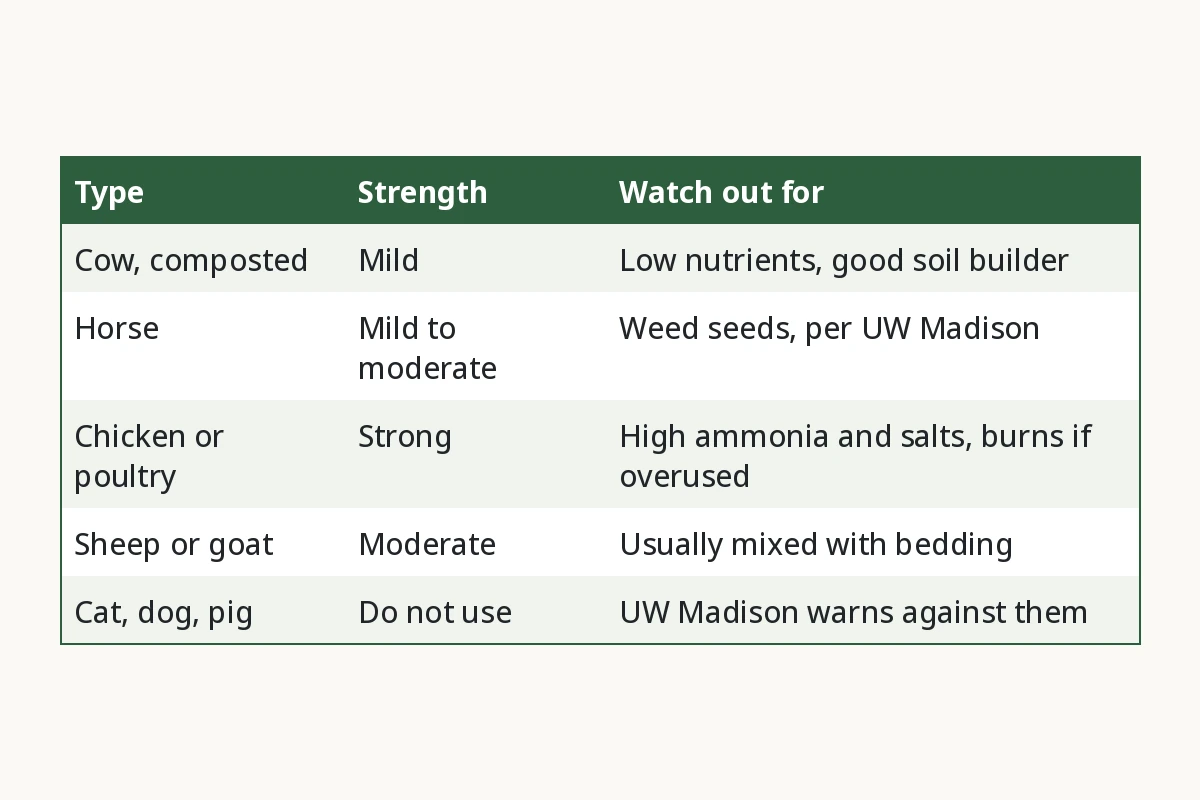
Composted herbivore manure is the best fit. UW Madison says garden manures typically come from plant eating animals such as cows, sheep and chickens. It warns against putting pig, dog or cat manure in a vegetable garden or a compost pile, ever.
| Type | Strength | Watch out for |
|---|---|---|
| Cow, composted | Mild | Low nutrients, good soil builder |
| Horse | Mild to moderate | Weed seeds, per UW Madison |
| Chicken or poultry | Strong | High ammonia and salts, burns if overused |
| Sheep or goat | Moderate | Usually mixed with bedding |
| Cat, dog, pig | Do not use | UW Madison warns against them |
Bedding changes the math. Straw or sawdust mixed into manure dilutes nutrients, the UW Madison article says, and a high carbon to nitrogen ratio, above about 25 to 1, can tie up nitrogen in the soil for a while.
Fresh, Aged and Composted Manure Explained
Colorado State separates three forms:
- Fresh manure is high in ammonia and salts, can burn plants and often carries pathogens.
- Aged manure has sat in a pile, unturned, for six months or more. Colorado State says most excess ammonia has escaped, but weed seeds can still sprout and pathogens remain a concern.
- Composted manure has gone through several hot turning cycles. Above 145°F, Colorado State says most pathogens and weed seeds are killed, and the organic matter is stable.
Composting also reduces odor and weight, though UW Madison cautions that salts can be more concentrated in the finished product.
How Long to Wait After Adding Manure
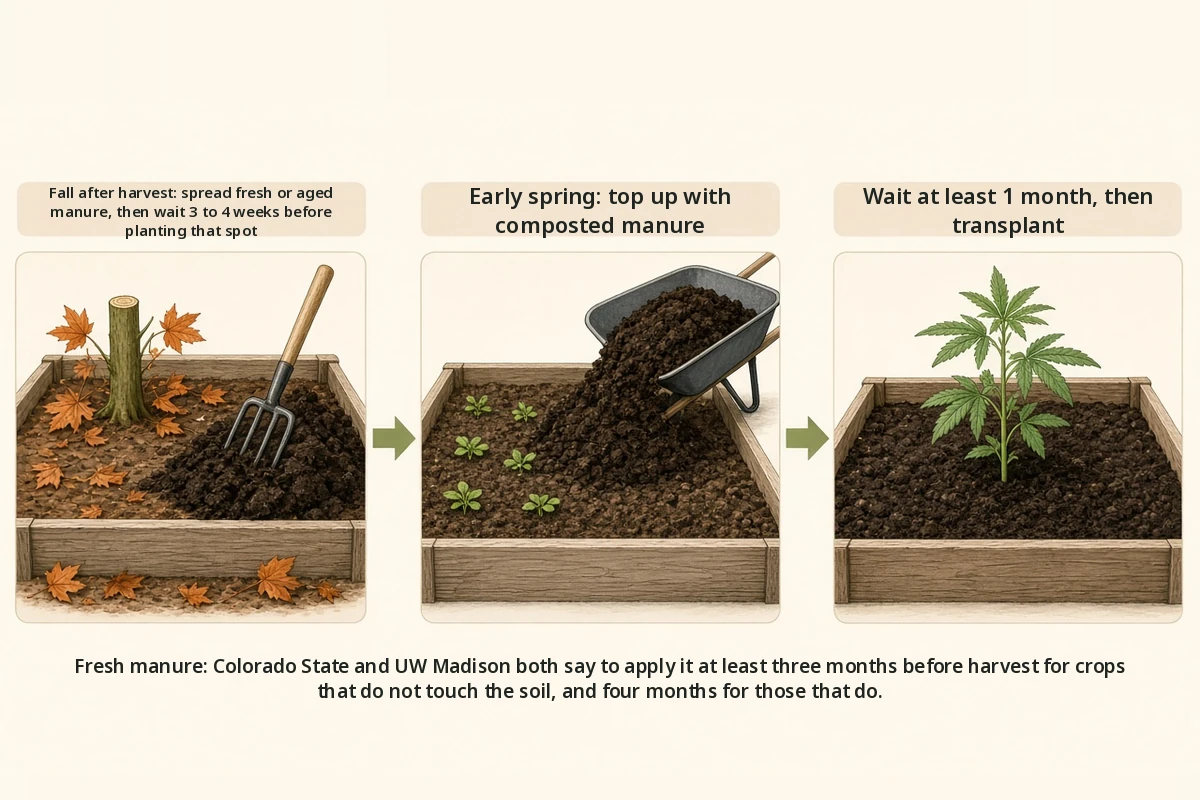
The waiting rules differ by type:
- Fresh manure: Colorado State and UW Madison both say to apply it at least three months before harvest for crops that do not touch the soil, and four months for those that do. In practice, that means fall only.
- Fresh manure salt risk: UW Madison suggests that after you spread it, you wait 3 to 4 weeks before you plant anything in that spot.
- Composted manure in spring: UW Madison recommends waiting at least one month before planting so the microbial burst does not interfere with seed germination.
For a typical outdoor cannabis season, a clean plan is to spread fresh or aged manure in fall after harvest, and top up with composted manure in early spring. Our guide on fall garden cleanup after cannabis harvest fits the fall step into your routine.
How to Add Manure to a Cannabis Bed
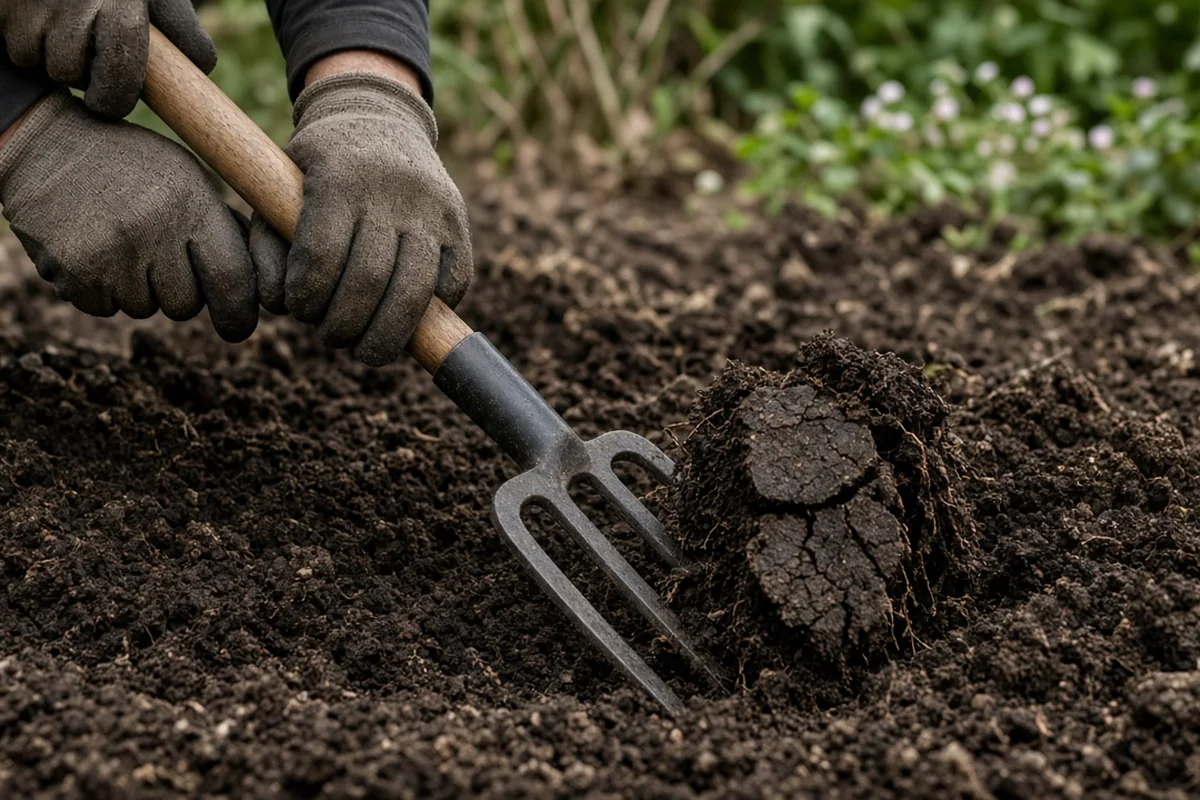
- Test first. A soil test shows what the bed already holds and whether salts are a concern. See soil testing for cannabis.
- Pick the form. Use composted manure for spring. Save fresh manure for fall.
- Read the bag. UW Madison notes bagged composted manure lists nutrient content on the label, which helps set the rate.
- Spread evenly. Rake a layer across the bed rather than dumping it in piles.
- Mix it in. UW Madison recommends working composted manure 6 to 8 inches into the soil when you can. Fresh manure should be worked in within 12 hours, UW Madison says, or much of its nitrogen escapes as ammonia.
- Water and wait. Give a spring application about a month before transplanting.
- Watch the first weeks. Yellow tips or burnt leaf edges can point to salts. Our page on salt buildup in cannabis soil explains what to do.
Can You Use Manure in Cannabis Pots?
You can blend a small share of composted manure into potting mix, but go light. Pots do not have the buffer of a garden bed, so salts concentrate faster. Colorado State warns that composted manure can be high in salt and suggests checking the product sheet or having it tested if salt is a concern. Never add fresh manure to pots. For container soil, see garden soil vs potting mix for cannabis.
Manure, Compost and Other Amendments
Manure is one of several ways to build a cannabis bed. Colorado State calls compost the gold standard of organic amendments and suggests looking for products with 40 to 60 percent organic matter. Plant based compost brings fewer salt concerns than manure. Worm castings are gentler still and work well in small beds and pots. Many growers combine a base of compost with a modest amount of composted manure for extra nutrients. Our pages on compost tea for cannabis and worm castings for cannabis cover those options.
Manure Safety Tips
- Wear gloves and wash hands after handling any manure.
- Keep fresh manure away from plants that are close to harvest.
- Store piles away from wells and water runoff.
- Buy composted products from sources that state the composting process.
Troubleshooting Manure in Cannabis Beds
Seedlings yellowed and burned after planting. Fresh or poultry manure may have been too strong or too recent. UW Madison notes fresh poultry manure carries a lot of ammonia and burns plants easily if over applied. Hold off on more manure and use composted product next time.
The bed sprouted a carpet of weeds. Horse or aged manure often carries viable weed seeds, as UW Madison and Colorado State both note. Switch to composted manure and mulch the bed.
Plants look pale despite heavy manure. Manure mixed with sawdust or wood bedding can tie up nitrogen while it breaks down, a hazard Colorado State says is greatest with sawdust. Compost that material first, or add a nitrogen source such as grass clippings, as Colorado State suggests.
Soil test shows high salts. Skip manure for a season and use plant based compost instead.
Strong smell weeks later. The manure was not fully composted. Turn it in deeper and give it more time.
Bagged manure smells of ammonia when opened. It may not be fully finished. Colorado State notes properly composted manure has stable organic matter, so spread a strong smelling product in fall or let it sit before spring use.
Sources
- University of Wisconsin Madison Extension, Wisconsin Horticulture, Using Manure in the Home Garden: https://hort.extension.wisc.edu/articles/using-manure-in-the-home-garden/
- Colorado State University Extension, Choosing a Soil Amendment: https://extension.colostate.edu/resource/choosing-a-soil-amendment/
FAQ
Can I put fresh manure on cannabis?
Not during the season. Colorado State says fresh manure is not a safe soil amendment or mulch around a growing crop. If you use it, apply it in fall, months before planting.
Which manure works best for cannabis?
Composted cow or other herbivore manure is the mildest and easiest to use. Poultry manure is strong and best used sparingly.
How long should manure sit before planting?
For composted manure added in spring, UW Madison suggests at least one month. Fresh manure belongs in fall.
Does manure have enough nutrients for cannabis?
UW Madison notes composted manure alone may not supply all nutrients for fast growing plants unless used at high rates.
Is chicken manure too hot for cannabis?
UW Madison warns poultry manure carries a lot of ammonia and burns plants easily if you put on too much. Use composted chicken manure lightly.
Does composting kill weed seeds in manure?
Colorado State says composted manure heated above 145°F kills most pathogens and weed seeds. Aged manure that was only piled, not turned and heated, can still carry viable seeds.


