
Onions Not Bulbing: Troubleshooting Day Length, Crowding and Nitrogen
The short answer
Onions not bulbing are often the wrong day length type for your latitude, since bulbing starts when days reach a set length. NC State and UC IPM add that crowding, too much late nitrogen and weeds limit bulb size. Match the onion type to your region, thin plants and ease off nitrogen once bulbing starts.
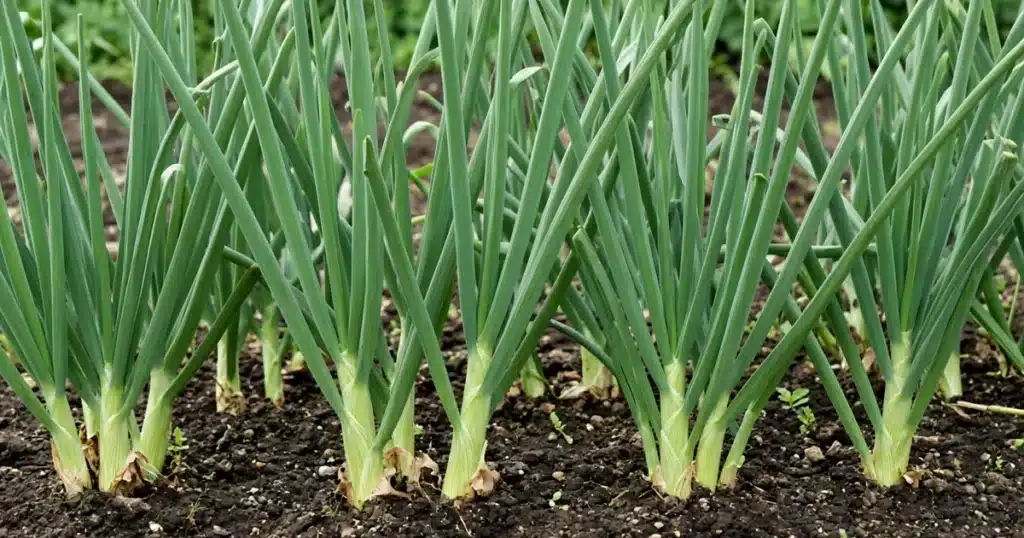
Few garden puzzles feel as odd as a row of tall, green onions with no bulbs. The plants look healthy, yet the bulbs never swell. In most cases the fix is a different seed choice or a small change in care.

Why aren’t my onions bulbing?
Onions build leaves first and bulbs second, and each green leaf becomes one ring of the bulb later on.
The switch from leaves to bulb is set by day length. Once days reach a certain number of hours, the plant starts to swell its base.
If days never reach that length, the plant goes on making leaves. You end up with thick green stems and a slim neck.
The NC State Extension guide to bulb onions explains that day length type is the first thing to check. Planting the wrong type for your area is the most common cause of poor bulbs.
How does day length affect bulbing?
Onions fall into three broad groups by the day length they need.
Short day onions start bulbing at about 10 to 12 hours of daylight. They suit southern states, often planted in fall or winter.
Intermediate day onions need about 12 to 14 hours, and they fit much of the middle of the country.
Long day onions need about 14 to 16 hours. They suit northern states, where summer days run long.
A long day onion planted in the far South may never get enough daylight to bulb. A short day onion planted in the North may bulb too early, while the plant is still small.
| Onion type | Daylight to bulb | Ideal fit |
|---|---|---|
| Short day | About 10 to 12 hours | Southern states |
| Intermediate day | About 12 to 14 hours | Middle latitudes |
| Long day | About 14 to 16 hours | Northern states |
Sources: NC State Extension, UC IPM, Iowa State University.
Our post on the light cycle explains how plants sense day length and why it shapes growth stages.
Our guide to long day vs short day onions shows which type fits your latitude.
What other factors limit bulb size?
Day length sets the start of bulbing. Care during the season sets the final size.
Crowding. Onions set too close compete for water and nutrients. The UC IPM tips for growing onions and garlic recommend spacing that gives each bulb room to swell.
Late nitrogen. Nitrogen grows leaves. Feeding heavily after bulbing starts pushes more leaf growth and delays maturity. Our post on nitrogen excess shows the signs of too much feeding.
Weeds. Onions have narrow leaves and shallow roots. Weeds shade them and take water quickly.
Dry soil. Bulbs swell with steady moisture. Dry spells during bulbing shrink the final size.
Small plants at bulbing. If the plant has few leaves when day length triggers bulbing, the bulb stays small. Early planting gives more leaves and bigger bulbs.
The Iowa State University guide to onions notes that onions planted early in spring have more time to build leaves before long days arrive.
How to: step by step
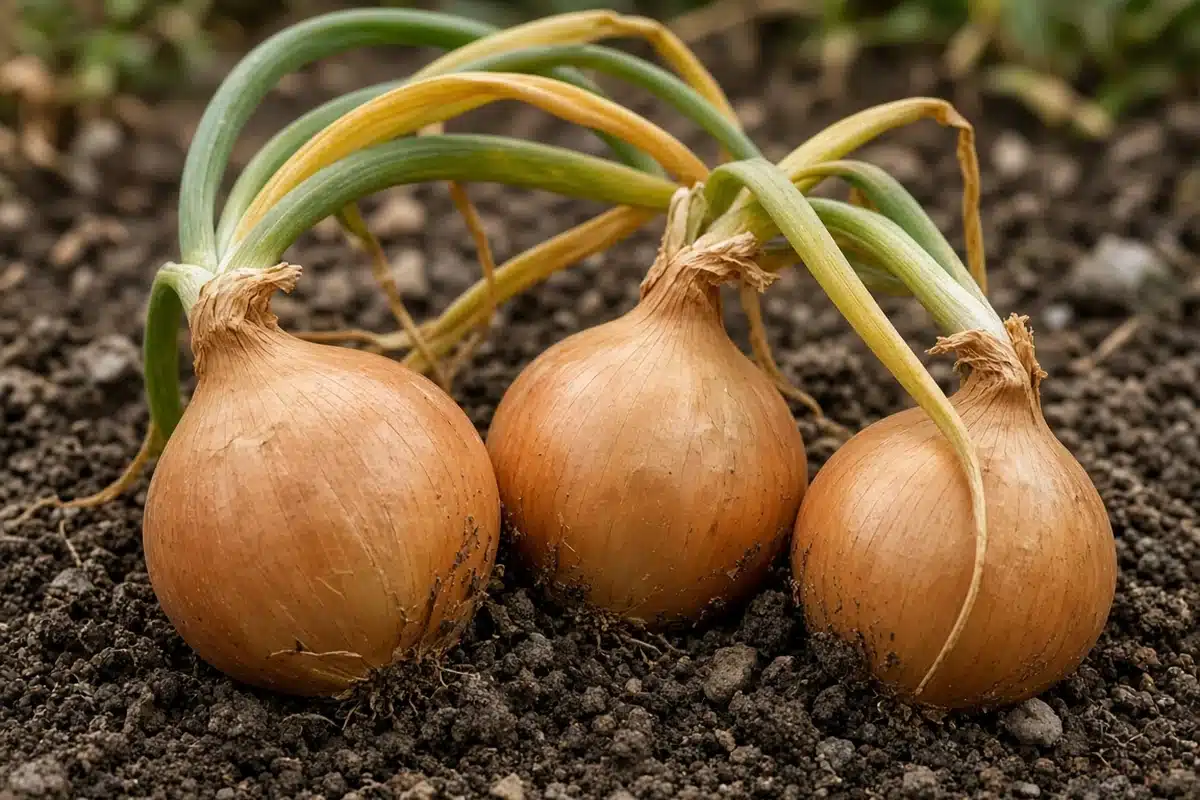
- Check whether you planted long day, short day or intermediate onions.
- Compare that type with your latitude.
- Thin plants to proper spacing.
- Stop heavy nitrogen once bulbing begins.
- Weed and water beds regularly.
- Plan the right type for next season.
How should you space onions?
Most bulb onions do well about four inches apart in the row. Rows can sit about 12 to 18 inches apart.
Thin seedlings early and use the thinnings as green onions.
Raised beds and loose soil help bulbs expand. Heavy clay can press on swelling bulbs and stunt them.
Our post on planning an outdoor garden layout helps you plan rows and bed space before planting.
Sets, transplants or seed?
Onions come as seed, small transplants or sets. Sets are tiny bulbs grown the year before.
Sets are quick, but large sets may flower instead of bulbing. Pick sets about the size of a dime.
Transplants are young plants grown from seed. They often give larger bulbs than sets in many regions.
Seed is the cheapest and offers the most variety choice. It needs the longest season, so start it early.
Troubleshooting
Tall green tops, no bulb. The day length type likely doesn’t match your area. Check the seed label.
Bulbs small and crowded. Thin more and pull weeds.
Thick necks that won’t dry down. Late nitrogen pushed leaf growth. Stop feeding earlier next season.
Plants flowered. Cold exposure or large sets can trigger flower stalks. Eat those onions soon.
Small bulbs after a dry summer. Water during bulbing and add mulch.
The right type for your latitude is the most important choice. Kind Seed Co shares more garden ideas in outdoor growing.
Sources
- Bulb onions, NC State Extension, Bulb onions
- Cultural tips for growing onions and garlic, UC IPM, University of California, Cultural tips for growing onions and garlic
- All about onions, Iowa State University Extension, Yard and Garden, All about onions
FAQ
Can you force onions to bulb?
Not really. Day length controls bulbing, so choose the right type.
Do onion sets bulb faster?
Sets often mature sooner than seed, though large sets may flower.
Why did my onions flower?
Cold spells or large sets can trigger flower stalks before bulbs form.
Are green onions a failed bulb?
No. Bunching onions are grown for leaves and never form big bulbs.
When do onions stop growing leaves?
Leaf growth slows once days reach the length for that type.



